Category Archives: Words

Pablo Neruda: ‘…y por las calles la sangre de los niños…’

Here’s a grim coincidence.

When I heard that one of the three dead in Boston was an 8-year-old boy, I remembered what I had heard on the radio early in the afternoon, before the explosions.

Celeste Headlee was interviewing someone about the legacy of Chilean poet Pablo Neruda, and the guest read the last part of Neruda’s poem “Explico Algunas Cosas.”

Here’s how it went:

Y una mañana todo estaba ardiendo
y una mañana las hogueras
salían de la tierra
devorando seres,
y desde entonces fuego,
pólvora desde entonces,
y desde entonces sangre.
Bandidos con aviones y con moros,
bandidos con sortijas y duquesas,
bandidos con frailes negros bendiciendo
venían por el cielo a matar niños,
y por las calles la sangre de los niños
corría simplemente, como sangre de niños.

Victim Martin Richard, 8.

Victim Martin Richard, 8.


Chacales que el chacal rechazaría,
piedras que el cardo seco mordería escupiendo,
víboras que las víboras odiaran!

Frente a vosotros he visto la sangre
de España levantarse
para ahogaros en una sola ola
de orgullo y de cuchillos!

Generales
traidores:
mirad mi casa muerta,
mirad España rota:
pero de cada casa muerta sale metal ardiendo
en vez de flores,
pero de cada hueco de España
sale España,
pero de cada niño muerto sale un fusil con ojos,
pero de cada crimen nacen balas
que os hallarán un día el sitio
del corazón.

Preguntaréis por qué su poesía
no nos habla del sueño, de las hojas,
de los grandes volcanes de su país natal?

Venid a ver la sangre por las calles,
venid a ver
la sangre por las calles,
venid a ver la sangre
por las calles!

And here it is in English:

And one morning it was all burning, and one morning bonfires sprang out of the earth, devouring humans. And from then on, fire, gunpowder from then on, and from then on blood. Bandidos with planes and Moors, bandidos with rings and duchesses, bandidos with black friars signing the cross, coming down from sky to kill children. And in the streets, the blood of children ran simply like blood of children.220px-Pablo_Neruda

Jackals the jackals would despise, stones that the dry thistle would bite and bit on and spit out, vipers that the vipers would abominate. Facing you, I have seen the blood of Spain rise up to drown you in a single wave of pride and knives. Traitors, generals: look at my dead house, look at Spain broken: from every house, burning metal comes out instead of flowers, from every crater of Spain comes Spain, from every dead child comes a rifle with eyes, from every crime bullets are born that one day will find out in due the sight of the heart.

You will ask: why doesn’t his poetry speak to us of dreams, of leaves, of the great volcanoes of his native land? Come and see the blood in the streets, come and see the blood in the streets, come and see the blood in the streets.

In Neruda’s day, the threat was fascist government. Today, in the West, it’s deluded individuals and small groups of lunatics.
The thoughtful hedonist: Russell Brand on Thatcher

greek-still-488x324

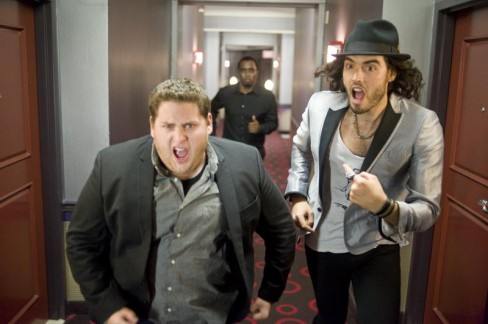
You probably don’t want to watch it with your mom, or with your children for that matter, but I have seen few things funnier in recent years than Russell Brand in “Get Him to the Greek.” From his first line, “I’m Aldous Snow, the rock star,” his embodiment of an out-of-control hedonist is so devastatingly spot on, you come away convinced that that is who he really is (of course, his personal biography isn’t that far distant from Snow’s).

But messed up as he may be, he’s a bright guy who can actually be fairly thoughtful (interestingly, there were flashes of that in the Aldous Snow character, tucked among the Jeffrey-induced outrages). He showed that in a piece he wrote for The Guardian a couple of days back. Excerpts:

One Sunday recently while staying in London, I took a stroll in the gardens of Temple, the insular clod of quads and offices between the Strand and the Embankment. It’s kind of a luxury rent-controlled ghetto for lawyers and barristers, and there is a beautiful tailors, a fine chapel, established by the Knights Templar (from which the compound takes its name), a twee cottage designed by Sir Christopher Wren and a rose garden; which I never promised you.

My mate John and I were wandering there together, he expertly proselytising on the architecture and the history of the place, me pretending to be Rumpole of the Bailey (quietly in my mind), when we spied in the distant garden a hunched and frail figure, in a raincoat, scarf about her head, watering the roses under the breezy supervision of a masticating copper. “What’s going on there, mate?” John asked a nearby chippy loading his white van. “Maggie Thatcher,” he said. “Comes here every week to water them flowers.” The three of us watched as the gentle horticultural ritual was feebly enacted, then regarded the Iron Lady being helped into the back of a car and trundling off. In this moment she inspired only curiosity, a pale phantom, dumbly filling her day. None present eyed her meanly or spoke with vitriol and it wasn’t until an hour later that I dreamt up an Ealing comedy-style caper in which two inept crooks kidnap Thatcher from the garden but are unable to cope with the demands of dealing with her, and finally give her back. This reverie only occurred when the car was out of view. In her diminished presence I stared like an amateur astronomer unable to describe my awe at this distant phenomenon…

The blunt, pathetic reality today is that a little old lady has died, who in the winter of her life had to water roses alone under police supervision. If you behave like there’s no such thing as society, in the end there isn’t. Her death must be sad for the handful of people she was nice to and the rich people who got richer under her stewardship. It isn’t sad for anyone else. There are pangs of nostalgia, yes, because for me she’s all tied up with Hi-De-Hi and Speak and Spell and Blockbusters and “follow the bear”. What is more troubling is my inability to ascertain where my own selfishness ends and her neo-liberal inculcation begins. All of us that grew up under Thatcher were taught that it is good to be selfish, that other people’s pain is not your problem, that pain is in fact a weakness and suffering is deserved and shameful. Perhaps there is resentment because the clemency and respect that are being mawkishly displayed now by some and haughtily demanded of the rest of us at the impending, solemn ceremonial funeral, are values that her government and policies sought to annihilate…

Rough stuff. But then there are bits like this:

When I awoke today on LA time my phone was full of impertinent digital eulogies. It’d be disingenuous to omit that there were a fair number of ding-dong-style celebratory messages amidst the pensive reflections on the end of an era. Interestingly, one mate of mine, a proper leftie, in his heyday all Red Wedge and right-on punch-ups, was melancholy. “I thought I’d be overjoyed, but really it’s just … another one bites the dust …” This demonstrates, I suppose, that if you opposed Thatcher’s ideas it was likely because of their lack of compassion, which is really just a word for love. If love is something you cherish, it is hard to glean much joy from death, even in one’s enemies…

I found it interesting because it gave me insight into the attitudes of a young Brit growing up in the Thatcher era — someone whose life wasn’t politics. I think he probably speaks for a lot of people in his generation, those who aren’t inclined to engage in the execrable “Ding-Dong” celebrations, but aren’t at all interested in fitting her with a halo, either.

I was also intrigued by the bits of communitarianism that crept into the writing of this young man best known in this country for playing a narcissist, such as “If you behave like there’s no such thing as society, in the end there isn’t.”

I share it as something from an unexpected quarter that broadened my understanding a bit.

I particularly liked this Sheheen quote about Haley, Sanford

I thought this was good in The State‘s story about Vincent Sheheen running against Nikki Haley again. It quotes him as saying:

“The current administration and previous distraction have presented the same ideas and done the same things. It’s not just (about) Republican control, it’s this ideology of self-promotion and extremism that both Sanford and Haley have brought to the table that has occupied South Carolina’s government for 12 years.”

How very true. What he’s doing there is tapping into what so many Republicans (that is to say, the ones who’ve dealt with them) don’t much like about Nikki or Mark Sanford, either. They didn’t like that everything Mark Sanford did (from “look at me” stunts like bringing the pigs into the State House to his appearing on national FoxNews 46 times while fighting against stimulus funding) was about Mark Sanford, not about South Carolina or its Republican Party. If anything, Nikki Haley has taken that me-me-me approach to new depths.

So that was a highly relevant thing to take note of. I also like the reference to the Sanford administration as the “previous distraction.” It has the same tone of genteel disdain that I hear when South Carolinians speak of the 1860-65 conflict as “the recent unpleasantness.”

I hope to see more such perspicacity from young Mr. Sheheen this time around…

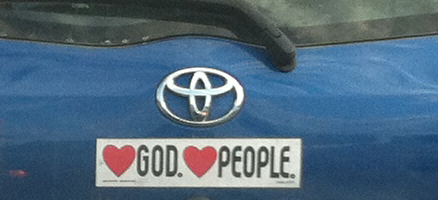
The greatest commandments, reduced to a bumper sticker

sticker

Saw this bumper sticker on the road, and was intrigued by the degree to which its creator reduced the two greatest commandments to the briefest possible expression. Here’s the previous record-holder for brevity:

36 Master, which is the great commandment in the law?

37 Jesus said unto him, Thou shalt love the Lord thy God with all thy heart, and with all thy soul, and with all thy mind.

38 This is the first and great commandment.

39 And the second is like unto it, Thou shalt love thy neighbour as thyself.

40 On these two commandments hang all the law and the prophets.

I’ve gotta say, I prefer Matthew. But I give the maker of the bumper sticker points for effort.

Bang, bang! Your hashtag shot me dead…

At first, I was going to launch into a rant about the stupidity of the people, here in the celebrity-addled West, when I took an additional few seconds to ponder this:

What do you see when you read this Twitter hashtag?

It’s supposed to be about Monday’s death of former British Prime Minister Margaret Thatcher and looks to have been popularized by the website “IsThatcherDeadYet,” which was not upset to hear about the Iron Lady’s passing. “It’s fair to say that we are not fans,” site co-creator Jared Earle told The Guardian.

When Thatcher died, the website asked readers “how are you celebrating?” and suggested they use the #nowthatcherisdead hashtag.

Monday at 7:58 a.m. ET, just after the news broke of Thatcher’s death, the hashtag popped up on Twitter. The first tweet from someone who seemed to have read it wrong came four minutes later:

“So sad to hear that Cher is dead. #nowthatcherisdead.”

That then led to some confusion and amusement. Comedian Ricky Gervais as among those who tried to straighten things out:

“Some people are in a frenzy over the hashtag #nowthatchersdead. It’s ‘Now Thatcher’s dead’. Not, ‘Now that Cher’s dead’ JustSayin’ ”

Idiots! I thought, and then I looked at the hashtag as though I were seeing it without the setup, and realized the natural way to make it out was to read “now,” then “that,” then whatever else one could make of the letters that remained.

So the stupidity, I now think, was on the part of the Thatcher-haters who devised the hashtag. The Cher interpretation makes for a better-written statement. The mind sort of wants a “that” after “now.” I mean, really, the thing would have made more sense, been easier to make out, had it read, “#nowthatthatcherisdead.”

Anyway, so much for the “Cher is dead” rumor. Which turned out not to be nearly as much fun as the “Paul is dead” one. That one had all those clues to look for…

BHZGd58CcAEEM4a

A very bad photo Cher posted on Twitter after rumors spread of her death. Come to think of it, she does have a sort of Elvira, Queen of the Dead thing going there. I don’t know who the kid is.

The amazing thing about newspapers, as interpreted by ‘George Costanza’

Romenesko shared this, which he got from The Harvard Crimson. It’s from an interview with Jason Alexander, best known for his role as George Costanza on “Seinfeld”:

The first time I really thought, “Oh my god, Jerry Seinfeld is brilliant” was when he did a joke about newspapers, and how relieved the editors of a newspaper must be when exactly the right amount of things happen everyday to make the paper come out perfectly, so that at six o’clock at their deadline, you don’t go, “Oh, one more thing happened,” and now you have a blank page with two paragraphs.

I’ve always loved that joke, too. Because while it is meant to be seen as ridiculous, it taps into a sense of wonder I had about newspaper from an early age.

When I was in second or third grade, I read a book of short stories aimed at people my age. It had a theme — each story opened a window on some different aspect of the big wide world, meant to show kids the possibilities for when they grew up. One story, the one I remember best, was about a kid who went to work for a newspaper as a copy boy (which would be my first newspaper job, at the Memphis Commercial Appeal, years later). The reader followed the boy as he learned about everything it took to publish a newspaper each day.

I was struck with awe at the enormity of such a task. I couldn’t believe any group of people, no matter how experienced or talented, could get all of those things done in a day, every day. And yet there was the proof, on my doorstep each morning.

Decades later, after I had mastered every aspect of the process, I used to wonder sometimes at the complaints we’d get from readers. Someone would be griping at me about some small thing that, in his or her opinion, wasn’t quite right in the paper, and I would remember that story and how it impressed me. And I’d think, Hasn’t this person ever thought about what a miracle it is that the paper comes out at all? Obviously not, or they’d have backed off a bit.

I’ve never thought a single actual error in any paper I worked for was excusable. And readers deserved to demand the same high standard from us. But occasionally, when they were going on and on about some tiny thing that had gone wrong (or that they saw as having gone wrong), I’d find myself wishing they’d pause, just a moment, to be impressed by everything that was right, against all odds…

Oh, wait, one other thing… Having spent a lot of years making the news fit the paper, ruthlessly wielding a light-blue felt pen (which humans could read, but the camera that shot the page when it was done could not pick up) in composing rooms, or trimming with marginally greater delicacy on a computer screen, I found myself puzzled that Yahoo paid a high-school kid tens of millions for an app that… well, here’s the description:

Yahoo was attracted to Summly’s core technology for automatically summarizing news articles. The technology, which included an algorithm for deriving the summaries, was created with help from SRI International, a Silicon Valley research-and development firm that has an artificial-intelligence lab and has an ownership stake in the startup….

In 2011, Mr. D’Aloisio founded his company, at the time called Trimit. He redesigned the app to automatically boil news articles down to 400-word summaries and re-launched it as Summly in late 2012 with help from SRI…

I thought, hey, I could have done that for Yahoo for half the money. And I wouldn’t have needed an app for it. It only takes seconds per story. I’ll admit, the slashing I used to do in composing rooms (and on computer screens) wasn’t always a work of art when I was in a hurry (which was most of the time) — but I kind of doubt this app is any more respectful of the writers’ precious words…

AP says there are no more ‘illegal immigrants’ in the U.S.

But Doug and others who’ve been yearning for this day shouldn’t get overexcited. AP says we still have an “illegal immigration” problem.

It’s a matter of style.

Most news organizations in this country follow The Associated Press Stylebook quite religiously. Except for a few local exceptions here and there, so did every paper I ever worked at.

And AP style just changed. Those who follow the guide are no longer to call anyone an “illegal immigrant,” or refer to people as “illegals.”

Romenesko quotes from the statement today from AP explaining the change:

The Stylebook no longer sanctions the term “illegal immigrant” or the use of “illegal” to describe a person. Instead, it tells users that “illegal” should describe only an action, such as living in or immigrating to a country illegally…

The discussions on this topic have been wide-ranging and include many people from many walks of life. (Earlier, they led us to reject descriptions such as “undocumented,” despite ardent support from some quarters, because it is not precise. A person may have plenty of documents, just not the ones required for legal residence.)…

… we had in other areas been ridding the Stylebook of labels. The new section on mental health issues argues for using credibly sourced diagnoses instead of labels. Saying someone was “diagnosed with schizophrenia” instead of schizophrenic, for example.

And that discussion about labeling people, instead of behavior, led us back to “illegal immigrant” again.

We concluded that to be consistent, we needed to change our guidance.

So we have….

Here’s the way the entry in the Stylebook reads now:

illegal immigration Entering or residing in a country in violation of civil or criminal law. Except in direct quotes essential to the story, use illegal only to refer to an action, not a person: illegal immigration, but not illegal immigrant. Acceptable variations include living in or entering a country illegally or without legal permission.

Except in direct quotations, do not use the terms illegal alien, an illegal, illegals or undocumented.

Do not describe people as violating immigration laws without attribution.

Specify wherever possible how someone entered the country illegally and from where. Crossed the border? Overstayed a visa? What nationality?

People who were brought into the country as children should not be described as having immigrated illegally. For people granted a temporary right to remain in the U.S. under the Deferred Action for Childhood Arrivals program, use temporary resident status, with details on the program lower in the story.

There’s a certain logic to this, but I think the AP is going about a step too far. I can see not describing humans as “illegals.” It’s lazy, and unless a person has been declared an outlaw in the full meaning of the term (is that even possible in today’s legal system), the person himself is not illegal.

But by doing away with “illegal immigrant,” AP is eliminating a perfectly clear and accurate way of describing one aspect of a person. I doubt the service would balk at “recent immigrant,” or any other accurate modifier used with the word “immigrant.” “Illegal immigrant” is a quick, accurate way to describe a characteristic of an individual that is important to the story (else it wouldn’t be mentioned at all). I see no reason to inconvenience thousands of writers and millions of readers by forcing them into less direct ways of communicating the same concept.

At the end of the day, Mark Sanford needs to read this list

Enjoyed this piece about cliches from an editor at The Washington Post:

Pity the poor editor seeking to avoid cliches. It is a futile attempt that, for better or worse, only shines a spotlight on what has become the new normal.

Be that as it may, it is fun. Over the past couple of years, I have joined with colleagues throughout The Washington Post, especially the inimitable Anne Kornblut, to collect cliched words and phrases that journalists rely on too much — indeed, at their peril. It was a little-noticed collection that has suddenly become oft-cited, perhaps even going viral.

After Jim Romenesko posted the list on his blog, I expected pushback from the powers that be, who might want to double down on their use of such terms. Instead, we received support from a dizzying array of sources, in particular through a feeding frenzy ofretweets and e-mails. Clearly, this hot-button issue struck a nerve…

You catch his drift, I’m sure. But go read the whole thing.

This list should come in handy to Mark Sanford. I would say, all he’d have to do is run all the proscribed phrases together and presto! He’s got another speech…

‘Jumping the shark:’ You keep using that phrase. I do not think it means what you think it means…

Fonzie_jumps_the_shark

In today’s WSJ, under the headline, “Jumping the sequester,” columnist Kimberley A. Strassel writes the following:

The phrase “jumping the shark” describes that gimmicky moment when something once considered significant is exposed as ludicrous. This is the week the White House jumped the sequester.

The precise moment came Tuesday, when the administration announced that it was canceling public tours of the White House, blaming budget cuts. The Sequesterer in Chief has insisted that cutting even $44 billion from this fiscal year will cause agonizing pain—airport security snarls, uninspected meat, uneducated children. Since none of those things has come to pass, the White House decided it needed an immediate and high-profile way of making its point. Ergo, it would deny the nation’s school kids a chance to view a symbol of America.

The act was designed to spark outrage against Republicans, yet the sheer pettiness of it instead provided a moment of clarity. Americans might not understand the technicalities of sequester, but this was something else entirely. Was the president actually claiming there was not a single other government item—not one—that could be cut instead of the White House tours? Really?

Yeahhh… I don’t think that’s jumping the shark. Do y’all.? That sounds to me like somebody wrote the headline first, and tried to force the column to fit it. Let’s look at the Wikipedia definition:

Jumping the shark is an idiom created by Jon Hein that is used to describe the moment in the evolution of a television show when it begins a decline in quality that is beyond recovery, which is usually a particular scene, episode, or aspect of a show in which the writers use some type of “gimmick” in a desperate attempt to keep viewers’ interest…

And here’s the origin:

The phrase jump the shark comes from a scene in the fifth season premiere episode of the American TV series Happy Days titled “Hollywood: Part 3“, written by Fred Fox, Jr.[4] which aired on September 20, 1977. In the episode, the central characters visit Los Angeles, where a water-skiing Fonzie (Henry Winkler) answers a challenge to his bravery by wearing swim trunks and his trademark leather jacket, and jumping over a confined shark. The stunt was created as a way to showcase Winkler’s real life water ski skills.[5]

For a show that in its early seasons depicted universally relatable adolescent and family experiences against a backdrop of 1950s nostalgia, this incident marked an audacious, cartoonish turn towards attention-seeking gimmickry. Initially a supporting character, the faddish lionization of an increasingly superhuman Fonzie became the focus of Happy Days. The series continued for seven years after Fonzie’s shark-jumping stunt, with a number of changes in cast and situations. However, it is commonly[who?] believed that the show began a creative decline in this era, as writers ran out of ideas, and Happy Daysbecame a caricature of itself. As a nod to the episode, Henry Winkler’s character again jumped a shark in the 2003 show Arrested Development

To me, that’s a pretty clear definition that the Strossel example doesn’t fit. You can call the White House cancellation of tours all kinds of things — in these parts, we’d call it a “Big Bird defense” — but it’s not jumping the shark.

That said, the very same Wikipedia entry I quote above gives an example, also involving Barack Obama, that I don’t think fits either:

In 2008 during the Obama presidential campaign, at a meeting of Democratic governors in Chicago, each governor was identified with a name plate while Senator Obama had a large seal – that looked official but was not.[11] The New York Times op-ed columnist Frank Rich wrote “For me, Mr. Obama showed signs of jumping the shark two weeks back, when he appeared at a podium affixed with his own pompous faux-presidential seal”.[12]

So what do I consider to be a perfect example of jumping the shark? This: When the Beverly Hillbillies went to England. Actually, that series jumped the shark several times; it was sort of a defining characteristic. It sort of did so when Jethro received his draft notice and costumed himself as Patton and bought a tank. It really, really did so when the whole cast jumped fictional universes, going to Hooterville to interact with characters from “Petticoat Junction” and “Green Acres.” (A radical change of venue can be a good sign that a shark is being jumped.)

In fact, those examples are so good that I have trouble coming up with any others that illustrate the  concept so well, as I understand it. It’s not limited to iconic sitcoms, of course. And it can be translated to politics. When Bill Clinton played saxophone on Arsenio Hall seems a pretty clear example. If you go way back, there’s Richard Nixon’s “Sock it to me?” on “Laugh-In.”

But closing the White House to tours? Not so much…

Economist takes live-and-let-live position on Oxford comma

An alert reader brought this piece from The Economist to my attention. An excerpt:

To recap, the Oxford comma separates the last two items in a list, as in “red, white, and blue”. For reasons opaque, the use or non-use of the final comma here stirs passions all out of proportion to its importance. As OnlineSchools.com’s graphic notes, much of the world uses it, but equally respectable publishing houses and publications do not. The Economist is in the latter camp: we would write “red, white and blue”.  Defenders of the Oxford comma point to an almost certainly apocryphal story of the student who dedicated a piece of work to “my parents, God and Ayn Rand”. But anyone who writes such a thing has bigger problems than punctuation. Any sensible person would edit and remove such messes as this, whether they use the Oxford comma or not.

What I like about OnlineSchools.com’s graphic is its explanation that the Oxford comma isn’t a black-or-white, always-or-never thing. It is a matter of style. Use it or don’t, but be consistent, and you’re fine. Rarely is such finesse on display when people talk about these things…

What that sort of implies, but doesn’t clearly say, is that even someone who does not use the Oxford comma as a rule might use it, without being untrue to himself, in a series of elements that are more complex than red, white and blue. For instance, if he were to describe the same colors as the hue of an apple at the perfect point of ripeness, that of a face that has been drained of blood at the moment when its owner has heard appalling news, and the color that you see staring straight down into the Pacific when you’re out of sight of land.

No one should be so rigid about this or any other style rule that it gets in the way of clear communication.

Of course, just plain “red, white and blue” would be the more economical way to say it.

Yes, public schools should teach Bible as literature

An op-ed in the WSJ today made the case for putting the Bible into the public school curriculum, as a foundational work (or rather, body of works) of Western civilization. The authors were educated in Europe and were taught the Bible as a matter of course. But that reckons without the reflexive horror the suggestion of doing so engenders in this country:

Teaching the Bible is of course a touchy subject. One can’t broach it without someone barking “separation of church and state” and “forcing religion down my throat.”

Yet the Supreme Court has said it’s perfectly OK for schools to do so, ruling in 1963 (Abington School District v. Schempp) that “the Bible is worthy of study for its literary and historic qualities. Nothing we have said here indicates that such study of the Bible or of religion, when presented objectively as a part of a secular (public school) program of education, may not be effected consistently with the First Amendment.”

The Supreme Court understood that we’re not talking about religion here, and certainly not about politics. We’re talking about knowledge. The foundations of knowledge of the ancient world—which informs the understanding of the modern world—are biblical in origin. Teddy Roosevelt, the 26th president known more as a cigar-chomping Rough Rider than a hymn-signing Bible-thumper, once said: “A thorough knowledge of the Bible is worth more than a college education.”

I agree entirely, totally apart from all the phrases with which scripture has enriched the language, or the fact that Shakespeare makes 1,200 biblical references.

I think there are other things we should have to read as well. I’ve always felt sort of ignorant that I’ve never read the Iliad, preferably in the original Greek. But that’s peripheral, compared to having a thorough understanding of such allusions as Adam and Eve, Samson and Delilah, Jonah and Judas Iscariot. Those are basic.

And it’s not just the stories or the language. As an overview of different forms of ancient literature (poetry, allegory, history, etc.) it’s a treasure trove.

Before someone misunderstands me — nothing that I’ve said gives anyone any reason to, but Kulturkampf in this society being emotional rather than rational, someone will — I’m not an advocate of mandatory prayer in public schools. Although people should be (and are) free to pray there as well as anywhere else.

The authors of this piece, if anything, underestimate the objections such a suggestion will meet. For instance, they neglect to anticipate the objection that other religions’ texts, say the Bhagavad Gita, should be given the same status in the K-12 curriculum. But of course, that work is not foundational to western culture. It’s a great subject for upper-division college electives, but there’s no more reason to make it part of everyone’s education than, say, Kerouac’s Dharma Bums as opposed to Huck Finn. One is enrichment; the other is basic.

Anyway, since these folks brought up the subject, I say yeah: Put Genesis and the rest in there with Shakespeare. They are still reading Shakespeare in the schools, aren’t they? If not, I give up…

The first pope, babbling incoherently

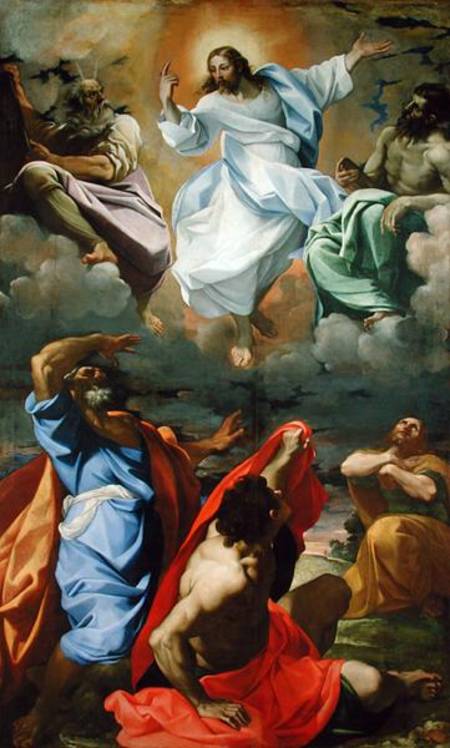
My post about E.J. Dionne’s take on how the Chair of Saint Peter should be filled brings to mind yesterday’s Gospel reading in Catholic churches. It’s one of my favorites — Luke’s account of the Transfiguration:

Jesus took Peter, John, and James
and went up the mountain to pray.
While he was praying his face changed in appearance
and his clothing became dazzling white.
And behold, two men were conversing with him, Moses and Elijah,
who appeared in glory and spoke of his exodus
that he was going to accomplish in Jerusalem.
Peter and his companions had been overcome by sleep,
but becoming fully awake,
they saw his glory and the two men standing with him.
As they were about to part from him, Peter said to Jesus,
“Master, it is good that we are here;
let us make three tents,
one for you, one for Moses, and one for Elijah.”
But he did not know what he was saying.
While he was still speaking,
a cloud came and cast a shadow over them,
and they became frightened when they entered the cloud.
Then from the cloud came a voice that said,
“This is my chosen Son; listen to him.”
After the voice had spoken, Jesus was found alone.
They fell silent and did not at that time
tell anyone what they had seen.

Why is it a favorite? Because in the middle of this description of a mystical event that transcends everyday experience, we have a very human reaction that brings things down to Earth and makes the story real: Simon Peter babbling about tents or booths (depending upon the version of the story). Just as you’re wondering what in the world he’s on about, the narrator tells you not to mind him, because “he did not know what he was saying.”ALG169046

Instead of the event being accompanied by humming choirs of angels, you have a soundtrack in which Jesus’ most impetuous disciple is heard clearly freaking out. It’s another example of the reason why Peter is one of my favorite, if not my very favorite, figures in the Bible. No matter how holy or somber the occasion, Peter could always be relied upon to do something that drew attention to his very human attributes: His bluster that nobody was going to lay hands on Jesus while he was around, followed by his clumsy denials, leading to his bitter self-reproach. The way he fell behind the younger and apparently fitter John running toward the tomb, then impatiently pushed past him at the entrance, so he could get in and see whether what the Magdalene had said was true.

These details in these stories have a naturalism about them that says, to me anyway, that no matter how fantastic these events being related are, you can tell a real person actually witnessed them.

It’s like… recently I was rewatching “All the President’s Men” (I have it on DVD), and being impressed all over again. One of the best parts of the movie is that so much of the dialogue seems off. Particularly in the awkward scenes in which Redford and Hoffman are trying to get information from sources who don’t want to talk, the dialogue often doesn’t follow. Someone says something, and the response doesn’t quite make sense in that context, or it’s awkwardly worded. Which is the way real conversations go — nervous people in particular babble in non sequiturs. They don’t speak as though a skilled writer had composed their lines. This makes the story real.

And so does Peter’s nonsensical response to the Transfiguration…

E. J. Dionne: ‘The best choice for pope? A nun.’

Over the weekend, E.J. Dionne — who does this sort of thing every week with David Brooks — was kind enough to write me and say he’d caught my bit on Weekend Edition Saturday on NPR, and “I wanted to tell you that you were excellent.”

Which, along with similarly kind plaudits I got from other friends and family, made my day.

While he had me, as a fellow RC he brought up Pope Benedict’s retirement, and asked whether I had read his “make a nun Pope” column.

I had not, but I went and read it immediately, and really enjoyed it. Excerpts:

In giving up the papacy, Pope Benedict XVI was brave and bold. He did the unexpected for the good of the Catholic Church. And when it selects a new pope next month, the College of Cardinals should be equally brave and bold. It is time to elect a nun as the next pontiff.

Now, I know this hope of mine is the longest of long shots. I have great faith in the Holy Spirit to move papal conclaves, but I would concede that I may be running ahead of the Spirit on this one…

Nonetheless, handing leadership to a woman — and in particular, to a nun — would vastly strengthen Catholicism, help the church solve some of its immediate problems and inspire many who have left the church to look at it with new eyes…

More than any other group in the church, the sisters have been at the heart of its work on behalf of compassion and justice. Nicholas Kristof of the New York Times made this point as powerfully as anyone in a 2010 column. “In my travels around the world, I encounter two Catholic Churches,” he wrote. “One is the rigid all-male Vatican hierarchy that seems out of touch. . . . Yet there’s another Catholic Church as well, one I admire intensely. This is the grass-roots Catholic Church that does far more good in the world than it ever gets credit for. This is the church that supports extraordinary aid organizations like Catholic Relief Services and Caritas, saving lives every day, and that operates superb schools that provide needy children an escalator out of poverty.”…

Throughout history, it’s not uncommon for women to be brought in to put right what men have put wrong. A female pope would automatically be distanced from this past and could have a degree of credibility that a male member of the hierarchy simply could not…

And a church that has made opposition to abortion a central part of its public mission should consider that older men are hardly the best messengers for this cause. Perhaps a female pope could transform the discussion about abortion from one that is too often rooted in harsh judgments (and at times, anger with modernity) into a compassionate dialogue aimed at changing hearts and minds rather than changing laws.

Unborn children are vulnerable. So are pregnant women. In my experience, nuns are especially alive to these twin vulnerabilities…

There was a lot of other good stuff, about how consistent this would be with the church’s devotion to Mary, and other points. But I fear I may have exceeded the bounds of fair use already.

You might wonder, “Is Dionne kidding? He knows this can’t happen, right?” Yes, he knows it won’t happen, and no, he’s not kidding. At the least, he hopes “they at least consider electing the kind of man who has the characteristics of my ideal female pontiff.

I urge you to go read the whole, well-reasoned piece.

Did the WSJ’s editors do this on purpose?

noonan

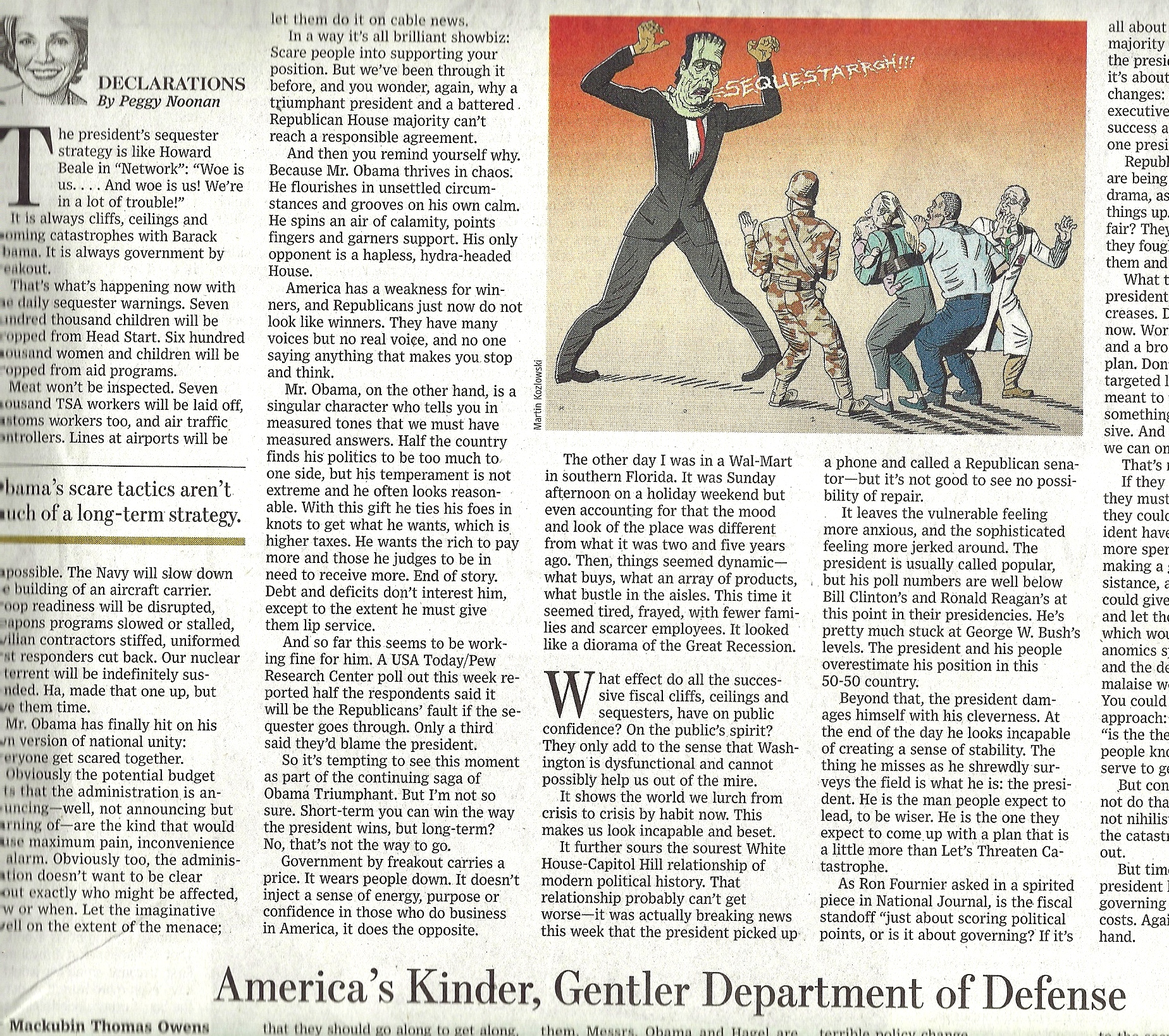
I just thought this was an interesting juxtaposition this morning: A separate headline using Peggy Noonan’s signature “kinder, gentler” phrase, right under her latest column.

Was that a conscious irony on the part of the editor who wrote the headline, and/or the one who put the page together, and/or those who read proofs? Or completely coincidental?

I don’t know.

In any case, here’s a link to the Noonan column, and here’s the piece under it with the “kinder, gentler” hed.

Mark Sanford’s math doesn’t add up, either

Mark Sanford’s new ad begins, “Washington’s math doesn’t add up.”

Well, neither does his. It goes like this: He spent six years representing the 1st District before. And his accomplishments added up to zero. And yet he blithely tells people that they should send him to Washington because he’s “fought to do something about it.” Yeah, I guess so, if ineffectual posturing counts. Which it doesn’t, in my book.

Change Washington? Really? You? You never made the slightest dent on Washington.

Then, he gets to talking about mistakes.

Really? You sure that’s the work you want to use? Mistakes? So… you accidentally slipped away from your SLED detail and went to Argentina, only admitting what you had done after you were caught dead to rights?

I truly don’t want to be the guy who casts the first stone. But I will note the line that everyone seems to forget in recounting that great story of forgiveness: Go, and sin no more.

In this ad, with regard to mistakes, Sanford piously intones, “In their wake, we can learn a lot about grace, a God of second chances, and be the better for it.”

Here’s the thing: When did our former governor repent of anything, so that he might clear the way for second chances? After the sins that we are all prone to, we only become “better for it” when we sincerely believe what we did was wrong, and repent.

After his rambling confession that day in June 2009, what was his penance? How did he live his life differently going forward? I’m not at all clear on that. Of course, that’s between him and God — unless, of course, he spends money buying ads that pull us into the equation.

I’ve heard a lot from this guy about how we are supposed to forgive him. He places that burden on us. Well, what’s his part of the deal?

I’ve got a great idea for a penance that would demonstrate that he’s truly sorry: If he would stop inflicting himself on the electorate. That would be better, in his case, than a thousand Hail Marys.

But no. There he is again, saying the same stuff. And we’re supposed to take him back. That’s the way he sees it, anyway.

One thing Graham definitely is NOT is dumb…

salon graham

Say what you want about the increasingly ubiquitous Lindsey Graham, Salon was way off the mark today when its header featured an unflattering photo of our senior senator next to the teaser hed, “Hagel’s dumbest enemies.”

Of course, as is often the case with such hyperbolic come-ons, the actual headline that the teaser linked to took it down a notch: “The increasingly ridiculous Hagel opposition.” The subhed, situated atop huge mugs of Graham and John McCain, begins, “Republicans block a vote for no reason…”

The very first paragraph of the body copy then refutes that (boldface added):

Sen. Graham and his best friend John McCain have been blocking the confirmation of Chuck Hagel as Defense secretary, because they want to know whether President Obama called the president of Libya the night of the Benghazi attack. While that’s not a very good reason to filibuster a Cabinet nominee, it is at least “a reason.” The White House has complied, giving Graham and McCain what they want. Graham’s response: Now he is just going to pointlessly delay the Hagel vote, because it will make him feel good. As always, with Lindsey Graham, being a senator is all about feelings.

Disagree with Graham — and McCain — all you want, but making him the poster boy of the “dumbest” is, well, pretty stupid.

I find a lot of the indignation on the left about delaying the Hagel nomination a few days a little on the disingenuous, even absurd, side. My least favorite manifestation of this is when I hear a Democrat express absolute mystification that these Republicans could possibly be objecting to Hagel, since he’s a Republican. There is no mystery as to why this is a Republican Democrats love. and Republicans have problems with him for the same reasons.

There are actual substantive reasons to question this nomination. We could start with his having been completely wrong on the Iraq surge. Which is kinda relevant in a candidate for SecDef. But then, of course, we’d have a whole other argument that we’ve had too many times before…

So never mind all that. I don’t call the president “dumb” for wanting a guy who looked at Iraq the way he did. I have more respect for the president than that.

But there’s a bigger reason I wouldn’t call Barack Obama dumb: I’ve heard him speak. And the same goes for Lindsey Graham.

I was speaking to a class at Lexington High School yesterday, and I let slip a comment that always makes me sound arrogant when I say it, but it’s true: It’s pretty unusual for me to interview a political officeholder in South Carolina who makes me think to myself, “This guy’s smarter than I am.” But I’ve had that thought more than once when talking with Lindsey Graham.

And I may have a host of faults — correction, I do have a host of faults — but being dumb isn’t one of them.

Thoughts on the State of the Union?

As I type this, Marco Rubio is wrapping up his response to the State of the Union. And I find myself wondering yet again, as I do every year this time, no matter who is in the White House… how did this ridiculous ritual get started?

I don’t mean the SOTU; I mean the response. The State of the Union is the president fulfilling a constitutional duty — which, by the way, he can do in writing (just a suggestion). But as much as that has transformed into political theater, the response is nothing but theater.

And you know what? It always comes across as lame, no matter which party is delivering it or which up-and-comer they choose to be the face of it. It rubs our noses in the fact that partisanship is so obligatory and ritualized today that an elected official can’t even deliver a constitutionally-mandated  message without the other party immediately standing up to say “nyah-nyah, that guy’s full of it.”

The artificiality of it is underlined by the fact that it is not a response at all, but a speech prepared ahead of time — a set of partisan talking points that the party wants to deliver regardless of what the president said.

Anyway, to me, the party delivering the response always comes across as petty and pointless. To me, anyway. Kind of sad, really.

Enough about that. Thoughts on the real speech, the one the president gave? Here’s an assessment from over at the WashPost:

That was an incredibly ambitious speech.

Imagine, for a moment, that President Obama managed to pass every policy he proposedtonight. Within a couple of years, every four-year-old would have access to preschool. The federal minimum wage would be at $9 — higher than it’s been, after adjusting for inflation, since 1981. There’d be a cap-and-trade program limiting our carbon emissions and a vast infrastructure investment to upgrade our roads and bridges. Taxes would be higher, guns would be harder to come by, and undocumented immigrants would have a path to citizenship. America would be a noticeably different country.

Yes, it was ambitious. About everything. I found that no particular part of it stood out for me, because he touched on so many things that he didn’t fully focus on anything. But maybe that’s just me.

I did like the communitarian touch at the end, about “the enduring idea that this country only works when we accept certain obligations to one another.”

Which of course Rubio summed up as “growing government.” Whatever. Although I’ll say that the president wanted to do so much that anyone would have to wonder at some point how we’re going to pay for it.

What did y’all think?

‘Where is Matt Damon?’ Twitter as a narrative medium

This was brought to my attention by Slate, which Tweeted that it was “The best Twitter story you’ll read all day.”

The tale to which the message linked more than lived up to that modest standard. As Slate noted, “this shaggy dog story shows how hospitable the medium is to old-fashioned front-porch (or bar-room) storytelling.”

This is not literature, but it shows how someone can tell an engaging, amusing, fairly involved story in much the way one would just sitting around with friends, at less than 140 characters at a time.

The story is told by protagonist Erin Faulk (@erinscafe) of Glendale, CA. She is apparently telling it in a bar, between rounds of beer. You can read it in its entirety here, including Tweets interjected by her readers following the story — just as friends might do hearing the story told in person.

It’s a pretty good little shaggy dog story, which begins, “I will now tweet about the time I tried to find Matt Damon in Morocco.”

It takes her 55 more Tweets (or 56; I sort of lost count and I’m not going to start over) to get the job done. Toward the end, some readers were interjecting that they were up past their bedtimes, but had to see how it ended.

This mild picaresque tale will not rock your world or anything. But it’s interesting, as an example of something you might not have realized you could do with Twitter…

My favorite spam of the day

Mostly, my spam filter works pretty well, but some days small groups of them sneak through. I got four of them back-to-back this morning.

I get a kick out of the way these bots try so hard to produce comments that sound real, but still fall so short of their goal. Here’s my favorite today:

I’ve been browsing on-line more than three hours lately, yet I never discovered any fascinating article like yours. It is beautiful price enough for me. In my view, if all website owners and bloggers made good content as you probably did, the internet will probably be a lot more useful than ever before.

I love this part: “…if all website owners and bloggers made good content as you probably did….” It doesn’t want to go too far and commit itself…

It is beautiful price enough for me, too.

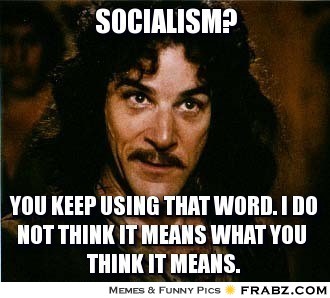
‘Conservative.’ You keep using that word. I do not think it means what you think it means.

On a previous thread, Kathryn noted that “satire” doesn’t mean what Todd Kincannon claims to think it means.

inigo

That put me in mind of this joke (at right) I ran across on the interwebs a few days ago. You may have seen it before; there seem to be several versions of it out there. Still, it’s funny, if you’ve seen the movie.

When we started watching “Homeland” at my house a few weeks ago (and, in the modern fashion, zipped through both seasons fairly quickly), it took me an episode or two to realize that “Saul” — the one really likable, admirable character on the show, which makes me worry something awful’s going to happen with him — was Mandy Patinkin! Then, for the rest of that episode, I kept thinking, “Hello. My name is Inigo Montoya. You keeled my father. Prepare to die.

Which in turn, this morning (after seeing Kathryn’s comment), got me to thinking about his performance as “Che” in “Evita,” so I listened to that on Spotify while doing ADCO work.

See how everything in the world is related? But no, I don’t know how many degrees away from Kevin Bacon Mandy Patinkin is…

Anyway… a couple of recent posts, this one and this one, centered around the word “conservative” and its obsessive overuse in SC politics. And indeed, one of my objections to hearing it over and over, apart from the pure monotony, is that I do not think it means what many of the people using it think it means. As Bud noted earlier, “Seems to me it’s not particularly useful to just advocate for ‘conservatism’ when the meaning of the term is so blurred and overused.”

For instance, 19th-century classical liberalism is not conservatism, although many in SC — those along the Mark Sanford/Nikki Haley axis — seem to think it is. Nor is the kind of rhetoric and attitudes that Todd Kincannon puts on display on Twitter a conservative way to communicate. It’s not prudent; it’s not respectful of traditions for human communication. It’s bomb-throwing rather than keeping the peace. So neither he nor those who cheer such Tweets as the Trayvon Martin ones are conservative people. Or at least within that context, they are not being conservative.

Conservatives don’t give themselves over to anger; they are temperate. If language is to have meaning, that is. But too many people gut words of their actual meanings, and restuff them with whatever strikes their fancy. And pretty soon, words don’t mean what any of us think they mean.