Category Archives: Blogosphere

OK, I’m back. I think…

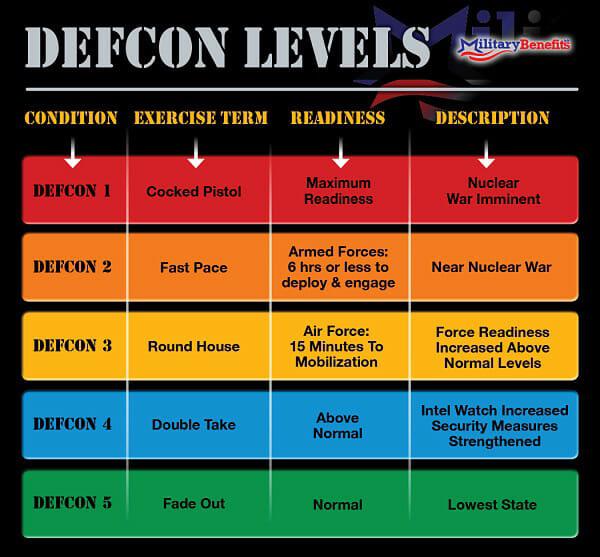
Looks like I’m back to DEFCON 5. Whew…

I’m just emerging from a blog crash that occurred around 9 or 10 last night.

After trying for a couple of hours last night to reach a human with my host, I gave up and started over this morning.

Eventually, about 10 minutes or so ago, I was able to log in again — only to find a slight problem in the dashboard. I’m hoping my new buddy at the host — I’ve got his email now — can straighten that out.

Meanwhile, while the experts were working on the disaster this morning, they apparently switched me to the new, improved, ultra-modern writing interface. I’m using it now. I have no idea what the result will be.

But after he fixed the little red warning problem I mentioned above, I may ask my new friend to restore the interface I’m used to. I feel a little like the deputy in the first episode of “The Walking Dead,” coming out of a coma and finding the world is way different that what I knew.

When I get these things sorted, I’ll resume blogging. First topic: This reapportionment mess over at the State House. Something dramatic is likely to happen on that today. I hope Shane Massey sticks to his guns, and the rest of the Senate goes along with him. We’ll see.

I was going to go to the State House and ride herd on this today, but instead of that, I’ve been struggling to put out the aforementioned fires.

See you soon…

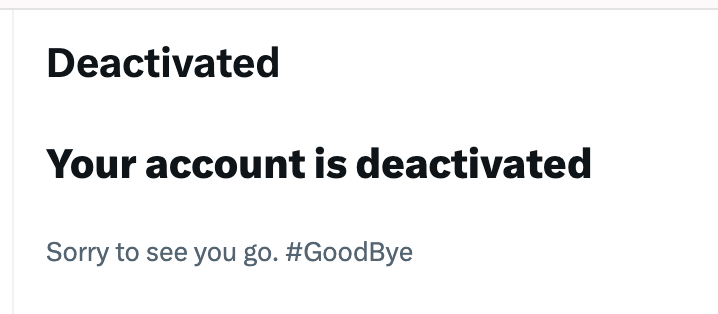
Another Twitter account is officially Xed

Buh-bye!

That’s a very blank, colorless, bloodless, soulless, bureaucratic, rubber-stamp sort of notification, isn’t it? The Middle Ages had beautiful, lovingly hand-drawn illuminations; our age has this.

That’s what ADCO received today upon doing away with its account on the social media platform formerly known as Twitter (which is what I still call it, on the rare occasions when I mention it).

I got a call this morning from ADCO’s Lauren McAlexander. It seems ADCO is building a new website, and she and Lora Prill agreed there was no reason to have a link to this particular social medium any more. When I asked why, she said we hadn’t used it since 2019. Twitter was no longer strategically useful or effective for ADCO.

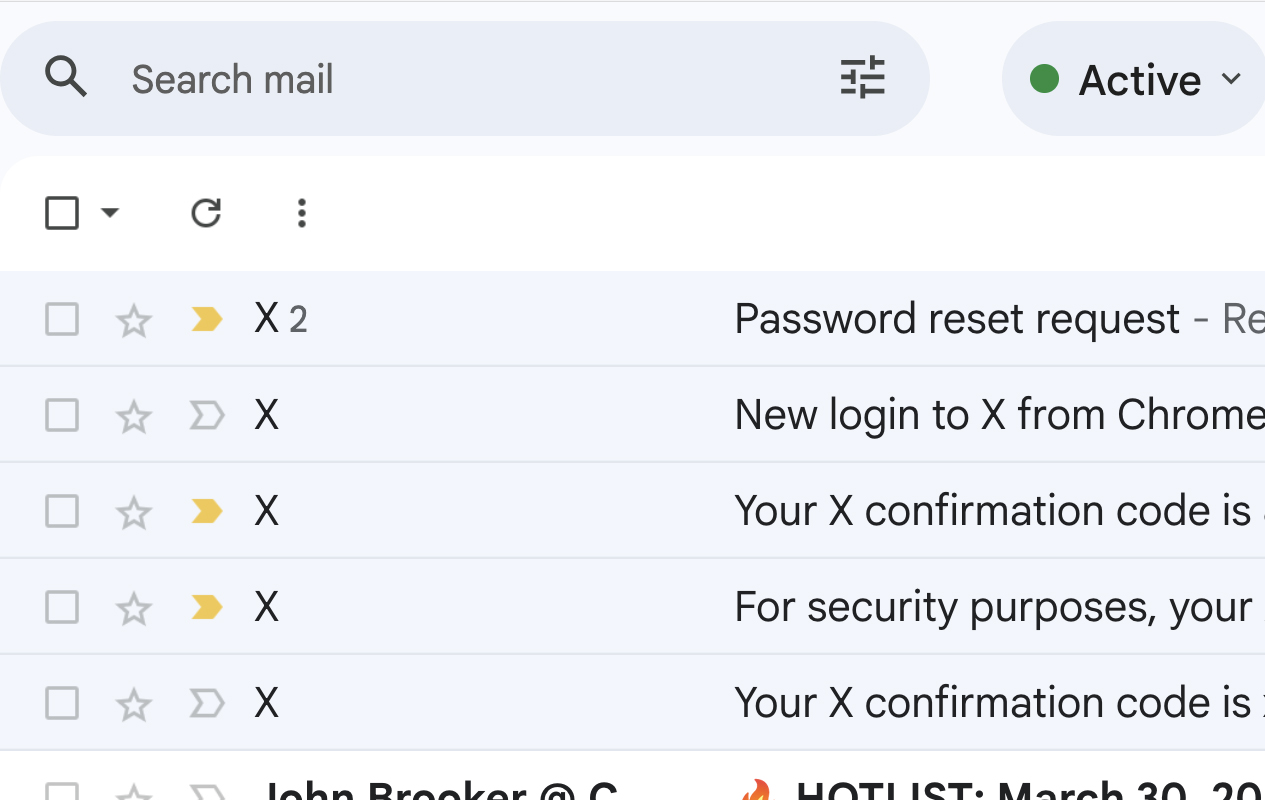
She reached out to me because the system was emailing me with a code that she needed to kill the account. Note the equally uninspiring email notifications below, the back-and-forth during several attempts to get in and ditch the account before we got through.

Why was I needed for that action? Because I used to do most of the Tweeting for ADCO. I’d sort of forgotten that until Lauren reminded me.

You may not know anyone, personally, who was as crazy about Twitter as I was. In 2009, went almost instantaneously from being a detractor of Twitter and all that social nonsense (I particularly thought it was a hoot when I first saw Andre Bauer’s MySpace page), to being an addict.

I still laughed at MySpace, grumbled that I was forced to deal with Facebook (because that’s where the masses were), was only briefly fascinated by Pinterest, turned up my nose at Instagram, and had no interest in TikTok or Snapchat.

But I was nuts about Twitter. It’s not just that it was an irresistible form to someone who started writing headlines for a living in 1975 — I was very much used to expressing things that way. It was also useful. There were people that I found I could reach more quickly with a Twitter DM than through other means. They checked Twitter that often, as did I.

I commented on everything happening, as it happened. I would live-tweet big political event, generally writing more than 30 tweets during a debate or major speech. I wrote haiku. Harking back to front-page-editor days in Wichita, I created the Virtual Front Page. I was named one of the Twitterati (and yeah, I get that that was kind of a joke on Corey’s part — Hey, look at the old guy tweeting! — but it pleased me).

Twitter was so straightforward and logical — the very latest Tweet among accounts you followed would be right there at the top, unlike the bewildering order of Facebook posts that made it hard to find something you had just been looking at. It was also relatively free of obvious ads.

Those things — the unmysterious ordering and lack of ads — started changing somewhat Before the Fall. I found that Tweets from accounts I read the most would appear at the top, regardless of when they were posted. I did not like that. Nor had I liked the move from the 140-character limit to 280. It’s like they were throwing discipline and artistry to the winds, with no respect for tradition. But I adjusted, remembering that I was maybe better at writing blurbs than headlines. (In my newspaper days, other editors would ask me to look over and write blurbs for projects I’d had nothing to do with; I just had a knack for summing up complicated content in a few lines.)

But what was most wonderful about Twitter was that everybody was there! That is, everybody in my world — journalists and politicos. And when I say they were there, I mean they were always there. There was always a party going on, of the 18th century salon variety — neverending interaction with smart people who knew their politics. It was addictive to a lot of people because of that, and as a result of that.

That’s not the case anymore, with a few exceptions. People have wandered away, and if I bother to look at the medium now, it can make me kind of pessimistic about the state of humanity. Not always, but a lot of the time.

I’ve tried alternatives. I signed up for — I have to pause here to remember the name of it — Bluesky right when it came out. It offered promise, but didn’t deliver because it never reached critical mass. I found a few Twitter friends there, but the energy was missing along with the numbers. The moment had passed for a medium such as this to really take off.

I’m not canceling my Twitter account. It’s still there if I need it to contact someone or whatever. But I don’t look at it on a daily or even weekly basis — when once I would do so multiple times in an hour.

I still smile when I look back and see myself with Joe back in 2018, there at the top of my feed. But then, after a glance or two, I move on. I have a lot of other things to do…


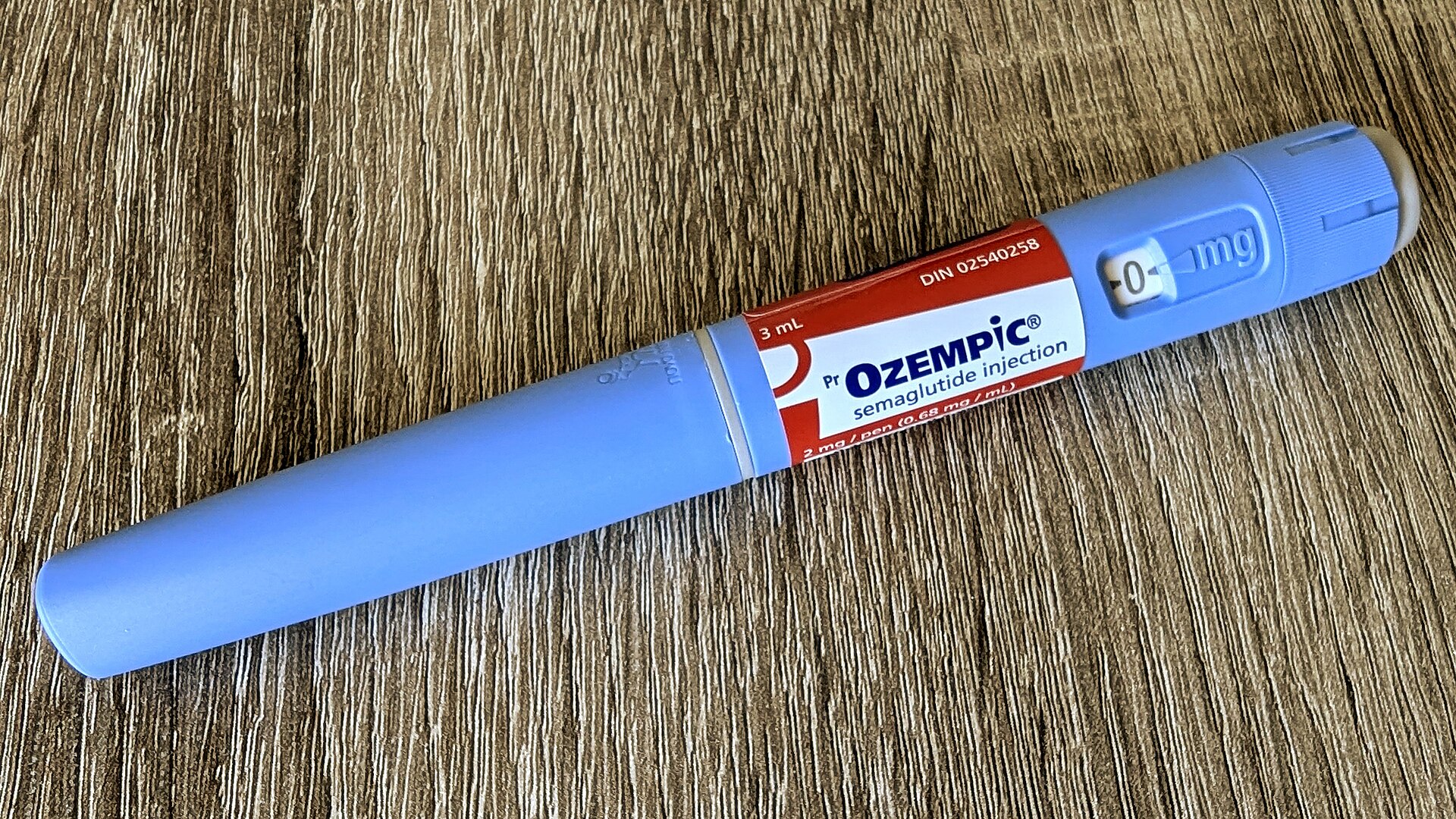
DeMarco: Ozempic and related drugs are tremendous game-changers

The Op-Ed Page

By Paul V. DeMarco
Guest Columnist

EDITOR’s NOTE: What? Three posts from Paul DeMarco in a row? No, the good doctor hasn’t quit practicing medicine to blog full-time. But he had saved up these three healthcare-related columns and sent them to me a couple of weeks back, and to my shame, I’m just getting around to posting them. Thanks so much for sharing your professional perspective on these important matters, Paul!

RFK Jr. promised radical positive change for American health care. So far, he has weakened the CDC’s vaccine advice, presided over the nation’s largest measles outbreak in three decades (the current epicenter of which is Spartanburg), and made inconsequential changes in the food pyramid and food additives.

The real opportunity to MAHA is to increase access to drugs such as Ozempic, Mounjaro, Zepbound, and Wegovy. These drugs are in the class of glucagon-like peptide-1 receptor agonists (GLP-1s). They stimulate the production of GLP-1, a hormone produced by the gut and brain that stimulates insulin secretion, helping lower blood sugar. In addition, they reduce mortality from heart attack and stroke and show promise in preserving kidney and liver function. They rank as one of the most consequential drug classes of the last quarter century.

I’ve spent my entire career trying, mostly unsuccessfully, to help patients lose weight. I started in the 1990s giving out quixotically restrictive diets (a half grapefruit, a slice of toast, and one boiled egg for breakfast, etc). Then in the 2000s, I hoped we could educate our way out of obesity. All we needed to do was put nutrition information on menus. I predicted (obviously incorrectly) that once people realized that a McDonald’s Quarter Pounder with cheese, large fries, and a large Coke was north of 1,500 calories (which is more than half of most people’s daily requirement), they would be running out the door and making a bee line for the nearest grocery store’s produce section.

Obesity is less a personal defect than the natural consequence of a country’s abundance. Once food becomes accessible, inexpensive, and engineered to be delicious, most of that nation’s people are going to eat too much of it. Remaining lean in this environment is possible – about a third of Americans manage it – but it requires a combination of favorable genetics, resources, education, and sustained restraint.

I still encourage my patients to do all the things they already know to do – break up with Little Debbie, eat more veggies, and stay active. But those tired instructions usually fail to make a difference. After decades of futility, I’m glad to finally have something to offer patients that works. The typical weight loss with sustained use of a GLP-1 is 15-20% of a patient’s body weight. For someone weighing 200 lbs., that’s 30 to 40 pounds.

Do I wish that the standard advice was enough? Yes, I would love to have a population of patients that crushed a kale smoothie every day after their 45-minute work-out. But most people don’t, or can’t, live like that. Now we have a drug that gives us the power to navigate the modern food landscape without falling into its many ravines.

Currently, most of my patients taking GLP-1s are diabetics. Watching A1Cs magically normalize is a wonder. For most of my career, we treated Type 2 diabetics with insulin. However, in Type 2, the primary defect is insulin resistance rather than insulin deficiency. If you give a patient enough insulin (sometimes hundreds of units a day), you can overcome this resistance and normalize blood sugar. However, insulin is an anabolic hormone which often causes weight gain.

The great advantage of GLP-1s over insulin is their ability to control diabetes while inducing weight loss. It’s now commonplace for one of my patients to walk into the exam room feeling both healthier and lighter. A weight, literally and figuratively, has been lifted off their shoulders. Some obese patients are not too bothered by the number on the scale. But for others, the lifelong struggle with their weight is shame-inducing. Patients are dogged by feelings of helplessness and unworthiness. I have shared my patients’ joy in both the physical and emotional boosts that GLP-1s provide.

There are, of course, cautions. Not everyone can take these medications. The most common side effect is nausea but there are a host of others, including serious ones like pancreatitis. However, overall, about 9 out of 10 people who start GLP-1s can tolerate them.

Ironically, while RFK Jr. has often criticized reliance on drugs like Ozempic, the administration he serves is moving to decrease their price. The administration has announced agreements with GLP-1 makers Novo Nordisk and Eli Lily to lower prices. One proposal seeks to lower the Medicare co-pay for GLP-1s to $50 a month. RFK Jr. should be championing that and similar ideas. He should intensify the pressure on the companies by educating the public about the economics of the GLP-1 market.

A recent peer-reviewed cost analysis published in JAMA Network Open estimates that GLP-1s cost less than $5 a month to manufacture. To be fair, this does not include research, development, distribution, and capital investment costs. But it’s clear that these companies are generating billions of dollars in profits, much of it from the U.S. market. Over the last several years, prices for GLP-1s have been roughly 5 to 10 times higher in the United States than in other developed nations. For example, in Britain last year, prices were approximately $100 per month compared to $1000+ in the US.

RFK Jr. could be leading the way on increasing accessibility for GLP-1s, rather than being a reluctant follower of a rare sound policy proposal coming out of the Trump White House.

Paul DeMarco is a physician who resides in Marion, SC. Reach him at pvdemarco@bellsouth.net.

DeMarco: The Best Model for Primary Care (part 2 of 2)

The Op-Ed Page

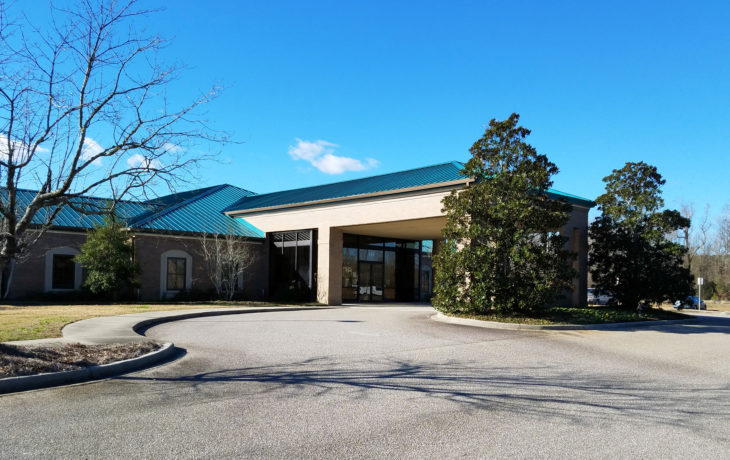
This is where Paul’s HH practice is located, at Francis Marion University.

By Paul V. DeMarco
Guest Columnist

My tens and tens of readers out there might remember how I ended my last column, about the pros and cons of concierge medicine. My bottom line was, though concierge medicine is a benefit to the physicians who choose it and to the patients that can afford it, it is ultimately corrosive, ignoring patients with limited means whom physicians have historically had a strong ethical imperative to serve. I ended with a mild teaser: “If you think community health centers (CHCs) are just safety net clinics for those who have no other option, stay tuned.”

Spoiler alert: they are not. Certainly not in Florence County, which is served by HopeHealth (HH), one of the finest CHCs in the state. Again, I will admit my bias – I work for HH. But let me try to convince you that CHCs are the best primary care delivery system.

CHCs are the most accessible, affordable model. We see everyone, we take almost every insurance, and we have a sliding scale for those without it. If you have ever approached the front desk of a medical office other than a CHC without insurance, you know the anxiety that can produce. Some practices refuse to see you unless you pay a certain amount up front. Others immediately put you on a payment plan. At CHCs, you are not treated as unworthy because you don’t have insurance. We say, “No problem, let’s get some financial information so we can place you on our sliding scale. Your co-pay may be as low as $20 a visit.” We also make it our business to help patients obtain the medications they need. HH operates a pharmacy with a team of pharmacists who are well versed in low-cost options for patients.

Although HH is clearly a great place for uninsured and Medicaid patients, it is also an outstanding option for patients who have Medicare or private insurance. Nationwide, of all patients seen at CHCs, roughly 20 percent of CHC patients have private insurance and 11 percent have Medicare. At HH, those numbers are significantly higher – roughly 37 percent of our patients have private insurance and 30 percent have Medicare. That’s a testament to our leadership and the care that we provide. Many patients that can choose any provider they want choose us.

That’s why I work at HH. It aligns with what I thought I was signing up for when I was in medical training. During those days, powered by sense of idealism, I had dreams of how to make a difference in the world. I regularly have medical students in my office now, and I watch them make the same kinds of calculations I was making 40 years ago. I tell them that my idealism has been tempered but remains intact, and that if I had to do it all over again, I would again choose to work at HH.

One of my core principles when I was in their shoes was that I wanted to work in a practice that saw everyone, regardless of their ability to pay. Once you crossed my threshold, your treatment came first, and how we were getting paid would come later. The community health center movement has exemplified that ethic since CHCs were founded in the mid-1960s as part of the War on Poverty. My guess is that without the CHC system, I would not have been able to uphold my principles. I doubt, without an MBA, that I would have been willing to take on the challenge of opening and running a practice that would take all comers.

It is important to acknowledge the federal government’s role in supporting CHCs, which are also called Federally Qualified Health Centers (FQHCs). Federal grants (Section 330) provide 10-25 percent of most center’s budgets. FQHCs receive a higher Medicaid rate than other providers. Those with pharmacies are eligible for the federal 340B Drug Pricing Program that allows us to reduce costs for those who struggle to pay for medications. In return for this support, CHCs are obligated to care for any uninsured patient who seeks care with them.

CHCs offer a wise and effective approach – a partnership between taxpayers and health care organizations dedicated to serving everyone. Anyone can walk into a CHC and be treated, without compromising on quality. CHCs, including HH, deliver high-quality care that compares favorably with other primary care models.

It’s astonishing that in the 15 years I have worked for HH, we have grown from a staff or about a dozen providers when I started to more than 100 providers serving more than 85,000 patients in 2026.

CHCs in general, and HH, in particular, are not perfect. There are ways we can and should improve. But in a health care system that is fraught with fragmented care, perverse financial incentives, and profit-over-patient mentality, it provides a welcome respite, a place where the mission is still clear and the patient remains at the center.

I’m not a big fan of corporate mission statements – they are often empty words. But I like HH’s, especially the part that says we try to “exemplify love for people and passion for their well-being.” Those are not empty words, and could apply to any CHC. They have allowed me and more than 300,000 others across the country – physicians, APPs, nurses, mental health professionals, dental providers, pharmacists, and support staff – to care for patients in a way that has kept our ideals about what medical care could be untrampled.

Paul DeMarco is a physician who resides in Marion, SC. Reach him at pvdemarco@bellsouth.net.

DeMarco: The Paradox of Concierge Medicine (part 1 of 2)

The Op-Ed Page

This photo from a previous post represents to traditional ideal of  medicine. But is Concierge Medicine the way to restore that ideal.

By Paul V. DeMarco
Guest Columnist

Almost all people of a certain age who are concerned about their health wants a primary care provider. I have been privileged to be that person for a small but well-loved group of people for the past 30-plus years. Over the past two decades, a new way of providing primary care has emerged which is often called concierge medicine (CM).

A common concierge medicine arrangement is for a patient to pay a monthly subscription fee. Rates vary, but in the Pee Dee you would expect to pay about $2000/year. In addition, the patient (or his insurance) may have to pay for individual visits above what the subscription allows. The per-member, per-month revenue allows physicians to see fewer patients while generating the same (or higher) revenue. Proponents of CM point to this as a primary motivating factor, which I fully understand. Physicians who practice primary care invest years and hundreds of thousands of dollars training with the goal of developing long-term relationships with patients. But when they begin practice, they often work for hospitals or companies that overload them with patients, not to mention all the documentation and communication a busy practice entails. CM allows physicians to do more of what they trained to do and love to do, spend time with patients in an unhurried way.

Concierge medicine provides a setting in which relationships have time to develop and deepen. Many non-CM physicians, including myself, who work in a typical office practice have their patients’ appointments scheduled 15 minutes apart. That is often not enough time, and part of the reason patients’ waits are so long in practices like mine.

Another positive aspect of CM is the return of the house call. Many CM physicians will visit with patients at home and also still make hospital rounds. I think the renaissance of the house call is a marvelous development. Visiting a patient at home is an intimate enterprise and feels completely different from meeting with a patient surrounded by the generic four windowless walls of an exam room. Patients are often more relaxed, family is more often involved, and occasionally food is offered. Many patients see the house call as a gift and feel a special gratitude. Doctors who visit homes always come away with a deeper understanding of the person for whom they are caring.

As you can tell, I appreciate the CM model. It’s the way primary care should be practiced. I understand the reasons why CM physicians are drawn to it. I personally know some truly excellent concierge physicians.

However, CM is ethically untenable. From Hippocrates onward, the obligation of physicians to provide care to any patient in need, regardless of their ability to pay, has been central. It’s an easy obligation to forget, given the gigantic profits hospital, pharmaceutical, and insurance companies make in our system. But when one becomes a physician, he or she is bound by a moral duty.

Put another way, I have never heard a physician of any kind publicly remark, “I just want to see affluent patients.” Nor have I ever read a medical school application essay with that statement. Our commitment to all patients, not just a select few, is part of physicians’ social contract.

I am not suggesting physicians are required to treat everyone for free. Physicians’ offices have high overhead. It usually takes many support staff-receptionists, medical assistants, nurses, administrators, business managers, etc., to run a successful practice. What I do say is that physicians abrogate a core responsibility of medicine if their business model excludes people below a certain income. Despite what is right and attractive about CM, I think in final analysis it represents a destructive trend in primary care, and ultimately an abandonment of the patients who need us the most.

Therein lies the paradox. In order to practice in a fulfilling way, one that rewards physicians emotionally and financially and satisfies patients, our current medical system incentivizes many physicians to abandon a fundamental tenet of patient care.

There are better solutions. I will mention one in passing and then expand on it and some others in my next column. There is an organization that already exists to provide excellent primary care to all patients – the Community Health Center (CHC). There are approximately 1,400 CHCs in the US that serve more than 30 million patients, almost 9 percent of the population. Full disclosure, I work for one. My CHC, HopeHealth, has more than a dozen offices spread across Florence, Clarendon and Williamsburg counties. If you think CHCs are just safety net clinics for those who have no other option, stay tuned.

A version of this column appeared in the December 17th edition of the Post and Courier-Pee Dee. Dr. DeMarco’s opinions are his own and do not necessarily represent those of HopeHealth.

A new change in the rules

The first image I came up with to illustrate this didn’t work. So here are some more…

A few days ago, I received a comment that mildly violated my civility policies, but raised a point worth addressing. The reader was complaining about a comment from someone else that was off the subject of the post. It referred to that other comment as “ranting.”

After it sat there awhile, I went ahead and approved it, just so I could respond to it thusly (which I’m now editing a bit to make my point clearer):

Well, you present an interesting dilemma…

I WANT people to always address the subject of the post, and to address it in a civil manner, refraining from trying to tear down the other folks involved in the discussion.

But I’ve always been fairly tolerant of folks wanting to address something else. I generally just post such comments and then ignore them, hoping someone else will help us get back on track.

Maybe I’ll change that. In fact, I’ll engage in an experiment: From now on, I will expect everyone to address the subject of the post, and to do so in a polite, civilized way. Those comments that fail to follow those simple rules will not be approved.

With one exception: You can bring up your own topic, as long as you follow the civility rules, on posts that are labeled “Open thread” in the headline.

We can watch and see how that words. Or rather, I’ll watch and see how that works. Because as much as the fact seems to offend some, this is my blog. If you don’t like my approach, there are millions of other places where you can say whatever you like. Here, you can only say MOST things…

This will remain in effect until I decide it’s not working. Yeah, there’s that first-person singular pronoun again. That’s just the way it is…

DeMarco: A.I., my mechanic, and my patients

The Op-Ed Page

By Paul V. DeMarco
Guest Columnist

Like many of you, I am struggling to understand the repercussions artificial intelligence might have on my life and on my neighbors around the globe.

I’ve read some articles and listened to many podcasts about AI. I’ve heard opinions from the sanguine to the apocalyptic. Experience being the best teacher, I have observed how AI has affected my life and my practice, and thus far, I am cautiously optimistic.

That said, it’s frustrating to have such a small window on the impact AI is having on so many of us. I know it’s eliminating some jobs, while creating others. I sense from a distance that it is transforming the way we educate our children. How do you teach children to think critically and write insightfully when AI can do both for them? AI is already changing the way we interface with the world. Have you called a business and spoken to an AI assistant yet? If not, you soon will.

There are myriad ways AI could influence my corner of the world, primary care medicine. Two are currently top of mind. First, I hope that AI will eventually do most of my documentation. Although there has been some buzz on this front, I have yet to see a system that is anywhere close to a human scribe. However, it’s possible to imagine an AI scribe that would be faster, less expensive, and more helpful than a human one (albeit less enjoyable to work with).

Second, and more interesting to me is how AI will be used in the exam room. A recent visit to my mechanic may give a clue. Several months ago, a vibration began emanating from the front passenger side of my trusty 2016 Ford Escape. The noise had some peculiar characteristics – it was loudest when I first started the car and tended to improve as the engine warmed up and achieved high gear. Once I was at cruising speed, it was barely noticeable.

I took the car to my local mechanic, in whom I have absolute trust, for a regular service. The noise had just began and I had not listened carefully to it at that point. Based on my vague description, he replaced a sway bar link. There was no improvement. Since the noise wasn’t diminishing the car’s performance, I waited several months to return to him. Then I did what I tell my patients not to do. I went to the internet. Prior to AI, I found searches for questions like this one to be mostly unhelpful. In my patients’ hands, medical searches have often led to inaccurate and needlessly anxiety-provoking results. AI has changed the game. Well-constructed prompts can return genuinely useful answers in seconds. I described the noise in detail, and ChatGPT gave me a differential diagnosis. After several rounds of back and forth, the leading candidate was a faulty engine mount.

My mechanic called me that afternoon with a different diagnosis involving the axle. But because the noise was loudest with the car in park, I was dubious. He wondered if we were each hearing different noises. “Let me come first thing tomorrow morning,” I said, “and we can talk about this.”

As I sat with him in the car the next morning, I told him about my AI research. I was uncomfortable as a true amateur (I had no idea what an engine mount (or a sway bar link was until ChatGPT informed me) disagreeing with an expert. But we had a relationship, and I asked if he would replace the engine mount first. If that didn’t fix the noise, he would investigate the axle. Two days later (the mount had to be ordered), I was back on the road and the noise had disappeared.

This could be a guide to how AI will affect my practice. As a generalist, I accept that there are many specialist physicians who know more about a particular aspect of my patients’ illnesses than I do. I expect to need help from them and other parts of the medical team (nurses, pharmacists, social workers, counselors, therapists, etc.). AI could be another member of the team. Since AI can be accessed from both directions– by the patient and the provider– it could also be a bridge to improve patients’ engagement in managing their chronic medical conditions. ChatGPT is imperfect, but often provides reasonable answers to well-written lay medical questions. Providers have access to an AI-powered tool called OpenEvidence that is even more reliable than ChatGPT.

I’m curious about how AI could alter my conversations with patients. I sometimes use OpenEvidence in the room with a patient and let the patient know what I’m doing. I haven’t yet used it to try to change a patient’s mind – for example, to urge acceptance of a vaccine of which the patient is skeptical. But it would provide an authoritative, neutral voice in that discussion.

I don’t perceive AI to be a threat. Nor do I believe primary care doctors could be replaced by AI. Human beings need other human beings to care for and about them. I hope that AI can be successfully incorporated into the doctor-patient relationship to better inform and connect both parties.

A version of this column appeared in the Nov. 14th edition of the Post and Courier-Pee Dee.

Wonder where I’ve been?

No, it wasn’t THESE three IT folks who helped me. Mine were more effective, but less funny,

Maybe you haven’t, since I’m in the habit of going walkabout these days.

But for a suprising number of these last days, I’ve been completely unable to do anything with the blog — post, moderate, comment, or even READ it.

Just 504 and 505 error messages. I even got a 503 once.

I hoped it would go away for days. Sometimes these things do. Finally, I gave up and reached out to my host for help. I was on a chat with a tech person — actually three different IT folks — for more than three hours today. It took awhile, but they got it up and running. Huzzah!

I’m going to take a nap now. I’ll try to post something tonight.

DeMarco: Bill Cassidy Must Remedy Danger of RFK Jr.

The Op-Ed Page

Sen. Bill Cassidy, La.-R

By Paul V. DeMarco
Guest Columnist

U.S. Sen. Bill Cassidy and I have never met, but we are contemporaries (I’m five years his junior). Our medical careers have seen tremendous advances regarding the public health. We have watched HIV go from a death sentence to a disease that can often be managed with a single tablet. We have seen smoking rates plummet by more than 50 percent. Lung cancer rates and cardiovascular disease rates have fallen precipitously. Cancer death rates have dropped by roughly a third.

At our graduation from medical school, we took a sacred oath pledging to care for our patients ethically, to offer cure when possible and comfort at the end of life. Cassidy’s medical career seems exemplary. As a physician in Louisiana, he helped establish a free clinic in Baton Rouge. When he embarked on a political career in 2006, he was, I suspect, motivated by the same benevolent impulses that led him to medicine.

Politics, unfortunately, is a fickle and contorting business. Cassidy, a Republican, has done back flips in his relationship with Donald Trump. After courageously voting to impeach him after January 6th, he has shrunk into the toady Trump demands. Still, I am confident he cares about his constituents and his country. He has accepted his humiliation by Trump as the price of remaining in his Senate seat where he can continue to do good work.

The dilemma of being a physician and a senator is that Cassidy has taken two weighty oaths, one to his country and one to his patients. We have watched him struggle with the pull of these oaths as he agonized about whether to confirm Kennedy. He attempted to assuage his conscience by extracting a series of promises during his confirmation process, both in private conversations and during the public hearings. But since his confirmation, Kennedy has flouted Cassidy again and again. In a private conversation Cassidy said Kennedy assured him that he would make no changes in the CDC’s Advisory Committee on Immunization Practices (Kennedy denies making this promise). In June, Kennedy purged the committee of all 17 members, replacing them with seven members, several of whom are vaccine skeptics.

In the hearings Cassidy asked Kennedy to state unequivocally that vaccines do not cause autism. He refused to do so. Instead, in a recent interview with Tucker Carlson, Kennedy claimed without evidence that the Hepatitis B vaccine was linked to autism in a study that the CDC had suppressed.

Antoine Bechamp

None of this should come as a surprise. Kennedy’s scientific views are antediluvian. He does not believe in modern germ theory. Let me repeat that. The current occupant of America’s most powerful public health agency, responsible for protecting and promoting the health of more than 340 million people, doesn’t subscribe to one of the foundational principles of modern medicine. He made this no secret. Cassidy had to know this before confirming him. In Kennedy’s 2021 book, The Real Anthony Fauci, he rejects germ theory for a discredited theory from 19th century scientist Antoine Bechamp called terrain theory. Bechamp proposed that disease arises from the body’s internal environment (terrain) and not from external pathogens. This theory has been discredited so completely that it’s not taught in medical school. In my 36 years as a physician, I had never heard of it until I read about Kennedy.

Cassidy and I trained at a time when it was common for doctors to do our own gram stains. We collected a sample from a hospitalized patient, placed it on a slide and stained it. Then we looked through a microscope to identify the offending organism. If we saw one, we could then treat our patient with an antibiotic specific to that pathogen. Often, we would then see our patient recover, sometimes miraculously. No physician who has cured a patient that way would be tempted to waste time with Bechamps’ bogus idea.

Cassidy brought Kennedy back to the hearing room on Sept. 4 to express his displeasure. He and the Democrats on the committee criticized him harshly. Kennedy was castigated for his claim that mRNA vaccines were not effective (he cancelled nearly $500 million in research funding), despite estimates they saved more than two million American lives and prevented many millions more hospitalizations. He would not answer Sen. John Warners’ question about how many Americans died of COVID (The CDC estimates approximately 1.2 million).

Kennedy claimed he could not trust the CDC’s COVID mortality data. But I don’t have to rely on figures. I lost several friends and patients to COVID. The first death in 2020 was a woman in her 50s who was still teaching. I have close colleagues who worked in the ICU during the pandemic and saw many needless deaths in unvaccinated patients. Overall, it is estimated that more than 200,000 lives could have been saved if unvaccinated people would have taken the vaccine.

Both of Cassidy’s oaths propel him to remedy the danger he has inflicted on America. He knew Kennedy was unqualified. He allowed a naïve hope and empty promises to sway him. Imagine if Kamala Harris had won the election and had offered Kennedy up as the HHS nominee. The nomination would have been dead on arrival. Cassidy compromised his oath to his country and to his patients to protect his seat.

He has three choices: convince Trump to fire Kennedy, lead a successful impeachment of the secretary, or relinquish his medical license.

A version of this column appeared in the September 18th edition of the Post and Courier-Pee Dee.

RFK Jr., who apparently found one of his Dad’s old ties in the attic.

Teague: South Carolina’s Election Commission: Troubled Waters

The Op-Ed Page

Lynn Teague
Guest Columnist

The South Carolina State Election Commission (SEC, not to be confused with anything athletic) has been in the news a lot in the past week, following the removal of Director Howard Knapp by a 3-2 vote of the commissioners last Wednesday. There had been reports of a SLED investigation involving Knapp, but no specific information.

Howard Knapp

This came during a period of uncertainty regarding the SEC’s response to the demands of the federal Department of Justice (DOJ) for our voter rolls, including sensitive personal information. The feds don’t have an impeccable record of data security of late, and this seems both not necessary (our rolls are already checked against federal databases to identify non-citizens and against multiple sources for other verifications) and a potential source of data exposure.

All of this has been further complicated by the firing of the Assistant Director of the SEC over a voice-activated recording device left, intentionally or not, in an SEC training and meeting room.

This turmoil has led to many questions. The first is whether voters should be panicked about what is happening, given elections that are coming soon. Should we panic about either the voting conditions or the integrity of the elections? This one is easy to answer.

Lynn Teague

We can expect the usual human glitches: the poll worker who forgets the key to the polling place and delays opening, the ballot marking device that won’t function, and similar technical problems. We should not expect anything else. At both the state and county levels, the people who make elections work on a day-to-day basis will continue to do the work that they know very well. They will conduct elections designed to count and report every vote, accurately. Furthermore, they will not be rudderless; they will be overseen by our bipartisan election commissioners.

However, this is followed by longer-term concerns. The privacy of our voter records is one of these. This issue is currently in court, in a case before Judge Daniel Coble in Columbia on 26 September. The data security issues around federal systems have already been mentioned.

In addition, it is here that the most important long-term issue arises: Is the South Carolina SEC the independent agency governed by appointed commissioners that we have believed that we have, or is it more vulnerable to political pressures? Commissioners are appointed by the governor, but during their terms cannot be removed except for cause. This is designed to insulate them from passing political storms.

We know that pressure from elected officlals is not unprecedented in the history of the SEC. The departure of the previous director, Marci Andino, followed some very angry comments from legislators who were disturbed by her letter suggesting an array of accommodations for voters during the pandemic. However, that what an exception to the history of the agency. On the whole, the South Carolina election management system contrasts markedly, and very favorably, with states where a partisan official oversees elections.

We should all hope that it stays that way, that South Carolina continues to preserve some measure of distance between partisan politics and the administration of what absolutely must be a non-partisan process, our elections. Politics today is highly adversarial and often becomes performance art, designed to get attention for the official or the official’s party rather than to achieve something substantive. Our elections should not be driven astray in those ugly winds.

Meanwhile, voters should check their registrations at scvotes.gov at least 30 days before elections. They should consult the League of Women Voters’ Vote411, where there is an abundance of election information, including candidate statements in their own words, not edited by anyone.

But after all that is done, we should hope that everyone will keep an eye on the General Assembly. The disturbances at the SEC are not a sound rationale for changing our election administration to one administered by partisan officials or in any way more vulnerable to manipulation. We should all be able to continue to vote with confidence that our votes are accurately tabulated and reported in a process that is not biased toward outcomes for one party or another (other than in redistricting, but that is another subject).

Lynn Teague is a retired archaeologist who works hard every day in public service. She is the legislative lobbyist for the South Carolina League of Women Voters.

All that really needed to be said about Kirk’s foul murder

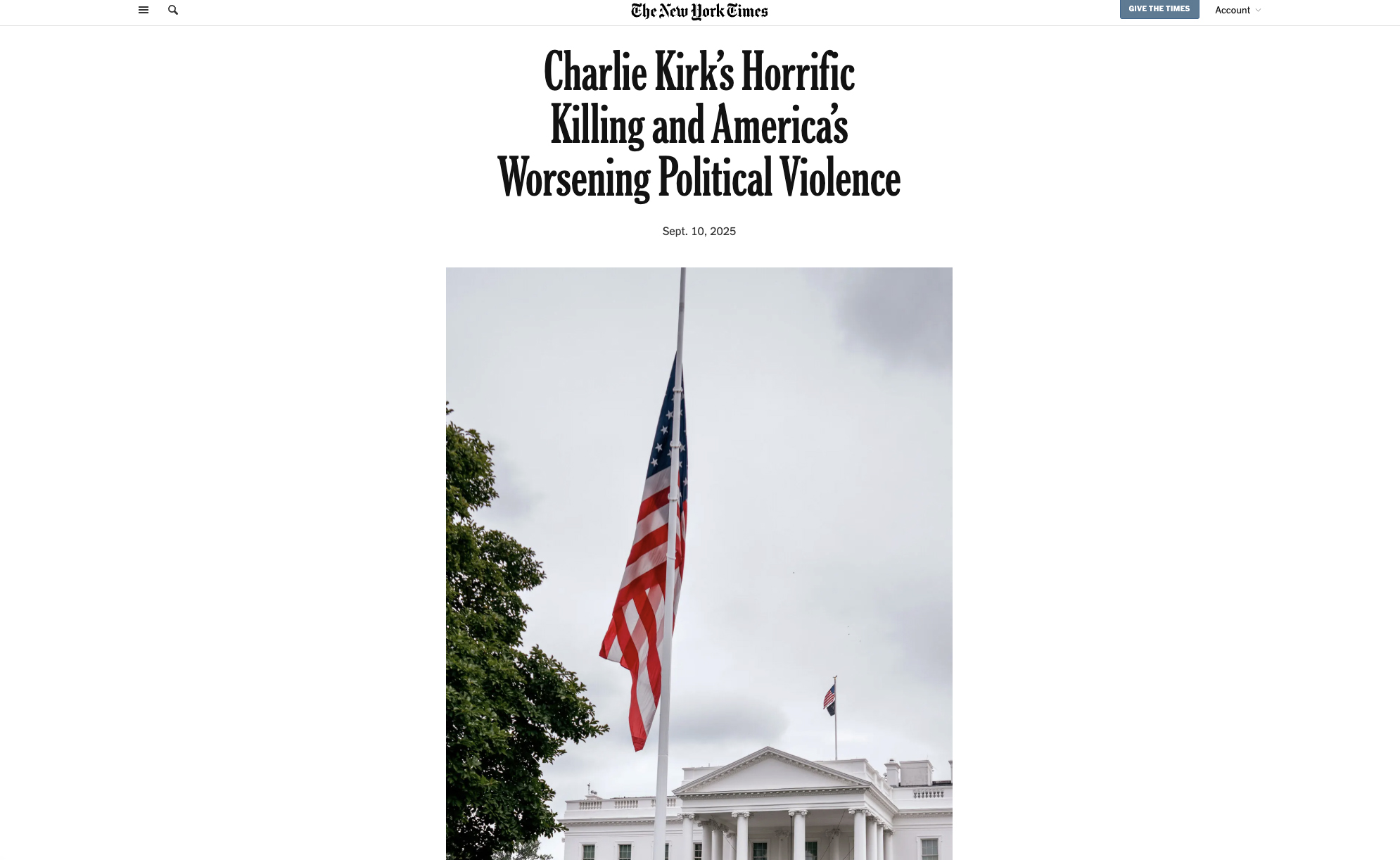
Screenshot

The evening of the day on which Charlie Kirk was murdered — a week ago today — I read an editorial about it in The New York Times that said everything that needed to be said about that appalling event.

Sorry to take so long posting it. The headline was “Charlie Kirk’s Horrific Killing and America’s Worsening Political Violence.” The link on that headline is one of those “gift” links the NYT offers, so you should be able to read it. Let me know if you can’t.

In the meantime, I’ll share some key paragraphs:

The assassination of Charlie Kirk — the founder of a youth political movement that helped revolutionize modern conservatism — at Utah Valley University on Wednesday is a tragedy. His killing is also part of a horrifying wave of political violence in America….

Such violence is antithetical to America. The First Amendment — the first for a reason — enshrines our rights to freedom of speech and expression. Our country is based on the principle that we must disagree peacefully. Our political disagreements may be intense and emotional, but they should never be violent. This balance requires restraint. Americans have to accept that their side will lose sometimes and that they may feel angry about their defeats. We cannot act on that anger with violence.

Too many Americans are abandoning this ideal. Thirty-four percent of college students recently said they supported using violence in some circumstances to stop a campus speech, according to a poll from the Foundation for Individual Rights and Expression published a day before the Kirk shooting. Since 2021, that share has risen from 24 percent, which was already unacceptably high. Surveys of older adults are similarly alarming….

The intensity of our political debates will not disappear. The stakes are too high, and the country disagrees on too many important questions. But we Americans have lost some of our grace and empathy in recent years. We too often wish ill on our political opponents. We act as if people’s worth is determined by whether they identify as a Republican or a Democrat. We dehumanize those with whom we differ….

That was the penultimate graf. Since I’ve quoted so much, I might as well give you the last one:

…This is a moment to turn down the volume and reflect on our political culture. It is a moment for restraint, rather than cycles of vengeance or the suspension of civil liberties, as some urged on Wednesday. It is also a moment to engage with people who have different views from our own. When societies lose the ability to argue peacefully and resort to violence to resolve their political debates, it usually ends very badly.

(When I read that editorial that night, I retweeted it with this comment: “NYT ably describes the violent tip of the iceberg of hostility that is sinking America. But we’re all too busy despising each other to bother trying to find a way to save our ship. “)

As for the excerpts above — if the NYT lawyers call, I’ll just have to ask them how much I have to cut to suit their definition of Fair Use. But I just thought it was too important not to share. It was a grown-up editorial. It seems to me to have been written by someone mature enough to remember when this country was healthy enough that we could disagree strongly and vehemently, and then shake hands and walk away as friends — or at least as people who recognized each other as fellow Americans, and not as “the enemy.”

Of course, maybe it was written by a younger member of the board. If so, we have someone to thank for providing that person with an excellent education, and a firm understanding of what made America great, before our country’s recent tragic decline.

Evidently the faculty members who were suspended from teaching at Clemson were not the kind who provide such intellectual enrichment. Their grotesque fulminations are an embarrassment to anyone with. conscience. Doubt me? Here are some quotes from their outbursts. If that link doesn’t work, I’ll be happy for you, because you’ll be happier for not having read them.

Should they have been fired for it? Let me pose a different question. Should people who would have deliberately published such remarks at such a time have been employed in the first place, in jobs that involve shaping young minds? Such irresponsibility is inexcusable. They weren’t courageously outspoken; they were stupid, cruel and hateful.

You would think that in an atmosphere in which more than a third of college students believe violence can be justified to stop speech they don’t like, anyone who teaches them would understand that their responsibility is to model productive speech and behavior. And the responsibility of college administrators is to make sure they hire people mature enough to understand that.

At this point in our increasingly ones-and-zeroes country, we will now start hearing the “what abouts.” What about those GOP politicians who have demanded their firings? Are you defending them?

Are you nuts? Those people are cheap opportunists, trying to make themselves heroes to an angry crowd. Or, worse, they’re trying to make a merely grieving crowd… angry. Stir things up. Because they seek higher office, and Donald Trump has taught them that the approach taken by every president before him — striving with all their mights to pull us together in troubled times by invoking the values we hold in common — is for chumps. You can win by feeding division, by pouring gasoline on the embers, he has taught them. And they’re acting upon those lessons.

Just as others have learned that if you post something stupidly inappropriate — the more hateful the better — on social media in response to any news event, there are thousands if not millions of people like them who will regard them as brave and witty, and clap them virtually upon their backs in congratulation. A certain needy type eats that sort of thing up.

Both categories are unacceptable in a rational society. But they are so richly rewarded — in the currencies that matter to them — that they just keep doing it.

One final word: If you actually believe that anything those disgraced faculty members said about Kirk was justified by his rhetoric, you are just as much a part of the problem as those hungry GOP pols.

Personally, I had never heard of Charlie Kirk before the news of his murder. But I went and looked at a couple of videos of him speaking. The entire thrust of what he said, even in the milder comments, was wrongheaded and objectionable to me. In others, he was utterly offensive. But all that was what I expected, since Trump is trying to canonize him. And all of it is beside my point.

Y’all know I don’t believe in capital punishment. But even if I did, I certainly wouldn’t support summarily executing a man for saying things that offended me. I could never support that. And I could never support or worse, applaud anyone who mocks a human being who has died that way.

DeMarco: NPs and PAs should continue to be supervised by physicians

The Op-Ed Page

By Paul V. DeMarco
Guest Columnist

In 1993, as a new physician fresh from residency, I joined an internal medicine practice composed of three doctors and one physician assistant in Marion. The next year, one of the doctors left the practice and our call schedule went from every fourth to every third night. I was the father of two young children, and this sudden increase in my workload threatened to overwhelm me. I would have left the practice and probably the Pee Dee if we hadn’t hired another PA. She enabled me to remain living and practicing in Marion.

I tell you this to underscore how important physician assistants (PAs) and nurse practitioners (NPs), collectively known as advanced practice providers (APPs), are to the practice of medicine. In my 30-plus years of practice I have worked closely with six APPs in two different internal medicine practices. Practicing with them as colleagues has been a privilege and of great benefit to me and my patients.

However, despite my love and respect for APPs, I oppose the current bills in the SC Legislature that would allow them to practice independently (S 45 and H 3580). The bills would allow APPs to see patients independently after only a year (2,000 hours) of working with a physician.

I have a host of reasons for my opposition. I will offer two here. First, training matters. Medical school is more rigorous and almost twice as long (4 years vs. 2 to 2.5 years) than APP training. But the most important difference is clinical experience. NPs need only complete 500 hours of clinical training to satisfy their national governing body. The PA national minimum standard is higher, at 2,000 hours, which are divided into multiple rotations in different medical specialties. At best, a PA doing an internal medicine rotation might get 8 weeks (about 300 hours) of IM training. An NP would likely get even fewer hours.

In contrast, physicians come from a tradition in which training was so grueling that it had to be scaled back. I finished my residency in the early 1990s before the Accreditation Council for Graduate Medical Education put a work hours requirement in place. In those days, every other night call was allowed, which meant residents could work more than a hundred hours a week. In 2003, an 80 hours-a-week maximum was instituted. Even if we use a more conservative estimate of 60 hours a week for an IM resident, over a three-year residency internists begin practice with approximately 9,000 hours of clinical experience, 30 times as much as the best case for an APP. It is a deficit that is very difficult for an APP to make up.

It’s not only the hours, but the intensity of the training. Physician residency training is remarkable for its depth and breadth. In the first (intern) year, physicians are intimately involved in their patients’ care. We perform histories and physicals, order labs and imaging, and create differential diagnoses and treatment plans. As second- and third-year residents, we remain closely involved, but also supervise the interns. Experienced attending physicians make rounds mornings and sometimes evenings, do bedside teaching, and are available for advice, but the residents are entrusted with significant responsibility and are the patients’ primary doctors.

By the end of our residencies, we have managed a vast array of clinical problems in the office and the hospital, from the trivial to the life-threatening. An exhaustive residency is the best way to prevent knowledge gaps, which are a common source of medical errors. If a provider’s training is too short or too narrow, they may not be able to recognize a condition they have never seen.

Second, the primary argument for independent practice is that it will increase access for underserved patients. But these bills will not remedy that problem. In about half the states, APPs have independent practice authority, so there is a record to examine. But different lenses produce different conclusions. Nursing researchers have produced papers claiming that independent practice does increase patient access; unsurprisingly, data from American Medical Association refutes this, concluding that APPs tend to practice in the same areas as physicians.

Current state law allows APPs to work alone if the supervising physician is “readily available,” although that term is not defined. Specific requirements for supervising physicians’ distance (45 miles) and travel time (60 minutes) to APPs’ practice locations were eliminated in 2018. Many of these solo APPs are only lightly supervised. Eliminating supervision entirely is a step in the wrong direction. We need more collaboration with our APP colleagues, not less.

Given the demands of modern medical care, the likelihood that a private solo APP or even a small group APP practice could offer affordable care, generate acceptable revenue, and sustain bearable working conditions is low. Rural practice can be grueling and lonely, and the burnout rate is high.

The best option for APPs to offer this type of care is through a community health center like HopeHealth, where I have worked for the past 14 years. CHCs receive enhanced Medicaid reimbursement and can offer a sliding scale for uninsured patients. If they are like HopeHealth, they offer competitive salaries and benefits, strong leadership, and educational and social opportunities for all providers, physicians and APPs alike.

I urge the legislature to focus on incentivizing doctors and APPs to collaborate. APPs have rightly argued that not enough physicians are willing to work in rural areas. But there are still some of us who will. In SC, physicians can supervise up to six APPs, so a single willing physician could catalyze a large rural clinic, or several smaller ones. This model, in which the physician and APPs work together, sharing the burdens and rewards of caring for rural patients, is the best way forward.

A version of this column appeared in the August 20th edition of the Post and Courier-Pee Dee. Dr. DeMarco’s opinions are his own and do not necessarily represent those of HopeHealth.

DeMarco: Greenwood vs Guthrie

The Op-Ed Page

[EDITOR’S NOTE: Dr. DeMarco sent this with the following apology: “This column is old and was written for July 4th so you may not want to run it. But it does describe the ongoing argument we are having about America’s history, such as in exhibits at the Smithsonian.” No need to apologize. The lack of timelines might be an appropriate concern for a newspaper, but I write here about such things as the Late Bronze Age Collapse. That was in the 12th century B.C. So no worries…]

By Paul V. DeMarco
Guest Columnist

I’m willing to admit I am as much a sucker for a sentimental tune as the next guy. Am I going to confess here before my tens and tens of faithful readers that Taylor Swift’s “Tim McGraw” makes me tear up every time I hear it? No comment.

But, as I ponder my most recent July 4th celebration, I’m wondering why “God Bless The USA,” our now ubiquitous patriotic anthem, does not strike the right note for me. As I watch my fellow Americans swept up in its rousing chorus, I don’t go there with them.

I felt this acutely this year because on Sunday, July 6th, our church’s praise band played “This Land is Your Land” and my heart did swell; that patriotic flush did seize me.

I’m not the first to compare these two different visions of America, and I’m disappointed that the songs are sometimes sung by one political party at the other. GBUSA is much more likely to be heard at a Republican event, TLIYL at a Democratic one. True to form, Jennifer Lopez sang TLIYL at Joe Biden’s 2021 inauguration; Lee Greenwood, who wrote GBUSA, played it at Donald Trump’s in 2025. Trump has also featured it prominently at his rallies.

I’m off balance from the first line of GBUSA:

If tomorrow all the things were gone I’d worked for all my life
And I had to start again with just my children and my wife
I’d thank my lucky stars to be livin’ here today
‘Cause the flag still stands for freedom, and they can’t take that away

And I’m proud to be an American where at least I know I’m free
And I won’t forget the men who died, who gave that right to me
And I’d gladly stand up next to you and defend her still today
‘Cause there ain’t no doubt I love this land
God bless the USA

I’m trying to imagine what tragedy has befallen the protagonist in the song — bankruptcy, eviction, fire or flood? I’ve seen people in all those situations, and their responses are rarely, “At least I know I’m free.” Perhaps it’s because we often take that freedom for granted. But the much more common response, in addition to the grief for the loss, is gratitude for those who come to help.

The “men who died” also catches me. On July 4th, we do celebrate a freedom from foreign enemies that was won in blood, almost exclusively by male soldiers, in the American Revolution and World War II. But, fortunately, since Vietnam, a war we now realize we didn’t have to fight, fewer than 6,000 service members have been killed in combat. We understand that the strength of our nation is in keeping the peace, and our Armed Forces are now approximately 17% female.

GBUSA is a song that is written to appeal to southern (“ain’t no doubt”), male veterans. I’m the first two of those. My father, the man I respect the most, is the third. He spent more than two decades in the Air Force. And as the song says, I am proud to be an American.

The song that expresses that pride more authentically for me is Woody Guthrie’s TLIYL. Guthrie the man is an interesting, complex human being. I don’t agree with everything he said or did. But the lodestar of his life seems to be an interest in the plight of the working man and an aversion to greed. Leaving Guthrie the person for another day, TLIYL takes a different approach to our nation’s greatness. Guthrie wrote the song in 1940 as a response to Irving Berlin’s “God Bless America,” which he found saccharine and out of touch with the bleak lives many poor families were living as the Great Depression dragged on. He originally titled the song, “God Blessed America for Me” to drive home the message that those blessings were for everyone, not just the privileged.

Greenwood conveys a pugnaciousness that is part of the American character: You will have to pry my freedom from my cold, dead hands. But that’s not most of American life. When is the last time as a civilian, you felt you had to stand up to a foreign invader who was threatening your freedom? Indeed, most of the concern about losing our freedom is currently being expressed from the left-about our own government’s actions.

What TLIYL captures so masterfully are the quotidian ideas that hold us together: the bounty and beauty of our landscape, our shared sense of purpose, the worthiness of every member of society.

In researching this piece, I learned that Guthrie wrote several other verses meant to skewer Berlin’s “God Bless America” that we no longer sing, one of which is:

In the shadow of the steeple I saw my people,
By the relief office I seen my people;
As they stood there hungry, I stood there asking
Is this land made for you and me?

Perhaps on July 4th we don’t want to be reminded that America is not yet the shining city on a hill that we hope it to be. But I would rather we sing that verse to remember our flaws and to provoke us to become the more perfect union that our founding document exhorts us to be.

A version of this column appeared in the July 16th edition of the Post and Courier-Pee Dee.

The thing that didn’t happen Sunday night at USC

‘The umbrella guy: Were these images a cause, or an effect, of the panic?

We were having a family birthday party for one of my kids Sunday night when I got a call from my brother in Greenville. He called to make sure that we knew we shouldn’t venture near the USC campus. There was apparently an “active shooter” situation, and the campus was locked down.

I saw that one person at our party seemed to be about to leave, so I asked my brother to hold on a moment, and I made an immediate announcement to the entire household about the news, suggesting that no one head in that direction. I was very much in a mode that was a sort of cross between “Now hear this!” and “General Quarters!”

But everyone already knew. My wife informed me that everyone had been talking about it at the table. I had missed it competely, which is a frequent occurrence with the state of my hearing.

Anyway, by that time the folks in charge on campus were already stepping down the alert, and within minutes they had given the “all clear.” Not because the “shooter” had been arrested or otherwise eliminated, but because he hadn’t existed.

There were some reported minor injuries, however — people who got hurt in the stampede of students trying to evacuate the area.

He was a creation of the remarkable new technology that we enjoy in the 21st century. No, not AI. You didn’t need that to produce this panic.

I’m talking about such quaint things as Al Gore’s Internet, smartphones with ever-improving cameras, social media, and the resulting ability of practically everyone on the planet to pass information to everyone else on the planet, whether it’s true or not.

Which is all stuff I have enjoyed greatly over the last couple of decades. But I’ve also pointed out how this combination of items is destroying our country, and other countries devoted to liberal democracy. But enough politics; back to the subject.

Of course, this causes people to scoff at the old newspaper guy wishing for the good ole days. Well, let me tell you about the good old days. Over the last day, I was thinking about how this would have unfolded, say, 25 years ago.

Basically, it would not have unfolded. It wouldn’t have happened. Of course, it didn’t happen, but something else did happen — a campus full of thousands of kids, not to mention their folks back home, were scared out of their wits. And some of them got hurt (but not seriously, apparently) in the rush to the exits.

Of course, I thought of this first from the perspective of a newspaperman. Back when such things as daily newspapers existed and thrived, news happened all through the 24 hours, but it only got published once. Back then, when the word of possible shootings went out, reporters would have rushed to the campus, the way they did Sunday night, and reported what they found. And for an hour or so, the whole news structure would be in high gear to meet the challenge. But then, about an hour later, everyone would know it was a load of nothing, and calm down. There might be a story about how everyone got excited and worried for a time, but there would at no time be a story delivered to actual readers crying out about havoc on the campus.

But I’m not fully imagining what would have happened. The thing is, there wouldn’t have even have been a story about the big scare. Why? Because there would have been no scare, for a number of reasons.

First, the images of a harmless-looking guy ambling along carrying an umbrella would not have existed. If you’re young — very young — it might be hard to imagine that. But you see, a mere quarter-century ago, people didn’t photograph everything they saw around them. I was one of the few people who might have done such a thing, because starting in my own college days, I got into 35mm photography in a big way. But I didn’t shoot a tenth of the images I now shoot every day, for the simple reason that film — and the chemicals I needed to develop it and make prints from it — cost money. It also cost a lot of time. Even if you were one of those civilians who dropped off their rolls at the drugstore, it still cost you some time. And unless you went to one of those one-hour places, you wouldn’t be seeing your prints for some days.

But let’s suppose that, being the camera geek I was, I did shoot such images, and somehow made the finished image appear instantly (remember that not even Polaroids were instantaneous, and the quality was awful). And suppose I also had the poor judgment to decide I wanted urgently to share this image, and my wild imaginings, with the world. How would I have done that — physically, technically? And how many people would I have reached? I assure you I had a much greater chance than most of you to get my picture into print, but I’d have to wait some hours before the presses rolled. And after they rolled, there’d be a further wait of hours (usually) before readers beheld it.

And by that time, we would have known for some hours that the pictures showed nothing that needed to be shared with anybody. They would be worthless, and of no interest.

There is value in having time to think, time to assess, time to recognize the truth before something is shouted to the world.

But we’ve lost that precious resource, and I don’t see any way of getting it back again. So in light of the existence of these new technologies, how on Earth are we going to stop driving each other stark, raving mad?

[Editor’s note: After I wrote the above, reporting on this incident has shifted more in the direction of a deliberate hoax, part of a pattern across the country, with less emphasis on innocent mistake. That significantly reduces the role that social media played, but it doesn’t eliminated it, because it doesn’t change the dynamics of the way current technology cause panic to metastasize, far ahead of the ability of reasonable investigation to catch up. (Although authorities did an excellent job of sorting it out as quickly as possible.) Without the technology, there might have been a panic on campus, but not across the country, as occurred in this case. This explanation raises other questions — if the cause of the panic was a couple of false phone calls, what role did the photos of the guy with the umbrella play? Was that just already-panicked students shooting pics of everything they saw and sending them out? I don’t know. In any case, they played a significant role in the widespread stress, based on what I was hearing from various folks following the incident.]

Older than the Pontiff himself

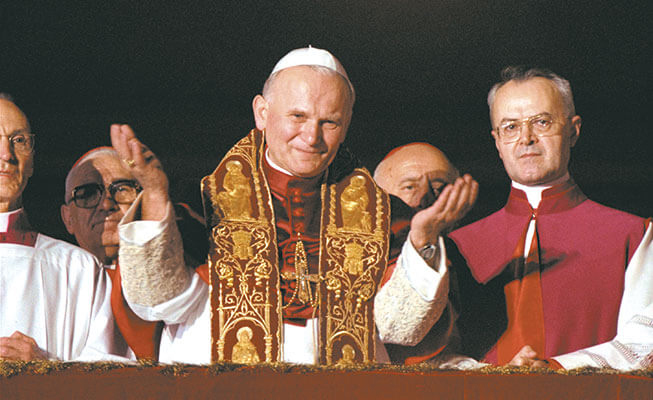
Who says ya gotta be old to be the Pope?

I mentioned that Paul DeMarco had inspired me to reflect on his latest post with a separate post of my own — or “perhaps more than one.”

This will be the second, more tangential, such post.

Paul shared this brief anecdote:

In another bookstore mentioned above, the name of which I shall not reveal, I was speaking to the owner about the new pope. The owner is a bit older than I and said, “I‘ve always thought of popes as very old men… but I just realized… I’m older than the pope!”

This caused me to check Wikipedia, and find out that I am indeed older than Pope Leo XIV. Not by a lot — we would have been in school at the same time; I was just a couple of years ahead. So obviously popes are not “very old men.” Of course, I realized long ago that this was the case. It was fairly obvious when the startlingly young Pope John Paul II came along. He was only 58, and obviously in his prime. I had just turned 25 when he took the chair of Peter, but you didn’t have to be older than he to perceive his youth to be exceptional.

But then Benedict and Frances were obviously up there, with Benedict retiring at 85, and Frances dying at 88. So at 69, Leo stands out a bit, but not the way John Paul did.

And like the man in the bookstore, I find it slightly jolting on a personal level to suddenly be older than the pope. But not as much as when I realized, back in September 2023, that I was older than three of my grandparents had lived to be. That was when I was the same age as Pope Leo.

And not as much as the moment in 1994, when David Beasley was meeting with the editorial board to seek our support in his bid for the governor’s office, and one of our members (technically an emeritus member, I suppose you’d call him) brought up the candidate’s extreme youth. I realized in that moment that he was only about 37 (I say “about” because I don’t recall the date of the interview). I was 40, and in that moment I was quite shocked that someone younger than I was seeking such an elevated office. The presumptuous puppy! That was a bit of a personal landmark.

That experience was repeated when Barack Obama came along. I mean, a young governor was one thing, but president of the United States? Come on. For reference: Obama moved to Hawaii about the time I was graduating from high school — but he didn’t graduate (from the posh Punahou across town from my public school) until eight years later. (That didn’t keep me from backing him for the Democratic nomination in 2008, although I went with the far more experienced John McCain in the general.)

Life can be described in many ways, but one way would be as a process of constantly modifying one’s sense of time. So having a pope roughly, but not quite, my age is not the surprise it might once have been. Governor, president, pope… there seems to be a pattern here, and I’m getting used to it.

And obviously, Pope Leo is not a “very old man,” even though he’s the age of the oldest of those three grandparents who did not live to be as old as I was when I wrote this. One’s own perception of human longevity is not the only thing that changes over time. Those three grandparents passed away in the 1950s, ’60s, and 1971. We lost my last grandparent in 1985, when she was 95. My father was three weeks short of 93 when he died in 2021. My mother is still very strong, physically and mentally, at 94. So it’s hard for me to think of myself — or the pontiff — as “very old” yet.

Today, we’re remembering my father-in-law, whose 102nd birthday this would have been, if we hadn’t lost him at 86. God bless you, Mr. Phelan, and thank you so much for all the ways you blessed us in your long life….

DeMarco: Why Independent Bookstores Shouldn’t Go the Way of Blockbuster

The Op-Ed Page

By Paul V. DeMarco
Guest Columnist

One could argue that independent bookstores are a luxury. You can summon books to your doorstep with a few clicks, sometimes the same day. Or, if you have an E-reader, in seconds. So why do bookstores continue to survive?

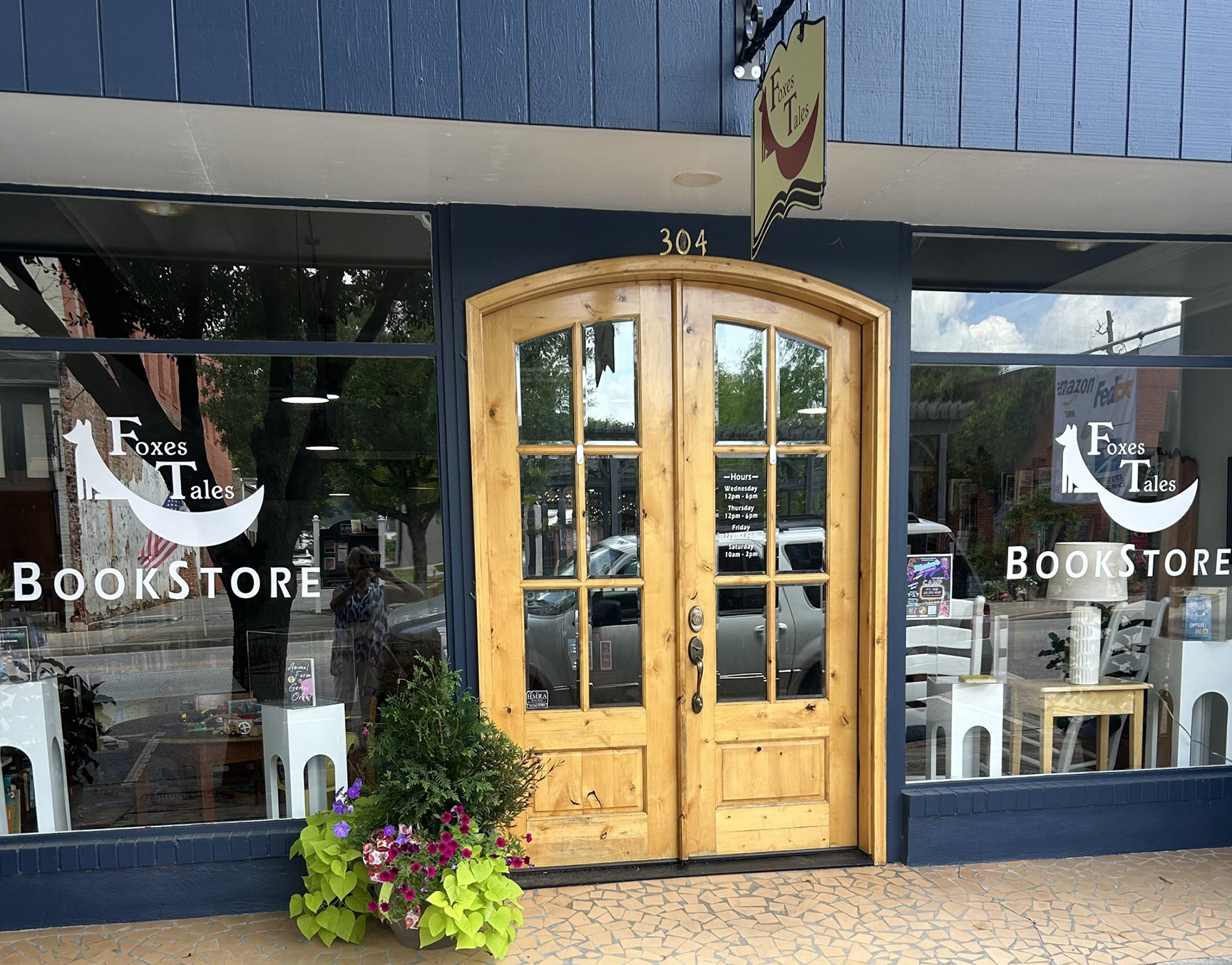
As Blockbuster faded in the 2000s, I worried that bookstores might suffer the same fate. But here they are still, and they seem to be making a resurgence. According to the American Booksellers Association, more that 200 new indie bookstores opened in 2024. We are seeing a similar renaissance locally. Since 2023, three new bookstores have opened in the Pee Dee – Jack’s Books in Florence, Foxes Tales in Marion, and Our Next Chapter in Conway. It’s worth considering why.

First, I think, are the owners. Their identities are palpable within the walls. You feel as if you are walking into an extension of their homes. I can tell you the name of the owners of almost every independent bookstore that I have frequented more than once: Gwen at Foxes Tales, Jack (Ok, that’s a gimme), Wendy and her daughter Olivia at Litchfield Books, and Clint at All Good Books in Columbia. I fondly remember Rhett and Betty Jackson who founded the Happy Bookseller in Columbia which closed in 2008. And I look forward to meeting Bob and Lisa Martire at Our Next Chapter, whom I called for this column.

Second is the product itself. There is just something about books: their personalities on a shelf, their weight in your hands, the curve of the pages, the smell of the bindings. We connect with books in a different way from the way we do with VHS tapes or DVDs. Is an E-reader more economical and practical? Undoubtedly. But after a day full of screens, can you find repose and escape in another screen? Many of us cannot.

Third is the community bookstores create. If you are new in town, where would you go to meet people? Church used to be the answer, but less so now, particularly for young people. Bars and clubs, of course. If I were young, I would head to the local coffee shop first, and the bookstore next. Shopping for books is different from shopping for groceries. You don’t always have a plan, and you aren’t focused on getting home to cook dinner. People relax in a bookstore; their minds are open. Children peruse, curious and wide-eyed.

In the past month I have had the following conversations in a bookstore: As I was entering Litchfield Books, a woman I had never met engaged me in a five-minute conversation after I bent down to greet her dog. Inside, I had a long chat with Wendy and Olivia about books, bookstore dogs, bookstore swag (I love a good bookstore T-shirt and baseball cap) and the possibility of adding a coffee bar (I voted a loud “Yes!” to coffee). In another bookstore mentioned above, the name of which I shall not reveal, I was speaking to the owner about the new pope. The owner is a bit older than I and said, “I‘ve always thought of popes as very old men… but I just realized… I’m older than the pope!”

I met a new bookstore friend recently during a trip with my wife, Debbie, to Decatur, Georgia, for a wedding. Debbie is a nurse but could have been a librarian. She was always ready with a fun, age-appropriate bedtime story for me to read to our children. That was precious time, with a little head against each shoulder.

When she saw that the wedding venue was near a children’s bookshop called Little Shop of Stories, we knew we had to visit. Which brings us to the last reason why we can’t let bookstores go. Every one has a vibe, an ambience, much like a restaurant. At Little Shop, soft Saturday afternoon sunlight flooded though the glass façade into a welcoming space that was filled with perhaps a dozen patrons milling and talking. A father and daughter sat in a chair as he read to her.

When it came time to pay, the young woman at the counter mistakenly input my transaction as a credit rather than a charge. When I discovered the error on Monday, I called and spoke with my new friend, Heather, at Little Shop, who straightened it out. She was lovely; she was kind; we laughed. It was the best customer service call I suspect I will ever have. A few days later, a care package arrived with a Little Shop mug, a tote bag, and a half dozen books.

Take that, Amazon! Yes, you will pay slightly more at an independent bookstore. But we have already made this bargain with coffee shops. We understand that we are paying too much for the liquid in the cup. But that’s not all we are buying. We are renting a small portion of the shop, that favorite table where we like to sit. We are maintaining a relationship with the shop owner (Hi Liz at Groundout and Mel at Bear Bar) or our favorite barista that would end if the shop closed.

We have a choice. We can pay the minimum and have the lonely convenience of books at our doorstep or on our screen. Or we can choose a better way. We can support a small business that provides livelihoods for its staff and weaves a beautiful thread into the fabric of a neighborhood. Find an independent bookstore, and you’ve found a place that cares about its future.

A version of this column appeared in the June 18th edition of the Post and Courier-Pee Dee.

Your Open Thread for Monday, August 4, 2025

I hope the Boston Globe won’t mind my using this. I’m trying to create more Globe subscribles.

Remember when I published one of these — or earlier on, a Virtual Front Page — pretty much every day? If you do, you’re showing your age, because it’s been awhile.

But here’s one for today, anyway…

  1. Yankee beaches — Since a lot of y’all are probably at the beach, and bemoaning the fact that there’s not enough room to walk, be glad you’re not up north. It’s getting ridiculous up there with the tent cities being set up everywhere. See the picture above. My daughter who was in Rhode Island last week said she saw a lot of that on Block Island. Why am I sharing this? Because I enjoy news that makes S.C. look good. We don’t get enough of that.
  2. You are contaminated — This is a tad depressing — talking about how such things as plastics permeate our bodies and those of all living things on the planet. But it’s a moment of nostalgia for me. I remember the old days when we worried more about old-fashioned pollution than climate change, which sometimes seems like the only ecological problem young folks know about.
  3. Your choices for governor — How bad can they get? Well, Nancy Mace just made her campaign official, so… Not bad enough for ya? Well, consider that Ralph Norman has also raised his absurdly unqualified hand. I was glad to see that Pam Evette was running, because it lets us know she’s still among the living — our Gov Lite is so invisible that I tend to think of her as the Ghost Who Walks. I don’t know Josh Kimbrell, but that alone would dismiss him from my consideration. The only Republican running with anything like credible credentials is Alan Wilson. But that still puts the GOP one viable candidate ahead of Democrats. Perhaps things will improve. Perhaps not.
  4. Joy in Beantown — This is the thing that most motivated me to post an Open Thread. I wanted to say something before the moment passed. The weekend just past was a great one at Fenway. The Red Sox are now ahead of the Yankees in the AL East, and only 3 games behind the leading Blue Jays. And I’m digging it, whether you are or not.
  5. This isn’t the same Democratic Party as Trump’s first term — I posted this just to react to the headline by saying, “Yeah, crushing defeat can do things to you.” I probably won’t read the rest of the story. Y’all can tell me if there are any surprises. I haven’t seen anything in politics to surprise me since last year. I suppose I could have said what I’ve already said frequently in recent months: “Ya think?”

The ominous flattening of language

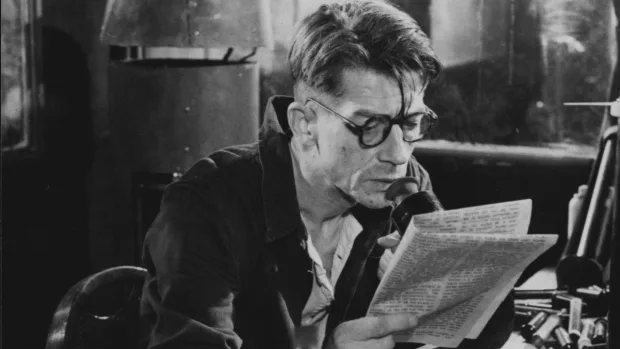
Winston’s job was obliterating facts. Another character obliterated language.

On a previous post — the one about the “thumb-up” emoji — a reader gently mocked the apparent silliness of the topic. I chose not to be offended, but to enjoy it by riffing on his point.

After all, I sort of did write that because I was looking for a quick-and-easy thing to post about, to assuage my guilt about not posting more often. And, I told myself, not everything has to be as long and complicated as the post that preceded that “silly” one (1,736 words, yikes!).

But… ultimately, I don’t consider the subject trivial. To explain…

Years ago, when Umberto Eco (the Italian semiotician and author of The Name of the Rose) was still alive, I saw something he wrote (or perhaps he was just being quoted) in a magazine. He predicted that our species was moving back toward nonverbal (or perhaps you would say post-literate) modes of communication. And this was years before emojis, in the ’90s or maybe the ’80s.

Anyway, I think of his prediction frequently these days (as I’ve mentioned before in a related rant). My question about the thumb-up emoji arises in that context.

My concern is that I see our ability to communicate flattening, becoming one-dimensional. The English language (the only one in which I am sufficiently literate to be able to perceive subtle distinctions) is amazingly versatile, flexible and able to communicate an apparent a galaxy of things with a single word, depending upon its context.

But I’ve seen a marked tendency to reduce in recent years. Sixteen year ago, I wrote about the absurdity of having my wife ask me why I was not her “friend” on Facebook. But I didn’t consider my wife absurd for wanting to include me in something she was enjoying. My problem was Facebook’s reduction of human relationships to one word. On that medium, you were either a “friend” or you were not, (which makes sense only if you haven’t advanced past the kindergarten level of social interaction). Obviously, my wife was and is much more than that to me. And yet in the years since then Facebook, in its hyperbureaucratic, ones-and-zeroes-obsessed manner, has dutifully labelled her, my parents, my children, grandchildren, cousins, acquaintances, and people I didn’t even know but approved to be polite (and no, I don’t do that any more) have all become my “friends,” without any elaboration or explanation or qualification or enhancement — without any of the things that make life rich and full.

I am reminded of the Newspeak Dictionary from Orwell’s 1984. Each edition is smaller, thinner, containing fewer words. The idea is to reduce the number of concepts a human is capable of generating or communicating, so that ideas that are troublesome to Big Brother’s state simply don’t arise or spread. As the dialectic of Oceania proceeds, language gets flatter and flatter. A thing that is in some way very, very bad is “doubleplusungood,” rather than horrible, evil, shocking, abominable, mortifying, putrid, appalling, disgusting, or … well, you get the idea, comrade.

When I first read that as a kid, being a word guy, I found the idea of such a dictionary, steadily shrinking, more terrifying than what Winston found in Room 101. Although what he encountered there was pretty doubleplusungood as well.

Combined with the communication breakdowns to which I refer, this flattening of the language — Facebook calling everyone you know your “friend,” and the apps that tell us the many-sided “thumbs-up” simply means “like,” is ominous. Creepy. Threatening.

As these modes become common, even universal, we become less intelligent. And humanity sinks into the mire. It’s one of the reasons that “Idiocracy” arrived centuries earlier than the silly film predicted…

DeMarco (again!): Reflections of an inexperienced traveler

The Op-Ed Page

Our ‘inexperienced traveler,’ using his ‘feeble’ Italian to ask Signore Giugui for directions.

By Paul V. DeMarco
Guest Columnist

EDITOR’S NOTE: Paul sent me this the same day as the one about Dr. Ceriani, but I held it a couple of days to space them out a bit. When he sent it, he noted that this would be “more is your wheelhouse — genealogy and travel.” Indeed.

I just turned 62 and have traveled internationally as an adult three times in my life, all in the last 5 years (Tanzania with the USC School of Medicine in early 2020, just before COVID, and Italy and Sicily in 2022 and again in April 2025). Looked at one way, I am exceptionally lucky. Even one trip out of my own country is more than the vast majority of the world’s people are afforded. I have carried that knowledge with me on each trip and hope to continue to hold it close. I never want to lose the wonder I feel as a jet first leaves the ground or as I navigate a foreign land where I feel the obligation to represent my homeland well.

Being an amateur (and sometimes absent-minded) traveler does have its downsides. There was the time I tried to go through security with a Swiss army knife in my backpack. On the 2022 trip I left my laptop in the Rome airport (happily, I was finally able to retrieve it months later). And on this last trip we had an overnight layover in London coming home, but our luggage got checked through to our final destination (Charlotte). The silver lining was I didn’t have any difficulty picking out my outfit for the next morning’s flight home.

This last trip to Sicily was especially meaningful for two reasons. First, I had a merry band of companions – my wife, my son and daughter, and their spouses. Second, I was able to visit my grandfather’s birthplace for the first time.

My grandfather, Poppy, was born in 1903 in Porto Empedocle, a suburb of Agrigento, a city of about 55,000 on the southern coast of Sicily. The city is built on a ridge overlooking the azure blue waters of the Mediterranean and is home to some of the most well-preserved Greek temples in the world. We had a picture of his home that Poppy’s son, my father, had taken on a previous trip and a street name, but not a house number. Our driver took us to the high end of the street. We had a beautiful view of the sea, but I thought we should have started at the other, lower end.

As we exited the van, I had resigned myself to not finding the house. It would be enough to say that I had walked on the same street as he had. Like many Sicilians of his generation, he gambled that life in America was worth leaving everything he knew, making a transatlantic voyage, and staking a claim in the new world. At the conclusion of his journey, he sailed by the Statue of Liberty to Ellis Island. He spent the rest of his days in her shadow in a duplex nestled in an Italian neighborhood in the Flatbush neighborhood of Brooklyn. He married a first-generation Italian woman (my grandmother, Rosalie), worked as a barber, and had a side business repairing radios in the basement of their home.

As I was taking in the landscape of my ancestral home, my son had walked on ahead. “I think that’s it,” he said, pointing. We had found it. The feeling that I had then, and that I have now as I write about the moment is both precious and curious to me. It looked just like the picture my father had given me. I suspect, if I had done some research, I could have found it on Google Maps street view and seen it without ever leaving home. But blood ties are powerful and inescapable. There is nothing that could replace my being there, nor replace being home but knowing I have been there.

Charlie the dog wth ‘Sophia,,’ Debbie, Salvatore e Paul.

Even meeting people who were not closely related to me, but were my people, felt electric. In a raucous street market in Catania, on the eastern coast of Sicily, my wife, Debbie, made friends with a small dog. The dog (whose name. we soon learned, was Charlie), was accompanied by his elderly owner (Salvatore) and his dark-haired, dark-eyed granddaughter (whose name, unfortunately, we didn’t ask for). Let’s call her Sophia. Salvatore spoke no English, but we were able to converse with Sophia in a mix of her broken English and my feeble Italian. When she translated our question about how long Salvatore had owned the dog, tears rolled down his face as he kissed the dog again and again to indicate how much he loved him. As the two of them departed he kissed Debbie and me. For any readers planning on travelling to Sicily, be prepared – Sicilians do kiss a lot. I received many double-cheek kisses, both from women and men.

My family teases me for all the pictures I take on vacation. I probably took more than two thousand on this trip. But I am glad I took a selfie with the four of us and the little dog he loved so much. I have loaded that photo, pictures of Poppy’s birthplace, and many others from the trip on my digital frame. Those images are not just preserved in the dim file of my memory but are available to me as I walk by the frame, in vibrant color and astonishing detail.

I hope to return to Sicily many more times, but I want always to maintain my perspective as an inexperienced traveler.

A version of this column appeared in the May 14th edition of the Post and Courier-Pee Dee.

The moment of discovery: Ben points out Poppy’s home!

DeMarco: The images that shape our lives

The Op-Ed Page

Dr. Ernest Guy Ceriani

By Paul V. DeMarco
Guest Columnist

As a graduation present, one of my best friends from college gave me a book titled Let Truth Be the Prejudice by photojournalist W. Eugene Smith. She knew I was on my way to medical school and chose the book because of a photo essay called “Country Doctor.” It documented the work of Ernest Ceriani, the sole physician for the people of Kremmling, Colorado, an isolated hamlet of about a thousand. The essay was published in 1948, when Ceriani was 32.

The images captivated me. There was a reality, a chest grabbing truth contained within. Smith said of the essay “I spent four weeks living with him. I made very few pictures at first. I mainly tried to learn what made the doctor tick.”

His patience was rewarded. The image that has been my lodestar captures Ceriani in the wee hours. He is in a homey hospital kitchen after completing a lengthy surgery. He wears a cloth surgical gown and cap. His mask is untied. He is slumped against the counter with the stub of a cigarette in his left hand and a slightly listing cup of coffee in his right. His exhaustion is palpable. In another photo (see below), he is holding the head of a 2-year-old child who had been kicked in the head by a horse. His brow is deeply furrowed. He is worried, afraid for the child’s sight. In another, he is on a home visit. He is sitting on a bed, listening to the chest of an elderly man dying of a heart attack.

I must admit that I had no idea what I had signed up for when I committed to medicine. I was the first doctor in my family and had never experienced a serious illness, nor had any family member or friend. I didn’t have a mentor to tell me what medicine would be like, but in a moment, these stark black and white photos showed me. I saw that being a doctor means to sometimes be afraid, to sometimes suffer, to carry the burden of your patient’s illnesses, to watch them die.

I write this not to tell you I have succeeded in my hope to follow in Ceriani’s footsteps. He bore a burden that I doubt I could have carried. Nor is it to say that the type of medicine I do is the most important or most difficult. There are physicians that put their lives on the line in war zones, brilliant bench researchers, and masterful surgeons whose accomplishments dwarf mine.

I tell you this for two reasons. First because Ceriani’s example is still powerful, and should remain relevant in patient care of all kinds, including quotidian practices such as mine. I teach medical students and give a talk every year entitled “Joy in Medicine.” Perhaps that wasn’t the title you would expect, given my description of medicine’s trials. Medicine is, of course, also full of joys and rewards. But accepting those requires no training. What allows doctors to maintain their sanguinity is an ability to anticipate and then face tragedy.

Physicians can make two mistakes confronting this reality. One is to be subsumed by the distress of their patients and become overwhelmed. But the more common mistake is to remain aloof, to treat medicine as a job rather than a vocation, as a means to a lifestyle. In these days of incentive contracts which reward physicians for increasing the number of patients they see or procedures they do, patients who gum up the works with thorny problems or unexpected complications become unwelcome. I can’t count the number of patients who over the years have broken into tears during a visit. There is no extra reimbursement for giving a despondent patient your undivided attention. I can rarely offer any helpful advice. But I do all I can do, which is listen. Surprisingly often, we both feel better for the time we spend together.

I ask the students to imagine a middle way in which we do our best to fully acknowledge our patient’s dignity without losing our bearings. I have had patients who have suffered unimaginably. One dealt with the death of her husband and then the tragic death of her son two days later. I can only go a certain distance into that pain. But I try to walk with the patient far enough.

Students want to know how far that is. I can’t fully articulate it. It’s the same sense I have that keeps me from getting too close to a campfire or to a cliff. Sometimes I go farther than I might, knowing that I will have help recovering. My medical colleagues, including my wife, who is a nurse and has lived the pressures of primary care practice with me, are there to support me in my temporary grief for my patients.

I have walked that line mostly successfully for thirty years thanks to the lessons contained in “Country Doctor.” Some days I don’t give enough, and others I let the pressure of getting the work done truncate my ability to fully engage. I could not have lived Dr. Ceriani’s life as a solo practitioner in the Rocky Mountains. But he has been my constant inspiration, and I am surely better for my friend’s thoughtful gift, one of the most important I have ever received.

A version of this column appeared in the April 16th edition of the Post and Courier-Pee Dee.