Category Archives: Technology

A worrisome national meme regarding SC’s Boeing plant

First 787 Takeoff In Charleston SC  K65673

Inaugural flight of first 787 Dreamliner built in SC./Boeing

We take great pride in our Boeing 787 plant down in North Charleston, and with good reason. It shows, as Bobby Hitt would say, that “we know how to make stuff” in South Carolina, including high-tech stuff.

So it is that I worry that it seems to be more and more routine for national media to say this one negative thing about the SC Boeing plant, as I have boldfaced in this passage from a story in The Wall Street Journal this morning:

Never overwhelmingly credible was Boeing’s threat to rip away its new 777X from its unionized Seattle-area workforce if local union members didn’t approve contract concessions, as they did last week.

Let us count the reasons: Boeing was already known to be dissatisfied with the dispersed plane-making that currently has the 787’s wing made in Japan. Boeing’s own new 787 plant with nonunion workers in South Carolina has been slow to get up to speed. A trained and experienced workforce, such as exists in the Seattle area, is not easy to recreate and Boeing is under considerable pressure from customers signing up for deliveries of the new 777X after 2020 to minimize delays and snafus like those that afflicted the 787….

Hey, I want them to take their time and do it right — I’d hate for SC workers to get the reputation of being casual and slipshod. But I hate seeing the word “slow” in connection with SC labor.

I’ve just seen that mentioned a number of times recently, to the point that it has started to worry me…

I’d like to have a Kalashnikov lawnmower

AK-47

For me, Mikhail Kalashnikov is one of those “You mean he was still alive?” people. I had not known he was still among us. But he was, until today, when he died at 94.

It’s ironic that he survived so long, since his invention was the cause of the premature deaths of untold thousands around the world.

Mikhail Kalashnikov/www.kremlin.ru

Mikhail Kalashnikov/www.kremlin.ru

His AK-47 (and its variants) was made to supply soldiers of the Red Army with a reliable modern rifle, but it became the weapon of choice of “national armies, terrorists, drug gangs, bank robbers, revolutionaries and jihadists,” as the WashPost put it.

Kalashnikov was a former Red Army sergeant with little technical training, who ended up leading the effort to create a rifle that met the requirements of a weapon that was cheap to produce, easy to maintain and operate, and reliable. He was wildly successful.

He produced an automatic weapon that took next to no maintenance, and would work under the most demanding conditions. There are stories of Kalashnikovs found buried in mud under rice paddies in Vietnam that still fired.

The AK enabled almost anyone to put a tremendous amount of lead (30 rounds to a magazine) on a target in a big hurry. And by anyone, I mean anyone — it’s the ideal weapon for child soldiers in Africa because it takes relatively little upper body strength to use.

And so we have the paradox of Mikhail Kalashnikov — hardly anyone in the past century has produced a product of any kind that performed as well as his rifle, and was so universally sought-after and used.

But hardly anyone has been the cause of more death.

He noted the paradox of tremendous achievement vs. tremendous harm himself:

“I’m proud of my invention, but I’m sad that it is used by terrorists,” he said on a visit to Germany, adding: “I would prefer to have invented a machine that people could use and that would help farmers with their work – for example a lawnmower.”…

If he had, I definitely would have wanted one of those lawnmowers. It would have started immediately every time, run on very little gas, and you’d only have to clean the filters once a year. And it would have lasted a lifetime.

North Korea is so incredibly backward, it issues threats by fax

Now that Kim Jong Un’s uncle has been executed and he no longer has adult supervision, he’s issuing threats. And how is he doing so, on the verge of the year 2014?

By fax:

North Korea on Friday threatened to attack South Korea without any notice via a fax sent to South Korea’s National Security Council, the Ministry of Defence said in Seoul.

The fax made reference to recent demonstrations in which effigies of Kim Jong Un were burnt in Seoul on the anniversary of Kim Jong Il’s death, an issue that often aggravates the North.

South Korea reacted firmly to Pyongyang’s warning that it would “mercilessly” attack “without notice” by sending a fax back that promised “resolute punishment” to any attack initiated by the North….

I like that touch — fighting fax with fax. Like, if you shoot a medieval catapult at us, we’re gonna shoot a medieval catapult back at you.

It’s got to be unsettling in Seoul, being so close to an adversary so deeply irrational that he puts you on notice that he’s going to attack without notice, completely without irony. And does it by fax. And isn’t embarrassed about it…

‘What did the world search for in 2013?’ Google knows…

zeitgeist

Edward Snowden and Glenn Greenwald are feeling like pretty important guys (just ask ’em; they’ll tell ya), especially since they finally got one federal judge to agree with their view of NSA surveillance programs.

But as far as Google is concerned, they’re not all that interesting.

At least, they don’t show up in the Google Zeitgeist list of top 10 global trending searches of 2013. Here’s what does:

  1. Nelson Mandela
  2. Paul Walker
  3. iPhone 5s
  4. Cory Monteith
  5. Harlem Shake
  6. Boston Marathon
  7. Royal Baby
  8. Samsung Galaxy s4
  9. PlayStation 4
  10. North Korea

There’s more — much more. From Google’s blog:

Every day, around the world, we search. We want to find out more about our heroes, explore far-away destinations, or settle a dinner table dispute between friends. And sometimes we just search to find out how many calories are in an avocado.

In our annual Year-End Zeitgeist (“spirit of the times”), we reflect on the people, places, and moments that captured the world’s attention throughout the year. This year marks our most global Zeitgeist to date—with 1,000+ top 10 lists across categories like Trending People, Most-Searched Events and Top Trending Searches from 72 countries.

As we get ready to turn the page to 2014, we invite you to take a global journey through the biggest moments from the past 12 months in our Year in Review video

And how did the largest number of users finish the query, “what is…?”

With the word, “twerking,” that’s how. Really. We’re serious. Even if the rest of the world wasn’t. It was “twerking,” not, say, “metadata.”

Somewhere at The Guardian, there’s an editor weeping right about now. Probably the one who keeps leading the paper (or at least, the Web version) with Snowden/NSA stories

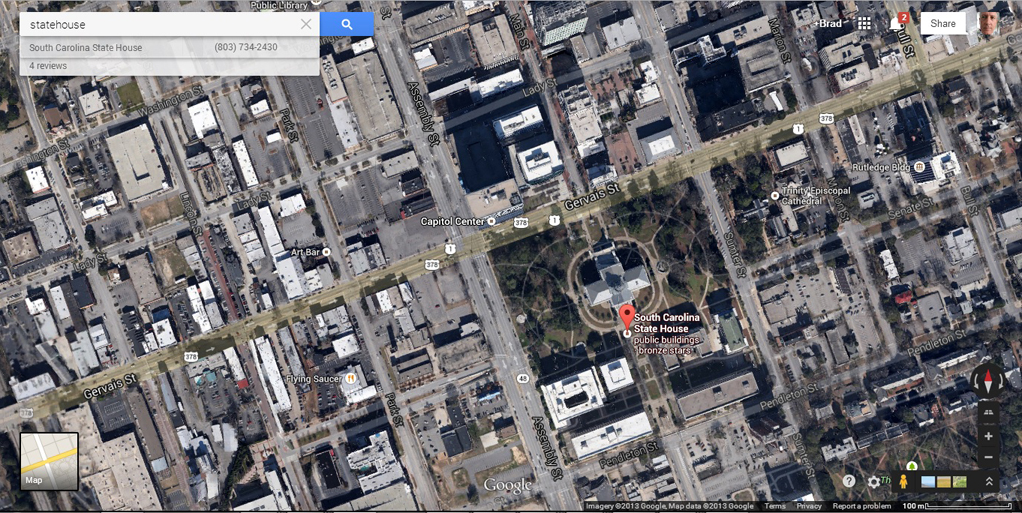
Fascinating NYT piece about Google Maps

maps

I continue to believe that Google Maps is, next to HTML code itself, the most amazingly absorbing thing I’ve ever encountered on the Internet.

This NYT piece, headlined “Google’s Road Map to Global Domination,” gives an extended glimpse into what Maps is all about, and the implications for the future. An excerpt:

 Where-type questions — the kind that result in a little map popping up on the search-results page — account for some 20 percent of all Google queries done from the desktop. But ultimately more important by far is location-awareness, the sort of geographical information that our phones and other mobile devices already require in order to function. In the future, such location-awareness will be built into more than just phones. All of our stuff will know where it is — and that awareness will imbue the real world with some of the power of the virtual. Your house keys will tell you that they’re still on your desk at work. Your tools will remind you that they were lent to a friend. And your car will be able to drive itself on an errand to retrieve both your keys and your tools.

While no one can say exactly how we will get from the current moment to that Jetsonian future, one thing for sure can be said about location-awareness: maps are required. Tomorrow’s map, integrally connected to everything that moves (the keys, the tools, the car), will be so fundamental to their operation that the map will, in effect, be their operating system. A map is to location-awareness as Windows is to a P.C. And as the history of Microsoft makes clear, a company that controls the operating system controls just about everything. So the competition to make the best maps, the thinking goes, is more than a struggle over who dominates the trillion-dollar smartphone market; it’s a contest over the future itself….


Jeff Bezos tantalizes us with drone delivery


I meant to mention this yesterday, but didn’t get to it.

The first thing I saw about Amazon’s tantalizing “unveiling” of drone delivery of packages — within half an hour, we’re told! — was a piece on Slate pooh-poohing it:

In an infomercial hosted by Charlie Rose on CBS’s 60 Minutes this weekend, Amazon announced that it plans to deliver small packages via drone in the near future. Many media outlets have credulously repeated this claim, just like they did with the beer-delivering drone and the taco-delivering drone.

However, the technical, regulatory, and logistical challenges of autonomous flight in crowded American urban airspace are far more profound than Bezos allowed on TV. As he said, the FAA is now revising its rules regarding autonomous flight. The FAA roadmap is complex. But it bluntly states (on Page 33): “Autonomous operations are not permitted.” There is an exception for line-of-sight operations for small UAVs. But Bezos’ vision of autonomous delivery in a city is not, according to the FAA roadmap, in the cards in the next few years….

Well, to be fair, Bezos did tell Charlie Rose it would be a few years. (But if the writer had Slate had really wanted to mock the media’s gee-whiz, boosterish reaction, he should have commented on the breathless “making of” feature about their Amazon scoop.)

In the spirit of scoffing, I thought about writing a post headlined something like, “Why doesn’t Bezos promise us teleportation while he’s at it?”

But truly, this is pretty much of a gee-whiz idea — little flying robots gently dropping stuff off at our front doors, and NOT taking the stuff back because we’re not there to sign for it? Who couldn’t love that.

Of course, I hope my libertarian friends will now stop insisting that the private sector is the place where innovations that make our lives better originate. I mean, the government’s been using drones for years, with deadly effect. And delivering payloads WAY bigger than five pounds, baby. It just shows how lame the private sector really is that we get excited over something that’s such a “been-there, done-that” to government.

Sorry, Doug. Couldn’t resist.

Seriously, folks, this is exciting. And we communitarians must admit that the one barrier to doing this is government — that is, the FAA. On the other hand, count me among those grateful that the FAA won’t automatically approve thousands of mini-helicopters buzzing around the yards where our kids play.

Someday, we’ll have this. Just as someday, we’ll have self-driving cars — once the liability issues are worked out.

And I like that Bezos is straining at the limits, getting out there, breaking molds, challenging assumptions, yadda-yadda.

It’s stuff like this that makes me hopeful that he’ll come up with mold-breaking ideas that save the newspaper industry, now that he’s in that business. I’d love a chance to help him do it. It would be wonderful (not to mention tremendous fun) to be on the technological frontier as a part of forging the salvation of the Fourth Estate.

Maybe we could even work drones into it…

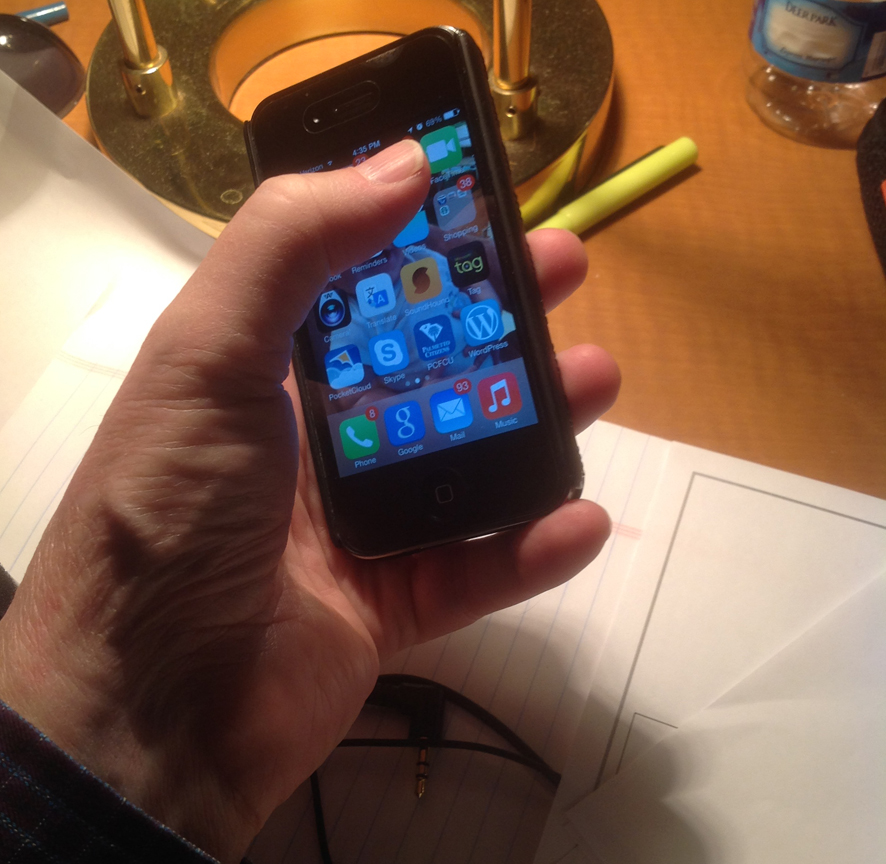
No, the iPhone screen does NOT need to get bigger

A couple of years back, looking to replace my old Blackberry, I had actually gone to Verizon to buy an HTC Thunderbolt. A guy who normally used all Apple products had told me he was getting one of those, because it was going to be better than the iPhone.

The Verizon guy put one into my hand, and I immediately said “Forget it.” It was way too wide. There was no way my thumb could reach all parts of the screen in one-handed operation. So I got the iPhone, because it was Baby Bear-sized — neither too big nor too small. Nice and narrow. (The guy who had advised me to get the Thunderbolt took his back the day he got it — although I don’t know whether that was width-related.)

When Apple just couldn’t resist making the iPhone 5 bigger, they wisely kept it the same width. That width is just right.

Now this, over at the WashPost:

Those who talk about Apple losing its innovative edge often point to the iPhone’s screen as a prime way to prove their point. While competitors such as Samsung, LG, Nokia and just about everyone else in the smartphone world has significantly pumped up the size of their smartphone screens, Apple has been far slower about making changes. In fact, it’s only bumped up the size of its screen once. And that was by a half-inch — from 3.5 inches on the diagonal to 4 inches starting with the iPhone 5.

There have been, of course, plenty of rumors that Apple has revolutionary plans for its screens, and on Monday Bloomberg reported that the firm is considering a new iPhone design that includes a larger, curved screen with advanced pressure sensors. Citing an unnamed “person familiar with the plans,” Bloomberg’s Tim Culpan and Adam Satariano said there will be two curvy models significantly bigger than the current iPhone and measure 4.7 inches and 5.5 inches. The phones, if they make it to market, would be on pace to debut in the third quarter of next year.

Let the screens keep getting bigger for those who want such a thing. For my part, I have an iPad, and don’t need a phone that doubles as a tablet.

Stick with Just Right, Apple.

Stick with Just Right, Apple.

Which is what some of the phones I’ve seen later look like. They make the Thunderbolt look anorexic. Pretty soon, they’ll need three hands — two to hold it, and one to touch the screen.

So do not follow this course, Apple.

Whew. I’m glad I put the kibosh on that right away. This could have gotten out of hand…

TIME: ‘The 140 Moments That Made Twitter Matter’

collage1

TIME must have had a lot of fun putting this together.

Maybe you don’t think Twitter matters at all. Maybe you think I’ve been wasting my time posting those 10,000 Tweets. Well, you’re wrong.

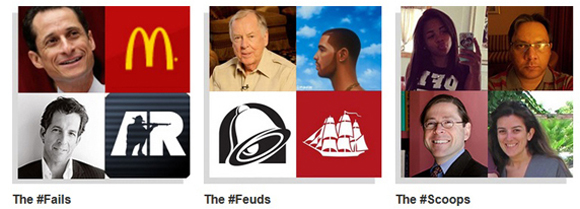
But don’t listen to me. Just peruse this collection of moments — with separate lists of #Fails, #Feuds, #Scoops, #Stunts, #Backtracks, #Rants, #Raves, #LOLz, #Debuts and #GameChangers — when Twitter really did matter.

Yeah, a lot of those are just fun, but many are serious. No one can doubt any more the power of Twitter as a medium that means business.

You can’t deny the power when…

Yeah, it’s a little less earth-shaking when a Hollywood star finds a fresh way to make a public fool of himself. Yeah, Alec Baldwin, I’m talking about you.

But there’s no question that Twitter matters now. And you don’t even need 140 characters to say that, to mean it — or too prove it.

Yes, that's Patrick Stewart posing in front of a sign that says "Picard." You sort of have to know about "Star Trek" to get this...
Yes, that’s Patrick Stewart posing in front of a sign that says “Picard.” You sort of have to know about “Star Trek” to get this. This is from the #LOLz category…

Have YOU been harmed by the DOR hacking?

Or do you know anyone who has?

I raised this question, sort of indirectly, earlier — I was questioning the value of Vincent Sheheen trying to get everybody outraged over the hacking, which broke a year ago, when we don’t know whether anyone has been harmed. I was reacting to this passage in an AP story:

It’s unknown if anyone’s identity has been stolen because of the hacking. A Federal Trade Commission attorney has said the selling and trading of stolen information makes it virtually impossible to trace an identity theft case to any particular security breach.

But since that was Friday afternoon, and things I post on Friday afternoons tend to drift off into a vague place, only a few comments were offered, none of them answering the question above.

So, let me know, straight up — do you know of anyone who has good reason to believe he or she was in any way harmed by the breach?

I know someone who has had a terrible time from having her identity stolen, although it happened well before any of this, so I don’t think it’s related.

Someone filed false tax returns for 2011 using my next-to-youngest daughter’s Social Security number and other info. It was a huge hassle getting it all straightened out.

Then, just over a week ago, she got this seriously threatening letter from the IRS saying that she had ignored their previous notices (she had received no previous notices) and that if she didn’t pay more than $7,000 RIGHT NOW her property was going to be seized.

There was no way she had at any time owed the IRS $7,000.

Supposedly, that is now straightened out, also. A guy at the IRS named “Mike” — no surname that I know of — said just to tear up that letter; it was all a mistake. OK, so we’re, um, somewhat reassured. (I assume that if there are any more threats from the IRS, we’re just supposed to say, “Fuggedaboudit. Mike says it’s cool….” We’re counting on Mike being the guy behind the guy.)

I don’t know whether that particular incident is related to the earlier theft or not. I think it is. I’m somewhat confused by the fact that my daughter was out of the country last month, and her purse was stolen — with passport, driver’s license, everything. She had to get a provisional passport from the embassy to get back into the country.

Oh, yes; one other thing — last week I got a notice from Adobe saying that when I bought PhotoShop Express from them several months back, my information was stolen. They want me to sign up for monitoring on their dime, I believe. I guess I’d better get on that; I’ve been busy the last few days and had managed to shove that to the back of my mind…

Unfortunately for Vincent Sheheen, I don’t blame any of these incidents on Nikki Haley.

My point is, people’s identities do get stolen, and it does lead to hassles. So has anyone had any such hassles that they know or merely suspect were related to the Department of Revenue hacking?

And if not, isn’t that sort of odd?

It’s a hoot the way Pinterest thinks it knows me

1b8b41e25511f0882a1034430b4bd102

Remember that picture I posted the other day of the protester from 1963?

Well, I posted it on Pinterest, too, and today I got a message from that social media service headlined, “Pins you’ll love!”

One of them was the picture above, with the caption, “Fashionable men.”

Pinterest thinks it knows me. It’s decided that what I want to see is natty young black men in skinny retro ties.

People worry about increasingly intuitive algorithms knowing too much about them. I look at the way those programs actually work, and have to smile. They have a tendency, shall we say, to leap to thinly supported conclusions.

You especially get wild results when the principal medium of expression is photographs, which are so subject to misinterpretation. I’m a word guy; I was interested in the words on the protester’s sign. All Pinterest saw was the picture….

Dear Leader and his posse are EVERYWHERE (not)

131015_officialsSilo_GOP.jpg.CROP.promovar-mediumlarge

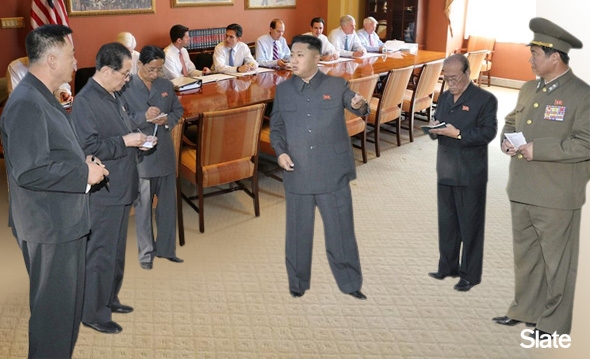
I enjoyed this little feature on Slate, making fun of North Korea’s supposedly notoriously bad Photoshop skills.

The doctored image above shows Kim Jong-un and his posse “working with Congress to finally iron out a budget deal and get the U.S. government up and running again.”

The one below shows them “working out an international meth purchase with a U.S.-based manufacturer.”

131015_officialsSilo_BB.jpg.CROP.promovar-mediumlarge

Gimme a break. Does a URL really have to be this long?

In a comment on a previous thread, I provided a link to an image that illustrated what I was talking about. Never mind what I was talking about; that’s not the point.

The point is, when I copied and pasted the URL for the image, I found it was, in my humble and uninformed opinion, longer than was necessary. Here’s the URL:

data:image/jpeg;base64,/9j/4AAQSkZJRgABAQAAAQABAAD/2wCEAAkGBhQSERUUEhQWFRQVFxgUFBUXFxQVFRQXFRQVFRQUFBcXHCYeFxkjGRQVHy8gIycpLCwsFR4xNTAqNSYrLCkBCQoKDgwOGQ8PGikcHBwpKSkpKSksKSksLCkpKSwpLCksKSksLCkpKSwpKSksLCwpKSwpLCwpKSksLCwsLCkpKf/AABEIAKIBNwMBIgACEQEDEQH/xAAcAAABBQEBAQAAAAAAAAAAAAAAAQIEBQYHAwj/xABOEAABAwICBgUHBgsGBQUAAAABAAIDBBESIQUGEzFBUQciYXGRMlKBk6Gx0RQVI0KSwRYkM0NTVGJystLwc4KUosLTF2Ozw+ElNUSD4v/EABkBAQEBAQEBAAAAAAAAAAAAAAABBAMCBf/EACoRAQACAAUEAQMEAwAAAAAAAAABEQIDEyExEkFRYTJSkfAiobHhBEKB/9oADAMBAAIRAxEAPwDcN6uXDcOw78JPLkfQvQdv9cwlc3JeTHWNj6DvxAcL8wtjAc1vDeOHH0fBKyMjeD39nb2r3hHuJDuIN7DxCksN8uPv7RZcMWbMTTvGVEwr3D/yPvQ5ysjBfh7FGNIRzU1pXRhBGXdw+CUBThSHtt3IbR96utPg0Y8oOFJhN+/PuPHxVkyn7EGDsPtTWnwmjHlXYUWU8wnkgw57imtPg0Y8q1jSMrHs9KdY8irExnkfakcwprejRhX2PIpCexTizsSGI8ldb0aUIBaU0sKnYSn4U1jSV2zPIo2ZVhhSBqaxoq/CksrBwTcP9ZJrejRQUKdgTHMTW9Gig4UEKwwIwhXW9LpK6yLKw2YSGIck1vSaSAkKsA3uRsxyCut6TTV+FIQp+ySBg7E1jSQUKU6FLFFzTWTSQ0EKfsxyUOvrGsFmgF38Pf29iRnejS9vMJGledG8lgJ43969sK0RNxbnO00QvQjAhXZNlumvYDv/API5EdqcgrlKPSlBG/x5577LN9I1SYqRrhkWnL0NPxWrhGSxvSzJaiw8S6/gQPvWSrmWyNocvGttRwd7/ik/CyoP1h7fiqdidZTph7tc/hTPzHt+KQ61TDiPb8VUgpCnTB1LYa3T8x7finN1wqBxHt+Kpg1LdOmDqXP4ZT9nt+KPwyn7PaqUtSFiVBa7GutR2e34o/DSfs9qpMCMCtQWu/wzn44fA/FKNcpuTfA/FUeBGBKgtdfhlNwDfal/DSfsHddUmBGBKgte/hxU+cfFwTzr5U+e4973+zNZ/AjAlQWvxr5U8z9p3xR+HlT5x+0/4qgwIwJUFtCOkCq85323/FL/AMQKnz3esf8AFZ3AjAvPTBbQnpBqvOd6x/xXoOkKpt5TvWSfFZrAkwK1BbRt6Qqnznesk+K9G9IdR5z/AFkn8yzGzRgSi4agdIlRzf6x/wDMh/SNUni71kn8yy+BGBKLhqm9JFQOLvtv+K9R0n1HN32isgY0jYbKUXDXnpPqeBP2ig9J9TzP2isjs0hiSi4dA0Fr5UVEzIi4jE4DI5netFHuFyd3o7+9YPo6Z/6jT5XGMXPLIhbxg6o7viPuVjZJWVF5HpKkKNo/yT3/AHBSVtwcMePkIQhe3haoQhc54VLh3ej71z/pim+ijb3k9t3D+UreNNjb+v6zXNemSa5iA5Nv4vKyQ2y5m1OTGJ6EhCEIgQhCAQhCAQhCAQhCAQhCAQhCAQhCAQhCAQhCAQhCAQhCAQhCAQhCDSdHslq6IYiCSLAC9yM7HlkCt69lrjk5w8HFc/1Dkw10R/atztfK/tXQ6ny3/wBo/wDjPxXnu99krRpyd3j3KWoWij5fo/r2qaFty/iyY+SIS2Sro50tCENGaiU9Q4O2ctse9rhulAG8Dg8cW+kXUxhzXCZ2e+nd6niuUdLk15mjlYekMBJ/zrqzVx3pUlvVEdp9jWMPtCzYWuWNCVMYnqpIQhCIEIQihbjUXV6iqaSslqWTF1I3bOMcgbjYWvIYGkWxDZOz/aCw66T0baJfJo3SQBjBqI2wxB0jG4nsEuK9zkPpG5lCFTrHqpTfIW19A+Uw7TZTRzYS+N24G7crZt5+WD2Chq9VKuKETyU8rITY4y2wAO4kb2g8yBvW7nqodG6PhopZY5pZKuOoqGxuEjIo2SRlzSRvJbG0W7XclpNJl8U2kquola6gnpsFP9IHslLowGsjaDkb4+GeNFpyOm1OrZA1zKWZweC5hwHrNFruF+HWbnxvldFNoMPpXOGM1PyplMyEDyscb3HK18eJuH7l1vRNLXCm0K3FJ+Uc6o+k3x9Z8Yfn1hs+GdrWXL9cWPg0pUYrscKgygg2IDnY2PBByOFwN9+aIZrbqbNQPa17XlpYwmQtIZtHMxPja7c7CQR6FTU1BJIHGON7w0XcWtc4NHNxAyHeuh9M1NVGfauLjRO2QhOMGMvMTiS1uLyrNfnbd3peiV9S2m0g6HHhEJ2ZABG3DSRhvvfhw+xFpgnaBqA4tNPNiDcZbspMQb55GG4b27l4U1DJJfZxvfhF3YGufhHM4QbDvXedG1laZdDtcZML4HuqyRfE8QXG1O/yj4uULVLRE8LG3MzGP0jK7ZwMaHAB7h+NvccobNvhAvZzc8xaFOZalarRVpnEkrmOhhdM1jW3xhgs67jk2zizLebnks4+ncAC5rgDxLSBmL7yuu6p6ILdMaVxxyNj2dQCWsPkzSte3CLWJc0EtHFWGmWPlrtGNlu7RjwwxNe032wids21OLMvJw2ByNzlkVSnEXxkWuCL5i4IuOYvvTV1jpKrnvpahktLVDZ1ILJ5jDs2FxthgLQHGNzRuF7XFyqvodqHtdWhrA9opXvzjx3kbYMZe24hz+rx9CFOeYUi7ro7WKocNDvcxm0qjIyoeYQHbNuIhgy6jSM/QFV6s6PhhOl5wx7ZYZ3Mj2UTJJYYi8nFFHIMOd3bxuYhTjyFqukaWOSqbJHDJDtIWPcJIxCXuu4bVrASAHAD0grKolBCEIBCEIgQhCC01alw1UJ/5rB4vaupVzbSydj3D3G/tXJtCyYaiI/tt/iC63X/AJWXtffxa1ee732Lone7uHvVjZV+jR13D9n7x8VYFbMqf0s2Z8ghCF0eFhUUzZGlrhcXByNi0jc5p4ELypZHX2cmb7Xa+wAlHnZeS4XzHpUyyLrPi4t6wTvRYzw43XEekaW9Y7lieR3GR1iu3tbmD2hcC1xlxVbs+A9pJ+9cYae6mbvT0xozT0lJCEIRAhCEUIXQNA09PR6JFdJTR1MklRsSJRdkcYvisNwccJz5uHKxmwUNCyGv0hHS7RkckUdPTzghseNsZc5zbnLFIbA8ALb0VzJFl12n1WojpOivTN2VdS7bYFzsEMga1+ID6zSLjCcsyexeBh0b8ibVfNzerVmkbHtX9fhjlP1zYE25oU5SErnE7811oag0bK3SL3NYIaVsZiile9kIdNFjvK9oLgwHhn5XYsTr5RUkc7DRPjLHxh0jI3ukZFICQ9rXOzLTvF+3uQUlHTSzvZDGHSPccMbAb52Js0E2GQJ9CkaQpqiilfA9z4nttjY2Q2u5ocL4DYmxC2equhaSChp6uoidNLU1QgiwyOj2IDy3GMO912E577gZZqy0zq9BU6Y0lLU4jDSRslexhwukIhYQzFvAsDu7M0HM2aXnFiJpQQLAiWQWHIWdkMh4IOlprOG2ls44nDaPs5wtZzs8zkMzyHJdEp9VdHyuoKkRSMp61z6d0JlcTFMC4Mc1/lFt43gj9ppy3KwHR1RuwkU04vWvpXjbmzY2bT6YEtzbZo9NxdDdy9usFSHOcKiYOfbE4SyAuwizcRvnYZZoqtPVErAySeV7GkFrXPcQC3JpAJyI4LbUWgNFPpKmrc2q2cM4jDWuYSWucGxhl/ODmkl265tzWd6QNXo6KtdDCXGPAyRuIguGMXwk8cwiKvSOm6ioa3bzSytZk3G5zg2/K+QNvSpejq6upIdrC6eCGRwG0biYx7sLi0B25xsHbuS2GjoKFur+OVs/XqAJDGY8TpmMdgtiNtkGndv3qboWngqNC0UddJKGurTFFs7FxNpI2M6wOFgxOO7gOaKwcWu1c3ABVTWj8gYrhvVLcgf2SR6Uyn1wrGTuqG1EgmeA177gl4AAAcCLOAAG8cFrNHdFzXVVax7pXw0bg0NiDNvMXtD2tbjIYCGkXJ48l6Q9FkJ0iKV08jWyQieHqtMh3h0cpF2tLSN/FDdgNIaSlnkMsz3SSO3ucbk23DsA5KMt/ozo6p6qeT5LUyTU0ELJJHsjvK+R2P6GJhtmQy+e69u1UmvGqBoJYwHOdHNGJGY24JG8HMkbuDmkjdzRGbQhCAQhCIEIQgl6JP00f7zeXPtXXK03lfyIjcPTGw8OWY9C4/QflGmwPWGR3b+K7BOc28Po2e4j/Tb0LzPL3HB2jnfSHuKtbKp0cfpB3H3K2WrK+LLm8kshKhdHJPpqlsjA+Nwexwu1wNwR2e5Pac1U1OhnRudJSFrHudikiOUM/PEPzbz57fSpmi9JCdpIa5j2HDLE7y4n2vhdzBBuCLgghZ8XDRgjfZOvZpJ4AnwBK+d9YX3qH9mEeDQvoDSLrQS/2b7fYIXzzpl+Kol/fPsNlyh2RmJ6a0JyqSEIQiBCEItr/V3Xepo43xxFjonnEY5WCRmIW6wB3HIeAXro/pBq4pZpHOZN8ottmTMD434RZt25WsLAAZWAHALNoQtq4OkmqbWGrcIZJcGzYHx3ZEy97RAEFm8i9/rHmnjpKm2Qi+T0mzE3ygN2JA2m0Ml7B/bh52yusihC20PSpUGpfOYqf6WMRTxYH7KZrb4TIHOJLgCW3vuysVn9YNYH1cjXOZHG1jdnHFEwMjjZcmwG85km55qrQhbVau9IMlLT/J3QQzxtkE0W1BOykvfE23bc9hJ52UqTpMf8tkqW08QE8WxqYcT3MnG7E529rsNm3A3DcbrFoQtotO66PnFOyKNtPDS5wRMLn4XXBxuc6xc649p5kq/rOmSoeam0TWieIRNaHk7EgSB0rer1nHadnkhc+QhbV6K1ziioDROpBI18jZZH7VzS8se1zRYNy6rA3I9qj68a1M0hO2ZsOxcGBjuvjxYfItkLWFws4hC2r0LrhDHQuo6mmM7Nrt4y2Qxlr8NutYZjLhzKm0GvVKylpIHUsp+TTNqMQmHXkGIuNrZAuO5YdCLboQ6SKd09XtKaQ01aGmaPaDaNkaLbSNwtYWDcubQb8F4av670dLW7dlLIyNsWxja2TE83N3ySucc3nK1rWssIhC2u1V1tgpX1UT45H0VUMBaHNEzAC7A4HIFwDjfdnY8E1umtHfKmF1NM+lZE9lnyF00shuWyP6wa2xys08jnayyaEQFCEIgQhCAQhCD0pnWcDyN/Bdfe67YnXvigjN+ebze/HfvXHo967Ax30NNbcIMNv3XC3vXjE6Q9KD8q3v8AuVyQqOldaRneFe3WrK4Zs2NzUJUi6uKzTikKYRc+hZ8zh3yuUTTr7U0v7o9rwF8+Vj7yPPNzj4uK75rW/DSvPa3+O/3XXz4Tcrm7HRr0XnHvXohIQhCPIQhCAQhCAQhCAQhCAQhCAQhCAQhCAQhCAQhCAQhCKEIXtSUjpZGRsF3vcGNHNziAB4lB4oXRv+HdC2pZRSVsgrCBiwxgw43NxCIOOeLlc8RxNlg6bRUsjnNjifIWXxBjHPtY2ucINhkhSKhesNK978DGOc/PqtaS7Lf1RmtDrrqrHRCmMUj5BPFtSXtwEZiwDd7cjuOaDNMXYaZn4rSEgD6N+7teHD2EeK481da0XMHUFIeQcw/3WRj7l5xPcPaJ3Xbbzh7wtABms3Hke438FpQ3Nd8vhnzjXhCc9t0LtbOsSmDeV6leROZ71nxzs0ZfLP6/zYaMn9o/9KT4hcIC7X0lyWpLc8fuA/1BcWazt9q8O0HMT00MsvbY/tN8VCYeaF6bMec3xTXNA+s3xCWlGoT8A89n2gm2HnN8QqURCXLmPEIt2t8QhREJbdo8Qkt2jxCFBCUN7vEIw9o8VLKIhCUBUoiEtu7xCT+t4QoIS4D/AFZGA8vchREJ2zPJJgPJCiIS4DyRgPJCpIhLgKXAUKWmr1TSMc81kMkzSBgEchjLTc3JIIuLWTtXdJRwV8MxBbEydr7HrFsePK/MhvuVTgKTAotS7SzUlz9NSSy07KijqPpGzlwwsu0FuCzrl2IBo7DdR6N8z9Hj5pj2Unzg4TshObGNLmsxXzwYRGTwzPC65KKmQNDQ94a03a3E4NaebRewPaEU1bLGSY3vYXCzi1zmkjtLTmi7u0zWNZpk0FvlghiEeC2LHhdtsHDFfBf9rtWS6X4JvxB04di+StbI5w/O3u8EjLFxKwVLWyRPxxvex+fWa4tdnvzBvmnVOkpZWtbJJI8N8kPe5wb3Ak2REa66xq9Ni0bAbeTK5vjHe/8AkXJ8J5LpWpchOjyD9WpBHcYSPfZeZeoWwWkIWcecvatEw3APYPaAu2Xwz53JUJUi7bOCysoMtQLEk2FzmCRuKnLHaT0oWkNkBjvm1rhYm2RNt5zCz42nLLph5mdckgNuGgWORsSTfibJkDpGCzJpGjk0tAHosojdKx3zcEvzrH5wXLZ3qU/5XN+sS+LfgkfVTfp5f8n8qgnSsfFwSfO0fnDxU2N00Tyj88/wi/kTC6Q/nSf7kB/0KKdKRn67fFI3SUfnhXbyb+Eloff8p4xU5/7aXC7i5p74KU/9tR36YiAu57QO9NZpmEi4kafSmyf8e/yY82eopP8AaS7E84/8PSf7S8vnGLz2+Ka7ScY+u3xU2Xd7upu2P/D0n+0gU/8AZ/4ak/215fOkfnt8U06Tj89vilwm73FNn+b/AMNSf7apqfSj5HdRlNmAQHw0wdZ7gIwforYnXFm3urH5yjH12+IWdhYWyxPNjg2eIAizjCGgWNiMJwA55hSah0wxcbvet0rJG6xbTHfiw0sLgLOLLFzWEDrNIzsUxmm3/oot9s6SPw/I79+Q5L1NQTHMGuDcckjt4uRKCC12JhyFzmOZtbePaXTBcWlwF2Nc1pNQM7swNe8YbOkAuLkZg8LZlqHgNM5eTH24aOEgc7nZi2V06WotgLmQWkYXt/F6UXa0EuO7LIHwT5tKXMuUYbK57sJlyBka1twcAcLYTlfO6hTkPjjbiZtIo3xNtKMJDy7rnq3Dm43WGYUWsJ0dVG422UF7OcMVJG24Y0uNiRnkDuUbSXmiGBhsHX+StDg0gEE9UgDMK4qtMOebuuR9MANtGbCaFsWHMbgW4u8pkukC4PN7F2zv1w4kxw7MtvgIwHJ3eXK2VCvoYi5mLYUrgCGAupw3E4glo3DfYgHdeyuINDQvY14hp+sA4Xp2Xzz5rwmr8TAw4vKiJGK7WiFgYWRg2ADiATewuTkd6sKKdrY2NL23DQDY5XAz9vuRJh5fMEX6Gn9Qz4o+YIv0FN/hx/MpnypvnDxSuqm+cPFXZ43Q26Di/QU3qB/MnfMcX6Cm9QB/qUkVLTucD6U4SjmPFDdD+Y4f1el9QP5kfMcP6vS+oH8ymGQcx42S7RvBwPcQpQifMkP6tS+o/wD0l+Zof1al9Sf5lM2nBMc+2/3qqiHQkH6tS+qcPc9NdoSn/Vab7Mg/1qW6ccx4hMNSPOHiF5mSkV+gKY//ABaf0bZvukXuJNlFsoo42R42vIaZCSQeb3FO+Ut84eIUatnBG++72qXJSfivflwG62XHmtHS+Qzta33ALF/KuLnWwsIOV2uDQ4gWyLXHcDu5rXaIlDqeItNwWCx3cVqypZc5KQlASLs4VKyXhUUUbyC9jXWvbE0EgHeATuXvZFlzt0qUI6Gg/QxerZ8EnzHT/oIfVs+CnWQmxurjq9Tfq8Pq2fBH4O0v6tB6qP4KwQoXKuOrlL+rQeqj+CZ+DdL+rQ+qj+CtEKVC9UqDSeplNMzCI2xOBxNfGxrSCLgXFrPGfklVGhejZkMzZJJGzNaD9Hsg1pJGWK7jcC9+8LbJClR4XrlmNb9HxR0UhbHG13VDXNY0FpL2i4Nu0qj6MqWOaCUytbI/aEWcLkNwgZE8L352Wj18b+Iy98f/AFWKn6NaYuocTSA8TSOY47tzLtd+y7cRw37wpMRcPeGZ6Whj0FT3wmCIkZg4R1wePfwPoTnat0x/MR+BHuKlsdtG8WuaSDfMsdxvzB39oIXpG+45EZOHI2vbtHLsXrph4mZVL9UaQ/mGC4ytiBHg5YbWPQnyd2EBpxXwOAFyOIFxmRdX+t87g82OWIDt6sbMu7M+K9KPRrNkwtx3LWkhsjm3xYb8e9Y8yYxbeGnDgmI5YlkILCcFrC5Nm4hluO/emUtM3MktkyacOHFY8iQQQM+R3LdtogQOrJY/82+ds8uJvcd4SnRDLWEb7HrOtIBmd47SvMbPVMNPonDguwNJaT2uGI2cQdxNrWUd1G3E0EZXzy4ehaTTNIGPaGtIGAWu4ONiTuPs9Cpm32jbb75dh5rvNdNvEc0nR6OgjJdsY6iO4aGglkjMRscXWviG/IEGyunau0b4xsg4yNIvwe4cGXccIHHnkq4V0pF8bvEp7K2Tz3eK4au/DtpT5NGhQ6ZsbYMjZ2dwWtsLuD9zu6yr9YKdsBcWsdhyDXEAC5wnE7ebdYjLirJ1bJfy3duZ5IZpGTz3buZScyJ7Jpz5Jo/R8MsJeGvDoxdwLSwSki+FtyQOV1QyV1yGiBrHYg0NBc4kDym4ibAnLNXw0nLxkef7zj7yvKWvcbXJyNweN+zkvM5kTwunPlFo9Hu3Pgd1iTiBthFsgGg2Lu/LctDT6HoC3r7RhAbfG57cRIuSA02425XCqnaTl343eJ+K82aTl891u9XDmUk5ft7ad1TgeGGjeA7EceN0paQWmxBwm1iCN2ZcFL1d1Ddm+d4w2GBsLnBrgR5ZNgfR2lQ2aSfbNzj6SU75dJ57h3OIC9xnR3hJypraWhfqPTcRKf8A7Xph1CpfNl9a9UPznIB+Uf8AaK8/nSW/5R/2ivWth+l50cf1NA/o/owMTiWNBAxPnawXNyBd+V8j4J9PqDRuF2Pa8Yg3KoheMTvJbl9Y2NhxsolFpkhsgfLM3EGNBYBIMOEbQYTIyzjuDgbi5tnYj2rtK0z8H5ZhZGGMEUMbGNfGXfJpgHVBOKPG/K/WxdiasTxEO2DJw1+rFMT+ekk9HtNluNw4tAliOINOF5aGi5AORtu4p7dRqXDfq4cOPFt47Fl7Ywb+Tc2vuuoI0xAJYpGGpaYWtZH9HAWtY0Fr2ubtbuMmOQkhwt1cjhBHjDPTNjfG01Aa6nbT22cJAcHMe+ZoM3Vxllyy+8k3zsnXHiPu9xkZf1z9v6/N1/SalRsuWwucLFtnkvbnk7qu7rXVjU0crGkiF7yMg1oFz2C5sM1nK3WSCSR0jmzYnNw32EOKPOTrU7vlP0RIeMRsblt8tygu0hTlzXXqI8P1YIYImZsax5DTUOs5zcYceN27sOfvWrj+XKP8bBi+WP8AaUbWnWWcSNijbJA5ou9riA84hcA2uABzBzuheFXW4nDZ4gxkcUTcYaHOETMJcQ1zg25O7EdyFmxY5meU0ojh05CELcxhIUISEkJEIXuXgIQhQCChCDN6/H8Ql72+8qL0af8Atkf7038ZQhJ+TrHxaKfKoyyvG6/bhecN+7gldlMP3D7LW8EqF67PLH63eX/fd/AxWlCPoo/3GfwhCF87/aW7tBkcDcbThF8TTew85ybTQt6nVH1eA80oQiKLTgts/wCzHvcqFv5QJELRPwco+azZ5KcPvQhYG4+ya37ikQvSSY3cvOTd6UIUhJO4f1zTAhCqHcPSvSJKhRTZN3pXi7chCCWzyR3D3BKhCKcBkV6xjJIhEl4lIhCKVCEIP//Z

Really. For those of you keeping score at home, that’s 9,903 characters. Or, to stretch it out, nine thousand, nine hundred and three.

Come on. Even if you assign a different combination of letters and numbers to every image ever created in the history of the planet, or ever will be created before our sun goes cold billions of years from now, you wouldn’t need that many characters to designate a specific one of those images.

That’s just ridiculous. TinyURL, anyone?

I couldn’t watch Werner Herzog’s anti-texting-and-driving video; it made my heart hurt too much

At the behest of AT&T, German filmmaker Werner Herzog made a half-hour video that shows the real-life human tragedies that texting while driving causes.

I couldn’t get through the very first story. It made my heart hurt too much. From the very first second that I saw that young woman holding her fingers out to her side, I knew that there was supposed to be a small child clinging to them, and that the child was gone.

It’s brutal. But as an updated, higher-quality film of the sort they made driver’s-ed students watch back in my day, it’s got to be effective. I hope.

So what is Amazon suggesting that Jeff Bezos buy next?

The credit for that headline goes to our own Bryan Caskey, who tweeted it to me yesterday (playing off of my earlier post wondering why Amazon would think I want to buy “geek” merchandise). How, indeed, would his own algorithms predict his future purchasing behavior based on his latest acquisition?

What, pray tell, is the founder of Amazon going to do with The Washington Post? Does he think he can make money where everyone else has failed? Does he seek influence? Or did he buy it as a hobby, sort of the way other people collect matchbooks or the like?

From his perspective, it doesn’t much matter, since he got it at such a bargain: $250 million. Less than 1 percent of his wealth. It’s about like me buying a single copy of the Post.

Let me elaborate on that figure.

Knight Ridder paid $300 million for The State and its smaller properties in 1986. As recently as 2006, when I speculated in a column about buy the paper myself, I was figuring it would still cost hundreds of millions — balancing the decline of the business against inflation. Mind you, this was just before the bottom dropped out of retail advertising.

Now, I just don’t know what it would cost. But I do know that, historically speaking, Bezos got the WashPost dirt cheap. Since the paper hasn’t changed hands before in modern times, we should look to the sale the other day of The Boston Globe by the NYT. Twenty years ago, New York bought The Globe for $1.1 billion. They sold it for $70 million. They ate a billion-dollar loss, and for all I know, consider themselves lucky.

So what is Bezos going to do with The Post? I don’t know. I wondered the same when Warren Buffett bought Media General. From what I’ve seen and heard, he hasn’t made any startling changes in the business operations.

But Bezos is more of an innovator. Is it possible that the guy who built a new kind of retail empire from the once-novel idea of selling books online has figured out, or will be able to figure out, the new business model for the news biz? I hope so. He’s got his work cut out for him. The collapse of newspapers’ business model is based on an economic trend that’s bigger than Amazon — and one of the secrets of Amazon’s success.

Newspapers — and local TV and radio stations — are the victims of a long-term trend in marketing (dating from direct mail in the early ’80s to the increasingly sophisticated targeting of the Internet) away from advertising in mass media to going after specific, individual customers. Advertisers became less interesting in reaching whole communities, choosing to be far more picky.

Since Amazon is the ultimate direct marketer to individuals, Bezos has to understand the phenomenon better than almost anyone. It will be very interesting to see how he applies his insights to The Post, if he chooses to do so…

The joys of a real bookstore

There was a thought-provoking little piece in the WSJ today by a bookstore owner in Tennessee:

The weather in Tennessee has been unaccountably beautiful this summer, with late July temperatures in the 70s rather than the 100s. The drive from Chattanooga, where President Obama gave his jobs speech at the Amazon warehouse Tuesday, to Nashville, where I am the co-owner of Parnassus Books, is a scenic two hours.

I wish he’d come by.

Thanks to the Amazon warehouse, there are about 7,000 new jobs in Chattanooga, many of them seasonal. But to celebrate Amazon as an employer is to ignore all the jobs that have been squeezed out of the economy as independent bookstores and other small businesses have been forced to close their doors, unable to compete with the undercut pricing the online retail giant offers. And with those shuttered bookstores go a big part of our community.

In the time-honored tradition of bookstores everywhere, our store is staffed by readers—people who want to talk about the books they love. We’re not handing out algorithms based on what books other people have bought. These aren’t widgets we’re selling….

Actually, it was more of a feeling-provoking piece than thought-provoking, I suppose. And my feelings were conflicted.

First, I felt sympathy for the person trying to operate a mom-and-pop bookstore in this age. At the same time, I noticed that this person didn’t get into the business until 2011. A former editor of mine retired more than 10 years ago and started an online used book business, so it’s not like this phenomenon snuck up on this person. This is somewhat different from the character in “You’ve Got Mail” who inherited a charming little bookshop.

Second, I felt identification with someone who would rather browse books in person than buy one online. That happens to be one of my very favorite leisure-time activities, when I have leisure time. So it is that I continue to root for Barnes & Noble to hang in there with the real, live bookstore thing.

Third, I felt guilty because, well, as much as I love browsing a bookstore, I’ve always had a preference for Barnes & Noble over the charming little mom-and-pop types. Even though Rhett Jackson was a friend of mine, I seldom frequented his shop. If I went there, it was to quickly find a book and buy it. There’s something, for me, about having the vast space and great variety of B&N to wander in, while sipping a hot Starbucks coffee. (Here’s another confession: When I go to the one on Harbison, the one I frequent most, I actually go to the Starbucks over across the parking lot, rather than getting my coffee in the bookstore cafe. Partly because I can use my Starbucks card there.)

Of course, as I’ve confessed before, I usually don’t actually buy a book at the end of those browses. But when I do buy a book — as I did just this last weekend — I buy it at B&N.

Finally, I felt out-bookwormed by this woman. As you would expect from someone who sells new books, she’s very up-to-date in her reading. I seldom read a book that was written in the last 10 years, or even 50 years — there’s just too great a wealth of old stuff that I’ll never get to, I have little interest in keeping up with the best-seller lists. Since I started reading the daily book reviews in the WSJ, I have gotten a little more interested in recent books — but when I get one of them, it still tends to sit on my shelves for months or even years before I actually read it. I like to let them age a little. So much of the rest of my life has been spent keeping up with the latest, and meeting deadlines. Part of the pleasure of a book is knowing it will sit there and wait for me indefinitely, and be just as rewarding when I finally pick it up.

I use Amazon for all sorts of things. Particularly phone accessories — USB cords, earbuds — which are amazingly cheaper than in a store. Or when I’m shopping for some particular item someone wants for Christmas or birthday, and I don’t immediately find it in the first store where I look — I’ll just stand there in the store and order it over my phone.

But books I want to hold in my hand before I buy.

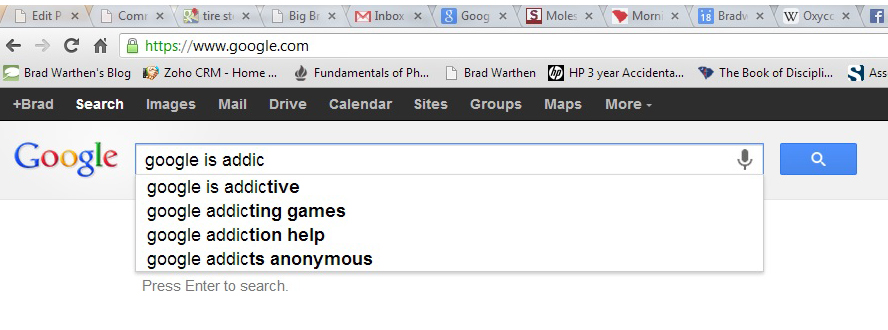
Forget oxycodone. The most addictive drug is Google. And we’re past the point at which it’s just a ‘choice.’

addictive

Back on this post from yesterday, we were having the usual argument about the intrusiveness of private companies vs. the government, and as usual someone said “my use of Google Maps is voluntary,” an assertion which I questioned.

My use of Google Maps and other Google products is no longer in the realm of what I consider to be “voluntary.”

Google is as much a part of the daily infrastructure of my life, and the things I need to get done, as the streets I drive on. Its services are something I rely on, in a more direct, frequent and ubiquitous manner, than I do the direct services of the police.

I don’t see how to engage modern life without it — or something exactly like it. I couldn’t get through a day of ADCO work without it, much less publish this blog. Without Google, both of my active email accounts go away, my browser (the instantaneous searches that occur when you type into the URL field, making it unnecessary to know the address of anything, is indispensable) disappears; there’s no YouTube, no really utilitarian Maps program, and then all sorts of other useful things like Google Books, Translate (no longer can I just say, Well, that’s French and I don’t understand French… no excuse), etc. Without Google Images, I have to fall back on my highly flawed memory for names and faces.

One can attempt to drop off the grid and no longer use Google, just as one can drop out of society at large — quit paying one’s taxes, go live in the wilderness off the land. Theoretically, at least.

But the cost of doing either is pretty high…

Yes, there are other services that do these things. But that’s not the point. If Yahoo or AOL had succeeded in being what Google is, or if Facebook were to succeed in being what it wants to be, then it would be the same thing; we’d just be calling it something different. And why ever use competing services for any of these functions, when the very fact that they are all knit together seamlessly magnifies their utility exponentially? I would no more want to switch platforms than I would want to try to leave the roads and drive on a railroad track in my car.

Kathryn writes, “Google is a gateway drug.”

Yes. And more addictive than most.

I always had trouble with being distracted by looking things up. It was just too seductive. A dictionary on my desk was a dangerous thing. I couldn’t look up a word without running across several other words on the way that fascinated me, and each of them led to other words, and on and on.

Fortunately, I had a good vocabulary, and seldom really needed to look up a word.

But now that I can, instantly, look up anything, I cannot stop doing it. A thought about a word or a fact that causes my brain to wonder or doubt even slightly (something I have always done, constantly; it’s just that for the first decades of my life it was harder to scratch that itch) sends me on an immediate search.

For instance, last night I watched “Looper.” Almost immediately, I wondered who the protagonist was. It looked remotely like , but the expression and even facial structure was wrong (It was him, but he wore extensive makeup to make himself look like a young Bruce Willis). Then I thought, “Isn’t Bruce Willis in this? Why haven’t I seen him?” So I checked, and yeah, he was coming up. I see Emily Blunt’s in it. Isn’t she the girl who… ? Yes, she is. She’s really something. Jeff Daniels is surprisingly good in this. What’s his character’s name again? And so forth… (By the way, the movie wasn’t very satisfying.)

OK, so most of that was IMDB, and IMDB isn’t Google. Yet. But the fact is, I often use Google to flesh out what I find in the movie database, because the info there is pretty sketchy. I like depth in my trivia. I used to do this with my phone, which is always clipped to my belt. Now, I usually have the iPad within reach as well.

In any case, now that it’s possible to look things up constantly, I can’t stop.

You can point to this as a character flaw (or perhaps an illness), and you have a good argument. But aside from the compulsive aspect, a certain amount of this is necessary to practically everything I do, everywhere I go.

Let’s say that a person only really needs to use these services a tenth as much as I do. I could concede that. But if a person doesn’t at least use them that tenth amount, he’s not going to be able to keep pace with the world and interact with other people at the pace that society demands — at least, not in anything I’ve ever done for a living. (Yes, I know that lots and lots of jobs today are still not information-based.)

That puts Google into the realm of essential infrastructure, again like the roads that are a function of government.

It at least gets us to where any assertion that one is not forced to deal with Google (or, for the sake of argument, with some other “private” entity that’s just as useful) on fairly thin ice.


Big Brother doesn’t need NSA to know where you’ve been

Several of the most amazing things I’ve seen technology do in recent years are associated with Google Maps.

Such as the traffic feature.

Look at Google Maps on your phone, and you’ll see how well traffic is moving — or whether it’s moving at all — on the road ahead of you.

Google does this by — Edward Snowden and the ACLU should brace themselves at this point — keeping track of all the Maps-equipped phones traveling on the road. Not only that road, of course, but all roads, all of the time. In real time.

Now, we see that law enforcement can do, and does, something similar by tracking license plates:

The spread of cheap, powerful cameras capable of reading license plates has allowed police to build databases on the movements of millions of Americans over months or even years, according to an American Civil Liberties Union report released Wednesday.

The license-plate readers, which authorities typically mount along major roadways or on the backs of cruisers and government vehicles, can identify cars almost instantly and compare them against “hot lists” of vehicles that have been stolen or involved in crimes.

But the systems collect records on every license plate they encounter — whether or not they are on hot lists — meaning that time and location data are gathered in databases that can be searched by police. Some departments purge information after a few weeks, some after a few months and some never, said the report, which warns that such data could be abused by authorities and chill freedom of speech and association…

You have to pity the ACLU, Rand Paul, et al. They are doomed to worry themselves to death. Because this toothpaste is not going back into the tube.

I liked the way it was put in an explainer of the Google traffic function:

So how does Google know what traffic is like on the roads, nearly all the time? From our smartphones, of course. Whether you like it or not, “telephone companies have always known where your phone is,” Dobson says, because cell phone companies need to use location to appropriately charge customers for calls. That means the companies are constantly monitoring location based on the strength of signal to a cell tower, which allows the phone to switch towers as it travels. Since 2011, the Federal Communications Commission has also required that phones come with GPS, so between the triangulation with cell towers and the GPS requirement, your phone is a marked man….

Now, this has stirred up some controversy about whether the process is an invasion of privacy. But both Dobson and Zhan Guo, a transportation policy professor at New York University, nearly laughed when asked about privacy concerns. That ship has already sailed….

Indeed. One might as well laugh.

Some will say that a private company keeping tabs on your every move, for its own greater profit (and utility, of course) is preferable to the gummint doing so.

I don’t think either is necessarily preferable, just different. And either way, ultimately inevitable.

‘I’m not just drinking beer; I’m making us more energy-independent’

Just had to share this, courtesy of the Daily Mail:

Mobile phone owners could soon be able to give their batteries a boost with their own urine.

British scientists at the Bristol Robotics Laboratory have developed a way of using urine as a power source to generate electricity and claim to have created the world’s first microbial fuel cells (MFC) powered mobile phone.

While many people might turn their noses up at the energy source, the researchers said that it is the ‘ultimate waste product’ and does not rely on the erratic nature of the wind or the sun….

You have to wonder — is this for real, or is the Mail taking the p___ out of us?