Category Archives: Education

If you want some REform, I know where you can start

New SC House Speaker Jay Lucas put out this release yesterday:

Speaker Lucas Creates Task Force to Advance Education Reform

Appoints Legislators, Educators, and Working Professionals


(Columbia, SC) – House Speaker Jay Lucas (District 65-Darlington) announced the formation of a task force to begin laying the groundwork for substantial, necessary education reforms. Speaker Lucas carefully selected the members of the House Education Policy Review and Reform Task Force based upon their experience and overall commitment to education.

“Every child deserves the opportunity to receive an exceptional education that paves the way for tremendous opportunity and lifelong success,” Speaker Jay Lucas said. “Effective education reform requires more than just suggestions from administrators; it demands valuable input from our job creators who seek to hire trained and proficient employees. All available avenues should be explored to guarantee our students receive a workforce-ready education that prepares each child for the 21st century.”

Speaker Jay Lucas selected Representative Rita Allison of Spartanburg to chair the House Education Policy Review and Reform Task Force. Rep. Allison currently serves as Chairwoman of the House Education and Public Works Committee. The Speaker also appointed six additional members of the South Carolina House, State Superintendent of Education Molly Spearman, several working professionals, and five representatives from the plaintiffs in the Abbeville County School District v. The State of South Carolina Supreme Court decision to participate in this task force.

“I am confident that this unique and collaborative task force, under the leadership of Chairwoman Rita Allison, will successfully reevaluate our educational mandates and institute knowledgeable reforms that will put our system on a path to excellence,” Speaker Jay Lucas continued.

Chairwoman Rita Allison stated, “Speaker Lucas’ revolutionary efforts to create this task force and include private sector professionals and representatives from school districts is truly commendable. Each member of the group will provide exceptional insight that will lead to significant education reforms for the Palmetto State.”

“I am honored to be part of Speaker Lucas’ team, which brings the General Assembly and education community together,”Superintendent Molly Spearman said. “It is vital that we develop a consensus and solution that benefits all students, regardless of where they live. Together, we can develop true education reform that ensures every South Carolina student is college and career ready.”


Members of the House Education Policy Review and Reform Task Force


            Rep. Merita A. “Rita” Allison, (District 36-Spartanburg), Chairwoman of the House Education and Public Works Committee

            April Allen, Director of State Government Relations, Continental Tire Corporation

Rep. Kenneth A. “Kenny” Bingham, (District 89-Lexington), Chairman of the Public Education and Special Schools Subcommittee, House Ways and Means Committee

Rep. William “Bill” Clyburn, (District 82-Aiken), House Ways and Means Committee

            Rep. Joseph S. Daning, (District 92-Berkeley), House Education and Public Works Committee

            Lewis Gossett, President and CEO, South Carolina Manufacturing Alliance

Rep. Jerry N. Govan, (District 95-Orangeburg), House Education and Public Works Committee

  Rep. Jackie E. “Coach” Hayes, (District 55-Dillon), House Ways and Means Committee

            Rainey Knight, Former Superintendent of Darlington County Public Schools

Rep. Dwight A. Loftis, (District 19-Greenville), House Ways and Means Committee

Superintendent Molly Spearman, State Superintendent of Education

            Dr. James C. “Jimmie” Williamson, President and Executive Director, South Carolina Technical College System


NOTE: The five invited representatives from the Abbeville County School District v. The State of South Carolina Supreme Court Decision were chosen to ensure that every child in South Carolina is given access to the best education, regardless of where the student lives. The names of these individuals will be announced at a later date.

The task force will be required to submit a report to the Speaker by the first day of next year’s legislative session (Tuesday, January 12, 2016) with their findings and suggestions for reform. Speaker Lucas has highlighted a list of specific reforms he would like to see addressed in the report’s findings:

1) Structural – After reevaluating the current policy, the task force must develop a structural framework that allows every individual school district to provide the opportunity for a twenty-first century education for all students.

2) Curriculum Standards– Highlight the workforce needs, particularly familiarity and access to technology, of the state’s private sector employers and develop recommended updates to the statewide curriculum standards that emphasize the needs for increased math and science education. Curriculum guidelines should be reevaluated from the early, formative years when students enter the state’s public education system all the way through high school.

3) Programmatic Review – Conduct a thorough review of all current statewide requirements to determine what can be eliminated, consolidated or updated in order to increase available resources for classroom instruction.

4) Work Force Development and/or Tech College – With an emphasis on creating a job ready workforce, develop methods to enhance access and availability of current technical college resources.

Looks like a pretty good group, and I hope they can come up with a real reform agenda, so we can get beyond counterproductive fights over whether to pay parents to abandon the schools.

Here’s a modest proposal for a place to start…

I see that Coach Hayes is on the panel. You know, the guy who (unless the system was changed when I wasn’t looking) gets to appoint the members of the school board that are theoretically his bosses, in his role as head football coach and athletic director at Dillon High School.

The bizarre patchwork of ways that school boards are chosen across the state — with some still employing the old system of having state lawmakers run things — is one of the more obvious things we need to reform. Along with consolidating districts, making it easier to fire bad teachers, and instituting some merit pay for the good ones…
 

You want to REOPEN the epic school-equity case? Really?

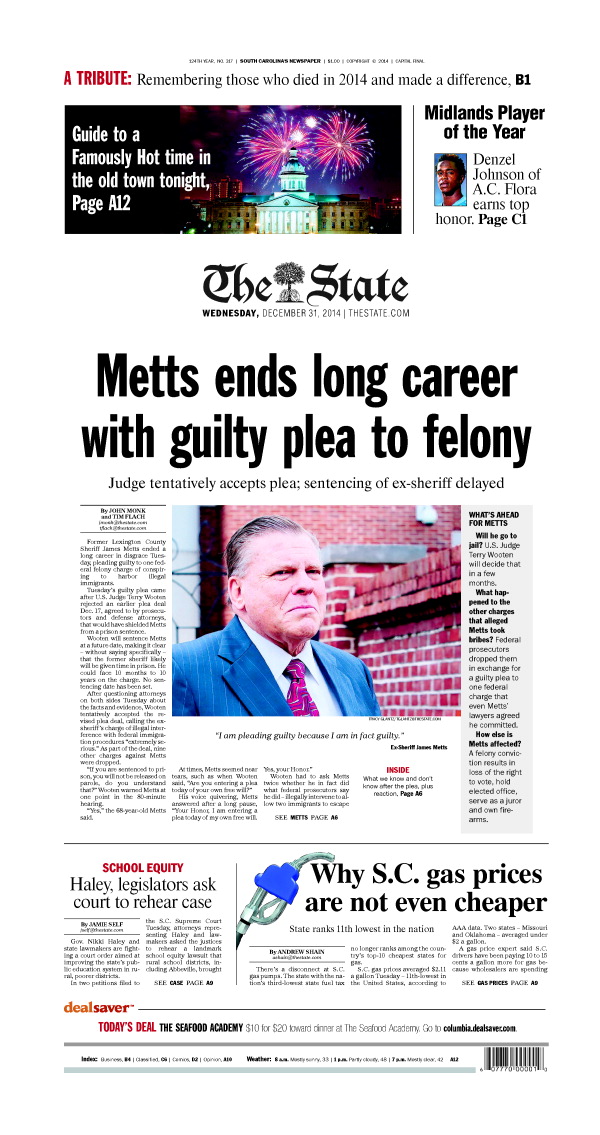
I was a bit surprised that this was played at the bottom of The State‘s front page today. Back in my front-page-editor days, I would have found a way to get it above the fold along with the Metts plea deal — to the right of it, in the traditional lede position.

We spend two decades trying a case in which the poor, rural school districts of our state petition for an equal chance for the children in their charge. Finally, finally, the state Supreme Court issues its ruling — that the state is indeed not providing an equal chance for all its pupils, and must remedy the situation.

And now, this:

Gov. Nikki Haley and state lawmakers are fighting a court order aimed at improving the state’s school system in rural, poor districts.

In two petitions filed with the S.C. Supreme Court on Tuesday, attorneys representing Haley and lawmakers asked the justices to rehear a landmark school equity lawsuit that rural school districts, including Abbeville, brought against the state more than 20 years ago…

The court ruled 3-2 in November that the state failed to provide children in poor, rural districts with an adequate public education as required by the S.C. Constitution.

Without recommending specific policies or actions, the court ordered lawmakers and the school districts to devise a plan to address the problems the court identified, including weak rural tax bases, aging facilities and the difficulty of recruiting quality teachers to rural areas. The court also said the state’s method of paying for schools was unfair and needs to be updated, and hinted some small school districts may need to be merged.

However, Haley and Attorney General Alan Wilson’s petition for a rehearing says the Supreme Court’s majority “overlooked recent education initiatives put in place by (Haley’s administration) and the General Assembly that will directly affect rural school districts in South Carolina.”…

Really? You want to reopen a case that took this long, rather than go ahead and do what you should have done without a lawsuit?

What — do you think the court didn’t spend enough time pondering it before?

Look, I appreciate that the governor and lawmakers took steps in this past session to do more to help the poorer schools out. I’ve praised them for it. But that improvement is the sort of thing you would hold up to show, as we go forward, that you’re trying to implement the ruling — not used as an excuse to ask the court to reconsider.

But going back and trying to drag this thing out further is no way to follow up that good first step. The governor and lawmakers should instead be competing with one another to come up with the best ideas to improve the rural schools, starting perhaps with something that most politicians at least give lip service to — consolidating districts, to eliminate duplication in administration and give the poorest districts access to the tax base in the more affluent districts in their counties.

Or something. Show some leadership, folks. Instead of what I can only categorize as sullen foot-dragging.

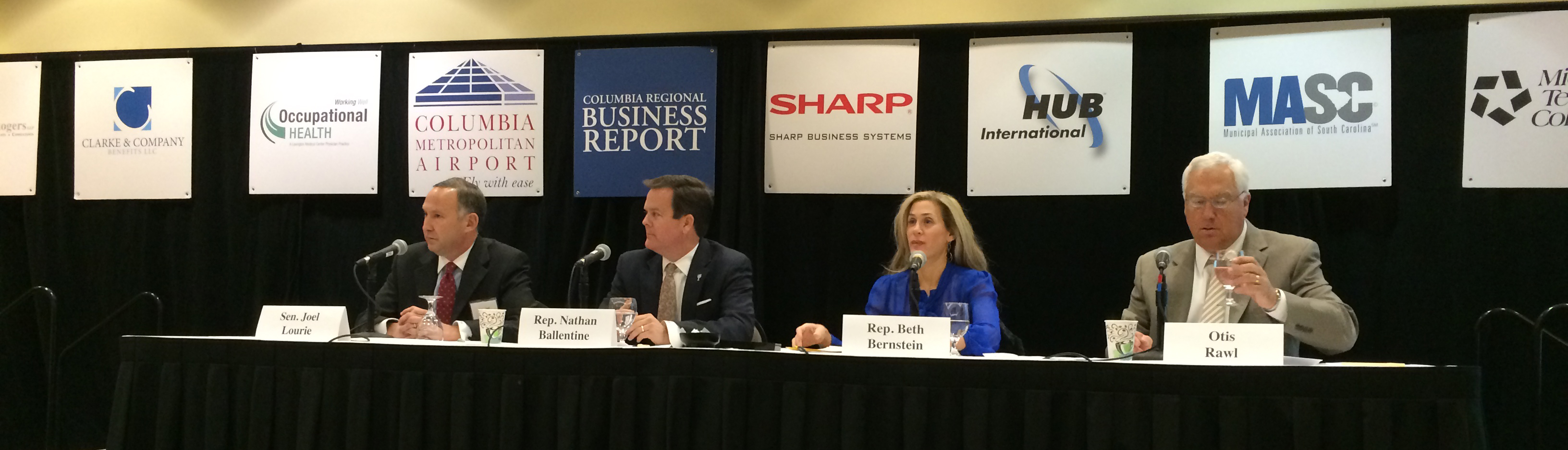
This morning’s CRBR legislative panel

Sen. Joel Lourie, Rep. Nathan Ballentine, Rep. Beth Bernstein, and Otis Rawl of the state Chamber.

Sen. Joel Lourie, Rep. Nathan Ballentine, Rep. Beth Bernstein, and Otis Rawl of the state Chamber.

I went to this morning’s “Legislative Lowdown” breakfast sponsored by the Columbia Regional Business Report. I waited and let Chuck Crumbo go ahead and write about it, since he gets paid to, and here’s his report. Use that as a baseline.

The panel was the same as this one in 2010, only with Rep. Beth Bernstein in place of Rep. James Smith.

Here are a few random impressions I formed:

First, while I think these annual sessions have been highly informative and fair to all viewpoints, CRBR should probably make an extra effort to get more Republicans on the panel, just to more accurately reflect realities. I wouldn’t take any of the Democrats away; I’d add a couple more Republicans — maybe Kenny Bingham and John Courson, or Katrina Shealy.

Here’s the one thing I Tweeted out during the session:

Otis wasn’t saying we shouldn’t have ethics reform, but he certainly seemed to regard it as a distraction, as a plate of vegetables with no meat, saying, “I know they’ve got to do this,” but… His tone reminded me of the bank examiner in “It’s a Wonderful Life.” Remember George Bailey, all animated, telling him about the fact that his brother is going to the White House to receive the Medal of Honor from the president, and the bank examiner says, without a shred of interest, “Well, I guess they do those things….”

Well, that’s Otis being told about ethics reform. He supposes legislators have to get this ethics stuff out of their system, but he’ll be glad when they’re done and move on from it.

Now in his defense, he sees the urgent need for workforce preparation, infrastructure and other things that bear on our economic well-being, and he should be focused on those things. But he was really a wet blanket on the ethics stuff.

Others were more interested in the topic. Rep. Bernstein predicted that, again, the sticking point will be independent oversight, instead of lawmakers policing themselves. She said that was key, but signaled willingness in a pinch to accept a “hybrid” approach, with some lawmaker participation.

On Medicaid expansion, Sen. Joel Lourie said two things that interested me. First that Christian Soura, the guy Nikki Haley just appointed to replace Tony Keck at HHS despite his never having done anything like that, is a very impressive guy. I’ve gotta meet this guy, if Joel thinks that. Or at the least, hear an elaboration on what impressed Joel. Then, he said he appreciates the position of those who oppose Medicaid expansion because they’re worried about the state having to pay 10 percent of the cost after three years. I usually don’t hear Democrats say things like that.

As Chuck noted in the lede of his report, there was pretty much a consensus that for lawmakers to act meaningfully on paying for roads, there would have to be a lot of pressure on them from outside the State House. Sen. Lourie said there are three kinds of people in the Legislature on this — those who clearly see the need to come up with road funding, those who can maybe be talked into it, and “the not no, but ‘hell no’ group.” Republican Nathan Ballentine said that was accurate, and “The majority in the House, the majority in my party, are in the ‘hell no’ category.” He says he’s not afraid of raising the gas tax, and noted that he voted for the cigarette tax increase awhile back. But getting the rest to go along will take heavy lifting, especially with the governor’s veto threat. There was discussion of raising fees for driver’s licenses. Otis Rawl noted that we only pay about $2 a year for those, and certainly, he asserted, it’s worth more than that for our families to travel on safe roads (and for our goods to get to market, he was quick to add).

It was predicted that roads, ethics and one other matter — reacting to the Supreme Court decision saying the Legislature hasn’t done enough to educate children in poor, rural districts — will dominate the session. The general consensus among these suburban lawmakers was that whatever is done for the poor, rural districts, it not be taken away from the affluent suburban districts. Which to me indicates more money would have to come into state coffers, although I didn’t hear anyone say that overtly.

And of course, more than money is needed. After talking about how bad things are in Marion County, Sen. Lourie said, “Maybe we don’t need three districts in Marion County.”

That caused me to break my rule about not asking questions at such events. I rose to suggest that everyone talks about school district consolidation until it strikes close to home. I agree that there shouldn’t be three districts in Marion County, but I asked, “should there be three districts in Richland County, and five in Lexington?”

He actually had a good answer. As he said, if the state is going to help out Marion County in ways that Richland and Lexington districts aren’t asking it to do and don’t need it to do, then there’s an extra expectation that Marion should do some things it can do on its own — like getting rid of duplicative administration. Rep. Ballentine agreed, saying there’s a much greater imperative to consolidate in districts with fewer students total than you would find in a single school in the city.

Yes, they’re right. The case for consolidation is much more compelling in the rural districts. But that doesn’t mean it wouldn’t be a good thing in the big counties, as well.

Anyway, that’s my rambling report…


Court rules for poor kids in 21-year-old lawsuit, says SC hasn’t done enough to educate them

I hadn’t intended to post today beyond the Open Thread, but this is major, historic news.

I wish Steve Morrison, who led the charge on this for so long, had lived to see this:

The South Carolina Supreme Court has ruled that state government is not doing enough financially to guarantee a “minimally adequate” education for public school students in poor areas of the state.

The court ruled 3-2 Wednesday in favor of plaintiff districts in the 21-year-old school equity suit.

The court rejected state lawmakers’ arguments that decisions on school funding belong to the General Assembly, not the courts. Lawmakers had argued that they alone should determine what the state constitution’s “minimally adequate” means.

Justices, however, found that the school districts must better identify solutions for their districts’ needs and work with state lawmakers on how to fix them….

Of course, the big, billion-dollar question is, What will South Carolina DO about it?

It is, unfortunately, up to our General Assembly. As Chief Justice Jean Toal wrote:

“it is the Defendants who must take the principal initiative,” the ruling states, “as they bear the burden articulated by our State’s Constitution, and have failed in their constitutional duty to ensure that students in the Plaintiff Districts receive the requisite educational opportunity”

But WILL they? They, after all, are the ones who have fought this. How can the Court compel action in this case? I don’t know enough to say…

Wow. NOW Mia McLeod is attacking Carolyn Click

Here’s the latest escalation from Rep. Mia McLeod, who really seems to be going around the bend on this thing:

Okay, Ms. Click, so you write front-page fabrications about race in Richland Two on Sunday and then again on Tuesday and Wednesday of the same week? Guess The State must be hard-pressed for real news…and real journalists.

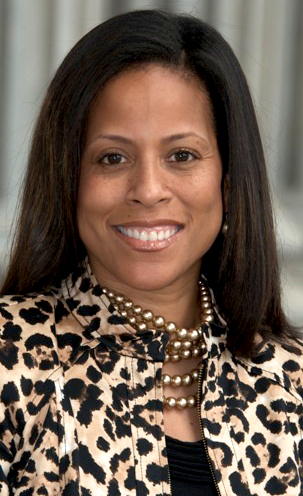
Race wasn’t an issue in Richland Two until you and your White Citizens Council (WCC) buddies made it one.Mia leopard jacket

The illusion of racial tension and animosity you guys have created continues to reveal your true colors. In fact, the same WCC spokesperson quoted in Sunday’s story, had this to add today,

“These people are playing hardball—if they get control they will drive off all the competent people…”

Funny thing is…”these people” kinda reminds me of “those people” and “you people.”

Clearly these are “your people,” Ms. Click, since you’re working overtime to help disseminate and lend credibility to their racist chatter.

Thankfully, somebody at The State had the good sense (not you, of course) to remove his racist rant from “the story” you originally posted online last night, as well as the printed version today.

More proof that “control”—not race, is the real issue. “If they get it,” means we’ve never had it. Guess that’s what scares y’all so much.

And you so desperately want the few readers you do have, to believe that I’m Amelia McKie’s biggest supporter. Guess that’s why you’ve conveniently omitted thousands of dollars in contributions and a diverse cross-section of her contributors from your “story.”

Too bad that while you’re working hard to undermine and discredit Mrs. McKie, the front-runner in this school board race, you’ve actually disclosed even more “evidence” of the collaboration between the current Administration and the WCC.

Obviously, the campaign contributions of current R2 Administrators to some of the WCC’s “chosen four” is evidence of collaboration and conflict—not to mention, impropriety. But I’m sure that’s well above your pay grade, Ms. Click, since The State must not require you to check the rules or the facts before you print your fabrications.

And for what it’s worth, I didn’t compare Debbie Hamm to Lillian McBride in my blog. I simply referenced incompetence as their common denominator.

Even my Senator chimed in to “reaffirm” his support for Debbie Hamm. But, this isn’t about her. Or is it?

Anyone who thinks she’s “building morale” in R2, is out of touch with everybody but the DO. For her loyal supporters, friendship trumps everything.

What a sobering reality check for the rest of us in Richland Two.

Let’s channel our energy and efforts towards a true commitment to excellence in education, for the benefit of all Richland Two students.

For those who are afraid of losing it, it’s clearly about control. For the rest of us, it’s truly about moving our students, communities and District forward, in a better direction.

It’s time to silence the rhetoric, the rancor and the manufactured issues of race. Next Tuesday, November 4, I’m counting on voters to do just that.

Maybe then, Ms. Click, you can focus your attention on real news, for a change.

Quote that….

Speaking as a 35-year newspaper veteran, I can tell you with authority that this is real news, and Carolyn Click is a real journalist. A good one. I’ve known her for a couple of decades, and I think this is the first time I’ve heard anyone call her professionalism into question.

And you can quote that….

Mia McLeod says it’s the WHITES injecting race in District 2

I really, really hated to see the first sentence of this story about the Richland School District 2 election:

Race has become the defining issue in the Richland 2 school board election, as rumors circulate of a shift in power from a white-majority to a black-majority board.

Fueled by the activism of an African-American parents’ advocacy organization and a separate white group called the Bi-Partisan Committee, the usually placid election in the Midlands’ largest district has spawned heightened interest and dueling visions for the future of the 27,300-student district….

Appalling. And here’s where I stand on this: I’m opposed to anyone who cares whether the board is majority-white or majority-black. I have no patience with Identity Politics. I wouldn’t lift a finger to affect the racial balance one way or the other.

By contrast, Rep. Mia McLeod is taking a side, labeling the “white” group as a latter-day “White Citizens’ Council.” Which is a pretty heavy-duty accusation. Here’s what she says:

Sadly, race has taken center-stage in Richland Two (R2), thanks to a modern-day White Citizens’ Council (WCC),” disguised as a bipartisan committee. But this WCC isn’t about students, academics, best practices or strengthening and improving public education in the District.

No…this “whites-only” advocacy group has rebranded itself for the sole purpose of interjecting race, racist rhetoric, lies and fear into a school board contest, so that R2’s power and control remains with those who’ve always had it.

It’s no secret that whites are now the minority in R2, but still very much in control. This election could change that, so the WCC was revived to protect the status quo and ensure that no real diversity or talent is elected.

Like you, I would much rather have qualified, competent board members who truly care about our students, parents, teachers and communities. Service with vision, integrity, transparency and accountability should be the benchmarks—not race.

I don’t care whether you’re (former) Elections Director, Lillian McBride, or (current) R2 Superintendent, Debbie Hamm. Incompetence in any “color” is equally offensive and those who condone it based on race, gender, party or friendship are equally wrong.

Realizing that change is imminent, former R2 leaders have joined forces with current R2 leaders to create this unholy alliance and ironically, it’s this White Citizens’ Council—not the Black Parents’ Association, that has strategically placed the issue of race front and center.

By purposely disseminating false, misleading, deliberately divisive rhetoric, R2’s WCC attempts to marginalize and discredit anyone who challenges the status quo. According to one WCC member, “it’s the last stand for a good school district.”

And yet, hiring and electing candidates based on race, not merit, is precisely what they’ve accused the R2 BPA of doing.

Isn’t that “the pot calling the kettle black?”

And because they’ve identified their “picks,” we now know who not to vote for, if we ever wanna see any positive, progressive change in R2.

Let’s start with the WCC’s only African-American endorsee, Cheryl Washington Caution-Parker, a retired R2 Deputy Superintendent who was repeatedly passed over for the top gig.

According to the WCC, she’s aptly qualified. Perhaps she was consistently not promoted because she is black, since current District leaders have secretly opined that R2 isn’t ready for a black Superintendent and “the reason we got rid of (former Superintendent) Katie” is because she promoted too many qualified African-Americans to Administrative positions, making it harder to keep R2 from “looking Black like Richland One.”

Amazingly, Washington Caution-Parker is now conspiring with the same racist operatives who’ve worked against her for years. Clearly qualified, but obviously not the brightest candle in the bunch…

Since the BPA allegedly works so hard to ensure that R2 hires and promotes African-Americans, whether qualified or not…maybe it was actually trying to help by listing her as “white” on it’s website—in keeping with the District’s “whites-only” Superintendent policy.

Perhaps, if the BPA had come to her aid sooner, Washington Caution-Parker might not have gotten bumped out of the Superintendent spot by a white IT Director with only a fraction of the qualifications and experience.

And White Citizens’ Council endorsee #2, James Manning, has proven yet again that he’ll align himself with anyone who’ll help him get re-elected.

Even after admitting that the WCC’s newsletter was chock full of lies, Manning happily accepted the endorsement—proof that he too, is fully supportive of the WCC’s mission and aligned with its values–while latching onto every black church, black parent, black anybody, who’ll help him hoodwink us out of four more years.

But the WCC’s radically racist crusade doesn’t stop there. It also attempts to defame and discredit one of the most qualified, capable, committed candidates, who happens to be African-American.

Why? Because if Amelia McKie (or as the WCC refers to her…the one with “the green signs”) is elected, we’ll have a strong voice on R2’s school board who’ll fight for students, communicate with parents and demand real transparency and accountability.

Contrary to what you’ve heard or read, I’m not a member of the R2 BPA. Neither is she. And if the school board and DO were truly representative of all of the people of R2, there would be no need for a Black Parents’ Association, White Citizens’ Council or this email.

Amelia McKie is a dynamic parent advocate, State SIC Board Member, R2 Ambassador, District spokesperson and SC Education Policy Fellow, who’s maliciously maligned because she poses the biggest threat to the OG’s precious status quo. And unlike the WCC’s “picks,” McKie is a change agent who’s qualified and in this race for the right reasons.

Her candidacy appeals to a vast cross-section of R2 residents because she understands that equity, parity and diversity are key to our individual and collective success.

Since we’re obviously not beyond tactics used during the Civil Rights Movement, ask R2’s WCC why it deliberately distributed false, deceptive, race-based propaganda, touting a predominately white slate to a “whites-only” audience—proving that District leaders still aren’t interested in engaging all of the people of Richland Two.

But as fate would have it, I just did. And now you too, get to see their true colors…

Not sure what to think of all that. But I imagine that some of the white folks who were so tickled that Mia was taking on Lillian McBride and her supporters among the other black members of the county legislative delegation are probably going to be less enchanted now.

No, Nicholas Kristof is NOT putting you on; he doesn’t do that

Nicholas Kristof is a serious, earnest journalist who writes about serious, earnest topics.

So I thought, when I looked at the graphic that appeared with this Tweet, that somebody from The Onion had hacked his Twitter account:


But no, the piece he was linking to was sober and earnest, and no one was trying to make game of the lightly educated. It was just an unfortunately funny example of a sad phenomenon…

Sheheen’s new education ad

This ad doesn’t strike me much one way or the other, but I thought I’d put it up to see what y’all thought…

Here’s the release that went with it:

NEW TV AD: “Futures” Contrasts Sheheen Vision for Education with Haley Record of Cuts
“A strong economy depends on great schools – and South Carolina deserves both.”
Camden, SC – Sheheen for South Carolina today released a new television ad contrasting Nikki Haley’s repeated vetoes of school funding and teacher pay raises with Sen. Sheheen’s long-standing record of support for public schools and plan to expand four-year-old kindergarten and increase teacher pay. The spot, “Futures,” is part of a substantial six-figure statewide TV buy beginning today.
“Nikki Haley’s veto pen has hit education harder than any other area, and she’s spent three years standing against pay raises for teachers while she increased her own staff’s pay — that’s not leadership we can trust,” said Andrew Whalen, Sheheen’s campaign manager.  “Vincent Sheheen has spent his career fighting for public schools, expanding four-year old kindergarten, and has worked across the aisle to achieve results. South Carolinians deserve honest leadership and accountability from a governor who understands that our children’s future and our economic well-being depends on great schools – that’s Vincent Sheheen.”

And below is supporting material (provided in the email I received, but for some reason not with the version on the website) for the assertions in the ad:

AD BACKUP:

Claim Backup
My mom was a teacher, and my sons go to the same public schools I did.
We know education builds futures.
Image of NH over shot of empty school hallway w headlines/quotes.CG: Nikki Haley

CG: Cut Over $100 Million From Schools

“SC governor’s veto pen has hit education hardest,” Adam Beam, The State, 6/27/2013Of the nearly 200 budget vetoes Gov. Nikki Haley has issued during her three years as governor, no government service has been struck more than public education.
A review of the governor’s budget vetoes shows the first-term Republican has vetoed $110 million worth of public education programs and services since 2011, vetoes that account for more than a quarter of the $419 million she has vetoed in state spending since 2011.
But Nikki Haley cut millions from our schools… “SC governor’s veto pen has hit education hardest,” Adam Beam, The State, 6/27/2013Of the nearly 200 budget vetoes Gov. Nikki Haley has issued during her three years as governor, no government service has been struck more than public education.
A review of the governor’s budget vetoes shows the first-term Republican has vetoed $110 million worth of public education programs and services since 2011, vetoes that account for more than a quarter of the $419 million she has vetoed in state spending since 2011.
Image of NH over shot of empty teacher desk w headlines/quotes.CG: Nikki Haley

CG: Raises for her staff

…and vetoed both teacher pay raises “Gov. Haley Vetoes $10 Million for Teacher Raises,” Robert Kittle, WSAV, 7/6/2012:Gov. Nikki Haley has vetoed 81 items from South Carolina’s budget, including $10 million for local school districts to give teachers raises.
and four year old kindergarten. “Haley, in veto, says early childhood nonprofit needs a closer look,” Jamie Self, The State, 6/12/2014:Gov. Nikki Haley vetoed a bill that supporters say would improve a nonprofit that distributes public money to private pre-kindergarten providers.


Image of NH over shot of empty school auditorium w headlines/quotes.CG: Nikki Haley

CG: Raises for her staff

“Gov. Haley sets premium staff pay,” Jim Davenport, Associated Press, 1/13/2011 

COLUMBIA — Gov. Nikki Haley will pay her chief of staff $125,000 per year, a salary that eclipses her own pay and is $27,000 more than former Gov. Mark Sanford paid his chief of staff, according to records obtained today by The Associated Press.

While giving her own staff twenty five percent raises. 

That’s not leadership we can trust.

“Gov. Haley sets premium staff pay,” Jim Davenport, Associated Press, 1/13/2011 

COLUMBIA — Gov. Nikki Haley will pay her chief of staff $125,000 per year, a salary that eclipses her own pay and is $27,000 more than former Gov. Mark Sanford paid his chief of staff, according to records obtained today by The Associated Press.

VS talking to elementary school kids / talking to teacher in busy school hallway.CG: Vincent Sheheen

CG: Restore School Funding / Raise Teacher Pay

As governor, I’ll restore school funding, and raise teacher pay.
Because a strong economy depends on great schools – and South Carolina deserves both.

Nothing schools do is more important than teaching civics

I applaud this initiative, because there’s nothing schools do that is more important than teaching young people to be well-informed citizens:

FOR IMMEDIATE RELEASE


September 17, 2014                                                                                           Contact: Camille AndersonCamille@CivicsEducationInitiative.com

801-874-6497


Three Former SC Governors Join Other State Leaders Announcing South Carolina Civics Education Initiative

State Legislative Effort Supported By Former U.S. Supreme Court Justice Sandra Day O’Connor, Former New York City Mayor Rudy Giuliani, Pulitzer Prize-Winning Journalist Carl Bernstein, & Award-Winning Actor Joe Mantegna

COLUMBIA, SOUTH CAROLINA – Honoring the anniversary of U.S. Constitution, signed on this date in 1787, former South Carolina Governors Dick Riley, Jim Hodges and James Edwards joined state business leaders today in announcing the South Carolina Civics Education Initiative.  This state legislative effort aims to ensure all South Carolina high school graduates have a basic understanding of American civics and history.

“It is absolutely critical that all South Carolina students have a sound knowledge of civics,” said state co-chair Governor Riley, who also served as U.S. Secretary of Education from 1993-2001. “This is not a partisan issue.  It is an American issue.”

According to the Pew Research Center, only about one-third of Americans can name the three branches of the United States government, much less say what each does.  Studies of high school students in Oklahoma and Arizona showed less than a four percent passage rate on the Unites States Citizenship Civics test – the test all immigrants applying for U.S. citizenship must pass.  According to United States Citizenship and Immigration Services (USCIS), which administers the civics test as part of the naturalization process, 92 percent of immigrants who take the test pass it on their first try.

The South Carolina Civics Education Initiative will promote an active and engaged citizenry by requiring all South Carolina high school students and those seeking general educational development (GED) study and take the 100-question USCIS Civics Test.

The legislation, which supporters plan to have introduced during the next session of the General Assembly in January, will award students making a minimum score of 60 with extra credit toward graduation. Students will be allowed to take the test as many times as necessary and will allow individual schools to administer the test in a way the school deems adequate.

“Understanding basic civics and how our government works needs to be a priority,” said Columbia businessman and Honor Flight of SC Chairman Bill Dukes, also a state co-chair. “Civic education will enable us to sustain our constitutional democracy.  Our citizens must be informed and responsible.  Our free and open society cannot succeed if our citizens don’t understand the fundamental values and principles of democracy.”

The USCIS Citizenship Civics test consists of 100 basic questions about American civics and history, such as:

What is the name of the President of the United States now?

Name one branch or part of the government.

What is the capital of your state?

What major event happened on September 11, 2001, in the United States?

“It is significant that the Civics Education Initiative is a politically non-partisan effort that understands the critical importance of teaching civics to students who will be stewards of our constitutional republic,” said state co-chair Karen Iacovelli, former member of the SC Education Oversight Committee and long-time education activist.

Its initial stages the SC Civics Education Initiative has enjoyed enthusiastic and broad support. State Co-Chairs include, in addition to Governor Riley, Mr. Dukes, and Mrs. Iacovelli, Governors James Edwards and Jim Hodges, Charleston developer Buck Limehouse, and South Carolina homebuilder Stewart Mungo.

One of the more popular aspects of this effort is the fact that there are no development costs for the test and little to no costs to develop study materials because the test itself and a wide range of study materials are available on the internet for free.

Six other states today are announcing similar state legislative efforts including Arizona, Louisiana, Oklahoma, Missouri, South Dakota and Utah.  The goal of the Civics Education Initiative is for every state in the nation to pass this legislation by September 17, 2017 – the 230th anniversary of the Constitution.  

The Initiative’s national board of directors includes former U.S. Supreme Court Justice Sandra Day O’Connor, former New York City Mayor Rudy Giuliani, Pulitzer Prize-winning journalist Carl Bernstein, and actor Joe Mantegna who has been nominated for both Golden Globe and Emmy awards.  (National Board Video Message)

The Civics Education Initiative is an affiliate of the Joe Foss Institute, which was founded to educate American youth on the importance of our country’s unique freedoms, and to inspire them to public service. Joe Foss was a Congressional Medal of Honor recipient, former governor of South Dakota, and first commissioner of the American Football League.

For questions contact Camille Anderson at Camille@civicseducationinitiative.com or 801-874-6497.

http://civicseducationinitiative.com

###

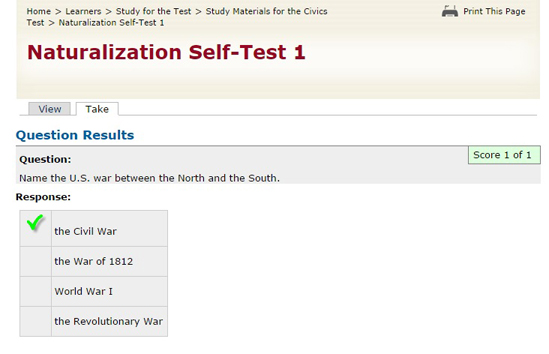
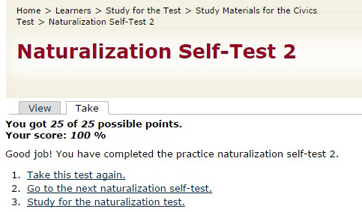
By the way, if you’d like to take a civics quiz like the one offered by USCIS to prospective citizens, click here.

I did, and got 100 percent, even though the test included trick questions such as the one below. Obviously, the correct answer is “The Recent Unpleasantness,” but that wasn’t offered as an option. So I had to choose a second-best answer. They graded it as though it were the correct one.

civil war


Touring USC’s new Darla Moore School of Business

Peggy Binette of the USC media office threw a poor blogger a bone and invited me on the official media tour yesterday of the fancy new ultra-modern, artsy, green, hyper-energy-efficient Darla Moore School of Business.

I’d have posted about it Wednesday, but was tied up the rest of the day.

The tour was like old home week. I ran into, let’s see… six people I used to work with at The State, two of whom actually still work there. So it was nice to catch up with them.

The building was really nice, too, although it will look better when the trees and plants come in, and they get some artwork up on the walls. I’m assured the architects have a plan for decorating the oceans of beige, but they’re not putting anything up until all construction is finished.

And it mostly is, or so it seemed. The building is fully in use, with students coming and going and faculty moved in to offices, but it will probably be awhile before it feels lived in.

In the video above, you hear Dean Peter Brews speak, with his South African accent, about the reaction of students to the new facility. He said they were saying it is “sick… which I gather is a positive thing.” For my part, I didn’t know the kids were still saying that.

For the basics, here’s The State‘s story from the tour. The messages for the day were:

  • This is a banner day for the Moore School, putting business education at USC in an enviable position in terms of facilities and capabilities.
  • The beauty, functionality and energy-efficiency of the building.
  • Collaboration. Over and over, we heard how faculty and students from different disciplines who never saw each other in the old, vertical building are already interacting to an unprecedented extent, which is expected to lead to all sorts of good things.

And, yes, the fact that the building is where it is to act as “a gateway for the University of South Carolina leading into the Innovista district.” Beyond that, I’ll let pictures tell the story…

One thing education does not need is political parties

I’m hoping this quote from Bruce Smith’s story about the state education superintendent candidate debate in Myrtle Beach Sunday was just out of context:

“Party matters” in public education said Democrat Tom Thompson, a former dean of graduate studies at South Carolina State University who bested three other Democrats in the primary.

“You can have the state superintendent of education say one thing but the party behind that person has to be consistent with what the state superintendent says,” he added, in a comment directed at Republicans, some of whom favor taxpayer vouchers for private school students….

The problem, you see, is not having officials who are Republicans. The problem is having officials who want to take money from public schools and pay them to parents for withdrawing their kids from public schools. Doesn’t matter to me whether the people wanting to do that Republicans, Democrats (and sometimes they are) or Zoroastrians. The idea is the problem, not the letter after the name.

The problem with Mick Zais isn’t that he’s a Republican. He could have been a Republican and been just fine. The problem is that he so firmly embraces bumper-sticker ideology. Which frankly was a shock to me. I expect retired military officers to be above that nonsense. I expect them to be pragmatists. So Zais was a surprise to me.

And I liked what Molly Spearman said right after that in the story:

Spearman, meanwhile, said the way to improve education is for people to work together.

“The job and our efforts are too important for us to squabble and not get along,” she said. “I have worked hard over my career never to burn bridges.”…

And adhering closely to a party line, to the exclusion of other ideas, is one sure way to burn bridges. In fact, that’s sort of what it’s for.

There was one thing in that party from which I can draw some comfort: The first candidate quoted was American Party candidate Ed Murray. Not that I can support the American Party, either, but I applaud the fact that Jim Rex and Oscar Lovelace are at least trying to promote a Third Way in South Carolina. And the attempt is drawing some positive attention, it seems…

Little-noticed fact: Sheheen has had a stellar legislative year

I don’t disagree with any of the “experts” who say Nikki Haley is the favorite to win the gubernatorial election this year.

But I do take exception to this observation:

The panelists stopped short of criticizing Sheheen, whom Winthrop University political science professor Scott Huffmon called “a great candidate” because he came so close to knocking off Haley last time. But when asked by Bierbauer what Sheheen has done in the past four years to strengthen himself as a candidate, they mostly kept silent….

That silence suggests something that we frequently hear here, particularly from Doug: That Sheheen hasn’t been a leader in his job as state senator.

Sheheen has done little to  tout his successes as a lawmaker.

Sheheen has done little to tout his successes as a lawmaker.

Actually, in terms of being a guy who gets things done in the Legislature, Sheheen has done quite a lot.

In the past year, significant progress was made on two things that Sheheen has been pushing vocally and visibly: The elimination of the Budget and Control Board and 4k expansion.

Argue how much of that was Sheheen if you’d like. For instance, his opponent had identified herself strongly with the restructuring initiative. But the fact is that Sheheen was pushing this bill, and working on his colleagues to promote it, since well before Nikki Haley ever decided to run for governor. (Which is kind of how long it takes for a good idea to seep into the heads of a majority of lawmakers.)

Those aren’t his only accomplishments. He was a significant player in the ban on texting-while-driving. The first two are much more impressive to me, however, as reflecting the kinds of strategic, fundamental changes that we need for South Carolina to progress.

What puzzles me is that we don’t see Sheheen touting these successes as a reason to vote for him. Instead, we see money and effort wasted on repeated attempts to get folks angry at the incumbent about the Department of Revenue hacking.

I don’t know why…

Odd interpretation of a poll result

This release left me scratching my head a bit:

Poll: Parents Say Too Much Focus on Standardized Tests

Opposition to Common Core Most Intense Among Parents

WASHINGTON, D.C. (June 26, 2014) — Parents of school-age children are unhappy with the amount of time spent on standardized tests and have strong opinions on other controversial education policies, including Common Core and school vouchers, according to a new national poll released today.

The Schooling in America Survey, released annually by the Friedman Foundation for Educational Choice and Braun Research, includes a statistically representative sample of school parents. It found 44 percent of those parents said children spend too much time preparing for and taking assessments; 22 percent said too low, 30 percent said the focus is about right, and 5 percent had no opinion.

So… 52 percent say kids spend about the right amount of time on standardized tests, or even not enough time, while 44 percent say they spend too much time on them.

What sort of group would look at those figures and come away with the headline, “Poll: Parents Say Too Much Focus on Standardized Tests,” which is only accurate in the sense that some parents (a minority) say that?

Oh. The Friedman Foundation for Educational Choice. OK. Yeah…

Mind you, I’m not sticking up for standardized tests here. I probably would have been in the 44 percent saying too much time is spent on them, although I’m far from passionate on the subject.

But what a screwy interpretation…

SCEA backs Sheheen for governor

Not a big shock or anything — the state education association supporting the Democrat — but I pass this release on for your perusal:

The SCEA Recommends Sheheen for Governor

COLUMBIA (June 17, 2014) – The South Carolina Education Association (The SCEA), the state’s oldest professional organization for educators, today announced its official recommendation of Senator Vincent Sheheen for Governor of South Carolina.

“Senator Sheheen is the best choice for South Carolina, particularly because of his leadership and advocacy on behalf of public education,” said Jackie B. Hicks, President of The SCEA. “He is a product of public schools in the Camden area, and both of his parents were professional educators. His children now attend the same public schools he attended as a boy. In addition, as an attorney and business owner, Senator Sheheen is keenly aware of the profound connection between quality public schools and our ability to sustain and grow a viable workforce.”

During his service in the General Assembly, Senator Sheheen expanded access to 4-year-old kindergarten, because he understands the importance of investing in early learning. Moving forward, Senator Sheheen will continue to work tirelessly on increasing early childhood education opportunities, improving K-12 education, and strategies to make college more affordable for all.

“He doesn’t just talk the talk,” Hicks said. “Senator Sheheen is actively involved in our public schools. In fact, he still volunteers his time reading to elementary school students. You won’t see him turning away millions of our own federal tax dollars for education. Not on his watch.”

Senator Sheheen also supports increasing South Carolina teacher compensation to the national average and developing a more equitable state funding formula that distributes education resources based on need, not zip code and property value.

“Our citizens deserve better leadership from the Governor’s Office,” Hicks said. “Vincent Sheheen is the right man at the right time for South Carolina.”

###

Haley vetoes: From First Steps to legislator pay

When I saw that the governor had vetoed First Steps (much beloved of Democrats since it was started by Jim Hodges), my first thought was, Huh. Maybe she DID mean we would “no longer educate children,” The younger ones, anyway.

Democrats are certainly hoping voters will see it that way. They are howling blue murder. Even the normally calm Rep. James Smith — the original sponsor of First Steps — got a bit shrill:

“Governor Haley has once again used her veto pen to stick it to education in South Carolina. First she vetoes $110 million in education funding, then she vetoes funding to keep teachers in the classroom, and now she wants to eliminate the First Steps early childhood education initiative. This governor has never truly supported education in this state and no election year gimmick can change that reality. Today’s veto is just another example of Governor Haley saying one thing and doing another. We look forward to overriding her veto next week and denying her the ability to once again play politics with our children’s future.”

But when I read The State‘s story, I had to admit that I don’t know, personally, how effective First Steps, which supports programs in private preschools, has been. So the governor’s wish to see it studied further before authorizing it for more than a year at a time doesn’t sound so bad. Maybe there’s something I’m missing.

I do find it ironic that she is vetoing something that sends public money to private educators.

Then there’s the matter of the governor’s veto of the pay raise lawmakers voted themselves. She says she isn’t arguing with the pay raise itself; she objects to the way they did it. That’s where I have to disagree with her. She thinks such a thing should be decided by referendum. Well, you know what I think of government by plebiscite. Lawmakers have to face the voters after voting themselves something like this. That’s enough of a check on their fiscal self-interest.

On the whole, the governor is ending the session the way she began it — as a kinder, gentler wielder of the veto pen. For instance, no veto of the Arts Commission. And as The State said, the total “amount cut with this year’s proposed vetoes is by far the smallest since Haley took office in 2011.”

Maybe she really has changed. What do y’all think?

This is why you make sure it fits on Twitter FIRST

I’m feeling bad for Nikki Haley today, because she was trying to do the right thing, and say the right thing, but the medium got in the way.

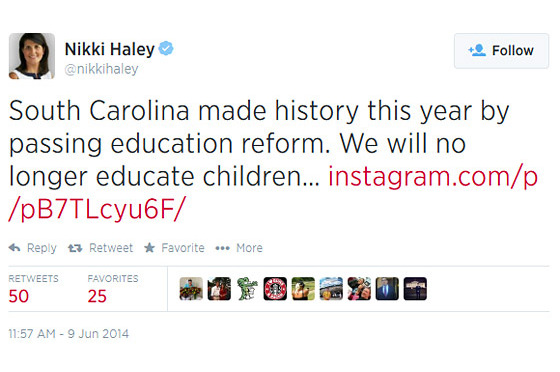
Below is an image of what appeared in her Twitter feed yesterday morning:

09-nikki-haley-tweet.w1058.h704

The problem, of course, was that she posted on Instagram, and when that autoposted to Twitter, it cut her off in mid-thought. What she actually said was:

South Carolina made history this year by passing education reform. We will no longer educate children based on where they are born. Through reading coaches, technology investments, and expanding charter schools we just confirmed that we want our children to be the future workforce for our growing high tech jobs! #ItIsAGreatDayInSC

And we should all be able to agree with that, even the Democrats who won’t give her credit for actually meaning it. (Well, they might not go for the charter schools part, but the rest of it…)

Here’s the corrected version of her Tweet:

Moral of the story: If you’re going to post to a medium that automatically posts to your Twitter feed, always write it for Twitter, and make sure it fits there first. Otherwise, it’s just too tricky to make sure this doesn’t happen to you.

People pay me to tell them stuff like that these days. Consider this a freebie, and don’t ever say I never gave you anything…

USC dean sends out memo re academic freedom

This was sent out to faculty by USC Arts and Sciences Dean Mary Anne Fitzpatrick this morning:

PLEASE DISTRIBUTE TO ALL YOUR FACULTY

TO: Faculty in the College of Arts and Sciences

Dear Colleagues:

In the past few months, academic freedom has become a hotly debated issue in our state. I need not rehearse all of the controversies that have erupted over certain reading assignments and performance events, as you are no doubt aware of them.

These controversies provide us with a valuable opportunity to affirm our most fundamental and profound principles. First, as university faculty, we can and we must be dedicated to the pursuit of knowledge and truth in our disciplines, and second, it is our right and our responsibility as faculty to determine the curriculum of our academic programs.

It is not often that academic freedom is the subject of numerous media reports and broad discussion among citizens. We should therefore welcome this chance to explain who we are as an intellectual community, our purpose and aspirations, and our vision “to transform the lives of our students and improve the world they will inhabit by creating and sharing knowledge at the frontiers of inquiry.”

I proudly invite you to read one such explanation written by Professor Ed Madden, a faculty member in the Department of English and the director of our Women’s and Gender Studies Program. Published in The State as a guest column on May 1, 2014, his explanation is both eloquent and moving.

http://www.thestate.com/2014/05/01/3419090/madden-is-this-a-pornographic.html

As your dean, I am deeply grateful for your commitment to our vision and for all that you do for our students.

Cordially,

Mary Anne

At first glance, I thought the memo was going to be about the national debate going on now about intellectual freedom on campus — the one sparked by all the student protests of invited graduation speakers. The WSJ had yet another op-ed piece about it this morning, this one headlined “Bonfire of the Humanities.”

And having made that mistake, now I have an appetite to read what academic leaders in this state might have to say about that national trend. Has anyone seen anything like that?

In the meantime, I suppose y’all could discuss this memo…

OK, well, just how graphic IS it?

I hadn’t paid much attention to the foofooraw over “gay-themed” books at the College of Charleston and USC Upstate, but something I saw at the top of this morning’s story did give me pause:

The College of Charleston assigned students to read “Fun Home,” a graphic memoir about the author’s struggle with family and sexual orientation. The University of South Carolina Upstate assigned “Out Loud: The Best of Rainbow Radio,” about being gay in the South…

Hold on — graphic? How graphic? I hadn’t seen the word, “graphic” before.

At this point, I supposed I could channel Woody Allen in “Sleeper” and offer to go off and study the material in detail and give you a full report later. But let’s just discuss it in the abstract first.

In this story, critics of the reading lists are couching their objections in terms of objecting to “pornography” at public institutions. Which seems to me a legitimate objection, if you’re one of the people expected to appropriate money for it. That is, if it is pornography. Having not yet conducted that in-depth study, I can’t say.

But if it is, I wonder — with all the fantastic literature that most undergraduates will never get around to reading in their entire lives, why does the curriculum need to have anything in it that a news story would matter-of-factly describe as “graphic.” It’s not like these kids don’t have access to porn websites. In what way is graphic material of any sort providing them with knowledge they can’t get without paying college tuition?

I tried to think of anything that I was assigned to read in school that was “graphic,” back in the licentious early ’70s, the days of “Deep Throat” and Plato’s Retreat.

The best I could come up with was Rabbit, Run by John Updike. I vaguely recall one dispiriting passage describing an adulterous liaison engaged in by Harry Angstrom. I don’t think anyone would call it “graphic.” It probably wouldn’t earn an “R” rating today (although the sequel, Rabbit Redux, which I read after college, certainly would have). It wasn’t nearly as prurient as God’s Little Acre, say.Caldwell172-GodsLittleAcre-frontCover

We read it because Updike was supposedly one of the great fiction writers of his generation. In that same class, we also read Crime and Punishment. Needless to say, the latter made a much deeper impression on me. I found Updike mostly… depressing.

I don’t feel deprived for not having studied anything “graphic” in school.

Thoughts about this? I mean, set aside the “gay-themed” bit that makes headlines. Let’s say we’re talking pure hetero. Is there any need for public institutions to use “graphic” reading material outside of a public health class?

My own gut reaction is to say “no,” although I supposed I could also without straining myself mount an argument that Erskine Caldwell‘s books are at least culturally relevant to South Carolina.

Such a discussion won’t lead to a resolution of this particular controversy, but I find the question intriguing…

Democrat demands Eckstrom apology for SC State remarks

This came in a little while ago:

House Democratic Leader calls on Richard Eckstrom to apologize for uninformed, ignorant comments about SC State
 
Columbia, SC – House Democratic Leader Todd Rutherford called on SC Comptroller General Richard Eckstrom to apologize for his inflammatory comments regarding SC State University on Wednesday. Eckstrom was quoted in the Budget and Control Board Meeting saying, “these are kids that are going there (SC State) because they can’t get into these other schools.” He also commented that we shouldn’t call SC State a historically black college because we don’t call other schools historically white colleges.

Rich Eckstrom

Rich Eckstrom

House Minority Leader Todd Rutherford released the following statement in response to Eckstrom’s comments.
“Richard Eckstrom should immediately apologize to the students and alumni of South Carolina State University for his uninformed, ignorant, and embarrassing statements earlier today. Those comments demonstrated a severe lack of understanding of our only public, historically black college in South Carolina.
As a result of his callous remarks, Mr. Eckstrom has insulted the names of prominent SC State alumni such as Congressman Jim Clyburn, General Abraham Turner, Former State Supreme Court Chief Justice Ernest Finney, Judge Matthew Perry, and the first African-American woman elected to the South Carolina legislature Juanita Goggins.
It seems as though Republicans can’t get through one week without making an offensive comment directed at African-Americans. I also call on the Republican leaders of South Carolina to condemn Mr. Eckstrom’s remarks to show that this kind of ignorance has no place in our political discourse.”
####

College of Charleston play flap draws national attention

Washpost

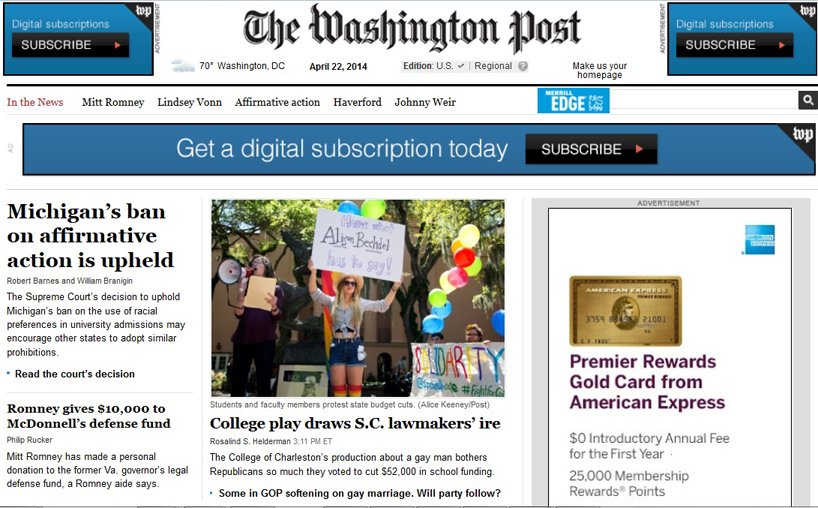
At this moment, the centerpiece story at the WashPost site is this one:

CHARLESTON, S.C. — More than 750 people packed into a city auditorium here this week for a sold-out production of “Fun Home,” a musical by a New York-based troupe about a woman coming to terms with her closeted gay father’s suicide. The crowd rose in a standing ovation before the show even began.

The emotional reaction was part of a worsening political battle between South Carolina’s public universities and conservative Republican lawmakers, who argue that campus culture should reflect the socially conservative views of the state.

The state’s House of Representatives recently voted to cut $52,000 in funding for the College of Charleston as punishment for assigning students to read “Fun Home,” the graphic novel that formed the basis for the play. House lawmakers endorsed a similar budget cut for the University of South Carolina Upstate in Spartanburg for using a different book with gay themes in its reading program.

Republican lawmakers also helped pave the way for the appointment of a controversial GOP state official as the College of Charleston’s next president, sparking campus protests.

The fights serve as a reminder that rapid national shifts on social issues — particularly gay rights — are hardly universal and remain hotly contested across much of the Deep South. The views of people in South Carolina carry particular weight given the state’s early presidential primary, which gives voters here the power to help shape the GOP ticket every four years….

You had probably heard about most of this. I hadn’t heard about the play angle.

It seems like WashPost regards this as a pretty big deal, on account of our early primary. I hadn’t thought of it that way until now.

Remember how, early in 2012, I worried about the way Kulturkampf issues were being used to divide us in that election? Here we go again, y’all — two years early…