Category Archives: Business

They got a union just for SERGEANTS? Really?

When I saw this headline at the Chicago Sun-Times site — “Ex-head of Chicago police sergeants union sentenced to 12 years in prison” — I thought what any ol’ Southern boy would think:

They got so many unions up there, they got a special one just for sergeants?

Apparently so.

Which means that those other parts of the country are… really different… from down here. And I don’t mean that in a good way.

As I’ve said before, I don’t hold with public employee unions. Public employees work for the people, not some separate private entity. That means they serve themselves as well as their friends and neighbors. Given that special relationship, there’s something really twisted about employer and employed being on opposite sides of a bargaining table. We should be able to rely on their being on the same side.

Fortunately, that’s one thing (one of the few) that I don’t have to worry about in South Carolina. We ain’t got none o’ that.

Unfortunately, we do get some of the negative effects of public employee unions here, with none of the dubious benefits. For instance… you know all that money that flows into our state from people trying to elect legislators who will undermine public education? They are to a great extent motivated by their animus toward “teacher unions.” Well, we don’t have any of those here, which is why it’s bitterly ironic that we should be a battleground for that issue (thanks in large part to Mark Sanford — his being governor persuaded those interests that South Carolina was fertile ground for their movement). The SCEA is a professional association, not a collective bargaining unit.

Today in the WSJ, there was yet another screed against teacher unions — which of course has no application to South Carolina. Sadly, too few in our state understand that, based on how many times I hear public education critics in our state moan about how the “teacher unions” stand in the way of improving education here. (I actually heard it from the lips of a Rotary speaker recently.)

Anyway, these are the things I’m thinking about as voters in Wisconsin decide whether to recall their governor over a battle about public employee unions. A fight in which we do not have a dog.

Apple, leave my Google Maps alone

I’m really getting sick of this Total War between the big technology communities, based upon the absurd assumptions that each provider of products and services become the provider of all products and services.

It’s like all of these companies — Apple, Google, Facebook, Microsoft, and to some extent AT&T, Time Warner, Verizon, etc. — think that to survive, they must succeed in becoming Ma Bell on steroids. The old Bell monopoly only dominated telephony. Now, the quest is to dominate it all, providing all of the services once provided by separate telephone, cable, and internet providers as well as manufacturers of all of the devices used as the platforms for such services.

This, of course, is happening at the same time that the potential services to be provided are expanding at explosive rates — which you would think would make for enough business for everybody, wouldn’t you?

Now, it seems Facebook wants to put out its own phone — which to me is the height of absurdity. Why would I want one of those? It would be like, I don’t know, having an AOL phone. (I have this pet theory that Facebook is the AOL of this decade — trying to be everyone’s gateway to everything, when no one needs it to be that.)

The latest is that Apple wants to boot Google Maps from its iPhones. Which, frankly, would make me like my iPhone less:

Later this year, Apple is planning to oust Google Maps as the preloaded, default maps app from the iPhone and iPad and release a new mapping app that runs Apple’s own technology, according to current and former Apple employees. Apple could preview the new software, which will be part of its next mobile-operating system, as soon as next week at its annual developer conference in San Francisco, one person familiar with the plans says. Apple plans to encourage app developers to embed its maps inside their applications like social-networking and search services. Technology blog 9to5Mac earlier reported that Apple will launch its own maps app in its next mobile-operating system.

Apple has been hatching the plan to evict Google Maps from the iPhone for years, according to current and former Apple employees. The plan accelerated as smartphones powered by Google’s Android software overtook the iPhone in shipments…

I want to know how far Apple plans to go with it. Will it duplicate Google Maps entirely, with a fleet of street-level cameras photographing every foot of every street in the developed world? Or will it merely use mapping technology to serve its other apps, and never mind providing the full range of service provided by Google? (Actually, my preloaded Google Maps app doesn’t do street level — which strikes me as odd, because it worked on my old Blackberry.)

The WSJ indicates that Apple will add functionality that Google lacks. And since Apple is Apple, there is bound to be some gee-whiz factor built in. And beauty. If the spirit of Steve Jobs still lives in the company at all, there will be beauty.

But I have to wonder, whatever happened to stressing one’s core competency, and just letting others do what they do well? I guess it’s out of style.

Then, suddenly, the economy got worse faster than you can say ‘Polish death camp’

This hasn’t been a good week for Mr. Obama. First there was the “Polish death camp” thing that wouldn’t go away. (Hey, I understood what he meant, didn’t you? But just try explaining it to the Poles…)

Today, there’s this:

Worst U.S. Job Data in a Year Signals Stalling Recovery

A dismal job market report Friday gave a resounding confirmation to fears that the United States recovery has markedly slowed, reflecting mounting evidence of a global slowdown.

The report, which showed the smallest net job growth in a year and an unemployment rate moving in the wrong direction, was a political game-changer that bodes ill for President Obama as he faces re-election.

It provided traction for his Republican rival, Mitt Romney, at a time when politicians have been deeply divided over the most effective way to strengthen the economy. And it put increased pressure on the Federal Reserve to take further action to stimulate growth.

The United States economy gained a net 69,000 jobs in May, according to the Labor Department. The unemployment rate rose to 8.2 percent from 8.1 in April, largely because more people began looking for work. And there was more unexpected bad news: job gains that had been reported in March and April were revised downward…

Yow. Now the president knows how John McCain felt when the economy got shot out from under him. OK, not that bad. But still not good.

What do y’all think? Is it a blip, or a negative trend? Because I remain convinced that the health of the economy depends in large part on what y’all — all 300 million or so of y’all — think about it. Yeah, there are some things we can’t help, like the Euro mess, but largely we have the ability to stimulate the economy by ourselves. Hey, that sounds kind of dirty, doesn’t it? Well, that’s not how I meant it. Or maybe I did. Talking about money stuff makes my mind wander…

Bad news, good news about newspapers

I learned yesterday that one of America’s great cities will no longer have a daily newspaper in the unkindest way, courtesy of my favorite celebrity Twitter follower, Adam Baldwin:

Adam Baldwin Adam Baldwin
@adamsbaldwin

Buggy-Whipped?! | RT @carr2n “Times-Picayune facing deep layoffs, may cut back from daily publication.” – http://nyti.ms/Jsib87

He jests at scars that never felt a wound. How would ol’ Jayne Cobb feel if the financial underpinnings of movies and TV suddenly collapsed? (Hey, don’t say it could never happen. Have you heard about Autohop? Remember, newspapers didn’t start dying because people didn’t want news; it was the ads drying up.)

That newspapers are having to cut back isn’t new (especially not to me), although nothing quite like this has happened before in a major city, so it’s a milestone (and the same company is doing the same with its papers in several other cities, including Birmingham). But my sadness is for the city as well. I lived in New Orleans almost as long as anywhere else growing up — I went to school there for two years (7th and 8th grades) instead of the usual one — and news like this makes it feel like the city itself is dying, with a vital spark fading:

The latest to go to three days a week: The storied New Orleans Times-Picayune, one of America’s oldest papers, which announced Thursday that it plans to limit its print schedule — beginning this fall — to Wednesday, Friday and Sunday editions. It will maintain 24/7 online reporting via its site, Nola.com.

This is a tactical trend for New York-based Advance Publications, which owns the Times-Picayune, as it pushes toward a limited print-digital model. Advance said Thursday that in addition to the Times-Picayune, it will also cut back the print frequency of its three papers in Birmingham, Mobile and Huntsville, Ala., to three days….

First Katrina, now this.

But enough bad news. We have some startlingly good news from closer to home: Warren Buffett is investing in newspapers. Including in South Carolina.

You may have seen that news last week. I was sufficiently surprised that I didn’t know what to make of it, and haven’t commented yet. But I have a new news peg: Buffett has written a letter to his editors and publishers, communicating his thinking in making this move. It’s a bracingly confident message:

Until recently, Berkshire has owned only one daily newspaper, The Buffalo News, purchased in 1977. In a month or so, we will own 26 dailies.

I’ve loved newspapers all of my life — and always will. My dad, when attending the University of Nebraska, was editor of The Daily Nebraskan. (I have copies of the papers he edited in 1924.) He met my mother when she applied for a job as a reporter at the paper. Her father owned a small paper in West Point, Nebraska and my mother worked at various jobs at the paper in her teens, even mastering the operation of a linotype machine. From as early as I can remember, my two sisters and I devoured the contents of the World-Herald that my father brought home every night.

In Washington, DC, I delivered about 500,000 papers over a four-year period for the Post, Times-Herald and Evening Star. While in college at Lincoln, I worked fifteen hours a week in country circulation for the Lincoln Journal (earning all of 75? an hour). Today, I read five newspapers daily. Call me an addict.

Berkshire buys for keeps. Our only exception to permanent ownership is when a business faces unending losses, a remote prospect for virtually all of our dailies. So let me express a few thoughts about what lies ahead as we join forces.

Though the economics of the business have drastically changed since our purchase of The Buffalo News, I believe newspapers that intensively cover their communities will have a good future. It’s your job to make your paper indispensable to anyone who cares about what is going on in your city or town.

That will mean both maintaining your news hole — a newspaper that reduces its coverage of the news important to its community is certain to reduce its readership as well and thoroughly covering all aspects of area life, particularly local sports. No one has ever stopped reading when half-way through a story that was about them or their neighbors…

So… if we are to take Mr. Buffett at his word, this isn’t some bid to rack up losses for tax reasons, or any other convoluted strategy. He actually believes this is a good investment. And he’s not known for being wrong about such things.

Back when I was first laid off, the executive editor position at the Florence paper was open. But I didn’t apply for the job — a combination of wanting to stay where my grandchildren are, and a reluctance to jump back into a dying industry, having done more than my share of laying-off and cutting back in the last few years.

But had the opening occurred under these circumstances — with new ownership, and that owner being Warren Buffett, and he bullish on newspapers — I might have looked at it differently.

GM says ads on Facebook don’t work (Oh, and why is it going public anyway?)

At the worst possible time — on the eve of the social site’s IPO — The Wall Street Journal reports that General Motors plans to quit advertising on Facebook because ads there don’t get the job done:

General Motors Co. plans to stop advertising with Facebook Inc. after deciding that paid ads on the site have little impact on consumers’ car purchases, according to a GM official.

The move by GM, one of the largest advertisers in the U.S., puts a spotlight on an issue that many marketers have been raising: whether ads on Facebook help them sell more products. On Friday, Facebook is expected to sell shares in an initial public offering that could put a market value on the company of as much as $104 billion…

That aside… personally, I have trouble understanding why Facebook wants to go public anyway. Of course, I’m pretty sure Mark Zuckerberg doesn’t want to — hence his childish, obnoxious gesture of showing up for business meetings on Wall Street in a sweatshirt.

But while I blame him for not dressing like a grownup, I find any reluctance he feels to go public totally understandable. I say this as someone who suffered for decades working for publicly-traded newspaper companies — and who would still be a newspaperman if his paper had not been owned by an overleveraged public company. To me, anyone who is making plenty of money from his private company would be totally insane to go public.

No one, but no one, would accuse me of being any sort of financial whiz. But I fail to see the presence of any of the usual reasons for going public. What does Facebook really need an infusion of cash for? It’s not capital-intensive like, say, a steel mill. It’s always been able to rake in the money for relative little investment.

Yes, I’ve gone out there and read explanations of why. But I’m unconvinced. So what if, for instance, going public would be a huge windfall for Facebook employees? Why would I, as an investor (if I were an investor), want to spend my money to give them that windfall? Where’s the competitive advantage in encouraging a company’s founding talent — the people responsible for making the property valuable — to cash out?

The one rational excuse seems to be that in this converging online world, the only way to compete with the other titans out there, such as Google, is to have mountains of cash on hand, so you can beat the others to the punch when it comes time to buy a YouTube or an Instagram.

In other words, it’s a necessary step in the bid to become all things to all people online. Which seems, in and of itself, a debatable goal. But hey, nobody’s asking me.

Idea for my band: “These go to three”

Just had an inspiration for how to make my band a success, at least on the local level. By “my band,” of course, I refer to the one that I’m going to start just as soon as I come up with a name, and finalize the playlist. I’ve been working on this for more than 40 years, and I’m making good progress. Don’t rush me.

Back when I was young and impatient, I briefly tried rushing it, and it didn’t work out. Some of the lads and I tried forming a band in Hawaii, and it only had one rehearsal, at Steve Clark’s house on Hickam Air Force Base. Burl Burlingame was there with his harmonicas, which proved it was a serious effort (he probably doesn’t remember, it was such a tiny blip on his music career). I was the front man, and thought I was the next Mick Jagger. But you see, we hadn’t settled on the name, or on our playlist — although we had written one song, called “Grilled Beaver Blues,” which we tentatively rehearsed that day — so the whole thing was just half-baked and premature.

Now, I’m going about it in a more organized and sedate manner.

And today, I had an inspiration for how to make some moderate money on the local level.

Last night I was at a business open-house kind of reception, and there was a band playing. And you couldn’t carry on a normal conversation when the band was playing, because the amps were turned to a point that would be useful for reaching the higher seats in Williams-Brice Stadium. As the organizer said to me in a LinkedIN message this morning, “Glad you were able to stop in last night — it was LOUD!!!”

Yes, it was. But not unusually so.

Have you noticed how very often this is the case? In fact, it seems to always be the case. Take the afterparty at the 100th episode of Pub Politics at Jake’s. Rep. James Smith’s latest band was playing, and no one could hear each other. I remember having what might have been a pretty interesting conversation with Trey Walker about working for the governor, and now for USC, except that it was conducted entirely by taking turns shouting into each other’s ears at a distance of about an inch.

Yeah, boys, I know you shelled out money for the amps and all, but do they really have to be turned to 11? Wouldn’t it be nice to put them at a volume where each note can be heard quite distinctly by people who are not talking, but which would allow those who DO need to talk to do so in normal tones?

I think a band that did that would really be in demand for almost any kind of event involving grownups — pretty much anything short of the latter hours of a wedding reception where everyone’s had too much to drink. I know what you’re going to say: “If it’s too loud, you’re too old.” Well, wake up and look around you — everybody is old. The Baby Boom hasn’t been 16 for some time.

I think that if a band could promise not to hurt the ears of attendees, it could name its price. And no one would care what its name was, or what it played, as long as it wasn’t too discordant. You could probably get away with playing Sex Pistols stuff at a Chamber event, as long as people could talk over it.

My sales pitch to event organizers would involve showing a specially modified amplifier. See? I would say. “These go to three.”

Rawl defends Georgia dredging decision

South Carolina Chamber of Commerce President Otis Rawl — who two years ago led his organization to make the unprecedented move of endorsing Vincent Sheheen for governor — today stuck up for Nikki Haley for something virtually no one at the State House will defend her on.

Speaking to the Columbia Rotary Club, he said the DHEC decision allowing Georgia to deepen the way to the port of Savannah was not a game-changer, and not a problem, for South Carolina in the long term.

In saying this, he was partly reflecting the wishes of multistate members who like the idea of competition between ports to keep costs down. But he also said it was a competition that Charleston, and South Carolina, would win.

To start with, he said, the proposed work would only deepen the Georgia port to 48 feet, compared to Charleston’s 52 — and that those four feet made a big difference. Further, he said that if South Carolina makes the right moves (always a huge caveat, but he seemed optimistic) we are well-positioned to become the entry point for the world to the Southeast, and an ever-greater distribution hub. One of the things SC has to get right — opening up the “parking lot” that I-26 has become at key times between Charleston and Columbia.

Otis agreed with me that this stance makes him a lonely guy over at the State House, where both houses almost unanimously rebuked the governor for, as many members would have it, selling out South Carolina to Georgia. Aside from Otis, only Cindi Scoppe has raised questions that challenge that conventional wisdom.

Now, lest you think ol’ Otie has gone soft on the Sanford/Haley wing of the GOP, he went on to say that one of the things business and political leaders must do to help build the SC economy is to refute, challenge and combat the Big Lie that our public schools are among the worst in the country. Because who in the world would want to invest in a state like that?

Not that we’re where we want to be, but as Otie pointed out, on realistic measures of quality, SC is more likely to rank in the low 30s. Which may not be fantastic, but is a far cry from “Thank God for Mississippi.”

On the whole, a fine set of assumption-challenging points from today’s Rotary speaker…

The videos we did for the Coble campaign

Here are the three videos ADCO created for the Daniel Coble runoff campaign. I like the way they came out.

I think you’ll find they’re a little different from what you usually see from a political campaign.

There are no “gotchas” here. We haven’t edited the truth to try to embarrass the opponent or make him look bad. Our purpose was more journalistic, to provide the voter with information they weren’t getting from news media, to help them make up their minds. Yes, we thought Daniel looked a little better than Moe in these clips. But the clips weren’t just chosen on that basis — in fact, we thought Daniel came across better throughout the debate, although Moe handled himself well, too. They were chosen because they struck a nice balance between complete answers, more than you’d get on TV news, without being so lengthy that the viewer wouldn’t lose interest and go away. (For instance, there were some really pertinent passages when the candidates discussed an important issue at some length — such as when Coble explained his position on water and sewer funds being used in the general fund, and did a good job with it — but we felt they were too long for this purpose.)

At the end of this forum, before the Melrose Neighborhood Association on Monday night, Moe Baddourah thanked the group and praised the format. He liked it because he wasn’t limited to 30-second answers as in some such gatherings. I think he was right, and you should be able to see some of what he liked about the format in these clips, even though we didn’t use some of the longer answers.

Each of the answers you see is mostly complete and unedited. I say “mostly” because in several cases, we trimmed the beginning of an answer and started the clip at the point when the candidate settled down to really answering the question — to the extent that he actually did answer it, which didn’t always happen.

You might watch these and decide you prefer Moe to Daniel, although I think most people will not. In any case, you can get a pretty good sense from watching them which of them approaches issues, and public service, in the way that you would prefer an elected representative to do.

I could elaborate here on the three clips and why we chose them, but I’d rather that those of you who are interested (particularly those who live in Columbia’s third district) would look at them with a fresh eye first, and after I see your reaction, I’ll elaborate.

Enjoy.

Something you should know: I’m helping Coble

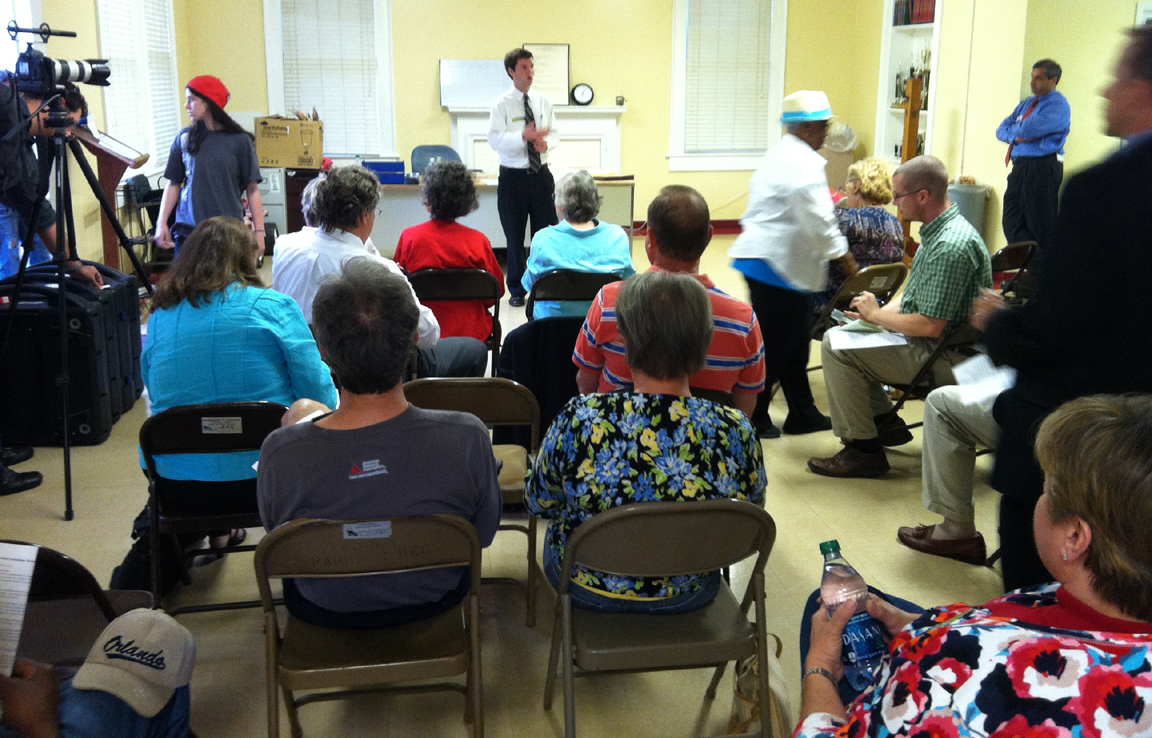
The Melrose event Monday night.

Last night I went to a debate between Daniel Coble and Moe Baddourah sponsored by the Melrose Neighborhood Association. But I’m not going to tell you what I think about what was said there because I wasn’t there as a blogger. This is complicated by the fact that various people who saw me there, including Moe, probably think I was there as a blogger. So this is to set the record straight.

I’ll start at the beginning.

Lately, a large part of my job with ADCO has been business development. In connection with that, I went to breakfast one morning several weeks ago (Feb. 23) with my old friend Bud Ferillo, and I urged him that if he ever finds himself in a situation where he’s representing a client who needs some of the services that ADCO provides, he should give me a call.

Sometime later (I’m not exactly sure when, but my first email on the subject was on the Ides of March), he gave me a buzz and said he needed some help with the production of some last-minute mailings for the Daniel Coble campaign. Fine. I put him in contact with colleagues here at ADCO with expertise in that area, and they helped him out.

At that point, I wasn’t directly involved, beyond getting people together. (I didn’t even see the mailings until after they were done and gone.) Nevertheless, when I interviewed Moe for this post, and when I interviewed Mike Miller for this one, I mentioned what my company was doing to help out Bud on Daniel’s behalf. Neither of them expressed any concern. (I meant to tell Jenny Isgett when I interviewed her, but later realized I had forgotten. And given the reactions of the other candidates, it didn’t seem worth a separate call. I’ll let you be the judge whether I was right about that.)

Then, over the next couple of weeks, I got slightly more involved, but only in the sense of being a conduit for communications between the campaign and folks at ADCO.

Last Thursday, my status changed. On that day, Bud asked whether ADCO could shoot video at a debate Monday night, and provide YouTube clips contrasting the candidates. I checked, and our usual in-house people couldn’t do it that night. There wasn’t time for handling things the usual way. I went ahead and personally lined up a free-lancer, Brett Flashnick, who readily agreed to help out.

So I was there last night in case he had questions, and also so I could witness the whole debate, and be able to help him in editing the video. This afternoon, Brett and Bud and I spent between two and three hours going through video and choosing some clips of good YouTube length. Brett has left now and will send Bud and Daniel the finished product to see if they approve.

So basically, I’ve been heavily involved now in making editorial judgments about campaign materials. I wasn’t involved in that way at all before, but I am now.

Even before things got to this point, I was worried about what, if anything, I should write about the campaign. When I wrote about all those endorsements that Daniel got on March 29, the news was so helpful (in my opinion) to the Coble campaign that I worried that I wasn’t reporting anything of similar impact from the other campaigns, and that it could look like I was favoring him. But I couldn’t figure out how to balance things out. Neither Moe nor Jenny were generating news like that; I wasn’t seeing anything new to react to.

Now that I write that, I realize that as indirect as my involvement was before, I should have told y’all about it. The fact that it was entering my head, that I was worrying about whether I was being 100 percent fair or not, even a little bit, means I should have told y’all so you could judge for yourselves. But I didn’t. I thought about it, but I decided that I was overthinking things, and that all I would accomplish would be to make the connection sound like a bigger deal than it was. Which is a case of over-overthinking, now that I think further (over-over-overthink) about it.

Also, I thought this: The fact that Daniel was the only candidate advertising on my blog (and I assure you, the other candidates had the same opportunities to do so that he did) was a greater apparent conflict than my indirect involvement with those mailings. And y’all knew about that — you could see the ad — and were therefore forewarned and armed to make any judgments you chose to make as to whether I was being fair.

Regardless of decisions I made in the past, there’s no question now: Y’all should know that I am involved at this point. So, anything else I say about this runoff (which probably won’t be much) must be considered in light of the fact that I’ve definitely, directly, done work to help the Coble campaign. I fact, I invite you to go back and read everything else I’ve written up to now (just use the search feature to look for the candidates’ names), and decide for yourself.

Of course, this is an opinion blog. I never make any pretense to news-style “objectivity.” But what I invite you to do is see whether you think any subjective judgments I’ve made were ones I would have made anyway, without any involvement in the campaign. Actually, what I see when I look back is that I held back from expressing any strong opinions or preferences. Which means that what I wrote was affected. Because that’s not normal for me.

All of this is making my head hurt. This, of course, is why people who make their livings as reporters and editors just don’t get involved, period. Or at least, that’s the way it used to be when there were good, full-time jobs to be had in that field.

Now, increasingly, news (or at least commentary) is brought to you by people who make their livings some other way. Which is something you have long known about me.

Life is confusing here in the New Normal, and all I can figure out to do about it is to tell y’all what I’m doing. Which I just did.

Anybody want to talk Mad Men?

I called AT&T (and be sure to check out the ad at right) on Saturday to upgrade my TV options so that I could see the season premiere of “Mad Men” Sunday night. In HD.

I even went to see Dreher High School’s production of “How to Succeed in Business Without Really Trying” — twice — over the weekend to help get me in the mood. (Quick, what is the most direct connection between that play — and I’m thinking the original Broadway production — and “Mad Men”? There’s a hint in the photo above.)

And it was all that I had expected it to be.

So I come in to work at my own ad agency Monday morning, and we usually spend a few minutes batting the breeze at the start of the traffic meeting, but… no one but me watches “Mad Men”! So there was no one to discuss it with.

Anybody want to talk about it? Here, I’ll start…

My favorite story line wasn’t Don’s relationship with his hot new wife, or Lane’s dilemma over the picture he found in a wallet. It was the one that went (SPOILER ALERT):

  • Young white twerps at competing agency, tired of hearing civil rights marchers outside their window, start dropping water bombs on them — which makes news.
  • Our protagonists at Sterling Cooper Draper Pryce decide (in their own white-twerpy fashion) to add to the competitors’ discomfiture by running a help-wanted display ad declaring that they are “an equal opportunity employer.”
  • Joan (my very favorite Mad Man, even though “Man” fits her less well than it does anyone else on television), who is on maternity leave, thinks the agency is hiring someone to replace her, and charges into the office with her baby to demand explanations.
  • A reception-room full of earnest young black applicants, quite naturally taking the ad at face value, show up to apply for the job. NOW what are our wiseguys going to do — say there IS no job, and risk getting as big a black eye as the rival agency did?

Suddenly, our “heroes” are entangled in the mid-60s, and they have to figure out how to cope with it. And it’s deftly and realistically handled, if a bit larger than life.

Getting in the mood for ‘Mad Men’

NEW YORK CITY—An office party, 1966. © Leonard Freed / Magnum Photos

Slate has put up a really interesting photo slide show invoking the “Mad Men” era, to help us all get psyched up for the season premiere coming Sunday.

This is but one. I urge you to go view the whole package. And check out other excellent archival images from Magnum Photos.

Oh, and in case you wondered, fans — working at an ad agency is just like that. Only without the smoke.

Bold new step for IT-ology, Innovista

This just came in a few minutes ago:

It’s a sign of progress. Friday, the Tower at 1301 Gervais — a landmark in the Columbia skyline — becomes IT-oLogy @ Innovista.

The installation of the IT-oLogy @ Innovista signage exemplifies the already successful partnership between IT-oLogy and Innovista to foster the development, growth and relocation of information technology (IT) companies, small and large.

“This marks the fruition of one of our original visions: a district with the strategic clustering of IT companies in one locality,” said Don Herriott, Director of Innovista Partnerships. “More companies are seeing the advantages of co-location, and IT-oLogy @ Innovista now houses 9 IT companies, and counting.”

SignIT-oLogy’s mission is to promote, teach and grow the IT talent pipeline and profession. With Innovista’s mission of creating, attracting and growing knowledge-based companies in the Midlands of South Carolina, the two constitute a perfect partnership for recruiting to the new IT-oLogy @ Innovista building.  Clustering IT companies in a single location, such as the Tower at 1301 Gervais St., can open the door for new opportunities for partnership and business development, stimulate new ideas and industry innovation and help in the recruitment of new companies to the region.

“Our goal is to bring the IT community together in a collaborative environment to develop the IT pipeline through programs at all levels,” said Lonnie Emard, executive director of IT-oLogy. “The partnership with Innovista is a perfect example of this collaborative effort because we are bringing together people and companies that are dedicated to both of our missions.”

The establishment of an IT district is not about a sign at the top of the Tower at 1301 Gervais St. While that is a visible representation of the partnership, the real story is what happens both inside and outside of the building. The uniqueness of IT-oLogy is that it is not a single company or entity; instead, it is a non-profit collaboration of companies, academic institutions and organizations uniting to address the nationwide shortage of skilled IT professionals. To address this challenge, IT-oLogy offers K-12 programs where students explore numerous IT career options, internships for undergraduate students and continuing education opportunities that keep professionals constantly learning and up-to-date. When all this happens, the result is a vibrant economic picture, which is the goal of Innovista.

The confluence of opportunities in IT-oLogy @ Innovista will provide a home in the community for local talent as well. “At the University of South Carolina, our responsibility to students and alumni extends beyond education. It includes a commitment to helping them find jobs, good jobs, when they graduate,” said Dr. Harris Pastides, president of the University of South Carolina. “The pairing of IT-oLogy and Innovista is perfect because of their complementary missions, each focused on growing our innovation economy in this region and across South Carolina.”

“From the outset, the vision of IT-oLogy has been to have business and academic partners collaborate to advance IT talent,” Emard said. “The lack of IT talent is a national epidemic that is solved in a local manner. The establishment of IT-oLogy @ Innovista is a visible representation of bringing companies together to collaborate and partner, fostering new ideas and technologies.”

Recently, IT-oLogy announced the establishment of the branch IT-oLogy @ University Center of Greenville, located in Greenville, S.C. This is yet another way IT-oLogy is working locally to address a national issue. In the future, IT-oLogy will continue to open branches across the nation as a way to advance IT talent in a grassroots manner.

Innovista is a strategic economic development effort that is connecting USC and university-spawned innovations with entrepreneurs, businesses and stakeholders. Its purpose is to help attract and create technology-intensive, knowledge-based companies, which result in higher-paying jobs and raise the standard of living in South Carolina.

For more information about Innovista, visit www.innovista.sc.edu

This is interesting on a number of levels.

Several months ago, I heard a rumor that Innovista’s headquarters were going to move from the USC campus to this building, in part to emphasize the point (emphasized by Don Herriott) that Innovista is about the whole community, not just those blocks in the area described by Assembly and the river, Gervais and the baseball stadium (and certainly far, far more than those couple of buildings people keep going on about).

Then I heard that wasn’t right. Maybe this idea is what started the rumor I’d heard.

Anyway, this is interesting, and I’m not sure what all the ramifications are yet…

What’s the proper price for books that don’t exist?

Just a couple of days after I posted a video of the director of the Ayn Rand Institute, that organization sends out this release:

Apple Should Be Free to Charge $15 for eBooks

WASHINGTON–Apple and five top book publishers have been threatened by federal antitrust authorities. According to the Wall Street Journal, they are to be sued for allegedly colluding to fix ebook prices.

According to Ayn Rand Center fellow Don Watkins, “Traditional books may come from trees but they don’t grow on trees–and ebooks and ebook readers such as the iPad definitely don’t grow on trees. These are amazing values created by publishers and by companies such as Apple. They have a right to offer their products for sale at whatever prices they choose. They cannot force us to buy them. If they could, why would they charge only $15? Why not $50? Why not $1,000?

“There is no mystically ordained ‘right’ price for ebooks–the right price is the one voluntarily agreed to between sellers and buyers. Sure, some buyers may complain about ebook prices–but they are also buying an incredible number of ebooks.

“What in the world justifies a bunch of bureaucrats who have created nothing interfering in these voluntary arrangements and declaring that they get to decide what considerations should go into pricing ebooks?”

Read more from Don Watkins at his blog.

I didn’t know what the Institute was on about until I saw this Wall Street Journal piece:

U.S. Warns Apple, Publishers

The Justice Department has warned Apple Inc. and five of the biggest U.S. publishers that it plans to sue them for allegedly colluding to raise the price of electronic books, according to people familiar with the matter.

Several of the parties have held talks to settle the antitrust case and head off a potentially damaging court battle, these people said. If successful, such a settlement could have wide-ranging repercussions for the industry, potentially leading to cheaper e-books for consumers. However, not every publisher is in settlement discussions.

The five publishers facing a potential suit areCBS Corp.’s Simon & Schuster Inc.;Lagardere SCA’s Hachette Book Group;Pearson PLC’s Penguin Group (USA); Macmillan, a unit of Verlagsgruppe Georg von Holtzbrinck GmbH; and HarperCollins Publishers Inc., a unit of News Corp. , which also owns The Wall Street Journal….

This is truly a fight in which I do not have a dog. I think. And it should please the Randians that my own attitude has to do with market forces. I can’t conceive of paying $15 for a book when, after the transaction, I don’t actually have a book.

So I can approach this dispassionately, and ask, to what extent is this a monopoly situation? After all, Apple has competitors — such as Amazon, which actually pioneered this business of selling “books” to people electronically. The WSJ story addresses that:

To build its early lead in e-books, Amazon Inc. sold many new best sellers at $9.99 to encourage consumers to buy its Kindle electronic readers. But publishers deeply disliked the strategy, fearing consumers would grow accustomed to inexpensive e-books and limit publishers’ ability to sell pricier titles.

Publishers also worried that retailers such as Barnes & Noble Inc. would be unable to compete with Amazon’s steep discounting, leaving just one big buyer able to dictate prices in the industry. In essence, they feared suffering the same fate as record companies at Apple’s hands, when the computer maker’s iTunes service became the dominant player by selling songs for 99 cents.

Now that sounds more like what I would think the market would bear, if the market were like me. $9.99 sounds closer to what I might conceivably be willing to pay in order to have access to the contents of a book without actually getting a book. But it still seems high.

Yes, I can see advantages to a e-book. You can store more of them in a smaller space. They don’t get musty, which for an allergic guy like me is nothing to sneeze at. And you can search them, to look up stuff you read, and want to quote or otherwise share. That last consideration isn’t that great for me because I have an almost eerie facility for quickly finding something I read in a book, remembering by context. But… once I’ve found it, there’s the problem that if I want to quote it, I have to type it — which is not only time-consuming, but creates the potential for introducing transcription errors. Far better to copy and paste. (At least, I think you can copy and paste from ebooks. Google Books doesn’t allow it. See how I got around that back here, by using screenshots of Google  Books.)

But I still want to possess the book. Maybe it’s just pure acquisitiveness, or maybe it’s a survivalist thing — I want something I can read even if someone explodes a thermonuclear device over my community, knocking out all electronics.

In any case, all of us are still sorting out what an ebook is worth to us. Let Apple set the price where it may, and try to compete with Amazon. Then we’ll see what shakes out.

Yep, that’s Bobby all right

People wonder why I’m always late and never (well, almost never) get anything done. It’s because for me, stuff just leads to stuff. And I’m unable to resist plunging ahead to see where it all leads.

For instance, today I had a membership committee meeting at the Capital City Club. At some point our membership director said that you can now buy Smart Cards at the Club. Someone asked what that was, and I pulled mine out of my pocket to show him. This reminded me… I had arrived at the Club for a meeting before the meeting, and my two hours (it was one of the green ones, which max out at 2 hours) were probably going to run out just as we were ending the lunch meeting. And I’ve been ticketed seconds after running out before.

So I excused myself to go put some more time on the meter.

On my way out, I ran into Rep. James Smith. We exchanged pleasantries, I excused myself again and went down to the street. I put some more time on, and headed back up.

On my way into the building, a sort of familiar-looking guy walking perpendicular to my path made eye contact with that “Hey, aren’t you…” look, hesitated, nodded to me with the sort of halfway nod that feels deniable, in case you’re wrong about who it is, and I gave back a similar nod. I walked on, thinking about the odd complexities of polite human interaction, when I heard a “Hey!” behind me. It was the guy. He asked me if I was Brad and if I used to run the newspaper. I told him I ran the editorial page. He asked me about a woman named Cindi who was married to someone who had been someone high-ranking at the newspaper, saying he probably was confusing her identity. He said no, not Cindi Scoppe.

I don’t know how I got there, but I eventually I read his mind enough (after he mentioned Macon, Ga.) to venture that he was talking about Nina Brook. Her husband Steve came to the paper as business editor, she joined as a political reporter, she left to go to WIS and then was Gov. Jim Hodges’ press secretary before I hired her away (the move was widely regarded as a defection) to be an associate editor. She’s now a high school teacher. Steve is now managing editor at the paper.

She and Cindi Scoppe share a number of characteristics (they used to be a fearsome duo as reporters, covering the Legislature together), which could lead to a name confusion, but don’t tell either of them that.

That settled, I confessed to not knowing his name, and he gave it. He works at the Department of Commerce. I asked how Bobby Hitt was doing. Bobby, if you’ll recall, was very ill just before Christmas, and hospitalized for quite a while. He’s back at work now, I was told, but working more of a normal schedule instead of trying to kill himself doing everything. Good to hear.

Oh, he said, since you know Bobby from way back you should probably get off the elevator on 16 and look down the hall to see the new portrait. He said it was by that lady, and he gave a first name (again, not the right one — I have days like that, too) who works with trash. I said you mean Kirkland Smith, who… drumroll… is married to James Smith, whom I had just run into. And it’s not really garbage she uses as a medium, more like… cast-off junk. It’s a recycling thing.

So on the way back to my meeting, I stopped on 16 and looked both ways. The receptionist at Commerce asked if she could help me, and I said I was looking for the picture. She told me to step inside the double doors and look down a hall, and at more than 50 feet there was no doubt — there was Bobby.

I went on down the hall to get close enough for an iPhone picture, and ended up chatting with another lady whose desk was next to it.

Eventually, I made my way back to the meeting. It was pretty much over. I hadn’t meant to miss the rest of the meeting; stuff just happens…

Anyway, I thought Kirkland’s picture was pretty cool, just like the others of hers I’ve seen. So I’m sharing it.

A new business model for journalism?

Romenesko brought my attention to this idea today. It’s intriguing, because the holy grail in journalism today is to find a new way to pay for it, now that the old business model that sustained newspaper journalism for generations has collapsed so spectacularly.

Interest in news and commentary is as great as always, but in the past, those who demanded such commodities were not the ones who paid for it — it was advertisers, who came to the newspaper for completely different motives. Now that marketing has changed so radically, turning from mass media to targeting messaging, how do you pay people to come up with the professional-quality content that the public still desires?

Here’s one way:

I call it the eBay of investigative journalism, and here’s how I envision it:

  • Bring donors and investigators together in an exclusive online network, creating a forum where they could pitch ideas to each other.
  • Donors in the network who want specific topics covered would propose stories and agree to fund the investigations. Journalists in the network would bid on the projects, outlining how much money they need. Multiple donors could contribute to each project.
  • Project pitches would work the opposite direction, too, with investigative journalists outlining their own ideas and donors “buying in” by providing the funds. Donors could contribute the full amount to fund projects they really like or fund parts of multiple projects. Journalists also could pitch ideas as teams or recruit teams within the network.
  • The network would have a team of editorial directors whose job would be to vet the donors, journalists and ideas. Only the best would make the cut, just like applying for media jobs.

Of course that only applies to investigative journalism — or more, broadly, what we referred to as “enterprise” stories: Someone (traditionally an editor) says “go out and look into this.” Traditionally, the journalist did so because he was paid a salary. Now that the revenue source that paid that salary has collapsed, this is an interesting idea for paying for a journalist’s time and expertise to pursue a subject.

Of course, there are real problems with it. Not every worthwhile story, not everything that citizens need to know, is marketable. That’s why it worked better to pay journalists salaries so that their scope of investigation was unlimited by what attracted a paying customer.

Then, there’s the fact that it does little good for the area of opinion journalism, which has been my specialty since 1994.

But perhaps most critically, it does nothing for the most fundamental, basic, bread-and-butter kind of journalism: simply covering everything in a community — crime, public safety, courts, politics, business. If you try to cover news according to whether someone wants to pay to see that particular story, it becomes PR.

But it’s still an intriguing idea.

Midlands mayors speak optimistically of burgeoning community unity

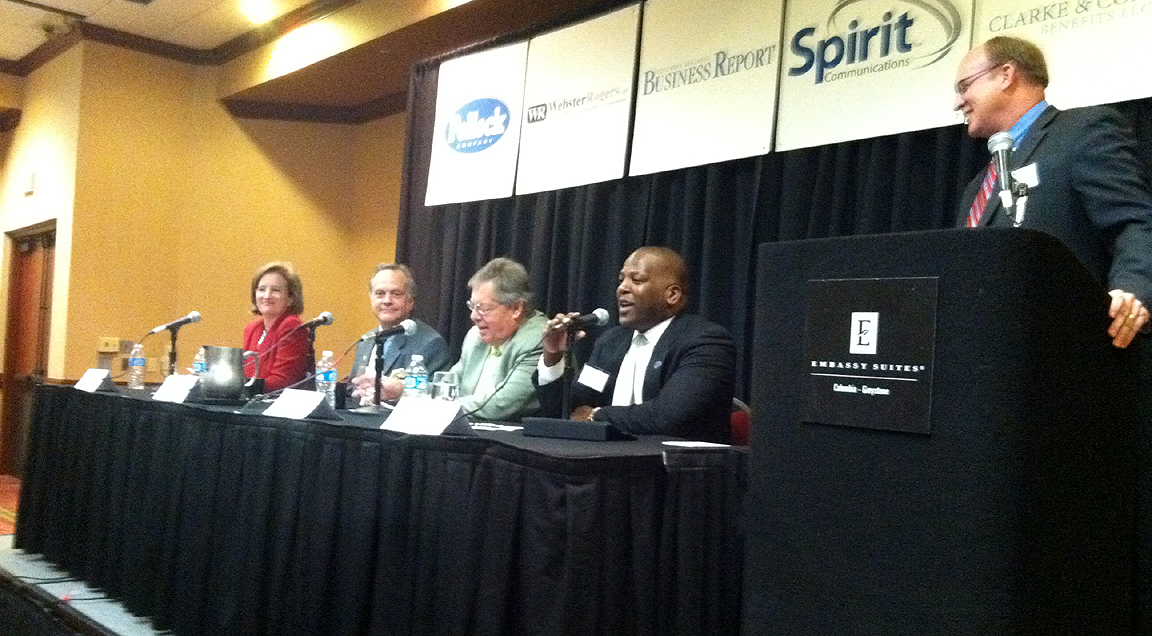
The panel laughs after moderator Bob Bouyea asked what should be done about traffic on I-126 and other paths into Columbia, and Steve Benjamin replied, "Everybody could live downtown."

This morning — very early this morning — I attended the latest “Power Breakfast” sponsored by the Columbia Regional Business Report. So did a lot of other people, packed into a ballroom at Embassy Suites.

I’d like particularly to thank the friends who joined us at the ADCO table, right up front:

We were there to listen to four mayors — Steve Benjamin of Columbia, Randy Halfacre of Lexington, Elise Partin of Cayce, and Hardy King of Irmo — talk about metro issues.

Here was the dominant theme: Regional cooperation.

You may note that that was the main theme at last year’s panel. You’d be right. But last year it was more about something to be grasped at. This year there was more of a sense of something achieved.

A lot of this arose from the experience of landing Amazon. One hears that a lot among folks who work in local government, and economic development, in the Midlands. Which is interesting. It started out as such a divisive controversy, in the Legislature, with the governor not helping a bit and lawmakers at each other’s throats. I had my own ambivalence about the deal at the time, but those who are dedicated to bringing jobs to the community were undivided in their minds, and undivided in the collective sense.

It seems to have been a rallying, bonding experience that carries over into many other areas.

Time and again this morning, we heard expressions of comradeship, a sense of all being in this together, that swept aside the political boundaries that have been an excuse to get nothing done in the past. We heard it a little less from Hardy King, who tended to answer questions entirely from an Irmo perspective, but he’s new, and hasn’t been through the same bonding experiences as the other.

Last year, the mayors were still stinging over the failure to come together effectively over the Southwest Airlines matter. This year, there was more reason to celebrate — and not just Amazon, but Nephron and other economic development wins for the whole community.

A lot of other issues were discussed — Ms. Partin mentioned the 12,000-year history park in her city, Mr. Benjamin said with regard to mass transit that “It’s hard to get Southerners out of their cars,” Mr. King spoke of his town’s 0 percent property tax rate, and Mr. Halfacre told us about what his citizens ask about almost as much as they ask for traffic relief: sidewalks.

But I’ve been away from home 12 hours now, and I hear my dinner calling.

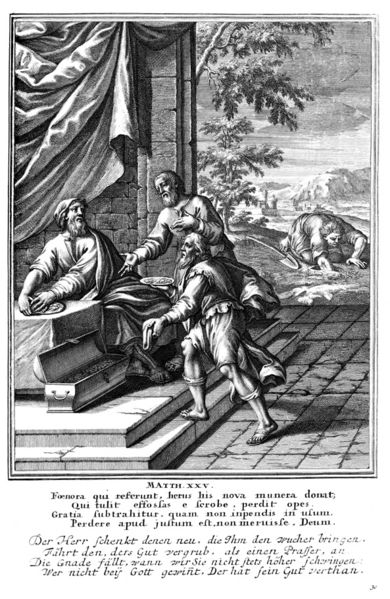
Taking a risk with a mustard seed

I don’t often get releases like this one, so I thought I’d share it:

11 Trinity Youth Transform $1,100 into More Than $60,000

In Just 90 Days, through the Kingdom Assignment, Students Raise Money to Further the Kingdom of God

Thursday, February 9, 2012, Columbia, SC Trinity Cathedral’s Episcopal Youth Community (EYC) is making a big impact in their parish and in our community. In November of 2011, Canon Brian Silldorff challenged 11 members of EYC to participate in the Kingdom Assignment. The result? More than $60,000 to fund an array of projects, both sacred and secular.

The Kingdom Assignment is an international project dedicated to stewardship of God’s Kingdom that started some ten years ago in Lake City, California. You can read more about the Kingdom Assignment on their website, www.kingdomassignment.org.

After teaching a Sunday school lesson about the Parable of the Talents, Silldorff challenged eleven youth to participate in the Kingdom Assignment and entrusted them with $1,100 and offered just three rules: 1. The money belongs to God and is entrusted to you. 2. You have 90 days to further the kingdom of God with your talent and treasure. 3. You must report back in 90 days about your project and its success.

It’s now 90 days later and the Kingdom Assignment project will culminate during Youth Sunday School on Sunday, February 12, 2012 at 10:15am in the Workshop. Students, adults, and those impacted by the project will be present along with parishioners and the media to celebrate the impact and reach of more than $60,000.

You are invited to join in the celebration and share in the success. Please email Brian Silldorff if you plan to attend as space is the Workshop is limited. The Worskshop is located on the ground floor of the Trinity Center for Mission and Ministry located at 1123 Marion Street, Columbia, SC 29201.

Way to go, kids! I’m proud of you. Even though you’re not Roman. At least you’re catholic. You know, my cousin is one of y’all’s priests.

This reminds me of the best sermon I ever heard from my own pastor, Msgr. Lehocky. It was so long ago, he probably doesn’t remember it, but I do — the main points, anyway.

I’d always had trouble with that parable — you know, the Capitalist Parable:

14`The kingdom of heaven will be like the time a man went to a country far away. He called his servants and put them in charge of his money.

15He gave five bags of money to one servant. He gave two bags of money to another servant. He gave one bag of money to another servant. He gave to each one what he was able to be in charge of. Then he went away.

16`Right away the servant who had five bags of money began to buy and sell things with it. He made five bags of money more than he had at first.

17`The servant who had two bags of money did the same thing as the one who had five bags. He also made two bags of money more than he had at first.

18But the man who had only one bag of money dug a hole in the ground. And he hid his master’s money in the ground.

19`After a long time, the master of those servants came home. He asked what they had done with his money.

20The servant who had been given five bags of money brought five bags more to his master. He said, “Sir, you gave me five bags of money. See, I have made five bags more money.”

21`His master said, “You have done well. You are a good servant. I can trust you. You have taken good care of a few things. I will put you in charge of many things. Come, have a good time with your master.”

22`The servant who had been given two bags of money came and said to his master, “Sir, you gave me two bags of money. I have made two bags more money.”

23His master said, “You have done well. You are a good servant. I can trust you. You have taken good care of a few things. I will put you in charge of many things. Come, have a good time with your master.”

24`The servant who had been given one bag of money came and said, “Sir, I knew that you were a hard man. You cut grain where you did not plant. You pick fruit where you put nothing in.

25I was afraid. So I went and hid your money in the ground. Here is your money.”

26`His master answered him, “You are a bad and lazy servant. You knew that I cut grain where I did not plant. You knew that I pick fruit where I put nothing in.

27You should have put my money in the bank. Then when I came home, I would have had my money with interest on it.

28So take the money away from him. Give it to the one who has ten bags.

29Anyone who has some will get more, and he will have plenty. But he who does not get anything, even the little that he has will be taken away from him.

30Take this good-for-nothing servant! Put him out in the dark place outside. People there will cry and make a noise with their teeth.” ‘

Not that I have anything against capitalism; I don’t. I just didn’t like it that Jesus was suggesting that the third servant had done something wrong. I mean, if someone else asks you to hold his property, shouldn’t you take every precaution to preserve it and have it ready to give back to him? Doesn’t basic honesty require that? Capitalism is a fine thing, with your own money. But do you have the right to take a risk with someone else’s, without specific (preferably written) authorization?

The risk part was what got me; that’s what seemed wrong. It was too easy to fail.

Father Lehocky urged us to look at it in a whole new way. He said people who play it safe are wasting the talents or other gifts they are entrusted with. OK, I sort of got that, but what if they fail? What if they do?, he said. Failing is part of life. You can fail big-time, and by doing so advance the cause of God. Look at Jesus himself. Was there ever a bigger failure? Look at the way he died. Charged as a criminal, whipped nearly to death, stripped naked and nailed up on a gibbet like an animal for the unfeeling community to watch his death-agonies. Abandoned by his friends, who ran like scalded dogs before the bully boys and denied even knowing him. Not a word he’d said had ever even been written down. All over, all done with, all for nothing. He’d taken a risk, and failed spectacularly, by every standard the world had for judging such things.

Except that he hadn’t, as it turned out. He’d really started something. The risk he’d taken had paid off in a way no ordinary mortal would have predicted.

That sermon made me think differently about my life and how it should be lived. It made me look at failure in a new way. Not that I’ve always lived up to that new way of looking at life. But it made me think. And now that I’m writing this, I’m thinking about it again…

Joel Sawyer joins forces with Wesley Donehue

A screenshot from an episode of "Pub Politics" when Joel Sawyer, right, stood in for Wesley Donehue. At left is Phil Bailey, and the guest is the record-holder, making his 8th appearance.

Joel Sawyer, ex-press secretary to Mark Sanford and until recently the public face of the Huntsman campaign in SC, has a new gig:

Columbia, SC – February 6, 2012 – Two of South Carolina’s top up-and-coming political and communications talents are teaming up, with Donehue Direct CEO Wesley Donehue announcing today that Joel Sawyer would be joining the firm effective immediately as Senior Vice President.

“Donehue Direct has already established a brand as being the premier internet, social media, and political consulting firm in South Carolina,” Donehue said. “Joel is going to help take this company to the next level in terms of growing our brand and expanding our presence across the region. “

Sawyer and Donehue were recently named among Columbia’s 50 Most Influential People by Columbia Business Monthly, the only political consultants to receive the honor.

Sawyer began his career as a newspaper reporter with the Spartanburg Herald-Journal, where he won S.C. Press Association Awards for spot news reporting and in-depth reporting. He then served in Gov. Sanford’s communications office for more than six years, most recently as Communications Director. He moved on to become Executive Director of the SCGOP, where he guided the state party to its first-ever sweep of Constitutional Offices and taking the 5th Congressional District. Most recently, he served as state Campaign Manager for Jon Huntsman for President.

“This is an incredible opportunity to join a growing firm that is really at the cutting edge of internet and social media technology,” Sawyer said. “Wes and his team are literally creating the roadmap for the convergence of new media and traditional political consulting – and this partnership is going to take it to new heights.”

Donehue Direct is a political consulting and technology firm with operations in Columbia, Charleston and San Francisco. The Donehue team runs campaign and internet operations for clients ranging from City Council and State Legislature to United States Senator and Governor. Last year, Donehue Direct CEO Wesley Donehue was named Republican Innovator of the Year by Campaigns and Elections magazine.

Congratulations to both Joel and Wesley. They seem poised for success in the Republican interactive services market. In South Carolina, that’s a growth niche…

Once upon a time, boys and girls, there were these things called “newspapers”…

This newsreel, brought to my attention by Burl Burlingame, has a lot of funny lines in it, but none is a bigger hoot than, “there are a lot of writing jobs on newspapers.”

I also like the part when it says that women find it hard to compete with men for hard-news reporting jobs. And it’s so true! You know why? Because there’s aren’t any freaking reporting jobs, that’s why!