Category Archives: Books

This year’s One Book: Conroy’s “My Reading Life”

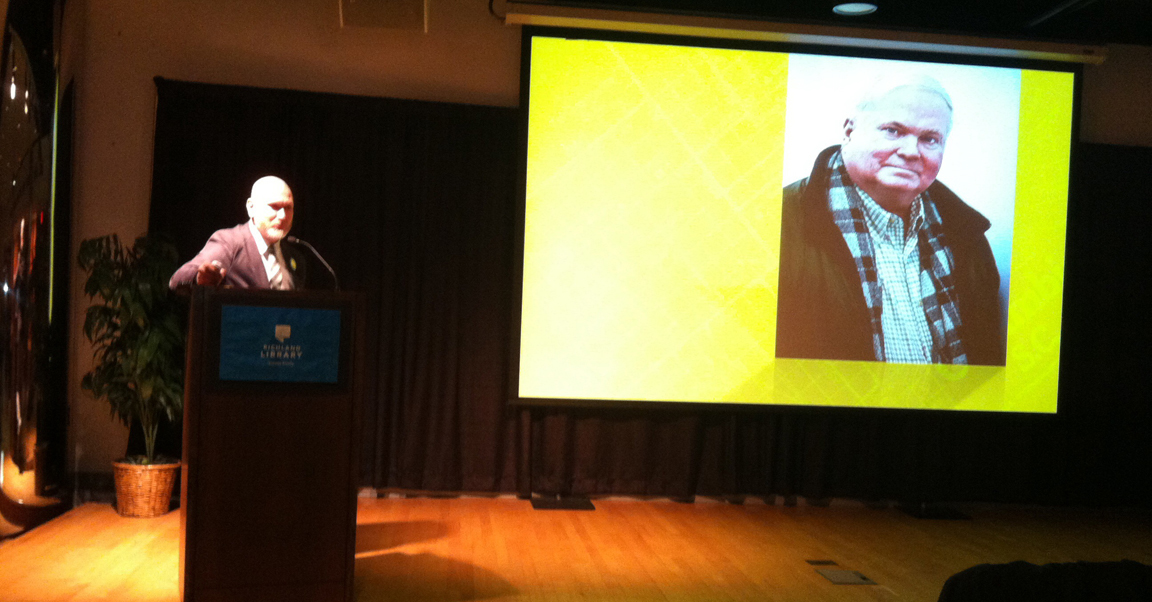
Tony Tallent, the Director of Literacy and Learning at Richland Library, announced this year's selection.

Tony Tallent, the Director of Literacy and Learning at Richland Library, announced this year’s selection.

Last night, I dropped by Richland Library for the unveiling of the chosen book for the 2014 “One Book” program.

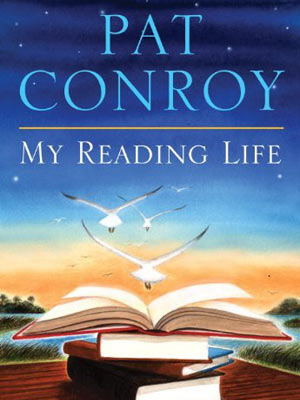
It’s My Reading Life, by Pat Conroy. Everyone was pretty pumped about it, in part because the author himself will be participating in the program.conroy

I look forward to reading it myself, and joining in discussions of it. As you may recall, I moderated a discussion at the library for this past year’s selection, A.J. Mayhew’s The Dry Grass of August, a book I enjoyed much more than I had thought I would.

Which I suppose is kinda the point of participating in a program that gets you to read something you might not have. It’s broadening to get pulled away, however briefly, from my obsessive re-reading of Patrick O’Brian’s Aubrey-Maturin series (I’m currently on about my sixth trip through some of the books — I still haven’t allowed myself to read the very last two in the series).

Now, to digress…

After the announcement, I got involved in a discussion of the strong-mayor referendum with Mike Miller, Tim Conroy (the author’s brother and a longtime Columbian), and City Councilman Sam Davis. All of us, except Mr. Davis, had been deeply disappointed by the outcome. He listened patiently to us, and we listened patiently to him, but I don’t think any minds were changed.

We were joined late in the discussion by our old blog friend James D. McAllister, a writer and owner of Loose Lucy’s. He was against strong-mayor, but Kathryn would probably discount his opinion, since, like me, he doesn’t live in the de jure city.

Anyway, back to the book… maybe we should all read it and have a good discussion of it here on the blog. Whaddya think?

No, that is NOT me. That's Mike Miller with Tim Conroy.

No, that is NOT me. That’s Mike Miller with Tim Conroy, later in the evening at First Thursday on Main.

My favorite store in the universe is closing!

As y’all know, one of my very favorite leisuretime activities is to go to Barnes & Noble, get a cup of coffee, and browse. And sometimes blog — it’s one of my favorite remote locations for that.

I’ve done this in lots of Barnes & Nobles — such as in Memphis; Myrtle Beach; New York; Florence (SC); Charleston; Harrisonburg, Va.; Camp Hill, PA — but my favorite, my essential, my default, has always been the one in Harbison.

I wrote one of my favorite early blog posts, headlined, “The Caffeine Also Rises,” at a Barnes & Noble. An excerpt from that over-stimulated ramble in 2005:

This is blogging. This is the true blogging, el blogando verdadero, con afición, the kind a man wants if he is a man. The kind that Jake and Lady Brett might have done, if they’d had wi-fi hotspots in the Montparnasse.

What brings this on is that I am writing standing up, Hemingway-style, at the counter in a cafe. But there is nothing romantic about this, which the old man would appreciate. Sort of. This isn’t his kind of cafe. It’s not a cafe he could ever have dreamed of. It’s a Starbucks in the middle of a Barnes and Noble (sorry, Rhett, but I’m out of town today, and there’s noHappy Bookseller here). About the one good and true thing that can be said in favor of being in this place at this time is that there is basically no chance of running into Gertrude Steinhere. Or Alice, either.

I’m standing because there are no electrical outlets near the tables, just here at the counter. And trying to sit on one of these high stools and type kills my shoulders. No, it’s not my wound from the Great War, just middle age….

There’s nothing like writing under the influence of your first, or second, coffee of the day. Especially back then, before I had built up resistance.

But the best of all was at the B&N at Harbison. It just had the perfect feel to it. I wrote this and this and this there.

The one at Richland Fashion Mall (or whatever it’s called now) is OK in a pinch, but not the same. Maybe it’s that there’s no video and music department; I don’t know — but I’ve never been inclined to spend much time there.

Anyway, you get the picture. So you can imagine how dismayed I am at this:

By KRISTY EPPLEY RUPON — krupon@thestate.com

COLUMBIA, SC — Barnes and Noble on Harbison Boulevard will close at the end of the year, leaving the Irmo area without a traditional bookstore selling new books.

A manager answering the phone at the store Monday morning said she could not give details to the media. Efforts to reach a spokesperson Monday morning were not successful.

However, employees are telling customers that the store at 278-A Harbison Blvd. will close at the end of the year because its lease is not being renewed….

If I were a guy whose favorite recreation was jogging in the park, and the park got paved over, I couldn’t be more upset.

This is just wrong.

Maybe I should have bought something now and then when I was there browsing. Or maybe I shouldn’t have fallen into the habit of buying my coffee at the actual Starbucks across the parking lot before entering the store.

But surely I’m exaggerating the impact of my own behavior — right?

Is this just a meaningless little coincidence, Jeeves?

When I saw this in the WSJ this morning:

TUNKHANNOCK, Pa.—Atop a hill at the end of a road called P&G Warehouse Way sits a warehouse stocked with Pampers diapers, Bounty paper towels and other items made by Procter & Gamble Co. It also houses an ambitious experiment by Amazon.com Inc.

I initially read the boldfaced part as “P.G. Wodehouse.” Not a name I think of very often.

Then, within an hour, I was reading this, from an email from The Trinity Forum:

Happy Birthday, P.G. Wodehouse!
October 15, 1881 – February 14, 1975

Coincidence? Yes, I suppose so.

Anyway, if any of y’all want to explore the author beyond Bertie Wooster, Trinity’s offering a deal on one of Wodehouse’s books.

I’d wish him a Happy Birthday, but, since he died in 1975, I doubt he’s on Facebook…

Colonel Cathcart raises our ‘Walk for Life’ goal

danby

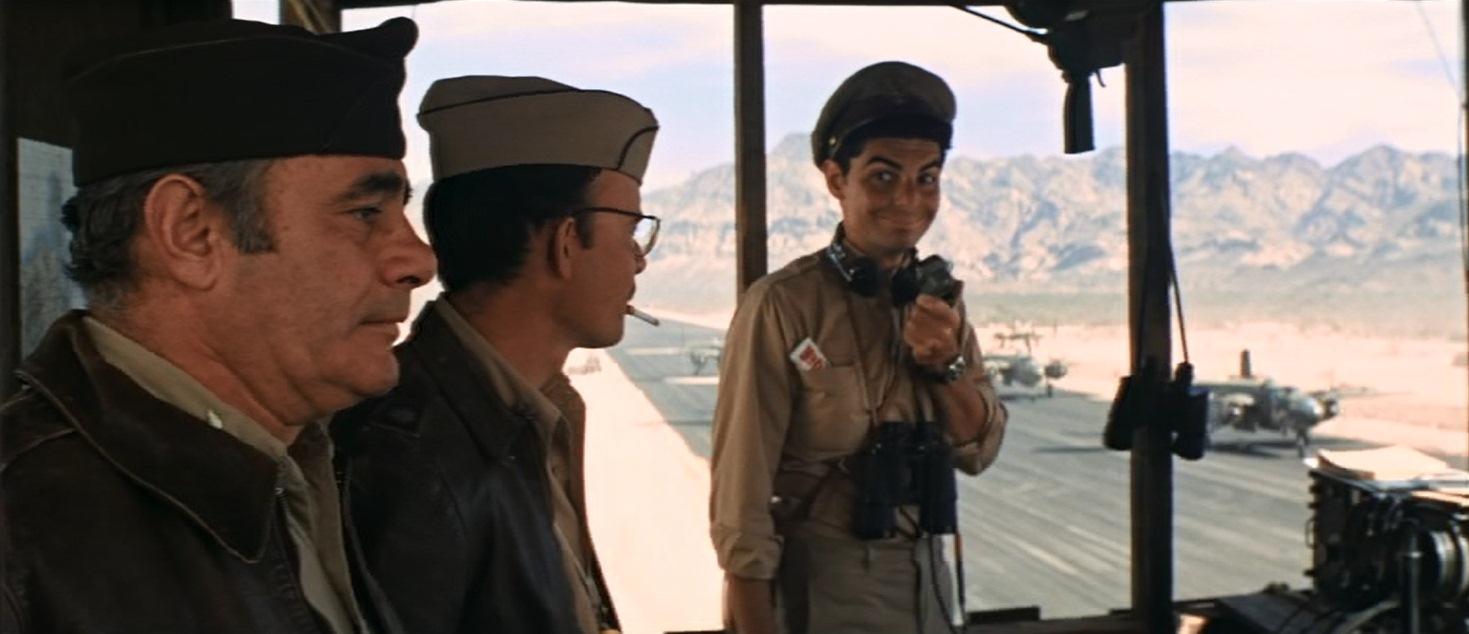
Col. Cathcart, Lt. Col. Korn, and Major Danby.

You remember Col. Cathcart, don’t you — from Catch-22? (And if you haven’t read Catch-22, you should.)

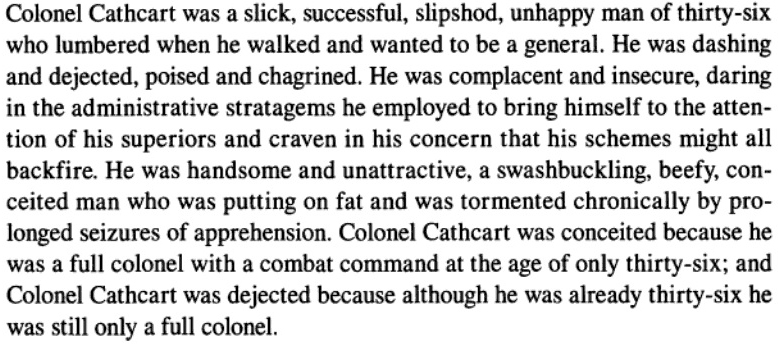
Here’s a reminder of who he is:

description

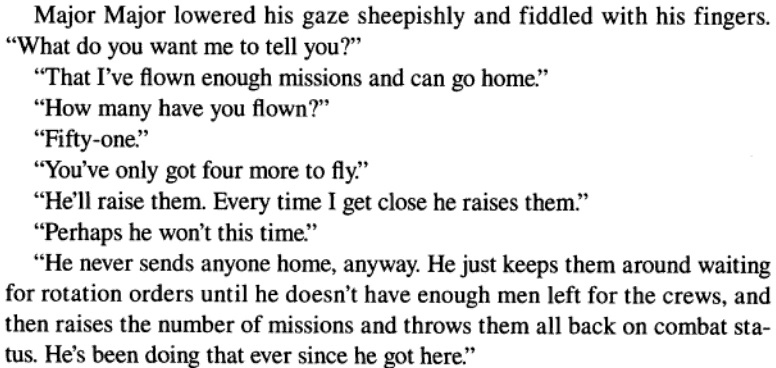
His main function in the plot of the book is to keep raising the number of missions that the men in his bomb group must fly before they can rotate stateside. He does this to curry favor with his superiors. He lives for “feathers in his cap” and lives in horror of “black eyes.”

This repeated raising of the number of missions is a key driver in Yossarian’s constant, growing anxiety, especially since the colonel always raises the number just before Yossarian reaches it:

cathcart

Well, it seems that Col. Cathcart has slipped out of the pages of the novel and somehow gained access to our Walk for Life team profile, and raised our goal — much as Yossarian slipped out of his tent one night and moved the bomb line on the map to above Bologna.

And I’m happy to report that I — I mean, Col. Cathcart — ran into Samuel Tenenbaum this morning, who is sort of the General Dreedle of Palmetto Health Foundation, and told him that our goal has been raised from $1,000 to $3,000. He was most pleased. I think this is quite a feather in my, I mean Col. Cathcart’s, cap.

And I’m sure, men (like Lt. Scheisskopf, I enjoy addressing you as “men” in a clipped, military voice), that you’ll be happy to keep flying missions until we exceed the new goal. Failure to do so would result in a black eye for me, your colonel, and I’m sure none of you men want that.

Some talking points on the library bond vote

I haven’t seen a lot out there about the Richland Library bond vote on the Nov. 5 ballot. So I thought I’d pass on this memo I received from folks who are pushing for a “yes”:

Dear Friends,


Did you know the Richland Library bond referendum will be on the November 5 ballot?  Below is some basic information.  If you would like more details or how to be involved in Vote For Our Libraries, contact us!  betty@voteforourlibraries.com  803-233-2414

Richland Library


Since 2007, the library has had a capital needs plan that calls for renovations and additions to all library facilities based on the changing ways we serve and advance our community.


Key Facts:


Why is the Library Requesting a Bond Referendum?

Voter approved bonds are the only way the library can obtain substantial funds for building and renovations. The goal is to update all library locations by adding and reconfiguring space, technology and resources to better fit the way customers need and use the library today. The capital needs plan was developed in 2007 and is reviewed each year. The only new buildings are Ballentine and Sandhills. Following green building guidelines and sustainable practices will mean substantial energy savings for all locations.


Why now?

It’s been 24 years since the last bond referendum in 1989, and most of our facilities haven’t been significantly improved or updated since then. Interest rates are at an all-time low – it costs half as much today for twice the value added in 1989.


What will it cost the taxpayer?

Estimates indicate the maximum impact on taxpayers to be $12-14/year for a $100,000 home. For as little as one cup of coffee each month, we can ensure access to needed resources and technology, as well as the opportunity to share information and exchange ideas.


Why spend money on libraries when everyone has a smartphone/tablet?

Technology has made libraries more essential to their communities – not obsolete. In fact, many people in Richland County rely on the library for access to technology, computers and the Internet. Even if you may not use the library, your friends, family and neighbors are most likely relying on its services.

What’s on Hank and Marie Schrader’s bookshelf?

Hank

Last week, I thought I had finally found an aspect of “Breaking Bad” that no one else had delved into.

I should have known better. As into the series as I am, I knew that there were people out there who apparently have no lives whatsoever, and they’re always going to be several steps ahead of me.

But here’s my post on the subject anyway…

Volumes have been written (although probably not yet actually assembled into physical volumes) about the main characters, such as this one last week wondering if Hank Schrader was turning into Walt White. Or rather, into another Heisenberg.

But how do you really get to know somebody? Well, you go to his house, and you look at what he’s got on his bookshelf. (Or, if you’re Rob Fleming in “High Fidelity,” you look at his records, and then judge him unmercifully.)

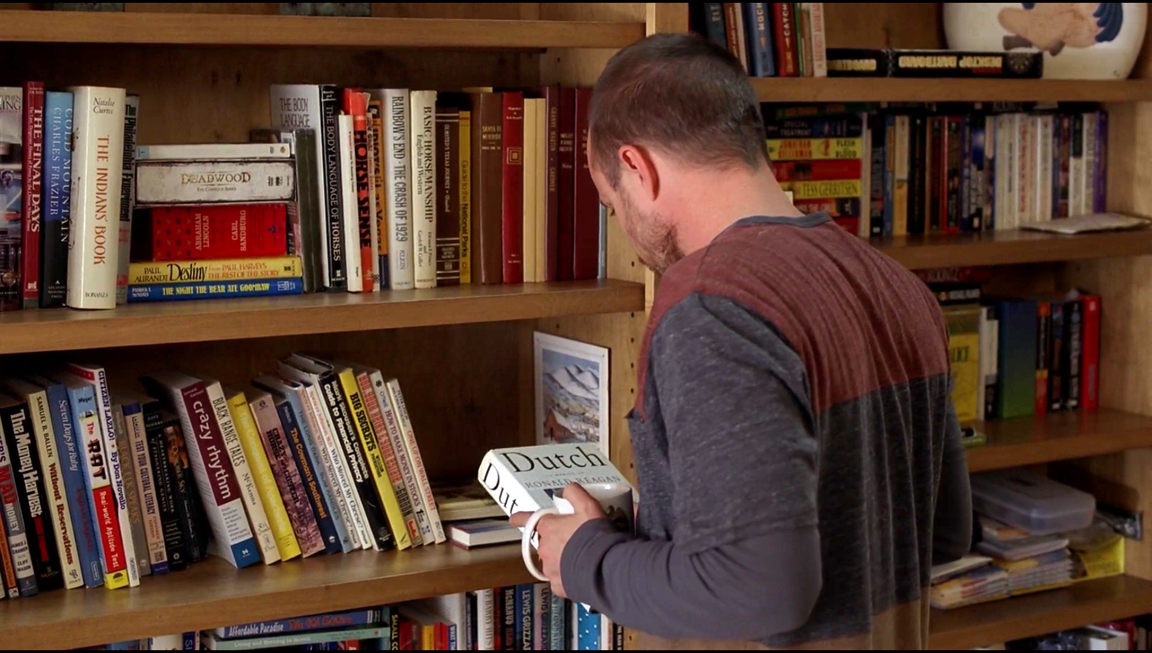
Last week (the episode before last night’s, that is), we got a look at Hank’s and Marie’s bookshelf. Jesse Pinkman walked over and idly picked up a copy of Edmund Morris’ Dutch: A Memoir of Ronald Reagan. I half-expected Jesse to remark on it, but he didn’t. (If he had, what would have had said, yo?)

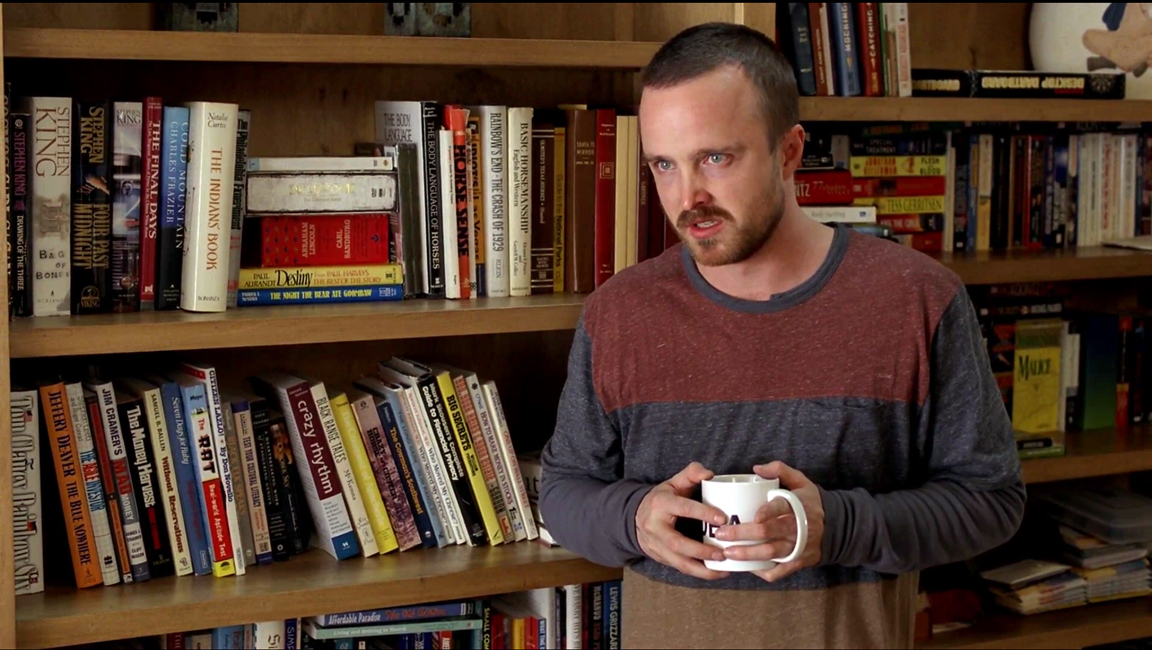
Since Jesse said nothing about it, I froze the screen and looked at what else was there. A sampling:

  • They’re into Stephen King; I see four books by him.
  • There’s The Final Days, except it doesn’t look right. That WoodStein classic should be thicker, and have a white background rather than a maroon one. Turns out it’s actually this later book, which has the subtitle, “The Last, Desperate Abuses of Power by the Clinton White House.” Which gives us a different impression, but one more suited to what we know of Hank and Marie.
  • Western themes are amply represented — Horse Sense, The Body Language of Horses, Crazy Horse and Custer, The Indians’ Book, Black Range Tales, and so forth. We Easterners suppose Westerners spend their time thinking about such things. There’s also a DVD set of “Deadwood.”
  • Tom Clancy makes an obligatory appearance with Rainbow Six, which you would also find on my bookshelf. One of his lesser-known works, centering around John Clark rather than Jack Ryan, but the one that launched a family of first-person shooter games. Which, I like to speculate, is how Hank got into it. After all, the game was released before the book.
  • One is not surprised to find books based on, or collecting, works of Paul Harvey and Lewis Grizzard.
  • There are various business self-help books, including not one, but two copies of Who Moved My Cheese?
  • I’m intrigued by Citizen Lazlo, by Don Novello. (You know, Father Guido Sarducci.) I’m even more intrigued that Amazon says that people who viewed that also viewed Cold Mountain, which can also be found on Hank’s and Marie’s shelves. I don’t know what the connection might be.

Anything else jump out at y’all as revelatory?

I love details such as this. I’ve always thought I’d love to work in movies (or good television). I’m fascinated by the people who come up with these little obsessive details to put in the background, details that reveal character subtly, or which reflect an era accurately — when done right.

books

The joys of a real bookstore

There was a thought-provoking little piece in the WSJ today by a bookstore owner in Tennessee:

The weather in Tennessee has been unaccountably beautiful this summer, with late July temperatures in the 70s rather than the 100s. The drive from Chattanooga, where President Obama gave his jobs speech at the Amazon warehouse Tuesday, to Nashville, where I am the co-owner of Parnassus Books, is a scenic two hours.

I wish he’d come by.

Thanks to the Amazon warehouse, there are about 7,000 new jobs in Chattanooga, many of them seasonal. But to celebrate Amazon as an employer is to ignore all the jobs that have been squeezed out of the economy as independent bookstores and other small businesses have been forced to close their doors, unable to compete with the undercut pricing the online retail giant offers. And with those shuttered bookstores go a big part of our community.

In the time-honored tradition of bookstores everywhere, our store is staffed by readers—people who want to talk about the books they love. We’re not handing out algorithms based on what books other people have bought. These aren’t widgets we’re selling….

Actually, it was more of a feeling-provoking piece than thought-provoking, I suppose. And my feelings were conflicted.

First, I felt sympathy for the person trying to operate a mom-and-pop bookstore in this age. At the same time, I noticed that this person didn’t get into the business until 2011. A former editor of mine retired more than 10 years ago and started an online used book business, so it’s not like this phenomenon snuck up on this person. This is somewhat different from the character in “You’ve Got Mail” who inherited a charming little bookshop.

Second, I felt identification with someone who would rather browse books in person than buy one online. That happens to be one of my very favorite leisure-time activities, when I have leisure time. So it is that I continue to root for Barnes & Noble to hang in there with the real, live bookstore thing.

Third, I felt guilty because, well, as much as I love browsing a bookstore, I’ve always had a preference for Barnes & Noble over the charming little mom-and-pop types. Even though Rhett Jackson was a friend of mine, I seldom frequented his shop. If I went there, it was to quickly find a book and buy it. There’s something, for me, about having the vast space and great variety of B&N to wander in, while sipping a hot Starbucks coffee. (Here’s another confession: When I go to the one on Harbison, the one I frequent most, I actually go to the Starbucks over across the parking lot, rather than getting my coffee in the bookstore cafe. Partly because I can use my Starbucks card there.)

Of course, as I’ve confessed before, I usually don’t actually buy a book at the end of those browses. But when I do buy a book — as I did just this last weekend — I buy it at B&N.

Finally, I felt out-bookwormed by this woman. As you would expect from someone who sells new books, she’s very up-to-date in her reading. I seldom read a book that was written in the last 10 years, or even 50 years — there’s just too great a wealth of old stuff that I’ll never get to, I have little interest in keeping up with the best-seller lists. Since I started reading the daily book reviews in the WSJ, I have gotten a little more interested in recent books — but when I get one of them, it still tends to sit on my shelves for months or even years before I actually read it. I like to let them age a little. So much of the rest of my life has been spent keeping up with the latest, and meeting deadlines. Part of the pleasure of a book is knowing it will sit there and wait for me indefinitely, and be just as rewarding when I finally pick it up.

I use Amazon for all sorts of things. Particularly phone accessories — USB cords, earbuds — which are amazingly cheaper than in a store. Or when I’m shopping for some particular item someone wants for Christmas or birthday, and I don’t immediately find it in the first store where I look — I’ll just stand there in the store and order it over my phone.

But books I want to hold in my hand before I buy.

Pope Francis is right: Read all the Dostoevsky you can

You may have heard by now what the Pope had to say on the plane flight back from Brazil, and he’s absolutely right: He told the reporters they should “read and reread” Dostoevsky.

Or maybe you missed it. Most of the news stories about his informal papal bull session have been about what he said about gay priests. That didn’t seem as newsworthy to me, but then unlike much of the world, I didn’t think that the church hated gay people. What those remarks told us is that this pope is personally very different from the last pope, which is a good thing. In terms of style and orientation and emphasis, we’ve gone from a Grand Inquisitor to a parish priest, with all the best things such a pastoral role suggests — loving, welcoming, kindly, caring deeply about the “least of these.”

As we go along, I expect a lot of people who think the church is hateful will be pleasantly surprised. For me, it will be pleasant, but less of a surprise.

Here’s another prediction — this pope is going to get good press, so he’s going to seem like a nicer, friendlier guy, whatever he says. Why do I say that? Because he’ll walk to the back of the plane or bus or whatever and bat the breeze with the media types, no holds barred. John Paul II did that, and you know what good press “John Paul the Great” got. Whereas Herr Benedict only took prepared, screened questions. Reporters love a guy who’s generous with access, and spontaneous. It has always puzzled some people why the press was historically so kind to John McCain. He did the same thing, long before there was such a thing as the “Straight Talk Express.” And the press loved him for it.

The WSJ story was headlined, “Pope Signals Openness to Gay Priests.” It probably would have captured him in a nutshell if it had just said, “Pope Signals Openness,” period.

But while I was sort of kidding about the Dostoevsky thing as big news, I’d like to know more of what he said about that. This pope has made news mentioning Dostoevsky previously, in a recent encyclical. But since that document was put together on the previous pope’s watch, no one knew for sure whether it signaled a particular interest in the Russian master on the part of Francis.

The Holy Father says, read more of this guy.

The Holy Father says, read more of this guy.

Anyway, his comment — however sketchily reported — about reading Dostoevsky does what the previous pope was so good at. It’s made me feel guilty. I read Crime and Punishment and The Brothers Karamazov when I was in college (the first as a class assignment, the second on my own), but haven’t reread either since then, and have never gotten around to such other masterpieces as The Idiot (which was specifically mentioned in the encyclical).

I suspect the pope recommended such reading because Dostoevsky is way, way deep on moral issues. Which is why I should have read him more by now. Yet I haven’t, while reading O’Brian’s novels about the Napoleonic Wars over and over and over and over (on my fifth time through the earlier novels now). Ditto with John le Carre.

What’s really awful is that I go around citing Crime and Punishment all the time, thereby giving an artificial impression that I’m way, way deep, too. Or maybe not. People can probably see through that…

But I hereby resolve to do better. I downloaded The Idiot to my iPad this morning. That counts for something, right? I feel more serious already, almost profound.

Isn’t it cool how, in ebook form at least, all the greatest literature is free now?

Snowden spills his guts, again

My old roommate John peers out from our room in Snowden just before the Honeycombs were torn down.

My old roommate John peers out from our room in Snowden in 2006, just before the Honeycombs were torn down.

“Snowden” is one of those names that sticks with you. Or with me, anyway. It was technically the name of the particular one of the Honeycombs I lived in that one semester I went to USC in 1971 — although I seem to recall that a lot of people called it by a letter designation. Was it “J”? I don’t know. Maybe. “Snowden” sticks better.

That’s probably because I was so hugely into Catch-22 at the time. I had first read it the summer before my senior year of high school. Then, at the start of the senior year, our English teacher, Mrs. Burchard, let us pick several of the books we would read. I pushed, successfully, for Catch-22. (not just because I’d already read it — I looked forward to discussing it) We also read Cat’s Cradle and Stranger in a Strange Land, at the urging of some of my classmates. Mrs. Burchard did make us read several of Ibsen’s plays, which I enjoyed — especially “An Enemy of the People” (“A majority is always wrong” seemed so true to me at that early age.)

Snowden, of course, was the pivotal character in Heller’s novel. He only appeared in one scene, but that scene was repeated — or rather, portions of it were repeated — over and over in the novel. All he ever had to say was “I’m cold.” But that was enough.

The novel is structured around that incident, until the very end. The plotline keeps looping around back through time, flashback after flashback, and Yossarian’s memory keeps returning to the incident with Snowden. Each time, that memory is unfolded a little more completely, toward the final, full, horrible revelation that changes Yossarian permanently.

“I’m cold,” said Snowden.

“There, there,” said Yossarian, tending the wounded gunner back toward the rear of the plane. Even after Snowden had spilled his terrible secret, that’s all Yossarian could say.

Anyway, that’s what goes through my mind as I read the name of the guy who took it upon himself to reveal the NSA’s programs. He’s a guy who looks like he could be Yossarian’s Snowden. He certainly looks young enough, unformed enough. Yet he’s a guy who’s taken on a self-righteousness akin to Ibsen’s Thomas Stockman, someone who’s decided he knows better than everyone else, and is prepared to take the burden of revelation upon himself.

Snowden 2

Top Five TV Shows about the Cold War (I’ll stop now)

tinker-tailor-soldier-spy-alec-guinness_brownsuit

Alex Guinness as George Smiley.

Just to beat the topic from yesterday totally into the ground, here are my Top Five TV Shows About the Cold War:

  1. Tinker, Tailor, Soldier, Spy — The Alex Guinness version, of course.
  2. Smiley’s People — The sequel to Tinker, Tailor. I have both series on DVD at home.
  3. Game, Set and Match — A series cobbled together from the first three novels in a Len Deighton trilogy of trilogies. It took some liberties, and I seem to recall hearing that Deighton hated it. This is possibly because the character that Ian Holm created for the series was quite different — a more tormented, stressed-out character — from the Bernard Samson in the novels. But I enjoyed the series anyway.
  4. The Missiles of October — Worth watching if only for Martin Sheen’s version of Bobby Kennedy.
  5. The Day After — A huge TV event at the time when it came out. Sort of the Cold War equivalent of “Roots.”

There’s sort of a lack of variety in this list, I’ll admit — the first three are spy series, and two by le Carre with the same chief protagonist. But I have to work with what TV gives me. And I really believe the first two are among the best things ever made for the tube.

"The Day After" -- nuclear apocalypse in Kansas.

“The Day After” — nuclear apocalypse in Kansas.


Top Five (and other) Cold War Movies

The Spy Who ... (Richard Burton)

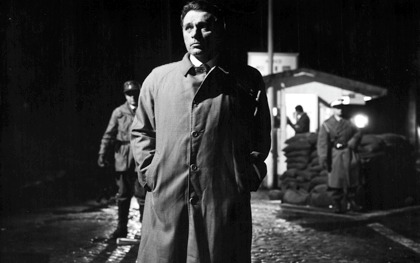
Richard Burton as Alec Leamas in “The Spy Who Came In From The Cold”

Bryan Caskey has drawn up his Top Five Cold War Movies over at his blog, and I feel compelled to answer it. My perspective is a little different from his, because I grew up in the ’50s and ’60s, giving me not only different cultural touchstones, but a different feel for the Cold War itself.

Here’s my Top Five:

  1. The Spy Who Came in from The Cold — This defines the genre. Starts and ends at the Berlin Wall. A lot of bad movies were made from good books in the ’60s, but this wasn’t one of them. It did a great job of capturing the atmosphere, the moral ambiguity and the deception-within-deception-within-deception plotline of LeCarre’s book.
  2. Dr. Strangelove — I was torn between this and Fail-Safe, which was the same story without the comedy. But this was such an awesome piece of film-making, it had to go on the list. Strangelove got us to laugh at the things that caused our hair to stand on end in Fail-Safe. The link is to my favorite scene: “Now, then, Dimitri, you know how we’ve always talked about the possibility of something going wrong with the Bomb…”
  3. Our Man in Havana — I’m going for satirical again with this spoof of the spy genre. Both Alec Guinness and Ernie Kovacs. How do you beat that? Based on Graham Greene’s most enjoyable “entertainment” (which is what he called his less serious novels), which inspired le Carre’s The Tailor of Panama.
  4. The Mouse That Roared — Yes, I’m going for the more obscure reference because Barry in High Fidelity (the ultimate authority for the science of Top Five lists) would sneer at any Top Five list that didn’t have one that no one else would think of. I’ll even admit that the movie wasn’t very good — although I enjoyed the book. This is about a tiny country with a medieval military capability that becomes the world’s greatest power by stealing a Doomsday Machine from the U.S. For Strangelove fans, this also has Peter Sellers in multiple roles.
  5. The Manchurian Candidate — Paranoia is a huge part of what the Cold War was about, and this is the classic of that genre.

Another Five, in case you’d like a Top Ten:

  1. Seven Days in May — In a way not really about the Cold War, except for the paranoia thing.
  2. Fail-Safe — I initially had this in the Top Five, trying to be cool by picking on the less-obvious choice. I was going to say that “Awesome as it was, Strangelove was more about a sort of smartass 60s cultural sensibility than it was about the way real people felt about nuclear annihilation.” But I changed my mind.
  3. The Ipcress File — Perhaps the all-time best Michael Caine vehicle, based on Len Deighton’s very best novel. Deighton’s book is breezily ironic, very hip, yet far more realistic than Bond.
  4. The Lives of Others — A look at what life was like on the other side of the curtain.
  5. WarGames — More of a movie about the then-new phenomenon of computer hackers than about the Cold War, but it still fits in the genre. Ferris Bueller meets Fail-Safe.

Also-rans, in no particular order:

  • The Third Man — This might have made the list, but I think it’s more about postwar black-marketeering than about the Cold War proper.
  • Stripes — Great fun, but too silly to make the Top Five list.
  • The Right Stuff — Not what you think of as “Cold War,” maybe, but what was it all about? Trying to prevent the godless Russkies from being able to drop nukes on us from space, like rocks from a highway overpass. An amazing job of turning a book that is mostly about the narration into an engaging film.
  • Red Dawn — A high school kid’s fantasy of World War III. I mean, wouldn’t every adolescent boy like to see the boredom of school interrupted by a shooting war in which he is the hero?
  • Twilight’s Last Gleaming — Didn’t we see Burt Lancaster play this character before, in “Seven Days in May”?
  • The Quiet American — The jaded European view of Americans as blundering do-gooders.
  • Blast from the Past — Bomb-shelter anxieties transformed into romantic comedy.
  • 2010 — The sequel to 2001: A Space Odyssey, this one wrongly guessed that we’d still be goin’ toe-to-toe with the Russkies nine years later. Best parts: Both Dave and Hal show up.
Ernie Kovacs playing minibottle chess in "Our Man in Havana."

Ernie Kovacs playing minibottle checkers in “Our Man in Havana.”


Vincent Sheheen kicks off 2014 campaign, apparently…

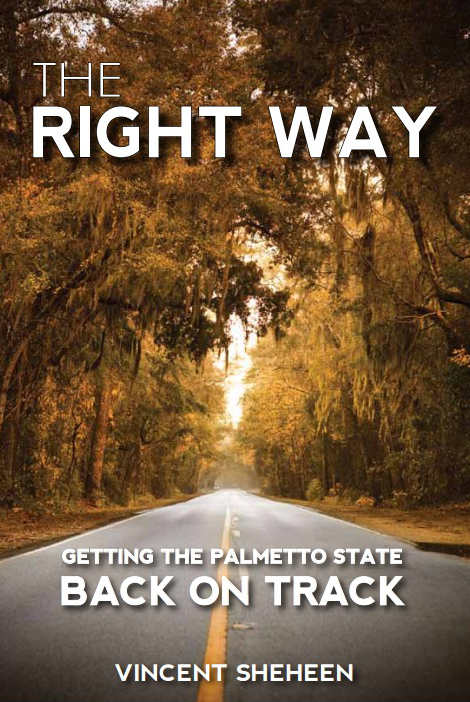
sheheen book

This came in about an hour ago:

Sheheen Kicks Off “Back on Track” Tour
State Senator will discuss ideas for moving South Carolina forward and his new book “The Right Way” in three-week statewide tour
Rock Hill, SC. – Today, state Sen. Vincent Sheheen kicks off the Palmetto State “Back on Track” tour at Sun City in Rock Hill to rollout his new book “The Right Way” and discuss his ideas for how to move South Carolina forward with local residents and leaders around the state.
“This short book is not meant to propose solutions to all of our state’s problems. It’s a revolt against the status quo. This book proposes ideas for us to consider and debate to try to get our state back on the right footing and shed the inanities of the past few years,” said Sen. Vincent Sheheen. “More than anything, this book of ideas is an attempt to promote more rational political discussion and policy making. Ultimately, we will still need committed citizens and leadership on many fronts to make it so. I look forward to meeting these leaders in the coming weeks and discussing how we will all move forward together.”
The Back on Track Tour will run from March 11th through March 30th holding lectures at universities, listening sessions with local families and leaders, and press conferences and discussions with media about the vision laid out in his book for creating jobs, improving education, restructuring the government, and creating a more prosperous future for the people and businesses of the Palmetto state. The tour kicks off today at noon in Rock Hill, before making stops in Conway, Myrtle Beach, Florence, Columbia, Aiken, Charleston, Fairfield, Beaufort, Greenville, and Spartanburg throughout the next three weeks.
Sen. Sheheen’s book is free and available online here, or as a hard copy at each of the event stops on the Back on Track tour.
Below is a selection of key quotes from Sen. Sheheen’s book, “The Right Way: Getting the Palmetto State Back on Track.”
We must do better for South Carolina… the right way
“This book is not about me. It’s about our South Carolina—a South Carolina we know can exist if we join together in a common vision with leaders who actually care about our state. We are better than what our government has looked like in recent history. We have been better before. We deserve better now. It’s up to us to engage and change. We must do it again…the right way.” — p. 110
“Somehow, however, we have let the naysayers gain the upper hand over the last couple of decades in South Carolina. You know who I am talking about—the people who tell us what we can’t do instead of what we can do. These are folks who believe nothing will ever get better and that things just are what they are. I am not one of these people. I do not believe that the South Carolina I know is made up of people like that either. From Camden to Charleston, Aiken to Horry and Due West to Denmark, the people I know and meet in South Carolina believe we can do better than what we have experienced in South Carolina’s recent government. In fact, we must.” — p. 108
“But we also need more than just ideas. We need ACTION—action that turns the status quo of the negativists on their heads. It is almost too late. But together, we still have time. If we don’t quickly get South Carolina moving again, our children and grandchildren will pay the price for decades to come.” — p. 109
Total change needed
“We have suffered embarrassment after embarrassment caused by our leaders’ unethical behavior and boneheaded statements and we have become the butt of late night television jokes all too frequently.  This downward spiral in our government should surprise no one. Why? Because we have elected leaders who proclaim a belief that government is always part of the problem. Once elected, they prove their theory correct by making our state’s government a dysfunctional embarrassment that is incapable of efficiently meeting the demands of core government functions.”  — pp. 1-2
“Future success for South Carolina’s workers—as well as the entire state—requires more education, not less.  Unfortunately, South Carolina’s recent leaders don’t have a good record in making smart investments in education to ensure that our children will have the training they need to get the better-paying jobs of the future. I believe it’s time we turn that abysmal record on its head.  Simply put: How can the students of today expect to hold the jobs of tomorrow if they don’t have enough knowledge? — p. 8
“Accountability in South Carolina’s government has been missing for more than a decade. In the end, a government can be successful and accountable regardless of deficiencies in its structure if it has strong, responsible and effective leaders.  However in South Carolina, a combination of ineffective leaders and confusing structure has led to our government being ranked one of the most dysfunctional and unaccountable in the nation.” — p. 27
“I am not opposed to healing our government incrementally.  I am, however, skeptical that our current leaders will finish the job with that approach. I believe that when a government has reached such a level of dysfunction and disintegration as South Carolina’s, it is time to return the power to the people.” — p. 48
“Through weak leadership in recent times and a governmental system confusing to virtually everyone, South Carolina’s government has arrived at a low point. We have a choice:  To continue with the same poor leadership and same poor system, or break with the past and make dramatic change.  We can’t afford to wait on current crop of political leaders to make the changes our state needs and deserves. We must take things into our own hands and force change. Either through incremental or dramatic change, we must alter the trajectory of South Carolina’s future. My children and yours deserve our best efforts.” — p. 50
Forward, to a path to prosperity
“One of the greatest obstacles to robust economic growth in South Carolina is our state’s broken and dysfunctional tax system. Furthermore, a special-interest-controlled tax code means that general taxpayers will end up with fewer core services that they say they want. Sure, in good times of budget surpluses, politicians will spread the wealth to make all appear rosy. But all they’ll be doing is bandaging a broken system, which will unravel once again when they cut what they recently added during downturns. It’s a seesaw system of government that leaves us all up in the air.” — p. 54
“The goal of tax reform should not be to raise taxes. To achieve true economic success, our state must reform how it taxes goods so that it can reduce the rate for everyone. That’s something we should all be for.” — p. 67
“Like most South Carolinians, I believe in hard work. I believe we should expect everyone who is physically able to have a job. I don’t believe in handouts. But I also expect that our state government will do all it can to ensure that opportunities exist for our citizens to find a job. It’s in all of our interests for the state to provide a hand-up in the form of job training, economic development, good education and support for small businesses.” — p. 85
“What is excluded from most local economic development offices’ services is support to startup companies and entrepreneurs.  This reflects, in part, a lack of expertise in the area but also recognition that the failure rate of these types of companies is high. A handful of groups around the state provide services to startups and entrepreneurs, but they are the exception rather than the rule. The S.C. Department of Commerce has a department that provides access to resources for small businesses, but there is little affirmative effort by the state to assist small business.” — p. 98
“Our state needs a multipronged approach to saving our rural areas and small towns. Failure to meet this challenge will doom many communities to a low standard of living and even non-existence. North Carolina has met this challenge head-on and invested heavily in the strategies and infrastructure for its rural areas. We should do the same.” — p. 102
“Our leaders are pricing the middle class out of a college education. The alternative has become hundreds of thousands of dollars of debt incurred by our future workforce. This is a dumb policy. We should dedicate a decent portion of future budget growth to stabilizing college tuition. And when the state funds higher education in a reasonable manner, colleges and universities should be required to keep tuition increases low.” — p. 106
###

Spring, trying to arrive

azaleas

“With so many trees in the city, you could see the spring coming each day until a night of warm wind would bring it suddenly in one morning. Sometimes the heavy cold rains would beat it back so that it would seem that it would never come and that you were losing a season out of your life. This was the only truly sad time in Paris because it was unnatural. You expected to be sad in the fall. Part of you died each year when the leaves fell from the trees and their branches were bare against the wind and the cold, wintry light. But you knew there would always be the spring, as you knew the river would flow again after it was frozen. When the cold rains kept on and killed the spring, it was as though a young person had died for no reason.

In those days, though, the spring always came finally but it was frightening that it had nearly failed.”

— A Moveable Feast

Just a couple of days back, I noticed how the azaleas next to my driveway were budding, and even blooming in some places. Below, you see a tree blooming in my backyard.

Anyway, I wonder if it’s going to last, or is this like the false springs in Paris that Hemingway wrote of? If the latter, it will be a shame, but I won’t take it as hard as he did. I don’t see the fall the way he did, either. I feel like things are coming alive when the leaves turn and the air turns brisk.

One thing I really don’t like about the spring, especially this one. I really resent that I’ll be robbed of an hour tonight. I don’t like anything about Daylight Savings Time, and it really bugs me that it’s taking up more and more of the year…

spring

Yes, public schools should teach Bible as literature

An op-ed in the WSJ today made the case for putting the Bible into the public school curriculum, as a foundational work (or rather, body of works) of Western civilization. The authors were educated in Europe and were taught the Bible as a matter of course. But that reckons without the reflexive horror the suggestion of doing so engenders in this country:

Teaching the Bible is of course a touchy subject. One can’t broach it without someone barking “separation of church and state” and “forcing religion down my throat.”

Yet the Supreme Court has said it’s perfectly OK for schools to do so, ruling in 1963 (Abington School District v. Schempp) that “the Bible is worthy of study for its literary and historic qualities. Nothing we have said here indicates that such study of the Bible or of religion, when presented objectively as a part of a secular (public school) program of education, may not be effected consistently with the First Amendment.”

The Supreme Court understood that we’re not talking about religion here, and certainly not about politics. We’re talking about knowledge. The foundations of knowledge of the ancient world—which informs the understanding of the modern world—are biblical in origin. Teddy Roosevelt, the 26th president known more as a cigar-chomping Rough Rider than a hymn-signing Bible-thumper, once said: “A thorough knowledge of the Bible is worth more than a college education.”

I agree entirely, totally apart from all the phrases with which scripture has enriched the language, or the fact that Shakespeare makes 1,200 biblical references.

I think there are other things we should have to read as well. I’ve always felt sort of ignorant that I’ve never read the Iliad, preferably in the original Greek. But that’s peripheral, compared to having a thorough understanding of such allusions as Adam and Eve, Samson and Delilah, Jonah and Judas Iscariot. Those are basic.

And it’s not just the stories or the language. As an overview of different forms of ancient literature (poetry, allegory, history, etc.) it’s a treasure trove.

Before someone misunderstands me — nothing that I’ve said gives anyone any reason to, but Kulturkampf in this society being emotional rather than rational, someone will — I’m not an advocate of mandatory prayer in public schools. Although people should be (and are) free to pray there as well as anywhere else.

The authors of this piece, if anything, underestimate the objections such a suggestion will meet. For instance, they neglect to anticipate the objection that other religions’ texts, say the Bhagavad Gita, should be given the same status in the K-12 curriculum. But of course, that work is not foundational to western culture. It’s a great subject for upper-division college electives, but there’s no more reason to make it part of everyone’s education than, say, Kerouac’s Dharma Bums as opposed to Huck Finn. One is enrichment; the other is basic.

Anyway, since these folks brought up the subject, I say yeah: Put Genesis and the rest in there with Shakespeare. They are still reading Shakespeare in the schools, aren’t they? If not, I give up…

The utter pettiness of public life in our times

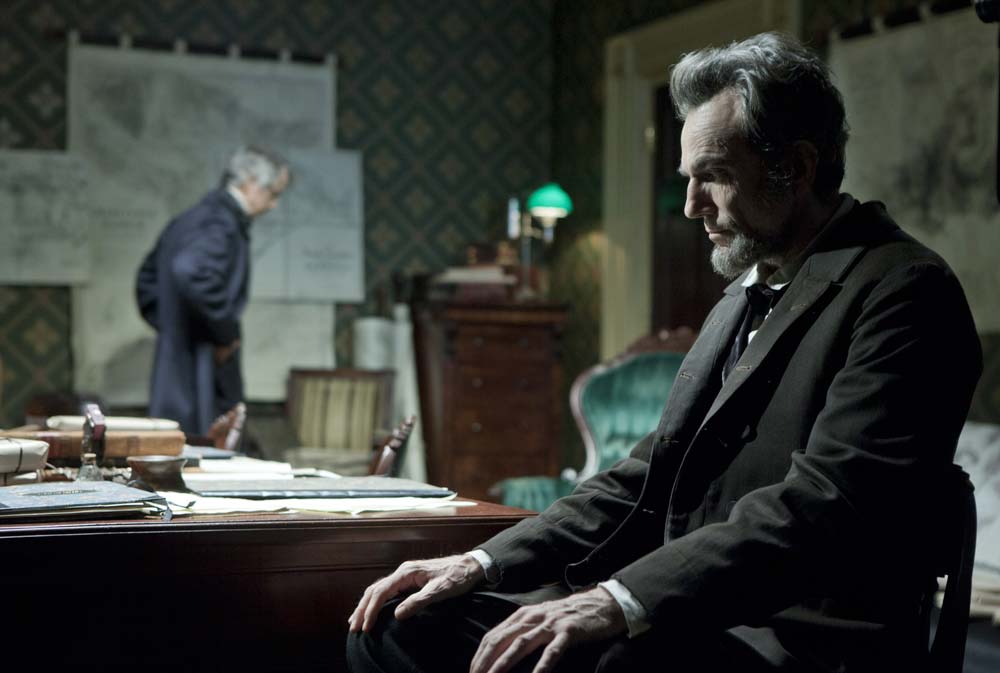
lincoln

As a young man, Abraham Lincoln fretted that there was no opportunity for his generation to accomplish anything important; gone were the days in which the founders had risen to the great challenge of establishing the nation.

Here’s an early passage from Team of Rivals: The Political Genius of Abraham Lincoln, which I finally finished reading a couple of nights ago:

… Lincoln had expressed his concern that his generation had been left a meager yield after the “field of glory” was harvested by the founding fathers. They were a “forest of giant oaks,” he said, who face the “task (and nobly they performed it) to possess themselves, and through themselves, us, of this goodly land,” and to build “upon its hills and its valleys, a political edifice of liberty and equal rights.” Their destinies were inseparably linked” with the experiment of providing the world,” a practical demonstration” of “the capability of a people to govern themselves. It they succeeded, they were to be immortalized; their names were to be transferred to counties and cities, and rivers and mountains; and to be revered and sung, and toasted through all time.”

Because their experiment succeeded, Lincoln observed, thousands “won their deathless names in making it so.” What was left for the men of his generation to accomplish?…

Of course, Lincoln was profoundly mistaken:

In 1854, the wheel of history turned. A train of events that mobilized the antislavery North resulted in the formation of the Republican Party and ultimately provided Lincoln’s generation with a challenge equal to or surpassing that of the founding fathers.

Every day that he was in office, Lincoln and his administration wrestled mightily with questions of ultimate important and great moral weight. Until very late in the war, the great issues — whether the United States would continue to exist, and whether all its people would be free — were in great doubt.

Along the way, he dealt with a great deal of human pettiness — from the criminal uselessness of General McClellan to the scheming, naked ambition of Salmon Chase, from the everyday grubbing of officeseekers to personal disputes that threatened the government’s ability to function — but his focus, and that of most of those around him, was on the towering issues of the day.

And in spite of all, the challenges were met, masterfully. By Lincoln, whom I am more convinced than ever is the most remarkable and able individual ever to hold the office of president, but also by ordinary people who rose to do extraordinary things.

All the time I was reading that book, I kept thinking how unbelievably petty our public life is today. And I’m not just talking about the partisan bickering that I decry here so regularly. It’s the things that we squabble about that are so depressing.

The whole time I was reading that book — and I read it slowly, over a period of months, mostly at the dinner table, a few pages at a time — the great crisis of our time was the “fiscal cliff.” That precipice was created by our utter inability to deal with the most routine concerns, those of financing the government. And of course, we have a series of unresolved conflicts of the same nature that we must deal with this year, since the can has only been kicked, and kicked feebly, down the road.

In her column this weekend, Peggy Noonan wrote the following, in another of her passages finding fault with President Obama:

All the famous criticisms of him are true: He has no talent for or interest in sustained, good-faith negotiations, he has no real sense of alarm about the great issue of the day, America’s debt….

Really? That’s “the great issue of the day”? How mind-numbingly appalling.

And perhaps she’s right. Politicians in Washington, and all those who ape them in the hinterlands, certainly act as though that, and attendant issues, are the great matters of our day.

But here’s the thing: There are no great moral considerations involved here, people. Figuring out what it costs to run the government and how to levy the taxes to pay for it are matters that a middling accountant could work out in a day, and the issue would be behind us. How much to tax, how much to spend are indeed debatable issues. But they are not issues of right and wrong. They are unworthy of anyone’s passion.

No, I don’t long for us to be engaged in a mighty war to settle whether this nation, or any like it, will continue to exist. I don’t want to see more that 600,000 of my fellow citizen die in settling some momentous issue.I don’t lament, as Lancelot did in a time of peace in The Once and Future King, that “We don’t see many arrows thrilling in people’s hearts nowadays.”

I would just like to see us recognize that petty issues are petty issues, and resolve them, and move on. And no, I don’t consider trillions of dollars to be small considerations; I’m just saying that these issues are eminently solvable, with just a modicum of reasonable behavior on the part of all parties. I’m saying that the “drama” of “fiscal cliffs” and debt ceilings is entirely contrived, artificial and unnecessary.

Getting rid of slavery — now that was difficult. It was the great unresolved conflict that had dogged the nation since its founding. The issue could not be resolved without tearing the nation apart and putting it back together again. The solutions accepted as fact in 1865 were unthinkable in 1860. (Yes, they were “thinkable” in that abolitionists advocated them; but it was politically impossible to implement them until the height of the war.)

We shouldn’t need a national existential crisis to solve the problem of balancing the national checkbook. We should just be able to do it, and move on.

First-person shooter: What games did Loughner play?

This is a post I wrote back in early 2011, and didn’t publish. Recent discussions of gun violence bring it back to the fore, so here it is…

In my Monday Wall Street Journal (the only edition I received after coming back from England until late Wednesday, which was really frustrating), I read the following about the Arizona shooter:

“All he did was play video games and play music,” said Tommy Marriotti, a high school friend.

And that got me to wondering: What sort of games did he play? Since initially reading that, I see he recently played Earth Empires, a strategy game. But I suspect he has at least at some time — maybe back in high school, maybe some other time — played another sort of game.

I find myself wondering whether he was into first-person shooter games…

I have two reasons for wondering that. First, there are the theories of Lt. Col. Dave Grossman (ret.). Col. Grossman is the foremost expert in the field of “killology,” a term he coined. He wrote a fascinating book, On Killing: The Psychological Cost of Learning to Kill in War and Society, which I recommend. It discusses the psychology of killing, mostly within the context of war. He explains that for most of military history, as long as we’ve had projectile weapons in the hands of the average soldier, the overwhelming majority of soldiers did not shoot to kill. Frequently, they didn’t fire their weapons at all, and when they did, they tended to fire over the heads of their enemies — to engage in a sort of threat display, rather than use deadly force.

They did this because for most humans, the reluctance to kill is deep and strong.

The U.S. military, realizing this (on the basis of extensive studies during and after WWII), started conditioning that reluctance out of soldiers starting with the Vietnam era (or perhaps a little earlier; it’s been awhile since I’ve read it). Soldiers started to be trained to quickly acquire the human target and fire accurately before thinking about it too much. The result is that the U.S. military is, soldier for soldier, the most deadly fighting force in the world, perhaps in history. (Probably the most dramatic demonstration of this was the battle of Mogadishu in 1993, in which elite soldiers faced mobs of Somali militias with a tendency to fire randomly and wildly with their AK-47s — the result was 18 dead Americans, but about 1,000 dead Somalis.) But soldiers who shoot now often pay a profound psychological cost later, and that was what Col. Grossman was motivated to study.

He has also ventured into related peacetime phenomena, such as the popularity and increasing sophistication of FPS games, which train the reflexes of the kids who play them to shoot quickly and accurately, without reluctance. He asserts that it’s not a bit surprising that we have Columbines given the ubiquity of such games. Kids have had conditioned out of them the hesitation that affected trained soldiers through most of history.

You may say Col. Grossman exaggerates. And indeed, some experts are far more phlegmatic about such games. I don’t think he does, but that’s because of the other reason I was interested: I’ve played these games myself. A decade or so ago, I had a copy of an early version of Wolfenstein. The violence was non-stop, but it was also cartoonish and unconvincing, only a step or two beyond Space Invaders. Now, it’s different…

Two years ago, I got myself a copy of Call of Duty: World at War. I was fascinated by the premise, which was to put the player in realistic scenarios from the Pacific and Eastern fronts in the Second World War. (Some of them weirdly realistic. When I saw some of the scenes from the Peleliu campaign in “The Pacific” recently, I thought, I’ve been there… It was weird.) But I was completely unprepared for two things: First, the realism. When I first booted up the game on my computer (and I had to get a more sophisticated video card to run it, even though my computer was almost new), I thought I was watching a video prologue — I didn’t realize the game had started. I couldn’t believe the graphics were that realistic, that high-res.

Second, the emotional manipulation, which was stunning. There are two story lines: In one, you are a U.S. Marine named Miller, fighting your way across the Pacific. In the other, you are a Red Army soldier. The designers of the game came up with their own way of overcoming any reluctance the player might have to shooting the enemy. The Marine scenario begins with Miller being a prisoner of the Japanese. As Miller, you watch the Japanese torture and kill your buddy, before one of them moves toward you with a knife, prepared to serve you in the same way — before he is stopped by the commandos who have come to rescue you. Your rescuers hand you a weapon, and by this point, you’re expected to know what to do with it.

In the start of the Russian scenario, you are lying still among dead and dying comrades in Stalingrad. As you lie there (the game won’t let you move at first), you watch German soldiers step around you, casually shooting the wounded as you watch helplessly. Somehow they overlook you. As the enemy moves away, a grizzled Red Army sergeant who was also playing dead whispers to you to follow him, and he will show you how to get your vengeance on the fascists, who, as he keeps reminding you, are raping your homeland. He hands you a sniper rifle…

Creepy, huh? At this point, you’d like me to tell you I didn’t go on and play the game, but I did. I’ve played it all the way through a number of times. It’s very seductive, because it’s challenging. But I wouldn’t argue if you were to say, “Yes, of course it is — like other forms of pornography.” I expect those of you who’ve never played such games will have all sorts of critical things to say about me for playing it, and I won’t argue with those assertions, either. I know how it looks. When my wife enters the room when I’m playing, I hastily shut it down. Because she is my conscience.

But that’s not the really creepy thing: Over time, I played the game less. I had mastered the easier levels, and the harder ones were just ridiculous. Also, well, I’ve tried to spend less of my life in nonproductive pursuits. But a number of months ago, I got curious about something: I had never played the “multiplayer” option, in which you fight against other players over the Internet. So I tried that.

And I discovered that either the world is full of unsuspected super-soldiers, with reflexes that are not to be believed, or there are a lot of geeks out there who spend WAY too much time getting ridiculously good at playing these games. The latter, of course, is most likely. And hardly surprising. But I discovered one thing that positively sent chills down my spine. I quickly accepted that I could not survive more than a few seconds against people whose reflexes were so finely honed to aggressive play of the game. Fine — I have trouble with basketball, too. And I figured that the guys who spend a lot of time on these games are 20-something, and an old guy like me can’t hope to keep up. But what got me was when I encountered a few players who had activated the feature that enabled them to speak with each other in real time as they shot and stabbed their way across the landscape.

The thing that got me was when I heard their voices.

They were little boys. They sounded like they were about 10. And they were very, very efficient, hyperaggressive and unhesitating virtual killers.

I quit playing at that point.

Anyway, that’s why I wonder — what sorts of games did Loughner play?

What do YOU think of John Brown, all these years later?

I used to see this original mural in the state capitol in Topeka when I supervised the people who covered state politics for the Wichita paper. It seems to me to sum up Brown pretty well.

I’ve learned a lot of new things, and been reminded of things I once knew, in reading Doris Kearns Goodwin’s Team of Rivals: The Political Genius of Abraham Lincoln, the latter part of which inspired the movie “Lincoln.” (I’m not nearly to that part yet; last night I read up through Lincoln’s inauguration in 1861.)

One of them was the radical differences of opinion that existed about John Brown at the time. From my 21st-century perspective, I tend to think of who Brown was and what he meant as being a pretty settled matter. It is in my mind, anyway. But of course, at the time, he was perhaps the most extreme litmus test of attitudes ever to occur in U.S. history.

Today, I perused a review of another book, The Tribunal: Responses to John Brown and the Harpers Ferry Raid, which consists of contemporary writings about Brown from authors including Ralph Waldo Emerson, Henry David Thoreau, Frederick Douglass, Walt Whitman, Henry Ward Beecher, Jefferson Davis, Herman Melville, Stephen Douglas, Louisa May Alcott, Victor Hugo and Karl Marx.

Emerson saw Brown as a Christ-like “saint” and Douglass hailed him as “our noblest American hero.” His detractors saw him as “a deranged fanatic whose violent actions made civil war inevitable.”

I always thought of him as a deranged fanatic who just happened to be right about slavery. What he did was inexcusable, however laudable his motivations.

What the Union did in the Civil War was justified not only by the nobility of the cause, but by the fact that it was a case of the duly constituted authority of the country taking action against violent insurrection. But what Brown did was itself violent, murderous insurrection, not in any way supportable under the rule of law, and therefore unjustifiable. (There’s another measurement suggested by Just War theory, which is, Were the goals of his actions achievable? His most decidedly were not.)

A person can have the right idea on a burning issue and still be mad. A person can have noble goals and do despicable things in the name of them. To me, that’s always summed up Brown.

Your thoughts?

Pride and Prejudice and Scandal

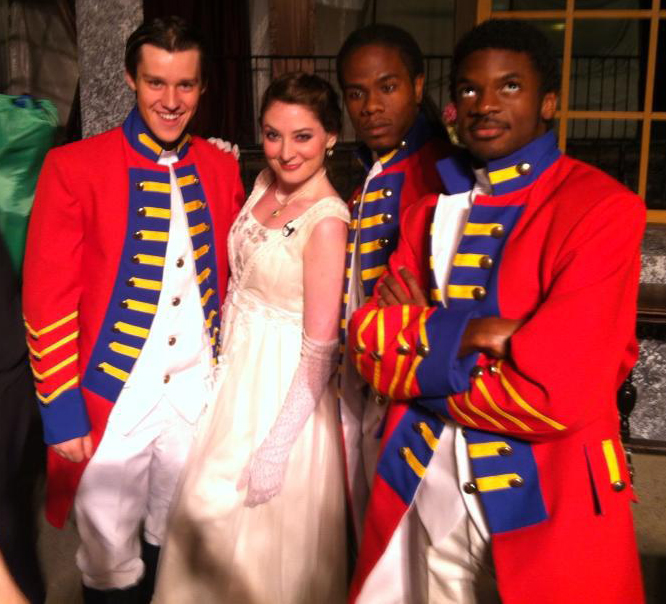
The imprudent Lydia Bennet (actress Sirena Dib) hanging with some of the young officers from the regiment...

Having appeared so recently in the SC Shakespeare Company’s production of “Pride and Prejudice,” I particularly enjoyed the ending of Maureen Dowd’s column about the Petraeus scandal:

The military might want to have its future stars read Jane Austen as well as Grant and Rommel. “Pride and Prejudice” is full of warnings about the dangers of young ladies with exuberant, flirtatious, “unguarded and imprudent” manners visiting military regiments and preening in “all the glories of the camp.”

Such folly and vanity, the ever wise Elizabeth Bennet cautioned, can lead to censure and disgrace.

We knew this was coming, didn’t we?

After the 2008 election, Jim DeMint and others cried that the reason Republicans lost is that they just weren’t right-wing enough, and they should never have nominated an iconoclast like John McCain.

It was patent nonsense, but the GOP listened, and so we got the Tea Party madness, and Nikki Haley, and Sarah Palin as a national celebrity, and a presidential nominating process that a year ago was letting the flake of the week take turns leading the pack.

It was inevitable, of course, that someone would say after Tuesday that despite all that saturation in ideology, Romney’s problem was that he just wasn’t right-wing enough (and remember, four years ago, Romney was the preferred candidate of people like DeMint). And in this release, someone did:

The Real Reason Romney Lost

Now that Mitt Romney lost to one of the most unpopular presidents in U.S. history, the question many are asking is why?

Political pundits on the Left and Right are claiming that Romney appealed too much to the “extreme Right fringe” and was not “moderate enough.”  The truth is that the exact opposite is true.

It is virtually impossible to win a national presidential election without your base on election day as 1976, 1992, 1996, and 2008 all demonstrated. Unfortunately, the GOP elites thought the pro-family/pro-life Christian base would hold their proverbial noses and vote for their candidate regardless.  They were wrong!

Fast forward to 2012 and many of us warned that if the GOP once again nominated an establishment approved liberal like Romney that it would assure 4 more years of the Obama in the White House since, again, it’s virtually impossible to win without your base on election day.

But once again, the elites who run the GOP (Reince Priebus, Karl Rove, The Bushies, the folks over at Fox News, the Weekly Standard and National Review) rammed yet another establishment liberal RINO down our throats who was, from the very beginning, destined for defeat.

Obama’s base turned out Tuesday night.  Romney’s  didn’t.  And why should they have?  After all, in just the past few months, Romney did virtually everything possible to snub the very same Evangelical conservative GOP “Values Voters” base ( whose support he would need in every one of the key swing states he lost last night) by:

  • Refusing to sign the Susan B. Anthony and Personhood U.S.A pro-life pledges.
  • Reaffirming his opposition to bans on homosexual scoutmasters.
  • Opposing 100% pro-life, pro-family, across the board conservative Senatorial candidate, Todd Akin.
  • Running pro-abortion ads in key pro-life swing states.
  • Stating that “abortion legislation” and Chick Fill-A was not “part of his agenda.”

Santorum was right when he said that Romney was the “worst Republican in the country to run against Obama.”

Having lost his own senate re-election bid by 18 points in 2006 by snubbing his own base (by supporting uber-liberal Arlen Specter over conservative primary challenger Pat Toomey), Santorum was all too familiar with what happens when your base stays home on election day.

The GOP elites should have listened to Santorum.

So, how do we stop perpetually repeating this mistake every 4 years you ask?  Simple.

Christian and conservative leaders and grassroots citizens must make it clear that we will, under no circumstances, compromise our core moral and spiritual beliefs.  We will not support godless liberals like Romney for public office no matter how many time the liberal GOP inside-the-beltway elites tell us our 100% pro-life, pro-marriage, pro- rule of law Constitutional conservative Christian candidate isn’t “electable.”

When we set the standard based on God’s authoritative Word and tell those running to represent us that if they don’t meet that standard that they will not get our support, I believe we will get candidates who truly represent us.

There are obviously millions of Christians and conservatives who don’t subscribe to the utilitarian-secular-humanist and anti-Biblical “lesser of two evils” construct and they refused to cast a vote for the most radically pro-abortion, pro-homosexual governor in the history of the Republic regardless of who his opponent was.

If the GOP is serious about reversing course in the next election they may want to run actual candidates whom the base will actually turn out for on election day.

Because, as Romney proved, you don’t win without your base on election day…

That email, by the way, came from one Annie Fischer, who appeared to be writing on behalf of one Gregg Jackson, author of a book entitled We Won’t Get Fooled Again.

But despite that title, there appear to be certain people who will keep getting fooled over and over, continuing to believe unlikely propositions despite evidence to the contrary.

Thomas Jefferson as unrepentant slaveholder

The usual take on the man best known for writing that “All men are created equal” has been that he owned slaves, but… after which you choose your excuse:

  • He was really conflicted about it.
  • He just didn’t think freeing them would be practical.
  • He was a particularly benevolent master.
  • It’s not fair to judge someone who was born into that system, and knew no other, by modern ethical standards.

The excuses may bear revisiting in light of a new book, Master of the Mountain: Thomas Jefferson and His Slaves, byHenry Wiencek. Here’s an excerpt from a review of the book this morning in The Wall Street Journal:

The strongest sections of the book track Mr. Wiencek’s close reading of Jefferson’s estate records, where he found a coldblooded taskmaster who ruthlessly exploited child labor and overworked his slaves as a matter of course. Jefferson sometimes countenanced brutal punishment, including the whipping of boys as young as 10 or 11 in his highly profitable nail factory, “whose profits paid the mansion’s grocery bills,” Mr. Wiencek writes. Despite Jefferson’s occasional assertions that slavery would one day wither away, he never lifted a finger to weaken it as an institution, even when implored to do so by friends and allies who regarded slavery as an affront to the values for which patriots had fought the Revolutionary War.

In his youth, Jefferson did hold antislavery convictions. And in his earliest draft of the Declaration of Independence, he may well have had slaves in mind when he declared that all men were created equal.(Southerners were sufficiently worried that they tried unsuccessfully to have the word “men” changed to “freemen.”) By 1784, however, in “Notes on the State of Virginia,” he expressed in graceful but cringe-inducing prose a deep personal distaste for blacks, who, he asserted, smelled wrong, copulated with apes in Africa, and were incapable of intellectual achievement.

Whatever moral ambivalence he may have felt toward the institution of slavery he overcame when he sat down and did the numbers for Monticello. In 1792, he calculated precisely what his slaves were worth. Mr. Wiencek writes: “What Jefferson set out clearly for the first time was that he was making a 4 percent profit every year on the birth of black children. The enslaved children were yielding him a bonanza, a perpetual human dividend at compound interest.” To intimates, Jefferson described slavery matter-of-factly as a good investment strategy, advising one friend that if his family had cash to spare, “every farthing of it [should be] laid out in land and negroes.”…

Actually, I was a bit surprised that Jefferson even handled the books for his estate. I supposed he followed the practice of the landed gentry of having a “man of business” deal with all that. I had supposed he was detached from the enterprises that gave him his wealth, devoting all his time to politics, science and music. I had read that he was a terrible money manager, embodying the Southern planter’s typical indifference to debt, spending above his means on books, scientific instruments and other things that scratched his intellectual itch.

I supposed that, to paraphrase John Travolta (on being a loan shark) in “Get Shorty,” he was never that into it. But supposing he remained above the details of running his estate was just my way of offering him another excuse, I guess.

Mr. Wiencek’s premise seems to be that he was not only his own man of business, but a particularly hard-eyed one, especially on the subject of slavery.

Not that I was ever prepared to give him a pass on that. There are a number of reasons why, among the Founders, I have always preferred John Adams to Jefferson, and have resented that Jefferson was in their day, and still is, more celebrated and revered. One of those reasons was that Adams was adamantly opposed to slavery, while Jefferson, high-minded words aside, was a major practitioner of that evil.

This book should give us all, including those of you who admire Mr. Jefferson more than I do, something new to consider.