Category Archives: The Nation

A place to comment on Trump’s Muslim Ban 2.0

C6P7yWCXEAAS38r

And yeah, that’s what it is. Clear away the nonsense and that’s what you’re left with. He said when he ran for president that that’s what he’d do, and this is his second attempt to get away with doing it.

All the whys and wherefores and details and adjustments are kind of irrelevant to me. What I see is that the entire effort — which he has made the top priority of his first days in office — is completely unnecessary. It’s an overwrought, complicated solution to a problem that does not exist. It is absurd every bit as much as it is offensive and unAmerican.

The administration keeps mouthing the ridiculous justification that this is needed to “keep America safe.” I won’t go into that except to note that Charles Krauthammer — who takes a backseat to no one in advocating for national security — dealt with that with the contempt that it deserved a month ago: “Not a single American has ever been killed in a terror attack in this country by a citizen from the notorious seven.” Which is now six, Trump having discovered that Iraq is an ally.

So, you say what you have to say about it. I’m done for the moment…

Has the West ceased to believe in itself?

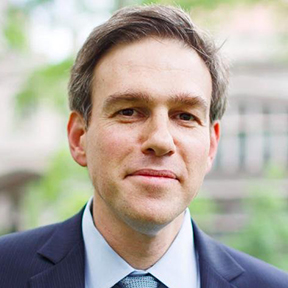
Last week, I read another excellent piece by Bret Stephens in The Wall Street Journal. It was headlined “Do We Still Want the West?,” with the subhed, “The best antidote to the politics of Trump or Le Pen is a course in Western Civ.”

Because of that paper’s pay wall, I’m going to push the envelope a mite on Fair Use here so that you get the point fully, and I hope the Journal will forgive me.

The piece begins anecdotally, telling about how the left’s culture warriors chanted Western Civ right out of the curriculum at Stanford in the ’80s, and how a vote to bring it back (a student vote, because grownups no longer dare to make such decisions) failed, 6 to 1.

Then, he sets out the problem:

The thought comes to mind following Sergei Lavrov’s Orwellian speech last week at the Munich Security Conference, in which the Russian foreign minister called for a “post-West world order.”…

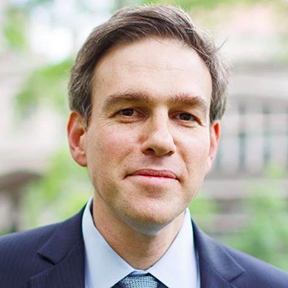
Bret Stephens

Bret Stephens

Mr. Lavrov understands something that ought to be increasingly clear to American and European audiences: The West—as a geopolitical bloc, a cultural expression, a moral ideal—is in deep trouble. However weak Russia may be economically, and however cynical its people might be about their regime, Russians continue to drink from a deep well of civilizational self-belief. The same can be said about the Chinese, and perhaps even of the Islamic world too, troubled as it is.

The West? Not so much.

The United States has elected as president a man who has repeatedly voiced his disdain for NATO, the World Trade Organization and other institutions of the Western-led world order. He publicly calls the press “an enemy of the American people” and conjures conspiracy theories about voter fraud whose only purpose is to lend credence to his claim that the system is rigged. He is our first post-rational president, whose approach to questions of fact recalls the deconstructionism of the late Jacques Derrida: There are no truths; reality is negotiable….

He goes on about the crisis of faith in Western ways in Europe, and notes how the non-aligned — who once were so eager to join the Western club — are drifting toward other power centers, such as Russia and China.

In other words, moving toward cultures that still believe in themselves, or at least in their own myths.

Then comes the best part:

There was a time when the West knew what it was about. It did so because it thought about itself—often in freshman Western Civ classes. It understood that its moral foundations had been laid in Jerusalem; its philosophical ones in Athens; its legal ones in Rome. It treated with reverence concepts of reason and revelation, freedom and responsibility, whose contradictions it learned to harmonize and harness over time. It believed in the excellence of its music and literature, and in the superiority of its political ideals. It was not ashamed of its prosperity. If it was arrogant and sinful, as all civilizations are, it also had a tradition of remorse and doubt to temper its edges and broaden its horizons. It cultivated the virtue of skepticism while avoiding the temptation of cynicism.

And it believed all of this was worth defending — in classrooms and newspapers and statehouses and battlefields….

Donald Trump was elected by people who for whatever reason just don’t seem to get the fundamental assumptions of the West — they don’t know the history; they don’t embrace the ideals. It’s hard to talk to them about what’s wrong, because they don’t see it. Maybe it’s too late for them, but it’s time we started overtly teaching our children what’s valuable about the West.

But first, of course, we need to decide whether we still believe in it ourselves…

You MUST read David Frum’s brilliant piece in The Atlantic

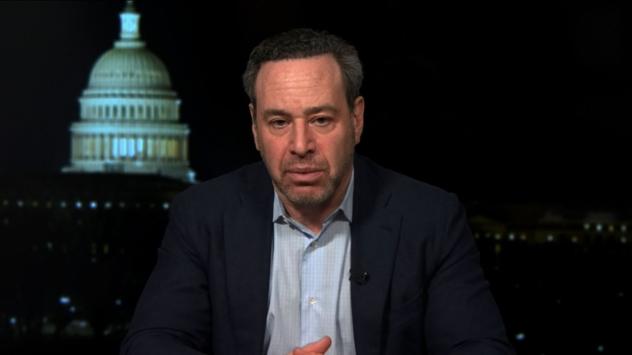
David Frum on Tavis Smiley's show earlier this week.

David Frum on Tavis Smiley’s show earlier this week.

The other night, as I turned off the Apple TV and paused just before turning off the tube altogether, I saw that Tavis Smiley was interviewing David Frum — former speechwriter for George W. Bush and current senior editor for The Atlantic.

So I stopped myself from turning it off, because Frum usually has smart, interesting things to say.

He immediately said something rather outlandish. He suggested it was highly possible that Donald Trump’s main goal in being president of the United States is to become the richest man in the world. And that as long as his tax returns are not disclosed, he’s likely to achieve it.

I was about to scoff, but paused. That would be a ridiculous goal to me, or to Barack Obama, or to George W. Bush (despite what Bud and others seem to believe about Republicans.) The sheer petty, two-bit cupidity of it is laughable, particularly since in our history, no one who was thus motivated has ever sought such a position, much less attained it.

But I then reflected that lots of people actually are that motivated by money, as Doug keeps insisting to me that everyone is. And if there’s anyone on the planet who might be that acquisitive, it’s Donald J. Trump.

Well, fine. I don’t care if he does become the richest man in the world. Were it in my power, I would write him a check for the full amount he wants if only he’d walk away and stop doing what he’s doing to our country.

I don’t know, but suspect, that Frum would do the same. Because the problem for him, and for me, is the startlingly insidious ways that Trump is undermining our republic, its institutions — particularly the effectiveness of our vaunted checks and balances — and its standing in the world as a beacon of how self-government can work. Whatever Trump’s goal is — money, popularity, power for power’s sake — the really horrible thing is what he’s doing to get there.

During the interview with Smiley, Frum alluded to a piece he’d written in The Atlantic. I finally read it tonight. It is without a doubt the most brilliant, incisive, on-point, and chilling thing I’ve read since this nightmare began.

The title is “How to Build an Autocracy.”

Orwell’s 1984 has been enjoying a surge of popularity in recent weeks, especially it seems since Kellyanne Conway’s remark about “alternative facts.”

Well, the first 878 words of this essay is a bit of speculative fiction imagining the world four years from now, when Trump has just easily won re-election. It’s scarier than 1984 because it’s not a theoretical projection of just how horrible things might get in a place like Stalin’s Russia. It’s chilling because everything it describes, in explaining how Trump becomes a power that can’t be challenged, is completely, immediately believable. It wouldn’t have been before the past year, but it is now. We’re seeing it happen.

The other several thousand words of the piece elaborates on how we get from here to there, and it’s amazing. Frum doesn’t generalize. He explains in detail why it’s highly likely that the checks and balances we rely on — from official ones like Congress to unofficial ones like the press — are being quite effectively neutralized. He sets out beautifully, for instance, how Paul Ryan and Mitch McConnell are motivated to look the other way because they need Trump more than he needs them. It explains so much.

As for the media, well, Trump is redefining the nature of truth itself, or at least the way Americans regard it. An example of how that works:

One story, still supremely disturbing, exemplifies the falsifying method. During November and December, the slow-moving California vote count gradually pushed Hillary Clinton’s lead over Donald Trump in the national popular vote further and further: past 1 million, past 1.5 million, past 2 million, past 2.5 million. Trump’s share of the vote would ultimately clock in below Richard Nixon’s in 1960, Al Gore’s in 2000, John Kerry’s in 2004, Gerald Ford’s in 1976, and Mitt Romney’s in 2012—and barely ahead of Michael Dukakis’s in 1988.

This outcome evidently gnawed at the president-elect. On November 27, Trump tweeted that he had in fact “won the popular vote if you deduct the millions of people who voted illegally.” He followed up that astonishing, and unsubstantiated, statement with an escalating series of tweets and retweets.

It’s hard to do justice to the breathtaking audacity of such a claim. If true, it would be so serious as to demand a criminal investigation at a minimum, presumably spanning many states. But of course the claim was not true. Trump had not a smidgen of evidence beyond his own bruised feelings and internet flotsam from flagrantly unreliable sources. Yet once the president-elect lent his prestige to the crazy claim, it became fact for many people. A survey by YouGov found that by December 1, 43 percent of Republicans accepted the claim that millions of people had voted illegally in 2016.

If you sow enough cynicism, you don’t have to murder journalists or imprison opponents. There are subtler ways of achieving autocracy, which have been employed in recent years in places like Hungary, and we Americans are just beginning to learn about them.

He sort of leaves open the idea that Trump is a fascist, and moves beyond it, to tell us that our notions and labels and expectations are behind the times:

Whatever else happens, Americans are not going to assemble in parade-ground formations, any more than they will crank a gramophone or dance the turkey trot. In a society where few people walk to work, why mobilize young men in matching shirts to command the streets? If you’re seeking to domineer and bully, you want your storm troopers to go online, where the more important traffic is. Demagogues need no longer stand erect for hours orating into a radio microphone. Tweet lies from a smartphone instead….

But I’m not going to be able to do justice to this piece with excerpts. You need to go read it yourself. If you care, you have to.

I’ll just close with a neat thing Frum did today on Twitter. He set out some of the main points of his essay with a series of 21 Tweets. Here they are:

2) Donald Trump is a uniquely dangerous president because he harbors so many guilty secrets (or maybe 1 big guilty secret).

3) In order to protect himself, Trump must attack American norms and institutions – otherwise he faces fathomless legal risk

4) In turn, in order to protect their legally vulnerable leader, Republicans in Congress must join the attack on norms & institutions

5) Otherwise, they put at risk party hopes for a once-in-a-lifetime chance to remake US government in ways not very popular with voters

6) American institutions are built to withstand an attack from the president alone. But …

7) … they are not so well-built as to withstand an attack from a conscienceless president enabled by a hyper-partisan Congress

8) The peculiar grim irony in this case is that somewhere near the center of Trump’s story is the murky secret of Trump’s Russia connection

9) Meaning that Trump is rendering his party also complicit in what could well prove …

10) … the biggest espionage scandal since the Rosenberg group stole the secret of the atomic bomb.

11) And possibly even bigger. We won’t know if we don’t look

12) Despite patriotic statements from individual GOPers, as of now it seems that Speaker Ryan & Leader McConnell agree: no looking.

13) So many in DC serenely promise that “checks and balances” will save us. But right now: there is no check and no balance.

14) Only brave individuals in national security roles sharing truth with news organizations.

15) But those individuals can be found & silenced. What then? We take it too much for granted that the president must lose this struggle

16) The “oh he’s normal now” relief of so many to Trump’s Feb 28 speech revealed how ready DC is to succumb to dealmaking as usual.

17) As DC goes numb, citizen apathy accumulates …

18) GOP members of Congress decide they have more to fear from enforcing law against the president than from ignoring law with the president

19) And those of us who care disappear down rabbit holes debating whether Sessions’ false testimony amounts to perjury or not

20) Meanwhile job market strong, stock market is up, immigration enforcement is popular.

21) I’m not counseling despair here. I don’t feel despair. Only: nobody else will save the country if you don’t act yourself. END.
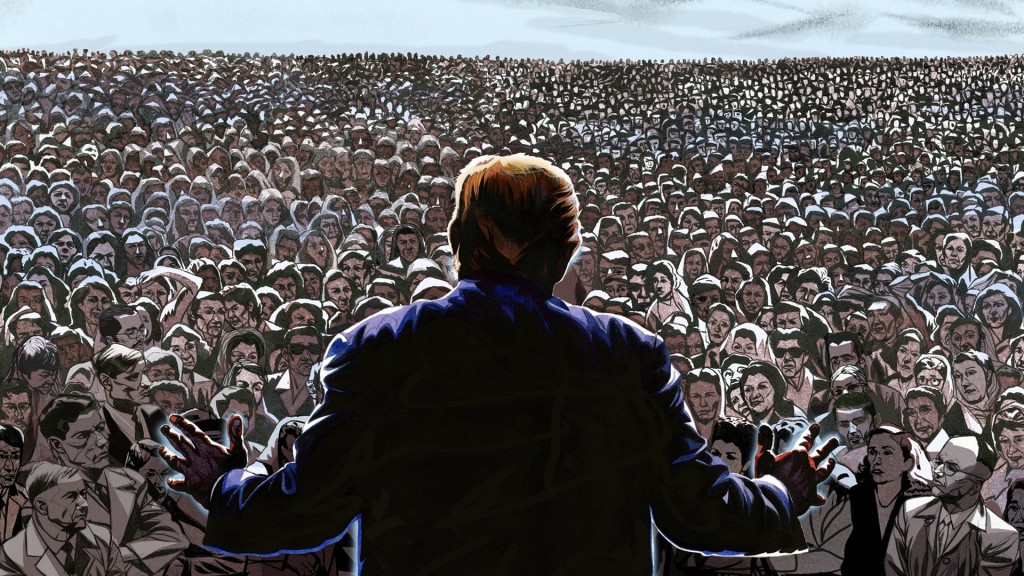
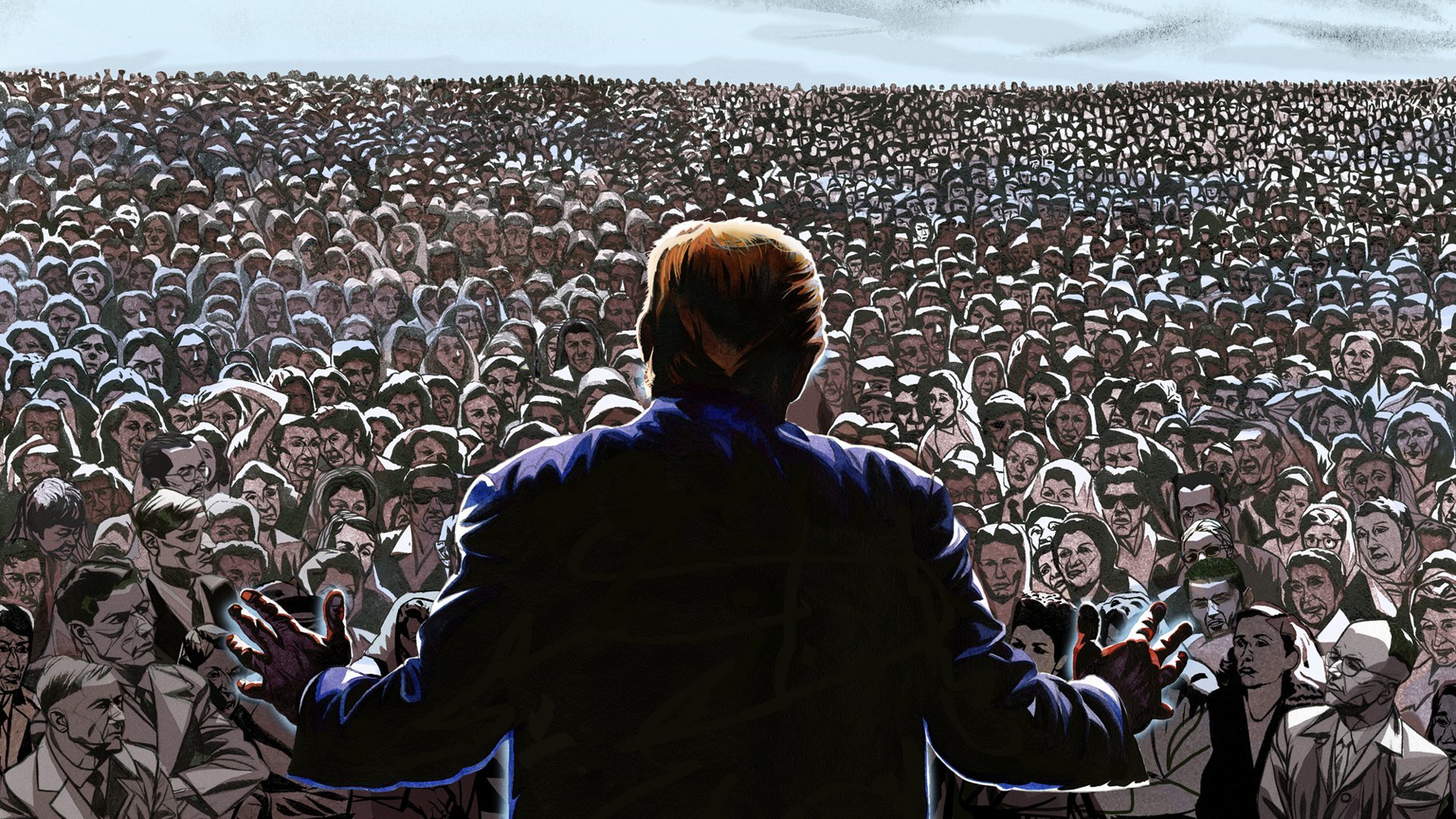
Illustration by Jeffry Smith in The Atlantic.

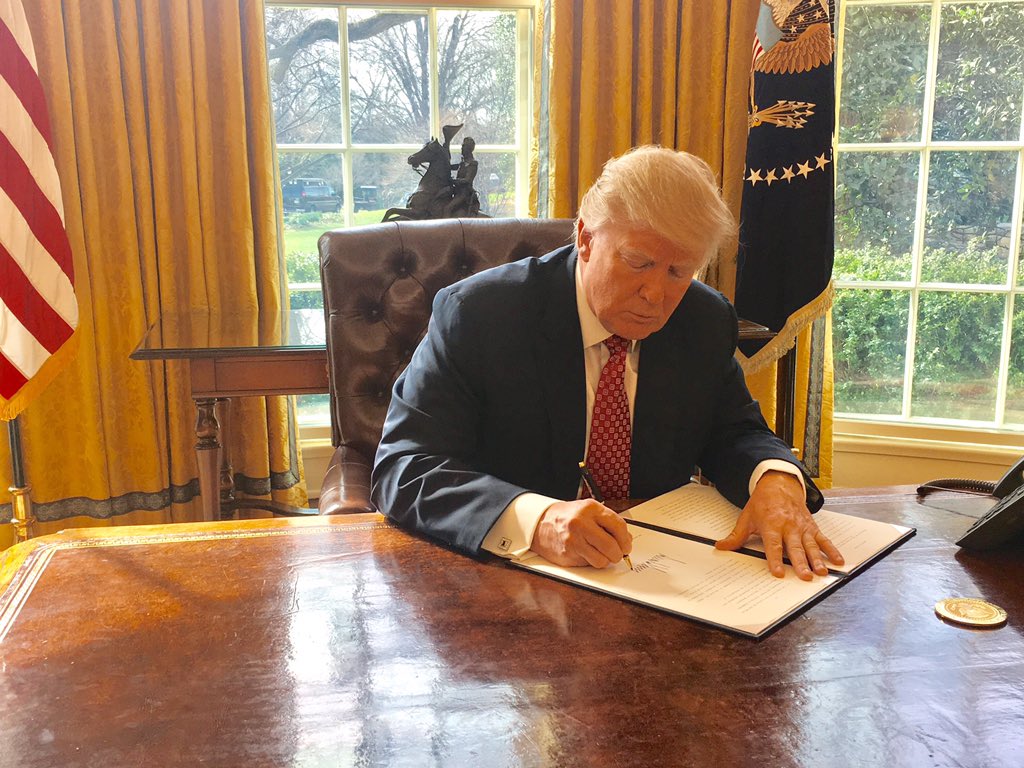
Illustration by Jeffry Smith in The Atlantic.
Any Democrats wanna run? Anyone? Anyone? Bueller?

As you probably know, everybody and his sister has lined up to run for the GOP nomination for Mick Mulvaney’s congressional seat in the 5th District. As of last week:

So far, six candidates have declared on the GOP side of the race: former state party chairman Chad Connelly; anti-Common Core activist Sheri Few; Camden attorney Tom Mullikin; Norman; Pope; and Indian Land attorney Kris Wampler….

(Yes, Sheri Few is running again! If at first you don’t succeed…)

It’s a mad scramble; you can’t hold ’em back! I read that story at breakfast at the Capital City Club one day last week, then folded my iPad and stood up to turn to leave — and there was Chad Connelly sitting at a table yards away with four or five other people, already having a campaign meeting. Time’s a wastin’!

And on the Democratic side…

I received this today, about an hour ago, from Clay Middleton with the SC Democratic Party:

unnamed
It is my privilege to lead the SCDP’s candidate recruitment efforts for the 2018 cycle.  The cycle is off to an early start with the upcoming special election in the 5th Congressional District.  After conversations with many great Democrats throughout the district, we expect a candidate to announce their candidacy next week.  The filing deadline is March 13th.  To receive regular updates on this special election campaign,sign up here.
While things are moving quickest in the 5th, it is not too early to start planning for a 2018 run for office!  If you are potentially interested, or know someone else who would be a strong candidate, please email me at plan2run@scdp.org.    
Throughout the country, Democratic energy is higher than ever before.  Earlier this week, in a special election in the reddest State Senate district in Connecticut, Democrats improved by 25 points over the 2016 general election result.  South Carolinians are just as fired up, organized, and ready to vote.  We just need great Democratic candidates to harness and capitalize on this energy.

Yeah, y’all are moving mighty quick in the 5th! You’re already up to the crucial, Let’s look and see if we can find somebody willing to run stage. You might even have one next week! The Republicans are probably wrenching their necks looking back at you! Or would be, if they gave you a thought.

And to think, this is the seat held by Democrat John Spratt for a generation before Mulvaney replaced him in the Tea Party wave of 2010.

If you’re a Democrat, and even if you aren’t, this is sad, folks…

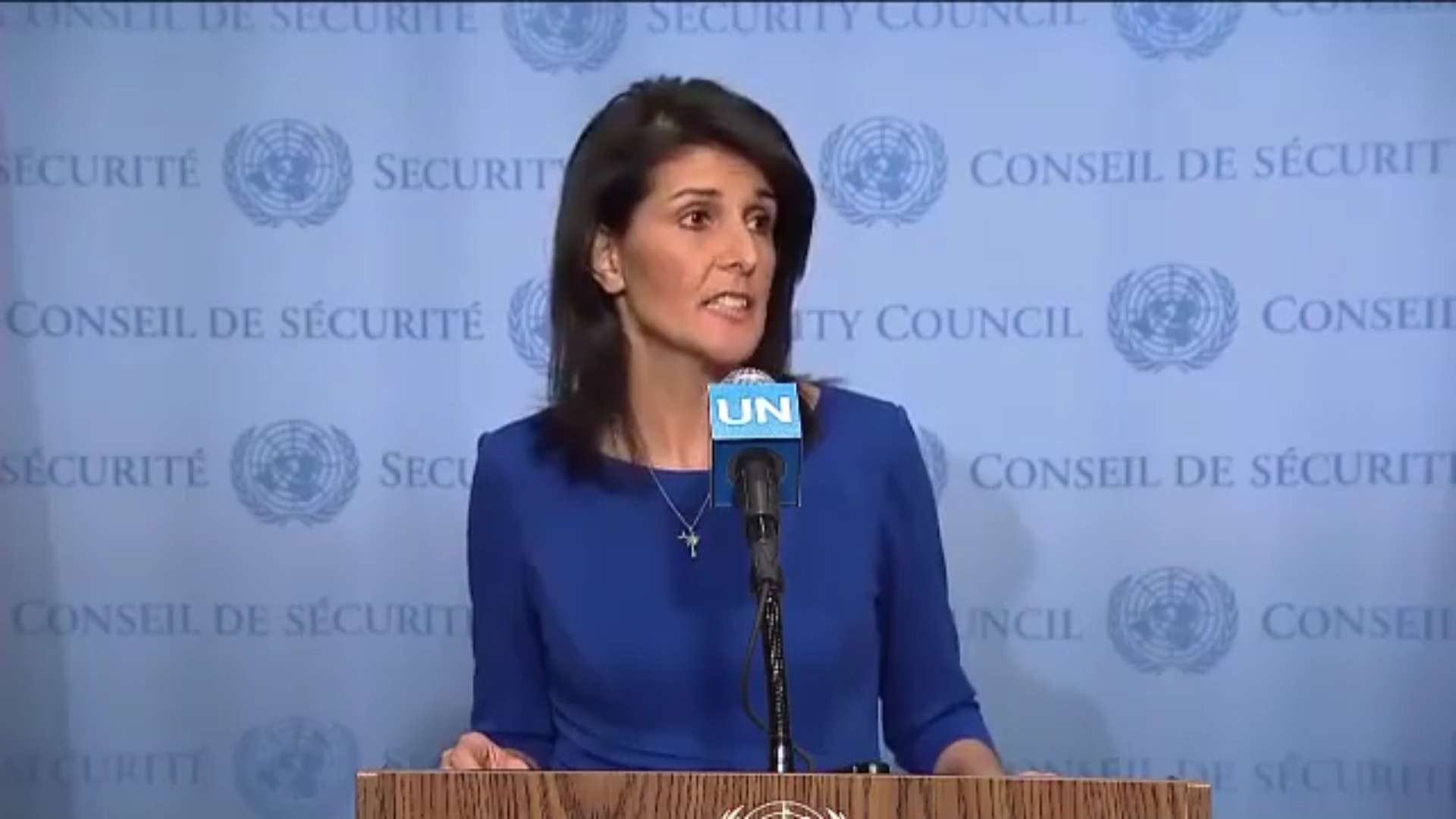
Suddenly, Nikki Haley is America’s foreign policy grownup

C5Tu3ZUWQAAq0KR

This was in The Washington Post over the weekend:

After President Trump said that deporting undocumented immigrants was “a military operation,” Homeland Security Secretary John F. Kelly, speaking in Mexico, clarified that there would be “no use of military force in immigration operations.”

After Trump, standing next to Israeli Prime Minister Benjamin Netanyahu, upended decades of U.S. policy by saying he was open to a one-state solution to the conflict in the Middle East, U.N. envoy Nikki Haley asserted that the United States “absolutely” supports a two-state solution.

And after Trump alarmed European allies by declaring NATO obsolete, Vice President Pence flew to Munich and Brussels, where he reassured a worried continent that the president remains “fully devoted to our transatlantic union.”

One of the unofficial duties of Trump’s Cabinet, it seems, is cleaning up the statements of the man they serve. Five weeks into Trump’s tenure in office, his deputies have found themselves softening, explaining and sometimes outright contradicting the president….

Or, as Jennifer Rubin wrote last week, “Pay no mind to Trump. He’s just the president.”

Perhaps the only hope we have to cling to in this crisis is the fact that most of the world understands that the president of the United States is, for the first time in history, a complete nincompoop (see how I didn’t call him an “idiot” just then), so there’s the possibility of grownups cleaning up his messes before they blow up completely. No guarantee it will work, of course, but there’s the possibility.

Here’s what we’ve come to: Our own Nikki Haley, who had basically zero qualifications for the job of ambassador to the U.N., is now the grownup who has to step in and set things right when the president of the United States screws up on the global stage.

Scary, isn’t it?

I don’t want to take anything away from Nikki by saying that. It’s not her fault she was unqualified for the position. To my knowledge, she never sought the position, and can be forgiven for not having prepared herself for it before it fell in her lap. I applaud how well she’s doing scrambling to catch up. She’s apparently listening to the right people, and doing her best to learn, and I honor her for it.

Wouldn’t it be nice if the guy who picked her for the job would do the same thing? But he won’t. He’s destroyed our hopes of his ever doing that, over and over again.

So everyone around him — or the competent ones, anyway, who are too few — will have to keep cleaning up after him, as well as they can for as long as they can. Which is cold comfort…

I love this picture from the Canadian border

From The Washington Post: Members of the Royal Canadian Mounted Police help a family from Somalia on Feb. 17, 2017 along the U.S.-Canada border near Hemmingford, Quebec. (The Canadian Press/AP)

From The Washington Post: Members of the Royal Canadian Mounted Police help a family from Somalia on Feb. 17, 2017 along the U.S.-Canada border near Hemmingford, Quebec. (The Canadian Press/AP)

I hope The Canadian Press (or the AP, which transmitted it) doesn’t mind my showing this photo, but my post would make little sense without it. It goes with this story this morning in The Washington Post:

OTTAWA — As desperate asylum seekers continue to flee the Trump administration’s immigration crackdown by crossing into Canada, concern is growing here over whether the country will be able to cope if the number of migrants keeps growing.

Stories of migrants hauling children and suitcases across frozen fields and snow-covered ditches into Canada have become headline news. The asylum seekers, who are fleeing President Trump’s travel and refugee bans as well as stepped-up arrests of undocumented immigrants, have received warm welcomes. But opposition politicians are criticizing the government of Justin Trudeau for being too harsh or too lax in its approach….

I just love that expression on the Mountie’s face as he lifts that child up from the snow. You go, Dudley Do-Right!

It’s particularly meaningful to me because our church sponsored a Somali Bantu family — a widowed mother and several children — in Columbia a few years back, and my wife played a leadership role in that, sometimes spending practically as much time with them, helping them negotiate American life, as she did at home. Or so it seemed to me, but I’m not complaining. She found the mother a job and helped her get settled in it, tutored one of the kids (using our old copies of The Wall Street Journal to help with his English skills), and all sorts of stuff like that. (My own involvement hardly extended beyond storing donated furniture in our garage before they arrived.)

Eventually, our Bantu family moved to Buffalo, where a lot of others like them had ended up. Also right on the Canadian border, you’ll note — although the picture taken above was far from there.

Of course, as I say, I love the picture. Despite the fact that it saddens me greatly that any of these folks would feel so unwelcome in this country that they would set out on such hazardous (and to them especially, horrendously cold) terrain in search of solace and safety…

Nikki shows Trump how to address anti-Semitism

I call your attention to Jennifer Rubin’s column praising Nikki Haley for showing the correct way to address anti-Semitism, a lesson her boss would do well to learn.

Of course, you might say Nikki evidently had help from people who know more about the Mideast and global antipathy toward Israel than she does, to which I’ll say, I certainly hope so. And bless her for having the wisdom to listen to them. And when she spoke them, the words became hers.

Here’s the pertinent part of the column, which quotes freely from Ambassador Haley’s remarks:

Her remarks are worth watching or reading in full, but this was especially effective:

The Security Council is supposed to discuss how to maintain international peace and security. But at our meeting on the Middle East, the discussion was not about Hizballah’s illegal build-up of rockets in Lebanon. It was not about the money and weapons Iran provides to terrorists. It was not about how we defeat ISIS. It was not about how we hold Bashar al-Assad accountable for the slaughter of hundreds and thousands of civilians. No, instead, the meeting focused on criticizing Israel, the one true democracy in the Middle East. I am new around here, but I understand that’s how the Council has operated, month after month, for decades. …

Incredibly, the UN Department of Political Affairs has an entire division devoted to Palestinian affairs. Imagine that. There is no division devoted to illegal missile launches from North Korea. There is no division devoted to the world’s number one state-sponsor of terror, Iran. The prejudiced approach to Israeli-Palestinian issues does the peace process no favors. And it bears no relationship to the reality of the world around us.

She further observed, “The double standards are breathtaking. Just a few days ago, the United States sought unsuccessfully to have the Security Council condemn a terrorist attack to Israel, where the terrorist opened fire on people waiting for a bus and then stabbed others. … The statement was blocked. And that’s downright shameful.”

She added, “Israel exists in a region where others call for its complete destruction and in a world where anti-Semitism is on the rise. These are threats that we should discuss at the United Nations as we continue working toward a comprehensive agreement that would end the Israeli-Palestinian conflict.” (Emphasis added.)

Nikki at UN

Of course, I don’t get them either, which is also bad

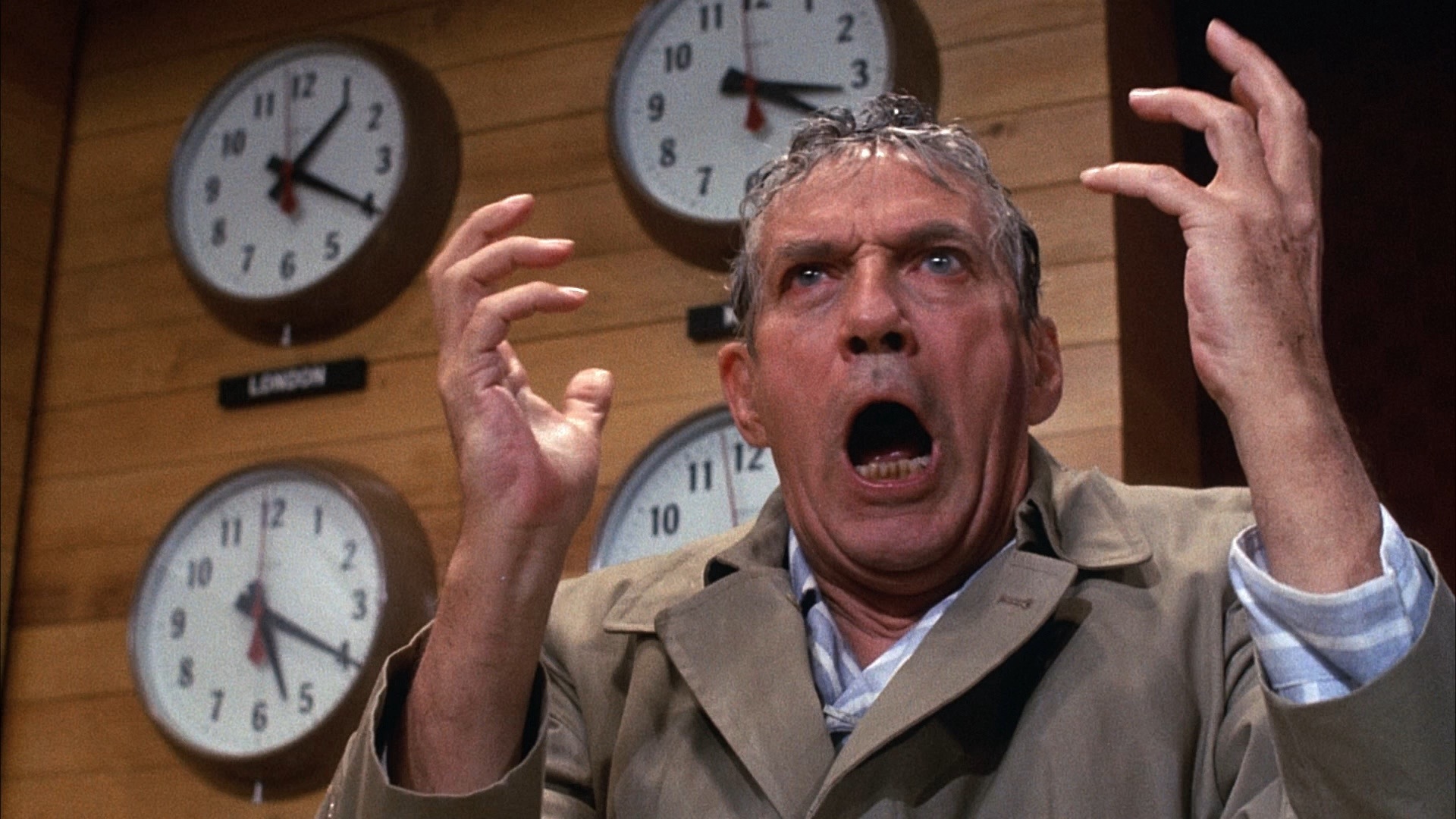
I didn't get why everybody was so mad in "Network," either.

I didn’t get why everybody was so mad in “Network,” either.

Just to examine the other side of the coin…

My last post quoted a Trump supporter on the subject of his detractors, saying “I just don’t get it.”

Well, far be it from me to let on to be wiser than others when I’m not. (As a Twain protagonist said, “I was born modest; not all over, but in spots.”)

The thing is, I don’t get Trump supporters. Oh, I can cite this or that overt reason that they give for holding the views they do. But I don’t have a good grip on what an editor I used to work with called “the emotional center.” And normally, I would.

After past elections, I’ve pretty much understood what happened, on most levels. Not this time. I read about people having (some of) the same reservations about Trump that I did, and voting for him anyway. And with some of those folks, I understand the underlying emotion — they really, really hated Hillary Clinton. I consider it rather intemperate and unwise to hate anybody that much, but I don’t doubt the force of that impulse.

But there’s something bigger than that going on, something at the root of the nihilism I kept writing about during the election (much to the irritation of some of you). Something that caused people to feel they wanted to blow it all up, regardless of the consequences. Something that made them want to give a grossly unqualified, deeply unfit man the most powerful job on the planet. Something they were just fed up about.

At this point, Doug is jumping up and down, saying, “I knew it! I kept saying you didn’t get it!” But I do get that the impulse was out there. What I don’t get — not being a cynic like Doug — is the rational basis for it.

I hear about “economic dislocation.” But that seems inadequate. I’m a white male who is as economically dislocated (the position I worked my whole life for, and performed very well, has ceased to exist) as anyone, and I strongly suspect that a lot of Trump voters, quite likely most of them, have higher current incomes than I have.

I see the anger is there, and I see it as key to what has happened (it certainly didn’t happen for calm, rational reasons). But I can’t connect to it.

And the feeling is familiar. I felt the same way back in the 1970s, when I saw “Network.”

To this day, I have no idea what Peter Finch’s character was on about when he kept babbling, “I’m as mad as hell, and I’m not going to take this anymore!” (In the larger sense, I mean — the immediate cause was that he was getting fired.)

Mad as hell about what?, I kept wondering. It made no sense, yet in the film, he turned out to be perfectly in sync with America. The viewers loved it. And that’s the tough part, see. I understood that Howard Beale was unhinged. But why did it strike such a chord?

I thought people running to their windows and shouting about how mad they were about some nonspecific “this” was absurd. I still think that.

I’ve heard all sorts of explanations as to what the Trump voters were mad about beyond the economic stress thing. And I fully believe in some of them — such as the feeling of being ignored and mocked and insulted by coastal elites. That I can dig; it’s based in something real. I can also understand frustration with the mess the parties have made of our politics — but electing Trump always seemed to me the surest way to make things worse, not better. And even if you take every ostensible cause and double it, and add them all together, and throw in Doug’s powerful disgust at government in general, it just does not add up to a justification for what just happened, and keeps happening every day.

It just doesn’t.

And yeah, it may seem stupid for me to try to explain a visceral phenomenon in rational terms, but I do try. I just don’t arrive…

Well that’s a start, senators

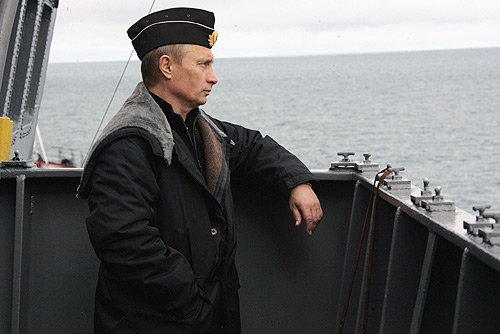
"Time for a course correction, captain!" (Don't you love when Putin plays dress-up?)

“One ping only, Vasily!” (Don’t you love when Putin plays dress-up?)

Jennifer Rubin had a column today headlined, “When will Congress take on Trump?” Something I’ve wondered myself. As she puts it:

President Trump provides neither coherent nor conservative leadership on policy. He creates foreign policy fiascoes. He has not resolved his conflicts of interest and still arguably operates in violation of the Constitution’s emoluments clause. When, irate Democrats and some Republicans plead, will Congress do something about him?

Well, I’m not saying this is enough by a long shot, but it’s a start. This is from Lindsey Graham:

Bipartisan Group of Senators Introduce Legislation establishing Congressional Oversight of Russia Sanctions Relief

WASHINGTON – A bipartisan group of Senators today introduced legislation, The Russia Sanctions Review Act of 2017, which provides for congressional oversight of any decision to provide sanctions relief to the Government of the Russian Federation.

“Russia has done nothing to be rewarded with sanctions relief,” said Senator Lindsey Graham (R-South Carolina).  “To provide relief at this time would send the wrong signal to Russia and our allies who face Russian oppression. Sanctions relief must be earned, not given.”

“If the U.S. were to provide sanctions relief to Russia without verifiable progress on the Minsk Agreements, we would lose all credibility in the eyes of our allies in Europe and around the world,” said Senator Ben Cardin (D-Maryland).  “Since the illegal annexation of Crimea and invasion of Ukraine by Russia in 2014, Congress has led efforts to impose sanctions on Russia.  We have a responsibility to exercise stringent oversight over any policy move that could ease Russia sanctions.”

“The United States should not ease sanctions on Russia until Putin abandons his illegal annexation of Crimea, verifiably and permanently ends Russian aggression in Ukraine, and fully implements the Minsk accords,” said Senator Marco Rubio (R-Florida).

“The Ukrainian community in Ohio knows firsthand the dangers of unchecked Russian aggression,” said Senator Sherrod Brown (D-Ohio). “Lifting sanctions now would only reward Russia’s attempts to undermine democracy – from Crimea and Eastern Ukraine to our own U.S. election. This commonsense, bipartisan legislation will give Congress – and more importantly, the constituents we answer to – a say in critical national security debates.”

“Easing sanctions on Russia would send the wrong message as Vladimir Putin continues to oppress his citizens, murder his political opponents, invade his neighbors, threaten America’s allies, and attempt to undermine our elections,” said Senator John McCain (R-Arizona). “Congress must have oversight of any decision that would impact our ability to hold Russia accountable for its flagrant violation of international law and attack our institutions.”

“Vladimir Putin is a thug bent on tearing down democracy—and Russia’s meddling in U.S. institutions is a threat to our national security,” said Senator Claire McCaskill (D-Missouri).“Any decision to roll over on sanctions needs to meet a high bar in Congress.”

Before sanctions relief can be granted, The Russia Sanctions Review Act requires the Administration to submit to Congress:

  • A description of the proposed sanctions relief for individuals engaged in significant malicious cyber-enabled activities, those contributing to the situation in Ukraine, and those engaged in certain transactions with respect to Crimea.
  • Certification that the Government of the Russian Federation has ceased—

Ø  ordering, controlling, or otherwise directing, supporting, or financing, significant acts intended to undermine the peace, security, stability, sovereignty, or territorial integrity of Ukraine, including through an agreement between the appropriate parties; and

Ø  cyberattacks against the United States Government and United States persons.

The U.S. Senate and House of Representatives will have 120 days to act — or decline to take action — on any proposed sanctions relief.  During this period, the President may not waive, suspend, reduce, provide relief from, or otherwise limit the application of sanctions with respect to the Russian Federation.  After 120 days, if both the Senate and House have not voted in support of a Joint Resolution of Disapproval, sanctions relief will be granted.

#####

I’m worried poor ol’ Trump’s going to wear himself out

This Tweet was moderately popular over the weekend, so I share it here:

We’ve seen some life in the judiciary, much to the new president’s consternation.

When will we see some life out of the legislative branch — you know, doing stuff rather than just saying stuff?

I know they’re out of practice. And I know that a lot of the stuff they would do would be stupid — like repealing Obamacare without replacing it with something that actually leads to at least as many people having good coverage. But hey, “stupid” is relatively, and they can’t possibly look as bad on that score as the executive branch — can they?

Hamiltonians, Wilsonians, Jeffersonians and Jacksonians

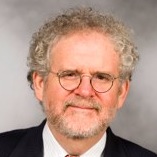
If you’d like to soothe your jangled nerves with an interesting intellectual take on WTF just happened to America, you might want to read this piece in Foreign Affairs by Walter Russell Mead, Columbia native and “radical centrist.”

It’s headlined, “The Jacksonian Revolt.”

Mead

Mead

Here’s the short version: We Hamiltonians and Wilsonians (going by Mead’s descriptions, I’m kind of both, which is unsurprising) have pretty much defined America’s prevailing values and role in the world for the past 70 years. We thought this was the natural, proper order of things, and the way everything was trending as well. But while we were thinking globally and in terms of universal principles, there was… I suppose one would call it discontent… at home. The Jeffersonians (a category that includes Rand Paul and Ted Cruz, which clues you in that I’m not one of them) thought this was a wave they could ride to power, but they reckoned without the way the Jacksonians ran in and grabbed the nation by the throat with all the thoughtfulness and refinement of the backwoodsmen who trashed the White House after the original Jackson’s inauguration. (Some of the editorializing in that last sentence is me, not Mead. In case you wondered.)

Mead is not saying anything new, for him or anyone else — I called your attention to him when he made some of the same points more than a year ago. And I’ve spent much of the past year worrying that our country was repeating the horror of the Election of 1828, only more so.

But now that it’s happened, and now that this latter-day Jackson is trashing not just the White House, but practically every aspect of rational U.S. policy in the world, this seems like a good time for a deeper look into what has happened, and is happening.

An excerpt from Mead’s piece:

The distinctively American populism Trump espouses is rooted in the thought and culture of the country’s first populist president, Andrew Jackson. For Jacksonians—who formed the core of Trump’s passionately supportive base—the United States is not a political entity created and defined by a set of intellectual propositions rooted in the Enlightenment and oriented toward the fulfillment of a universal mission. Rather, it is the nation-state of the American people, and its chief business lies at home. Jacksonians see American exceptionalism not as a function of the universal appeal of American ideas, or even as a function of a unique American vocation to transform the world, but rather as rooted in the country’s singular commitment to the equality and dignity of individual American citizens. The role of the U.S. government, Jacksonians believe, is to fulfill the country’s destiny by looking after the physical security and economic well-being of the American people in their national home—and to do that while interfering as little as possible with the individual freedom that makes the country unique. 

Jacksonian populism is only intermittently concerned with foreign policy, and indeed it is only intermittently engaged with politics more generally. It took a particular combination of forces and trends to mobilize it this election cycle, and most of those were domestically focused. In seeking to explain the Jacksonian surge, commentators have looked to factors such as wage stagnation, the loss of good jobs for unskilled workers, the hollowing out of civic life, a rise in drug use—conditions many associate with life in blighted inner cities that have spread across much of the country. But this is a partial and incomplete view. Identity and culture have historically played a major role in American politics, and 2016 was no exception. Jacksonian America felt itself to be under siege, with its values under attack and its future under threat. Trump—flawed as many Jacksonians themselves believed him to be—seemed the only candidate willing to help fight for its survival….

As you can see, his tones are measured as he describes this resurgence of anti-intellectualism in our politics. That’s what I’m talking about when I say you may find reading the piece soothing. Then again, maybe you won’t…

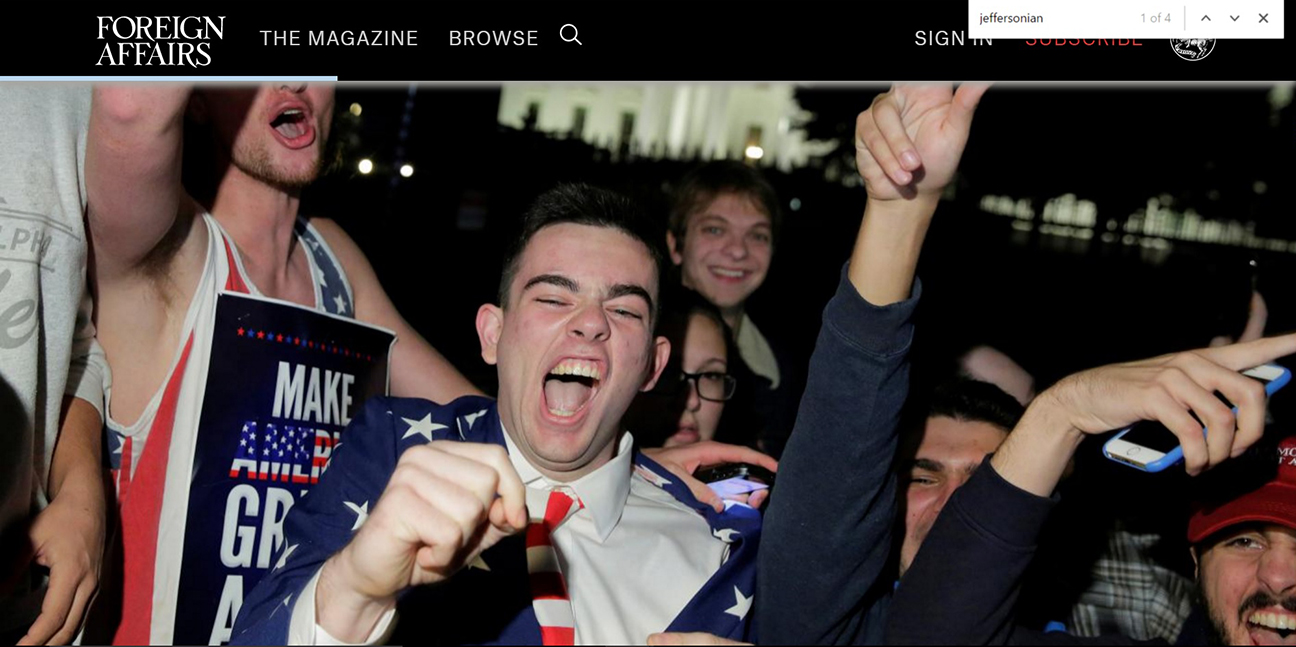
Mead writes politely of the Jacksonians, but Foreign Affairs paired his piece with this image of them celebrating on Election Night.

Mead writes politely of the Jacksonians, but Foreign Affairs paired his piece with this image of them celebrating on Election Night. Even I’m nicer to them than that…

People, can you just chill a bit over court nominations, please?

10569-003-C-P

So Trump nominated someone last night for the Supreme Court, and it looks like he had good advice and listened to it for a change: I’ve seen no indications at all that this Gorsuch guy is anything other than a qualified jurist. Which means that, in a rational world — barring currently unknown problems coming to light — his confirmation should be routine. Which would be welcome; we have enough turmoil in our public life at the moment.

But then, I read this main story (there were many sidebars) about the nomination in The Washington Post:

President Trump nominated Colorado federal appeals court judge Neil Gorsuch for the Supreme Court on Tuesday, opting in the most important decision of his young presidency for a highly credentialed favorite of the conservative legal establishment to fill the opening created last year by the death of Justice Antonin Scalia….

WHAT?The most important decision?” In what way, in what sense, in what universe completely lacking in any sense of proportion?

To keep it simple, let’s just consider three things this “young presidency” has done that are much more far-reaching in likely effect:

  1. Pulling out of TPP. This has disengaged America from the Pacific Rim, and invited the accelerated rise of China, in a way that is likely to have staggering consequences in this century both for us and for the billions of others affected — economically, strategically, culturally and almost any other “-ly” you care to name.
  2. Sticking a finger in the eye of every Muslim on the planet. Never mind the momentary unjust treatment of 90,000 or so individuals from Muslim countries, or the unconscionably inhumane “no” to refugees. This has indelibly engraved in a billion or so people’s minds that America regards them and their faith as the enemy, the one impression that our last two presidents have gone out of their way to avoid giving, even as they prosecuted the War on Terror.
  3. Naming Gen. Mattis as defense secretary. Just as Gorsuch’s appears to be, this was one of Trump’s rare good calls. Deciding upon such a qualified leader for our military at a time when the world is so unsettled and there are so many places where things can go really wrong really quickly was of the utmost importance. But it was also an historic precedent, since we had avoided naming recent generals to that post for my entire life. (By contrast, presidents have named LOTS of Supreme Court justices who have come and gone in my life, and none of them held immediate sway over the immense power of the U.S. military.)

Speaking of Mattis — despite the semi-Constitutional issue his nomination raised, an issue worthy of respectful consideration, but not one that should have been an obstacle in light of his qualifications, and of the nation’s desperate need of some qualified people at this point in our history — all but one senator had the good sense to confirm him.

And if our nation had good sense, something similar would happen with Gorsuch. Will it?

No, of course not. As another piece in the Post, by the venerable Dan Balz, noted:

The coming fight over his Supreme Court nominee will be fiercer than before.

Yes, it will. Else we would all be shocked. (I, for one, would be pleasantly surprised.) And what is likely to happen will be an utter waste of energy in a time when political capital needs to be saved for so many other more important battles.

My attitude toward Gorsuch is exactly the same as it was toward President Obama’s pick for this seat, Merrick Garland. They were both qualified for the job. They had already been vetted; they had already proved themselves. They had the requisite knowledge and experience, and reputations for probity and good judgment. There were detectable differences in judicial philosophy — differences that in a calm, proportional world would matter only to legal scholars. But both were qualified for the job — far more qualified than most people elected to Congress, for instance.

Whether one or the other was confirmed is not the Ultimate Issue. It’s not Armageddon.

Here’s the way I see it: The vast, vast majority of times the Court decides cases with wisdom and with ultimate respect for the law and for our civilization. Most decisions are unanimous — which seems remarkable to this layman, since the court deals mainly in matters lower courts were unable to settle conclusively. This has been the case over the decades, no matter whether the majority of the court is labeled “liberal” or “conservative.” Controversy exists only in a minority of cases, and most of those are at least decided intelligently, even if not the way you or I would prefer.

This has been true my entire lifetime.

To me, this testifies to presidents and senators having done a phenomenal job of picking good, qualified justices. The political branches have a much better record in this than in any other area I can think of.

Am I unhappy with some of the decisions? You bet. My opposition to Roe v. Wade is well documented here. I object not only to its legalization of abortion, but to the devastating effect that decision has had on our national politics — specifically, to exacerbating the very problem that I’m on about in this post.

(Considered logically, I am if anything even more opposed to the absurd precedent upon which Roe is based — the Griswold decision, which magically “discovered” an absolute right to privacy hiding in the shadows of the Constitution, a right that had somehow gone unnoticed in the nation’s previous 189 years.)

Today, in part because of Roe, we have vast numbers of people — thousands, if not millions of Americans will vote for a president based largely if not entirely on the basis of what sort of justices he or she is likely to name — “liberal” or “conservative.” Which is insane, given the far more immediate and far-ranging powers of the presidency. A president has the power, at every morning of every day, to make decisions that could lead to the destruction of all human life on this planet — and yet people will actually let their vote be decided on a narrow range of factors involved in a decision the president might make once, or maybe twice, in a four- or eight-year period.

It’s ridiculous. It’s far out of rational proportion.

Of course, since I’ve described the devastating effect of that one decision on our nation’s politics, you might say judicial nominations should be treated as seriously as they are. But no. That decision was an aberration. The number of bad decisions made by presidents in the same period of time since, say, Plessy v. Ferguson or Dred Scott is far, far vaster. Which argues that we ought to devote more of our attention and political energy on the 99.999 percent of what a president does, and less on this one.

Maybe Dan Balz and other experienced observers are wrong — just as they were wrong about Trump’s electoral chances.

Maybe the enormity of what Trump is doing in virtually every other area within his authority will shock our political players into having a sense of proportion. Maybe they’ll save their powder for the big battles that must be fought, some of which (who knows?) might even be won by the forces of reason. Maybe this confirmation will be as routine as it should be, as most of them should be.

But I doubt it. There is a vast infrastructure of political advocacy out there that exists purely for fights such as this one. And both political parties are closely wedded to those interest groups, and fearful of not doing their bidding with utmost zeal.

We’ll see…

WSJ’s Stephens on Trump: ‘capricious, counterproductive, cruel and dumb’

Kudos to The Wall Street Journal‘s Bret Stephens, who is continuing to keep the heat on Donald J. Trump, even as some others on the paper’s editorial page — who also know better — seem to have lost the will to do so.Bret Stephens

His piece today, headlined “The Wrong Kind of Crazy,” plays off of the Nixonian global strategy — the “madman theory” — of keeping adversaries in the dark about what you might do in a crisis, which theoretically causes them to tread lightly. In the hands of grounded figures such as Nixon and Kissinger, the approach made some sense. But that was in the case of rational actors — the “madman” part was that you wanted your adversaries to want to act in ways that would keep you rational.

It doesn’t work so well when your president is an ignoramus who basically doesn’t do rational, or at least doesn’t do it any more often than a stopped clock states the right time.

Which brings us to the present day, of course, since this is the first time in our history that we’ve been in such a situation.

Stephens says Trump has done one thing so far that — against a background of Nixonian stability and pragmatism — could have fit in the “good crazy” category: throwing China off-balance with that phone call with the Taiwanese president. As he wrote, If Beijing wants to use ambiguous means to dominate the South China Sea, why shouldn’t Washington hit back with ambiguous devices of its own?”

Unfortunately, practically all of Trump’s brand of nuttiness is “the wrong kind of crazy: capricious, counterproductive, cruel and dumb:”

So much was evident with the president’s refugee ban on Saturday. And with Steve Bannon’s elevation to the National Security Council, and the Chairman of the Joint Chief’s demotion from it. And with the announcement Wednesday that Mexico would pay for the wall. And with the withdrawal from the Trans-Pacific Partnership trade deal on Monday and the aggressively protectionist themes of his inaugural. And with his performance at CIA headquarters. And with his incontinent fixations on crowd size and alleged voter fraud….

That’s quite a list, isn’t it, describing the insane things done by an administration that’s only 11 days old? (And that’s a nice phrase: “incontinent fixations.”)

Just take one item: Replacing the head of the Joint Chiefs with Breitbart’s Bannon on the National Security Council would by itself be enough for me, were I a member to Congress, to start looking into impeachment procedures. That’s just beyond gross.

Anyway, I appreciate that Stephens isn’t going all wobbly…

The theory is, there's good crazy and bad crazy.

The theory is, there’s good crazy and there’s bad crazy.


If we’re not going to be America any more, what should we call ourselves?

827lowerslobbbovia

The Washington Post had a nice piece over the weekend about the recent history of U.S. immigration policy (“Open doors, slamming gates: The tumultuous politics of U.S. immigration policy“). It began with this anecdote:

In his farewell address to the nation in 1989, President Ronald Reagan told the story of a Navy sailor patrolling the South China Sea who came upon a “leaky little boat” crammed with refugees from Indochina trying to find a way to America.

“Hello, American sailor,” a man in the boat shouted up to the Navy vessel. “Hello, freedom man.” Reagan couldn’t get that moment out of his mind because of what it said about what the United States meant — to those who live here and to the rest of the world….

Well, as of the election of Donald Trump, that’s not what America means — to the world, or to Americans. “America” is what we used to be. At least at the moment, we’re not that any more.

Which raises the question: If we’re no longer America, what should we call ourselves?

Here are some possibilities, if we can get around any copyright considerations. I’m going with names that already have certain connotations in the public imagination, in order to speed up the branding process:

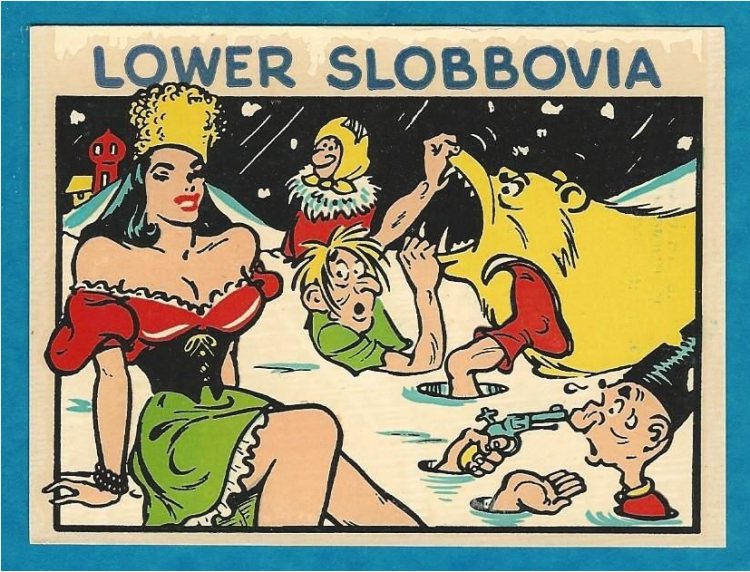
  1. Lower Slobbovia — This one has a certain feel to it that seems to capture where Trump is determined to take the country. It was coined by Al Kapp of “Li’l Abner” fame, and as Wikipedia notes has come to invoke “a place which is underdeveloped, socially backward, remote, impoverished or unenlightened,” or “any foreign country of no particular distinction.” You know, a place that is in no way exceptional. Which seems perfect, if we can get the rights to it.

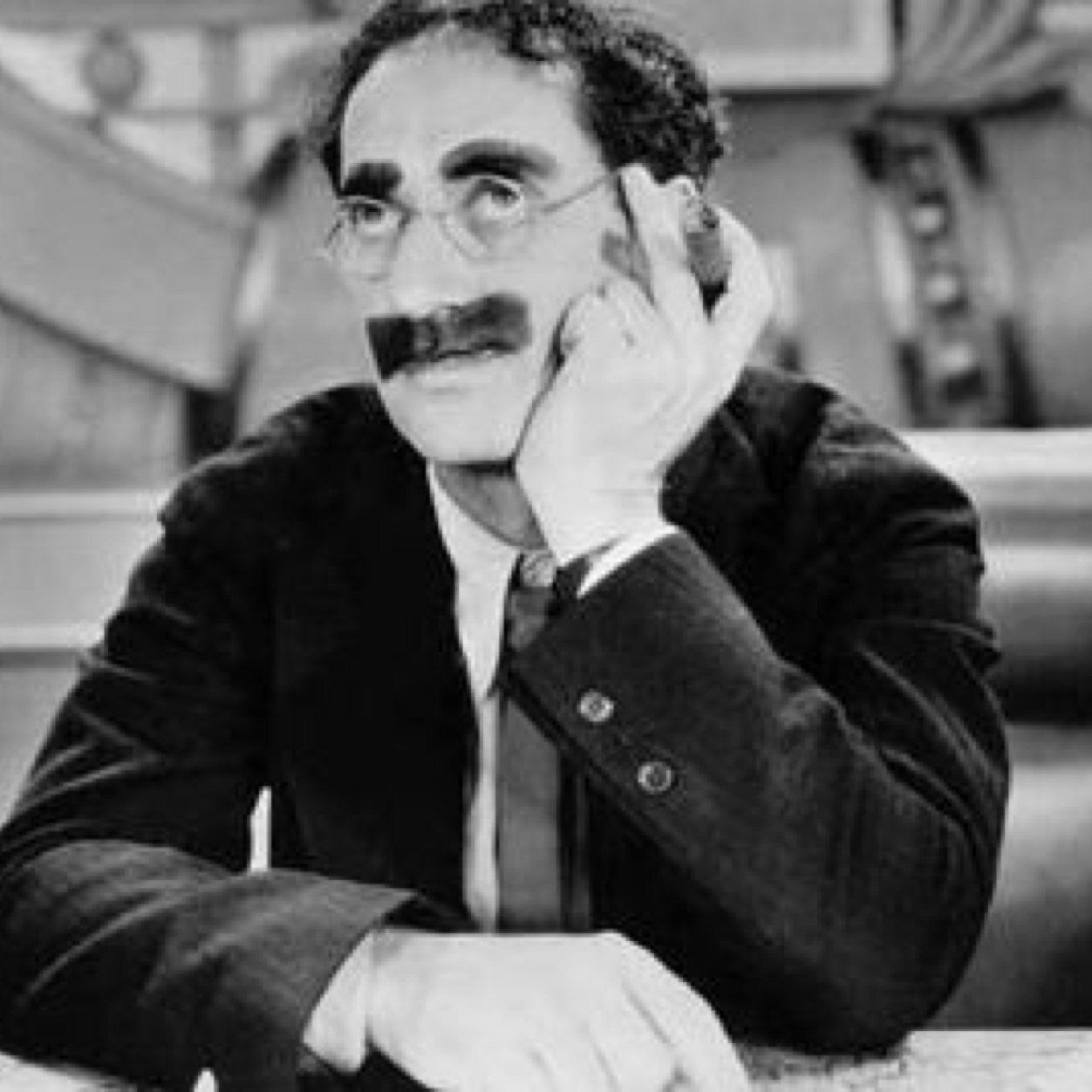
    Rufus T. Firefly dreaming up fresh mayhem for Freedonia.

    Rufus T. Firefly dreaming up fresh mayhem for Freedonia.

  2. Freedonia — In “Duck Soup,” this was the insignificant country governed by a crude, ill-mannered clown named Rufus T. Firefly (Groucho Marx). I’ll leave it to you to draw the parallel. Also, this should appeal to the Tea Party crowd, since early on, some Americans actually considered calling this country by a variant of that name.
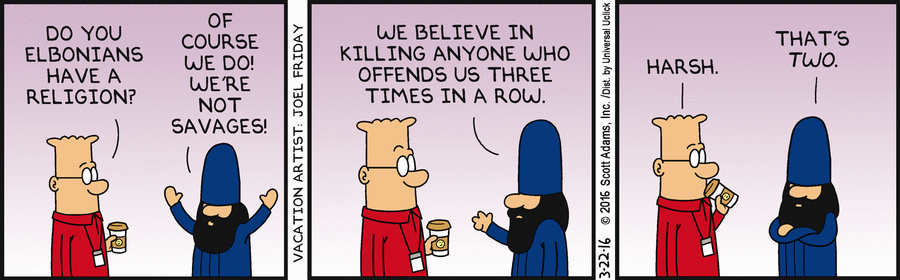
  3. Elbonia — The fictional country from “Dilbert” is “ruled by presidential dictatorship,” and its main export is mud.
  4. Bizarro America — Inspired by Superman comics. The Bizarro World is a place where everything is the reverse of what it is on this planet. Up is down, wrong is right, etc. Again quoting Wikipedia, “‘Bizarro World’ has come to mean a situation or setting which is weirdly inverted or opposite to expectations.” The name would announce to the world that America is now the opposite of what it was.
  5. Tomainia — That’s the country in Charlie Chaplin’s “The Great Dictator.” But since this was a satire about Hitler’s Germany, we’ll probably have to avoid it so that people don’t start yelling “Godwin’s Law!” at us, the way they always do.

Those are my suggestions. Any others out there?

Dt160322

Why don’t these ‘antiabortion’ kids today like ‘pro-life’?

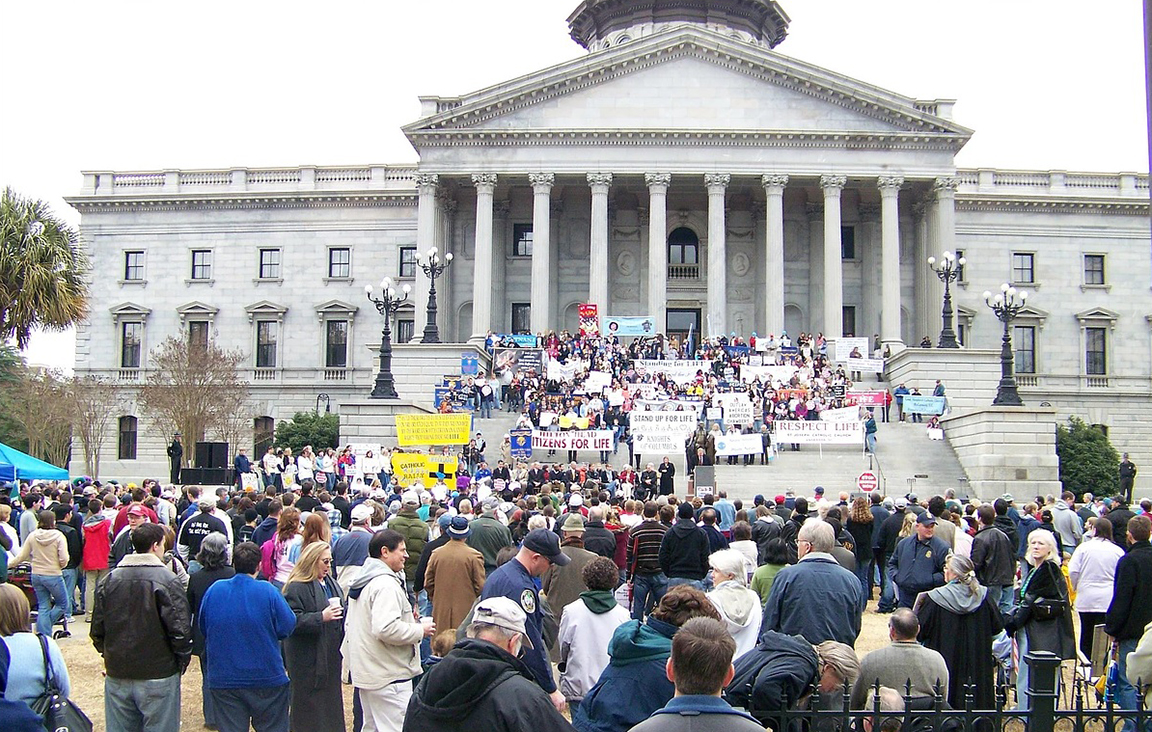
Pro-life demonstration at SC State House -- from SC Citizens for Life site.

Pro-life demonstration at SC State House — from SC Citizens for Life site.

I started to read with interest the WashPost story headlined:

Why these activists don’t like calling themselves ‘pro-life’ anymore

It was about how younger opponents of abortion, unlike their elders, often prefer to call themselves “antiabortion.”

The trouble is, the piece never really delivered on the first word in the hed: It didn’t really explain “why.”

It tried to, but it didn’t add up at all. For instance:

Many Americans are confused by what “pro-life” even means, and assume they must subscribe to a conservative agenda on many social issues, not just abortion, to join a “pro-life” group. “Maybe they’re pro-gay marriage or they’re pro-marijuana legalization. So they feel like, ‘I can’t be pro-life.’”

She thinks using the word “antiabortion” might help recruit those people.

The angst surrounding “pro-life” goes beyond the association with conservative politics, and beyond the confusion that makes people do a double-take as they try to remember: Which side is “pro-life” and which side is “pro-choice” again?…

What? If people are that confused, maybe they should avoid engaging the subject at all — it might sprain their brains.

And “the association with conservative politics?” What the what?

You’d think “anti-abortion” has more of an association with “conservative politics,” assuming one accepts the facile labels of our day. It suggests a very selective approach — and distances the activist from more liberal ideas. “Pro-life” suggests Bernardin’s Consistent Ethic of Life, which includes such things as opposition to capital punishment or to unjust wars.

I have no problem with being called “antiabortion” myself. As far as the one issue goes, it’s certainly descriptive. That’s why I’m cool with most news organizations’ style on the matter:

The Associated Press, The Washington Post, New York Times and most other large mainstream news organizations have long made it a matter of policy to refer to “antiabortion” vs. “abortion rights” activists, instead of the terms “pro-life” vs. “pro-choice.”

But why would any abortion opponent oppose “pro-life?” There’s just no understanding these wacky kids today…

They’re actually still going on about this

relentless

I followed a link provided by Bryan to a site that Wikipedia describes as “conservative,” but — just going by the headlines — seems quite a bit farther to the right than that.

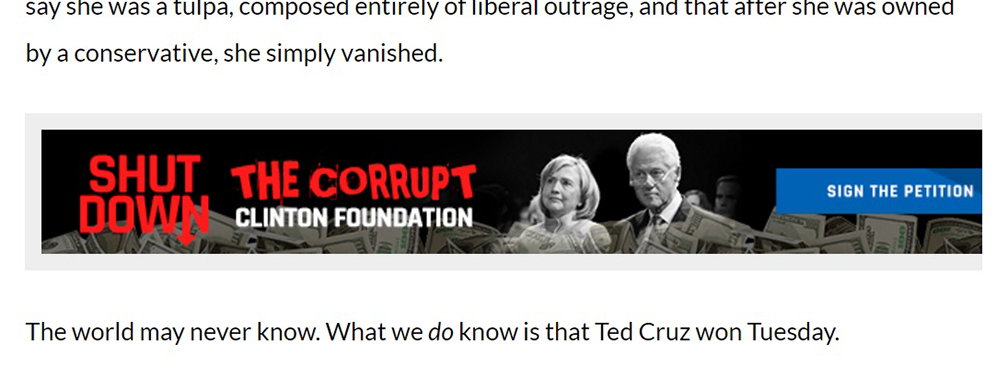
Anyway, in the middle of the piece Bryan had linked to, I saw the above ad. Here’s what it linked to.

And I thought, “Really? Still?

I had thought all that demonize-the-Clintons stuff was about keeping her from becoming president. Apparently, for some folks, it’s a career.

Which, of course, is what’s wrong with American politics across the spectrum from left to right: All those folks out there, in the parties and the many more-or-less affiliated interest groups, whose jobs depend on keeping people outraged…

Trump just handed the Pacific Rim to China

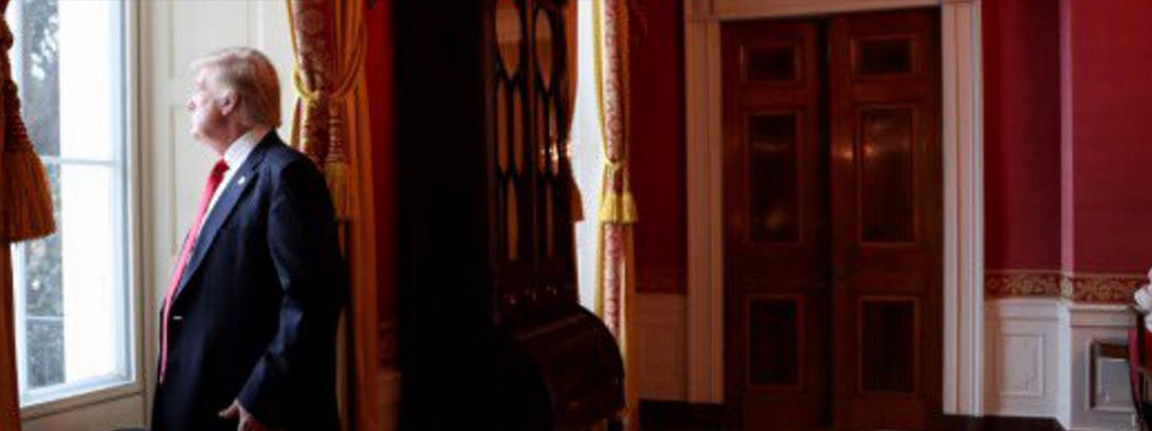
Trump, thinking hard before killing TPP. Feel free to laugh bitterly.

Trump, thinking hard before killing TPP. Feel free to laugh bitterly.

Well, he didn’t just do it. I tweeted about it eight hours ago, but now let’s discuss it here.

Here’s what’s happened:

President Trump began recasting America’s role in the global economy Monday, canceling an agreement for a sweeping trade deal with Asia that he once called a “potential disaster.”

Trump signed the executive order formally ending the United States’ participation in the Trans-Pacific Partnership in the Oval Office after discussing American manufacturing with business leaders in the Roosevelt Room. The order was largely symbolic — the deal was already essentially dead in Congress — but served to signal that Trump’s tough talk on trade during the campaign will carry over to his new administration….

“This abrupt action so early in the Trump administration puts the world on notice that all of America’s traditional economic and political alliances are now open to reassessment and renegotiation,” said Eswar Prasad, trade policy professor at Cornell University. “This could have an adverse long-run impact on the ability of the U.S. to maintain its influence and leadership in world economic and political affairs.”…

Yeah, well, that’s not all it can do, and probably will do.

We’ve heard a lot of nonsense in the past year about TPP, most of which had little to do with what was actually at stake. There was a good piece summing up the situation fairly neatly in the NYT in November after the election. First, it explained, “the deal, between the United States and 11 Asian and Pacific nations, was never just about trade.” So what was it about? Serious, sweeping, grownup-level geopolitics:

The agreement, the Trans­-Pacific Partnership, was conceived as a vital move in the increasingly tense chess match between China and the United States for economic and military influence in the fastest­-growing and most strategically uncertain part of the world. The deal, which excluded China, was intended to give those 11 nations more leverage in that strained match by providing them with a viable economic alternative. And its defeat is an unalloyed triumph for China, the country that President­-elect Donald J. Trump castigated repeatedly over trade…

Now, instead of Pacific Rim nations gathering under American leadership, growing closer in the face of increasing lawless aggression by China, we have China moving to do much the same deal under its own leadership, freezing us out.

And we’re not just talking about weak-kneed nations in China’s geographic shadow, or some of the usual suspects in our own hemisphere, where the Chinese have been steadily wooing friends for a generation:

Australia said on Wednesday that it wanted to push ahead with a Chinese-­led trade pact that would cover Asian nations from Japan to India but exclude the United States. Peru has opened talks with Beijing to join the agreement as well. Even American business leaders are positioning themselves for the potential opportunities in Asia…

Et tu, Australia? One of our four closest friends in the world?

Of course, none of this matters a bit to Mr. America First, who likes to grumble at China but will hand Pacific leadership to it in order to curry favor with his isolationist, xenophobic base.

We’ve been in danger on this issue all year, with gratuitous populism washing over both ends of our political spectrum.

Some of my interlocutors here like to excuse Trump now and then by castigating Hillary Clinton for this or that. Everyone has his or her favorite Hillary sins to cite. Well, you know what I think is the most reprehensible, unprincipled thing she did in the past year?

It was turning away from TPP. And it was the worst because she knew better. Sanders and Trump didn’t but she did. And she lacked the confidence, security and character to stand up to the Feel the Bern crowd, even as the grownups in the Obama administration were working double tides to salvage sound policy.

So we were headed toward the wrong door either way. The only hope was that she might have hesitated when it came time to kill this “gold standard” (her words) agreement outright.

Trump, who is not burdened by knowing better, did not hesitate for an instant. And now, no doubt, they’re breaking out the Maotai in Beijing, because an advantageous position for the cause of freedom in the world just got flipped upside-down….

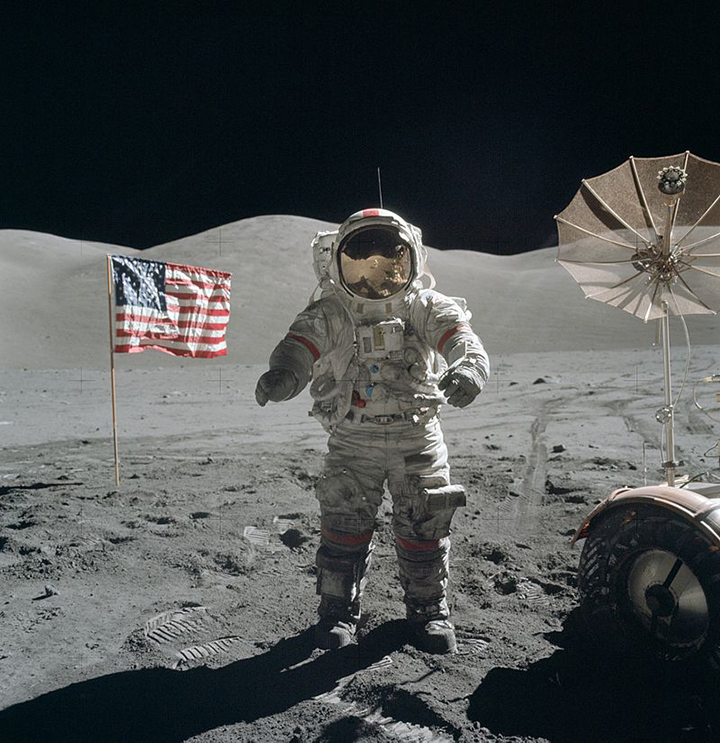
“The Last Man to Walk on the Moon”

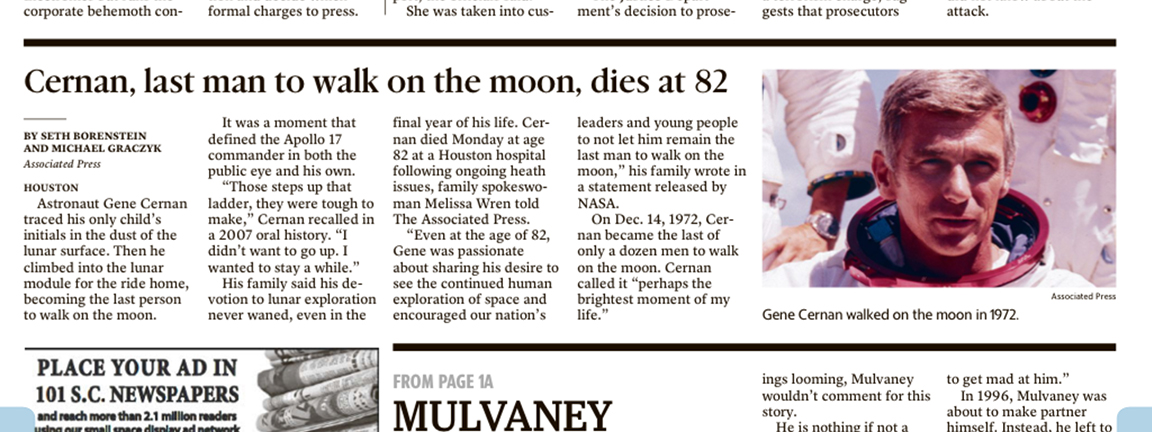
The news was buried deep inside the paper.

The news was buried deep inside the paper.

To someone who grew up in the ’60s, that headline (“The Last Man to Walk on the Moon”) sounds like the title of a dystopian science fiction novel — set in some future several centuries hence in which we’ve rendered the moon even less habitable than it is now, perhaps with radioactivity from the Second Great Interplanetary War.

Cernan on the moon.

Cernan on the moon.

But neither Heinlein nor Herbert nor Asimov nor Bradbury nor the rest could have imagined a future in which, in the near year 2017, we’d be looking back to the last trip to the moon as a thing that happened more than 40 years ago. (OK, maybe one of them did imagine something like that and I missed it. But it would have been a betrayal of the genre. In their stories, bad things might happen out there, but at least we would be there.)

When I was a kid, going to the moon was this super-exciting thing we were going to do in the future, as a necessary step before venturing to Mars and beyond. And now, it’s so far in the past it’s shocking.

Over the weekend, something caused me to think of “the Space Age,” and I was saddened to think of it as a thing in the now-distant past. We had thought we were on the leading edge of something that would last for the rest of human existence. Space travel would soon be like air travel — “2001” told us so!

Instead, after a few flights to the moon, we went backward. We pulled back to boring orbital flight, never again to leave our own backyard. And then we went back further, to where we no longer have the capability to send a man into orbit — astronauts have to catch a ride with the Russians. You know, the people we beat in the Space Race.

Astronauts are now like hobos, riding the rails when they get the chance.

Perhaps we Americans, we humans for that matter, are like the English after Spain discovered the New World — they waited well over a century before sending people to live there. (But if that’s the case, who is Spain, or Portugal?) So maybe someday, long after my generation is gone…

Anyway, those are the kinds of thought I have upon reading this, buried deep inside the paper today:

Astronaut Gene Cernan traced his only child’s initials in the dust of the lunar surface. Then he climbed into the lunar module for the ride home, becoming the last person to walk on the moon….

“Those steps up that ladder, they were tough to make,” Cernan recalled in a 2007 oral history. “I didn’t want to go up. I wanted to stay a while.”

His family said his devotion to lunar exploration never waned, even in the final year of his life. Cernan died Monday at age 82 at a Houston hospital following ongoing heath issues, family spokeswoman Melissa Wren told The Associated Press….

On Dec. 14, 1972, Cernan became the last of only a dozen men to walk on the moon. Cernan called it “perhaps the brightest moment of my life. … It’s like you would want to freeze that moment and take it home with you. But you can’t.”…

When he took those steps up that ladder to leave the moon and never return, so did his nation, his species.

And he was not happy about that.

Now, all our space heroes are dying of old age.

In the ’60s, during the Space Age, we were fired up with energy to meet the challenge that an inspirational president had set for us. I still get goosebumps:

We choose to go to the Moon!… We choose to go to the Moon in this decade and do the other things,[7] not because they are easy, but because they are hard; because that goal will serve to organize and measure the best of our energies and skills, because that challenge is one that we are willing to accept, one we are unwilling to postpone, and one we intend to win

Now, this week, as Astronaut Cernan was breathing his last, our nation prepared to inaugurate… President Trump, whose great aspiration for our country is to build a wall to keep the Mexicans out.

How far we have fallen from the moon, from the stars…

And now, we have China threatening ‘a large-scale war’

China's one and only aircraft carrier, which they bought used./U.S. Navy

China’s one and only aircraft carrier, which they bought used./U.S. Navy

Or rather, we have state-controlled media doing so, which is a signal I think we have to take seriously:

The US risks a “large-scale war” with China if it attempts to blockade islands in the South China Sea, Chinese state media has said, adding that if recent statements become policy when Donald Trump takes over as president “the two sides had better prepare for a military clash”.

China has controversially built fortifications and artificial islands across the South China Sea. Rex Tillerson, Trump’s nominee for secretary of state, said China’s “access to those islands … is not going to be allowed”.

China claims nearly the entire area, with rival claims by five south-east Asian neighbours and Taiwan.

Tillerson did not specify how the US would block access but experts agreed it could only be done by a significant show of military force. Tillerson likened China’s island building to “Russia’s taking of Crimea”.

“Tillerson had better bone up on nuclear power strategies if he wants to force a big nuclear power to withdraw from its own territories,” said an editorial in the Global Times, a Communist-party controlled newspaper….

I’m not disagreeing with anything Tillerson said, mind you — and it’s not all that different from the policy followed by the Obama administration — but the current situation is fraught.

On a previous post about Nikki Haley, Phillip Bush said:

That’s going to be a tough job, representing the views of the United States to the United Nations and the world when your own Administration is going to be one squabbling, Tweeting, contradictory, capricious, incoherent mess, especially on foreign policy. Her greatest challenge will come not from fellow delegates at the UN or on the Security Council, but trying to sort out and gracefully convey the day-to-day contradictions emanating from the government she is appointed to represent….

Yep.

One of the main narratives of this week has been that Trump’s nominees are not toeing the Trump line, particularly on foreign policy. Which in one way is encouraging (the nominees’ take is usually far wiser and better-informed), but in another way can lead to chaotic, incoherent policy, an unstable situation in which an unstable personality (hint, hint) can trigger an international crisis, perhaps even war, with a phone call — or a Tweet.

I have little doubt that Nikki Haley will conduct herself “gracefully,” but I do worry quite a bit about a diplomatic novice representing us on the Security Council without expert supervision and direction. That said, in a crisis, Nikki would be the least of my worries. And of course, the new POTUS would be my greatest.

What if, sometime after next Friday, Chinese state media issues a blustering threat like that, and includes some less-than-flattering reflections on Trump himself? How do you suppose he’ll react? And who will be able to contain him? And will they be in time?

Tim Scott’s celebrated one-word burn

I read about this in The State this morning, but it really didn’t make any sense without the original Tweet:

Tim Scott is the first black Republican U.S. senator from the South since Reconstruction and the only black Republican in the Senate at the moment. He also has announced he will vote for Alabama Sen. Jeff Sessions to become the next attorney general.IPwQ2WC9

Given the allegations of racism that have followed Sessions since he was denied a federal judgeship in 1986, Scott’s decision to support him has been met with plenty of criticism.

And lots of that criticism has come online, especially on Twitter, where Scott has 162,000 followers. But one tweet in particular annoyed Scott. User @Simonalisa blasted Scott and former Sessions aide William Smith by referring to them using a racial slur….

“So I thought it was a good time to tell people what I thought.”…

The original Tweet and the account that produced it had been deleted, but I found a reTweet that reproduced it:

OK, now I get it.

Well played, senator.