Category Archives: The Nation

Who can be as foolhardy and reckless as Trump? The Democrats…

900px-Flag_of_South_Korea.svg

Here’s an excellent example of why it won’t be the Democrats who save us from Trump.

At least, not these Democrats.

Possibly the most foolish thing Trump has done in the last few days (and yeah, I know there are a lot of exciting entries in a crowded field) is this, at the very moment we’re facing an increased threat from North Korea:

President Trump has instructed advisers to prepare to withdraw the United States from a free-trade agreement with South Korea, several people close to the process said, a move that would stoke economic tensions with the U.S. ally as both countries confront a crisis over North Korea’s nuclear weapons program.

Withdrawing from the trade deal would back up Trump’s promises to crack down on what he considers unfair trade competition from other countries, but his top national security and economic advisers are pushing him to abandon the plan, arguing it would hamper U.S. economic growth and strain ties with an important ally. Officials including national security adviser H.R. McMaster, Defense Secretary Jim Mattis and National Economic Council director Gary Cohn oppose withdrawal, said people familiar with the process who spoke on the condition of anonymity to discuss internal White House deliberations.

Although it is still possible Trump could decide to stay in the agreement to renegotiate its terms, the internal preparations for terminating the deal are far along, and the formal withdrawal process could begin as soon as this week, the people said….

You know why those top aides don’t want him to do this, especially now? Because they have brains. They know that free-trade agreements bind nations closer together, aside from producing more wealth overall.

This is absolutely no time for slapping allies in the face in that part of the world — or anywhere, of course.

But fortunately, there’s a loyal opposition out there poised to the save the country from this nonsense, right?

Uhhhh… no (imagine I said that in a Butthead voice). This was in the Post the same day as the above:

 Democrats facing reelection next year in states President Trump won are seizing on trade at this early stage as a crucial issue and a Republican vulnerability.

But rather than jeer Trump’s protectionist positions, Democrats are echoing them and amplifying them, arguing that Trump has failed to fulfill his dramatic campaign promise to rip apart trade deals.

“When we say renegotiating NAFTA, we mean a transformation, something substantial, not just going through the motions,” Sen. Robert P. Casey Jr. (D-Pa.) told union leaders recently, referring to the administration’s talks over the North American Free Trade Agreement.

For Democrats, Casey’s pitch signals a wholehearted revival of their labor roots and a sharp departure from the free-trade tilt of the past two Democratic presidents, Barack Obama and Bill Clinton….

So, according to these Dems, the trouble with Trump is that he’s not Trumpy enough.

Notice how eager they are to repudiate the views of the last two Democrats who won presidential elections?

Brilliant, just brilliant….
How much Harvey coverage is enough?

IMG_1309

OK, people are going to start throwing brickbats at me for being mean and uncaring, an apathetic monster.

But I’m not. In fact, I have relatives I saw just the other day down at the beach who have thus far been unable to return to their homes in Lake Charles. I get the human cost. I care.

I’m just asking, how much coverage of Hurricane Harvey do we need? And my tentative answer is, “Maybe a little less than we’re getting.” Or maybe the same amount, played a little bit differently. Or maybe I’m wrong. It’s just a gut thing, based on my experience the last few days.

I ask this as a guy who has spent most of his life as a newspaper editor, figuring out how best to deploy finite resources — people, space, time. You can’t cover everything, so what will you cover, and to what extent? And how will you present it?

I was part of the team at The State that was a runner-up for the Pulitzer in 1989 for our coverage of Hugo (we’d have won it, too, if San Francisco hadn’t had an earthquake in the middle of the World Series). I’m proud of that wall-to-wall coverage that went on for days, weeks, while our state struggled to recover.

But as someone who is sitting outside the affected area, looking at national media outlets, I have to think the coverage, and/or the play, may be a tad excessive.

You may recall — if you’ve read anything other than Harvey coverage — that a lot of people accused Trump of burying the pardon of Joe Arpaio by doing it as the storm bore down on the Texas coast. But here’s the thing about that: News organizations can still cover such a political development, and play it prominently — if they choose to.

The last couple of days, I’ve started wondering about news organizations’ willingness to do so.

In the past day, North Korea fired a missile over Japan. Meanwhile, it was learned that a guy who worked for Trump reached out to a high Russian official for help in building a Trump tower in Moscow at the height of last year’s election.

You will say, But that’s just petty politics, and we need to take a break from that stuff when there’s something that affects real people happening — such as a big storm.

Well, yes and no. Assertions such as that always bring me back to the First Amendment. The reason the press has that special protection in the Constitution is so that it can make you aware of things you need to know in order to be an informed, empowered voter.

The kinds of decisions that you, as a citizen, are called on to make with regard to Harvey, are limited. You can volunteer to go help, if you see a way you can do so and make a real contribution. You can give money, or donate food or clothing, or give blood, if those things are identified as needs. You can tell your congressman you want him to vote to fully fund FEMA.

And I think that coverage that a) communicates the situation fully, and b) clearly shows how you can help is all to the good. Give us that coverage, and plenty of it.

But cover the other stuff, too. And, yes, that is definitely happening, or I wouldn’t know about those things. But I get the impression that these other important stories are getting pushed to the margins.

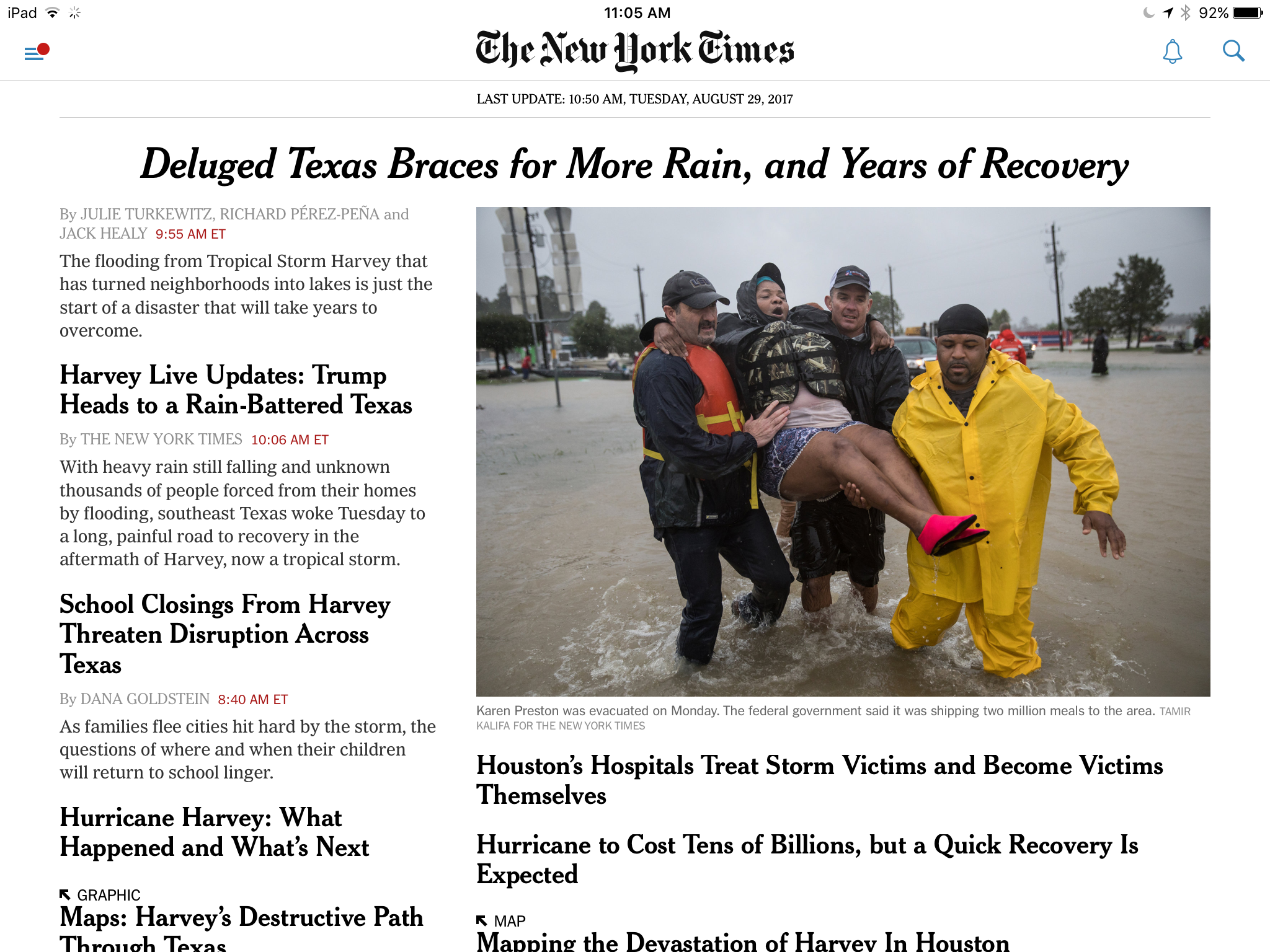
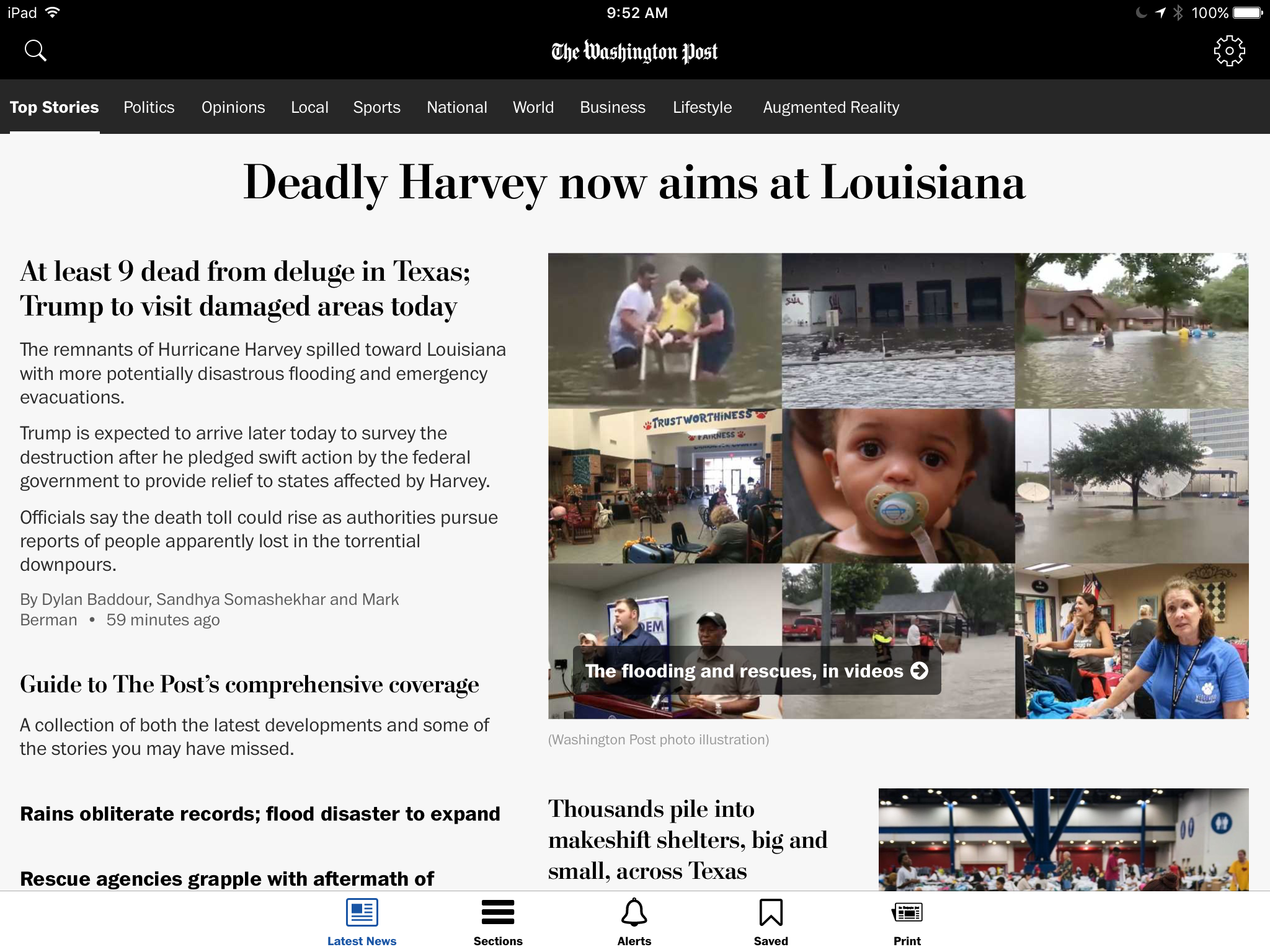
Look at the home pages of The Washington Post and The New York Times, above and below. Those screenshots contain nothing but headlines about Harvey. If you scrolled down on both of those pages, for at least another half a screen, it would be all Harvey.

And to me, that seems a bit… off. What’s wrong with letting people know, in their first glance at your news offerings, that there are other important things happening as well — such as the aforementioned missile over Japan? Harvey could still get the biggest headlines, and the most of them. But give us some balance, some perspective.

It’s a big planet, and most of it is not affected by Harvey. There’s a lot of other stuff going on. Don’t hold back from telling us anything we need to know about Harvey. But tell us the other stuff as well, and don’t bury it.

IMG_1311

Postwar consensus about U.S. role under fire from all directions

He believed in it, and so do I.

He believed in it, and so do I.

On a previous thread, we were having yet another discussion of “American exceptionalism.” Never mind where it started. At some point I said this and Doug said this and I said this and then Phillip weighed in.

And I answered Phillip at sufficient length that I thought it should be a separate post, so here goes:

Seeing as it’s Phillip and I have the greatest respect for him, I’m not going to send my seconds to confer with his seconds over his having called me a liar. Which is the only way I know to take “a feat of semantic gymnastics designed to make yourself feel more virtuous about your viewpoint.”

I’ll just say: Actually, no. There are no gymnastics involved when you’re saying exactly what you mean, and I’m saying exactly what I mean. As I suggested, there are people who DO think that way — the “superiority over” way. As I also said, people who dislike the phrase “American exceptionalism” — generally post-Vietnam liberals (as opposed to pre-Vietnam liberals, who saw things as I do) — like to paint the rest of us with that same brush, as a way of dismissing our views. As though we were a bunch of Steve Bannons or something.

But that’s not the main point I wish to argue. The larger point is that this assertion is completely wrong: “‘Responsibility’ in this case is self-assigned, that is, the United States arrogates for itself this ‘responsibility’ globally.”

Not at all. Through various security and other diplomatic arrangements, other liberal democracies have looked to the United States for leadership and support in many ways since 1945. This is most obvious through NATO, but through other arrangements as well.

Again, I refer y’all to the start of that Foreign Affairs piece:

In the 1940s, after two world wars and a depression, Western policymakers decided enough was enough. Unless international politics changed in some fundamental way, humanity itself might not survive much longer.

A strain of liberal idealism had been integral to U.S. identity from the American founding onward, but now power could be put behind principle. Woodrow Wilson had fought “to vindicate the principles of peace and justice in the life of the world as against selfish and autocratic power and to set up amongst the really free and self-governed peoples of the world such a concert of purpose and of action as will henceforth ensure the observance of those principles.” Keeping his goals while noting his failures, the next generation tried again with a revised strategy, and this time they succeeded. The result became known as the postwar liberal international order.

The founders of the order embraced cooperation with like-minded powers, rejecting isolationism and casting themselves as player-managers of an ever-expanding team. They bailed out the United Kingdom, liberated France, rehabilitated Germany and Japan, bound themselves to Canada and Mexico, and more. And for seven decades, the allies were fruitful, and multiplied, and waxed exceeding mighty.

Then arose up a new king who knew not Joseph….

And we know who that king is.

But it’s not just about him. If you go back to that thread where this discussion initiated, you’ll see that Doug enthusiastically applauded the comment from Phillip with which I argued. You may not think of those guys as being two peas in a pod, politically. And you certainly wouldn’t identify Phillip with Trump. Well, that brings me to my next point.

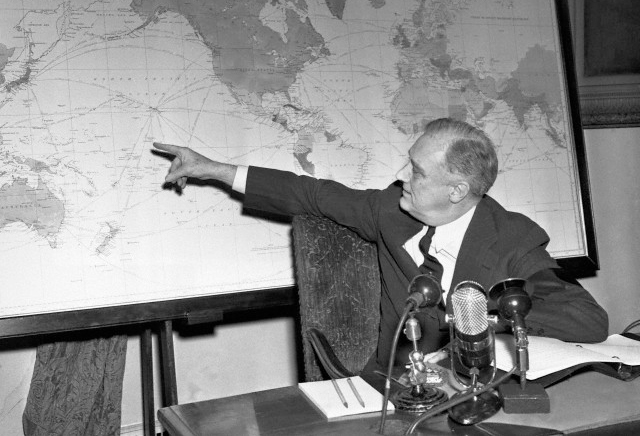
A startling array of people coming from many places on the political spectrum simply don’t believe in the postwar consensus that formed under FDR and Truman.

For a generation, that consensus stayed strong and almost unchallenged, with Democrats and Republicans differing mainly over how best to fulfill that role. Then things started breaking up over Vietnam, but the basic assumption that this country had obligations in the world continued, with variations in emphasis, through the Obama administration.

Now, it’s really under siege.

I mentioned Steve Bannon earlier. He, of course, doesn’t believe in our international obligations in part because he believes the U.S. is inherently superior. He’s sort of like those Chinese emperors who, with China positioned at least as well as Portugal and Spain to become a global trading and naval power, suddenly closed their country off to the world, under the theory that China was the center of the universe and superior to all other nations, so why have dealings with them?

Then there are the post-Vietnam liberals to whom I referred, and I hope Phillip doesn’t mind if I put him roughly in that category — I stand ready to be corrected if I’m being presumptuous. I hate to be labeled, so I hesitate to do it to my friends.

Then there are the libertarians like Doug and the Pauls, Ron and Rand. They hate the idea of the United States having a military for anything much beyond patrolling the border with Mexico. (No, wait — that last part took me back to Bannon.)

Then there are the socialists, the Bernie Sanders types, who in opposition to the libertarians WANT a big state, but they only want it to exist to shower blessings on the populace domestically. They get impatient at the very idea of talking foreign affairs. This is in some ways like the post-Vietnam liberals, only much more so.

Then there are the ideological extremists who have taken over the Republican Party, sharing some characteristics with the Bannon types and some with the libertarians. They can’t see over the edges of the narrow boxes they build around themselves, much less see beyond our borders.

The all have their motivations. One group just wants the U.S. to strut, out of the world’s reach. Another wants America to be humble. Another wants it to be small. Another wants it to be inward-looking, solipsistic. Another can’t see anything past the next GOP primary.

There’s no room in any of their views for a United States that would “pay any price, bear any burden, meet any hardship, support any friend, oppose any foe to assure the survival and the success of liberty.”

Anyway, that thing that JFK said there? That’s American exceptionalism.

Graham’s enthusiastic response to Trump’s Afghan plan

Trump still

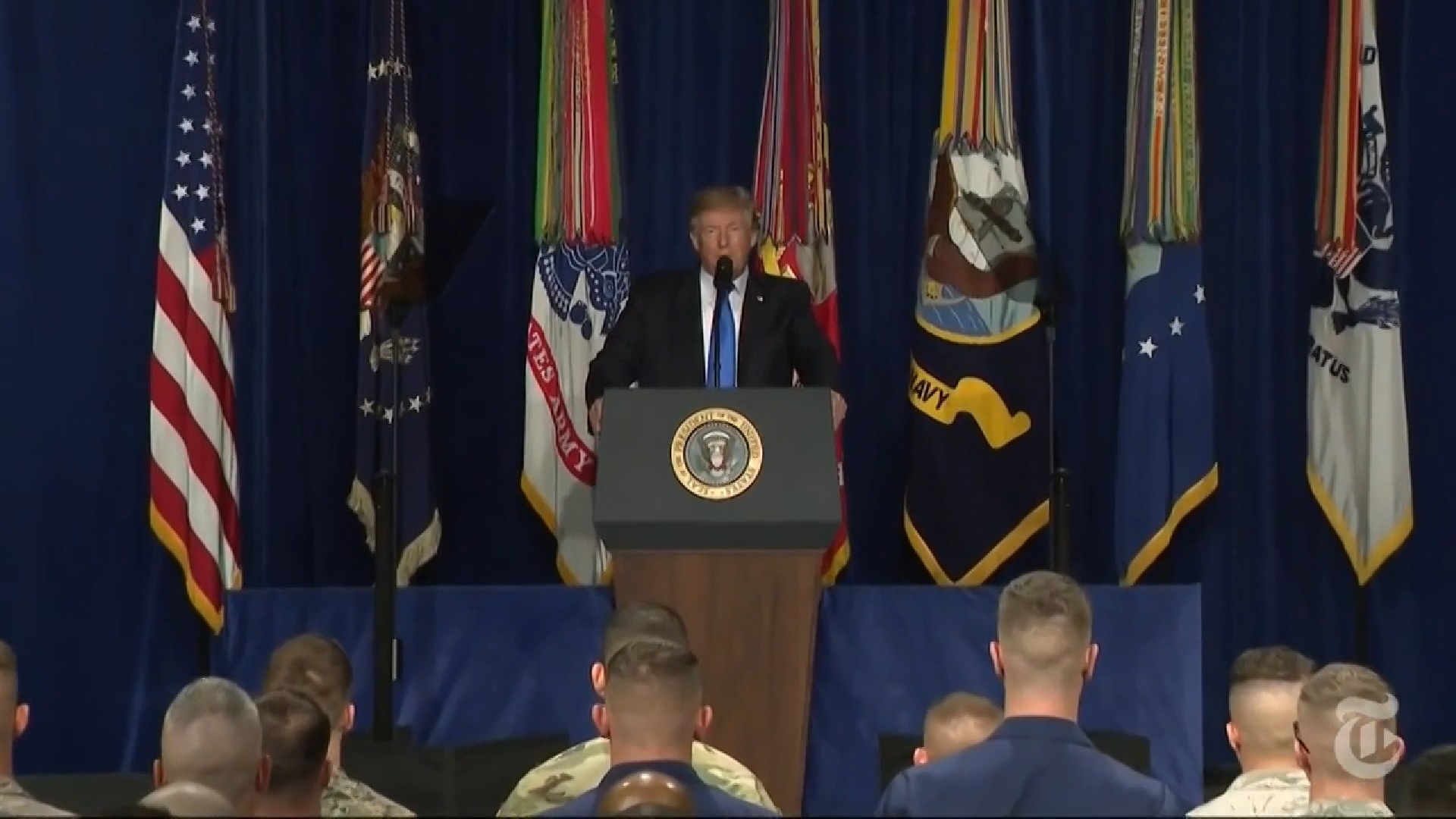
I missed Trump’s speech last night because I was writing that post about Jack Van Loan — and was surprised when I went back downstairs to find that it was over. I thought I’d catch at least some of it.

But I’m familiar with the gist. And since I got this response from Lindsey Graham today, I’ll use that as a device to get into the subject:

Graham: “Gloves Are Off Inside Of Afghanistan”

WASHINGTON – U.S. Senator Lindsey Graham (R-South Carolina) last night on Fox News reacted to President Trump’s new Afghanistan strategy.

Ø  GRAHAM: “I think there will be a lot of bipartisan support in Congress for this new proposal. I’m proud. I’m relieved. I’m proud of the fact that President Trump made a national security decision, not a political decision. I’m proud of the fact that he listened to the generals. I’m most proud of the fact that he shows the will to stand up to radical Islam.” https://youtu.be/2oZhfvbGd9c?t=9s

Ø  GRAHAM: “We’re going to make our decisions based on conditions on the ground, not on the arbitrary passing of time. So hats off to President Trump for not becoming General Trump. Because General Obama was a real lousy general, and that’s part of the mess we’re inheriting…” https://youtu.be/2oZhfvbGd9c?t=2m49s

First, let me say that while I, too, disagreed with him on Afghanistan, I would take President Obama — or either Bush, Clinton or Reagan — back in a skinny minute if it meant getting rid of Trump. And I could really do without the silly red-meat stuff about “gloves are off” and “the will to stand up to radical Islam.” It’s silly, and undermines serious people’s ability to take him seriously. He’s a smart man; he can express himself more intelligently, however much he wants to repair relations with what is euphemistically called “the base.”

Next, I’ll shift gears and express my great relief that for once, Trump seems to have allowed himself to learn from experts rather than going with his gut. That’s a big step. We’d be in a lot better shape if he’d learn to listen to ALL experts, and not just the generals — although listening to generals is a fine start.

Finally, I agree with Graham and Trump that setting deadlines to leave Afghanistan is the worst of ideas.

My rule of thumb is this: If we send troops into a situation with a departure date in mind, we shouldn’t send the troops in at all. Nor should we set dates for departure after we send them in. That makes it almost impossible to achieve military objectives, whatever the objective. (“Hey, enemy, just hunker down and wait until this date, and you can take over!”)

And that’s about it, except to say again that it’s a relief to see Trump listening to people who actually know what they’re talking about, for once. Wherever we go from here in Afghanistan, this is far better than a commander-in-chief calling the shots on the basis of grossly ill-informed whim.

But my relief isn’t so enormous that I’m going to gush about it the way Graham did…

Here’s what I mean by my essential Tory sensibility

I expect respect for fundamental institutions, such as the rule of law.

I expect respect for fundamental institutions, such as the rule of law.

I’m a conservative guy, on a fundamental level. I sometimes refer to my “Tory sensibility,” and I may be using the words incorrectly, not being a Brit, but at least I know what I mean. And in response to a comment by Doug back here, I tried to explain to others what I mean. And it got long enough that I decided it should be a separate post, because, you know, why waste all that typing?

When I say “conservative,” I mean it in a conservative sense, a traditional sense. No, I’m not trying to claim intellectual descent from Edmund Burke, because frankly I’ve never read Burke. In fact, the whole Burke thing confuses me: How could he be the father of conservatism, and be a Whig?

No, I’m more self-taught in this regard. And, quite frankly, even though I tend to pride myself on thinking things through rationally, this is a gut thing. (That’s what liberals think all conservatism is, don’t they — viscera over mind?) And in fact, it may not be self-taught as much as it relates to things I learned when I was so young I don’t remember learning them, things as basic as how you ought to treat other people (short version: with respect) and such.

And this gut thing of mine causes me to feel disgust at so many who insist that they are “conservative,” when they are institution-destroying radicals. I tried getting at this in early 2008, in a column headlined “Give me that old-time conservatism.” (That link was to The State‘s version, which I was pleased and surprised to find still up. Here’s the blog version, which includes links.)

What returns me to the subject was that call from Jack Van Loan last night, and some of the comments from my blog friends. Doug wrote:

There are more and more players this season who are sitting for the anthem. Marshawn Lynch is probably the most visible right now. To me, it’s a relatively harmless (and probably useless) way for a person to express his displeasure with the events of the day. The best course would be to ignore them if you disagree rather than try to vilify them….

I responded more or less as follows…

It’s outrageous. It’s completely uncivilized behavior. I don’t care what your issue is, you don’t do something that amounts to a general “F___ You!” to the entire nation over that one issue. (OK, I did something inconsistent with my own sensibilities there — chalk it up to my strong feelings on the issue, and my wish to engage the interest of moderns.)

(To elaborate on that point, Doug responded facetiously to my reply by saying “I must have missed Rosa Parks’ pamphlet: ‘Top Ten Reasons I Should Sit In The Front of the Bus’.” Which offered me a perfect opportunity to explain further: What Rosa Parks did was moderate, measured, proportional and to the point. She’d had enough of being disrespected, so she didn’t move. What the football player did was as different from that as night from the day. He flipped off the whole country in order to make an unrelated point. And if you think it is relevant and proportional to the point — if you think the whole country is rotten (which is what disrespecting the flag says) because on rare occasions (proportionally) a cop engages in violence that may or may not be based in his own personal racial attitudes — then you’re not thinking clearly. It’s a matter of focus, a matter of specificity, a matter of clarity.)

This is where my essential, bedrock conservatism comes into play. Real conservatism, not the nihilistic garbage that so many loudly proclaim these days.

I don’t ask much from people in the way of acting civilized. I just expect them not to go out of their way to do things that amount to a slap in the face to their fellow citizens, things that flip off our essential institutions.

I don’t ask you to go to my church. But I expect some respect toward that fundamental institution, toward all such fundamental institutions. If I were an atheist, I’d be a devout one. When someone said a prayer in my presence, I’d respectfully bow my head and be silent until they were done. Because to do otherwise would be disrespectful to the person and his beliefs. It’s like when I was in Thailand, and this lady who had hosted and fed us for two days in her home invited us to kneel beside her at the little Buddhist altar in her home to pray for our safety on the rest of our journey (or so my daughter explained, this being all in Thai), I gladly knelt and bowed my head. If I’d known the Thai for “amen,” I’d have thrown one in. When in Rome.

I feel the same way about other institutions of our civilization (and whatever civilization I’m visiting) — the government, our courts, public schools, the Constitution, the Rule of Law, the military, the national anthem, the flag, and yes, motherhood, the girl next door and apple pie (even though I am allergic to apple pie, so that it benefits me on no way). And I expect a modicum of respect for these things from my fellow citizens. They don’t have to exert themselves; they just need to not go out of their way to insult these things.

And when they do, forgive me if I don’t pay attention to the issue they’re trying to dramatize. If you want to advocate an issue, use your words — don’t use unfocused gestures of insult toward the whole society. That is childish, and I would add, barbaric — senselessly destructive. And I’m not going to hear you.

Use your words.

And yes, motherhood and apple pie and the Girl Next Door (Frank Capra version). Welcome home, George Bailey!

And yes, motherhood and apple pie and the Girl Next Door (Frank Capra version here). Welcome home, George Bailey!

About what happened in Charlottesville…

Lee

Y’all, I’ve had quite a few thoughts about this, but they’re all pretty involved and would take me time to develop and I haven’t had the time. But for now, I’ll do what I should have done Saturday — put up a sort of Open Thread devoted to what happened at Charlottesville, so y’all can get a conversation rolling.

Some possible avenues of exploration:

  1. Trump’s statement — As I’ve said many times before, I don’t think the president’s job description should, normally speaking, include issuing statements in reaction to every traumatic thing that happens across the country. But if he’s going to say something, it should be something that, for starters, doesn’t make matters worse. Trump utterly failed to meet that standard. And it wasn’t just his usual complete lack of thoughtfulness or hamhandedness with the English language. We know why he responded the way he did: He does not share the fundamental values of most Americans. He actually values the rock-solid backing of white supremacists, and doesn’t want to say anything that erodes that support.
  2. How do we prevent such violence without violating the 1st Amendment? If the ACLU stood up for the “right” of Illinois Nazis to march through Skokie, surely it would sue to uphold that right with this latter-day group of racist yahoos. And who’s to say the ACLU would be wrong? Personally, I think they were wrong in the Skokie days — sure, the Hitler fan club had the right to say what it wanted, but letting them do it in Skokie is too much of an offense against human dignity to allow it. This case seems fuzzier. Again, yes, they have free speech rights. But they went out of their way to express themselves in a place guaranteed to create as much tension, and likely violence, as possible. Should that be allowed? Does the free-speech clause guarantee freedom of venue? Such as, say, a crowded theater?
  3. If there would to be such a rally in Columbia, would you attend? I mean to protest, or for any other reason. Would you see yourself as having an obligation to show up in public to register your disapproval, or would you dismiss it by staying away and not giving the Brownshirt types the attention they crave? I can see arguments both ways.
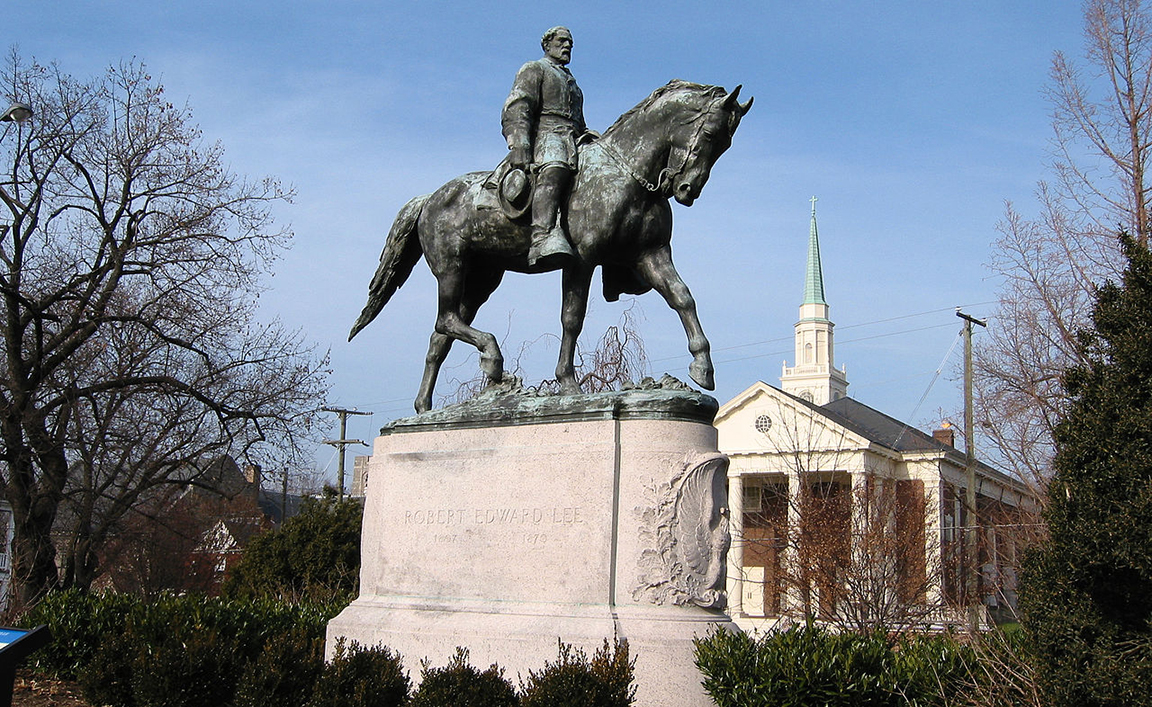
  4. What about that Robert E. Lee statue? I hesitate to mention this because I don’t want to dignify the supposed “issue” that motivated the demonstration. But I mention it only to say that I have no position on the “issue.” What the University of Virginia chooses to display or to take down is none of my business, and I think Charlottesville homeboy Thomas Jefferson would back me on that. I feel like we have enough going on here in South Carolina and don’t need to weigh in on what they do up there. I would argue that any of those white supremacists who were not from Virginia lack such standing as well…

Anyway, that’s for starters. Happy conversing…

Keep him WAY down in the hole….

This morning while working out on my elliptical trainer, I rewatched an episode of the second season of “The Wire,” and rather than skimming through the opening credits — something a bit harder to do on the Roku and have it stop where I want it — I listened to the song.

Guess which part of the words grabbed my attention, in light of current news?

… He’s got the fire and the fury
at his command.
Well, you don’t have to worry
if you hold on to Jesus’ hand.
We’ll all be safe from Satan
when the thunder rolls;
just gotta help me keep the devil
way down in the hole.

Yikes. Suddenly lyrics I’d heard a hundred times grabbed me in a whole new way….

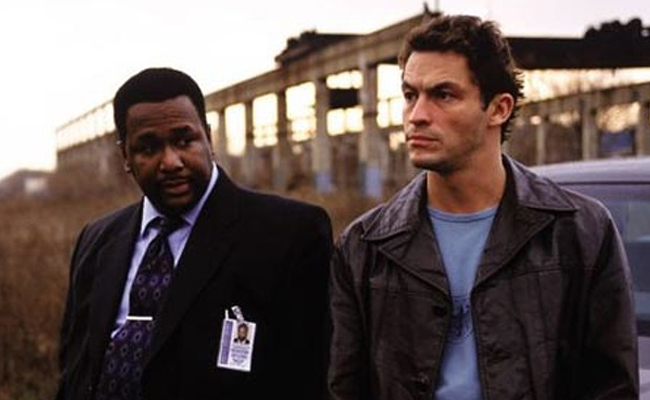
How would Bunk and McNulty deal with North Korea?

How would Bunk and McNulty deal with North Korea?

Is Mulvaney ‘The most dangerous man in Washington?’

Mulvaney

That’s what Catherine Rampell of The Washington Post claims.

(Well, to be clear, what she means is the second most dangerous man in Washington, which she acknowledges.)

Here’s why:

It’s Mick Mulvaney, director of the Office of Management and Budget.

In terms of both immensity and immediacy, the threat Mulvaney presents is far greater than any of the slow-motion train wrecks happening elsewhere in the administration. That’s because he seems hell-bent on wreaking a global crisis within the next two months.

Not a century from now. Not a decade from now. In two months.

That’s when the government will run out of money needed to pay bills Congress has already incurredaccording to Treasury Secretary Steven Mnuchin, if Congress does not act to raise the debt limit.

What would follow? Just a constitutional, political and global financial crisis….

OK. That would be bad. Important safety tip. Although I may not think about financial matters more than I’m forced to, even I understand — apparently better than the administration’s budget guy — why protecting the full faith and credit of the United States is important. But most dangerous? Maybe. But as much as I might be inclined to root for a fellow South Carolinian, I think some of the other people she names have pretty good claims to the title:

It’s not the guy in charge of our nuclear arsenal, who may or may not have realized that was the core of his job description before accepting the post (Rick Perry).

Nor is it the woman meeting with men’s rights advocates (Betsy DeVos).

And it’s not the guy who keeps adding financial assets and meetings with Russian officials to his federal disclosure forms (Jared Kushner).

It’s neither of the guys rolling back climate change regulations and sidelining scientists at the Environmental Protection Agency and Interior Department (Scott Pruitt and Ryan Zinke, respectively)….

But yeah, what Mulvaney wants to do is bad, almost in the Egon sense, financially speaking…

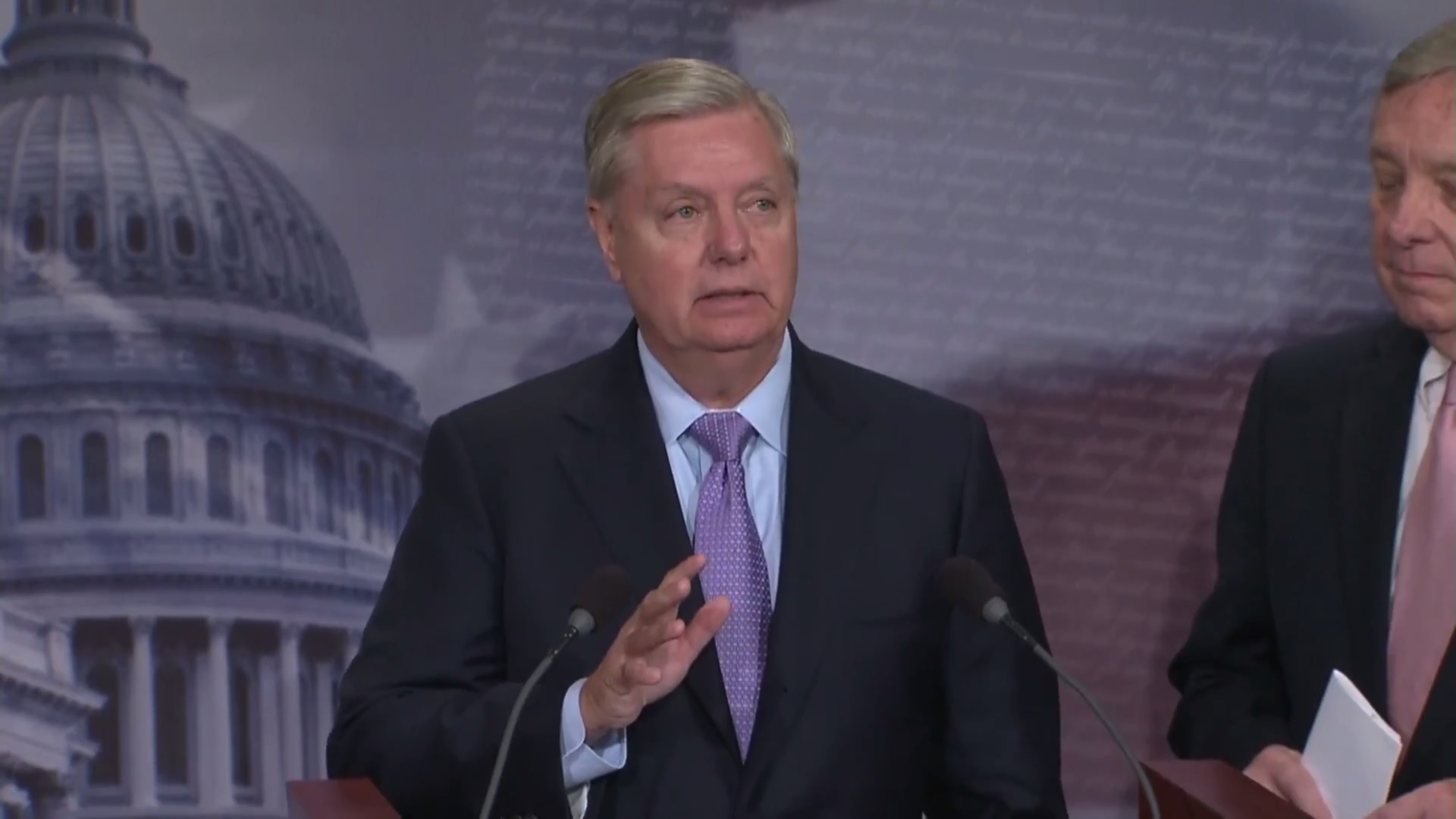
Meanwhile, Graham steps up with Dream Act

graham dreamers

Even as I was saying that with his particular friend John McCain out of action, the country really needed Lindsey Graham to step up… he was doing so.

Today, he and Democratic Sen. Dick Durbin announced they were introducing the Dream Act. Here’s a release about it:

GRAHAM, DURBIN INTRODUCE BIPARTISAN DREAM ACT TO GIVE IMMIGRANT STUDENTS A PATH TO CITIZENSHIP

WASHINGTON — U.S. Senators Lindsey Graham (R-SC) and Dick Durbin (D-IL) today introduced the Dream Act, which would allow immigrant students who grew up in the United States to earn lawful permanent residence and eventually American citizenship.  These young people, known as Dreamers, have lived in America since they were children, built their lives here, and are American in every way except for their immigration status.  However, under current law they live in fear of deportation and have no chance to ever become citizens and fulfill their potential.

“These young people have lived in America since they were children and built their lives here,” said Graham.  “There is support across the country for allowing Dreamers — who have records of achievement — to stay, work, and reach their full potential.  We should not squander these young people’s talents and penalize our own nation.  Our legislation would allow these young people – who grew up in the United States – to contribute more fully to the country they love.  They have a powerful story to tell and this may be an area where both parties can come together.”

“Hundreds of thousands of talented young people who have grown up in our country are at risk of deportation to countries they barely remember.  I’ll do everything in my power as a United States Senator to protect these Dreamers and give them the chance to become American citizens so they can contribute to a brighter future for all Americans,” said Durbin.  “I first introduced the Dream Act 16 years ago and I’ll continue fighting until it becomes the law of the land. I thank Senator Graham for partnering with me in this bipartisan effort.”

The Dream Act would allow these young people to earn lawful permanent residence and eventually American citizenship if they:

  • Are longtime residents who came to the U.S. as children;
  • Graduate from high school or obtain a GED;
  • Pursue higher education, work lawfully for at least three years, or serve in the military;
  • Pass security and law enforcement background checks and pay a reasonable application fee;
  • Demonstrate proficiency in the English language and a knowledge of United States history; and
  • Have not committed a felony or other serious crimes and do not pose a threat to our country.

A one-pager of the Dream Act is available here.  A section-by-section of the Dream Act is available here.

-30-

We’ve needed both Graham and McCain’s leadership on immigration, which had waned somewhat in recent years. Because if they don’t step up, who among the majority will?

Here’s video of Graham’s and Durbin’s announcement (It doesn’t actually start until 23 minutes in.):

Editing the Declaration of Independence

I spent part of the long holiday weekend rewatching an episode or two of HBO’s John Adams.

Of course, being me, I love the scene that depicts the editing of the Declaration of Independence.

If you’ll recall, Adams, Ben Franklin and Thomas Jefferson were appointed as a committee to draft the Declaration. Then, Adams had talked Jefferson into doing the actual writing, citing his skill with the written word and the fact that Adams himself was far too busy (aside from sitting on various committee, Adams was bearing the greatest share of the burden of arguing for independence, while Jefferson never opened his mouth during the debate).

In this scene, Adams and Ben Franklin are getting their first look at what Jefferson has written, and reacting to it, and offering changes. Having been in this situation myself so many thousands of times with writers who sometimes regarded their words as perfect, I enjoyed watching the dynamics.

First observation: Adams starts out by praising Jefferson’s work to the skies — a fitting approach given the document he’s editing, but one that is wildly at odds with my own approach. As Dave Moniz used to say when he worked for me, the highest praise I ever offered of writers’ work was “pretty good.” Maybe I should have tried this approach; it seems to have led to a good result.

Then there is Jefferson’s unnerving passivity through most of the process — an almost autistic lack of emotion. I’ve had writers fly off the handle at my changes, or be philosophically diplomatic about it. But never anyone with this staring, shrugging apathy. Change to “self-evident?” Yeah, whatevs…

Even when Adams says some of it might not be the way he would have said it, but he will still defend every word, Jefferson has no gratitude, but shrugs, “Well, it’s what I believe…”

Nevertheless, Jefferson proves he’s not an automaton when Franklin (being a newspaper editor himself, Ben had a knack for this) finally gets a rise out of him, and Jefferson says, still in that cold-fish voice, “Every single word was precisely chosen. I assure you of that, Dr. Franklin.” To which Franklin, unfazed, essentially says yeah, that may be the case, but you don’t get the final word; we’ve got to get this thing through Congress.

Adams was (in an unaccustomed role for him) cheerleading the document, while Franklin was determined to edit it. Normally, I’m an Adams fan, but in this case, it’s Ben I identified with. You can’t let writers get an exaggerated sense of their own importance. What do they think they are, editors?

Anyway, this is my belated Independence Day post…

franklin-jefferson-adams-writing-the-declarationcropped1

About that question: Can words kill people?

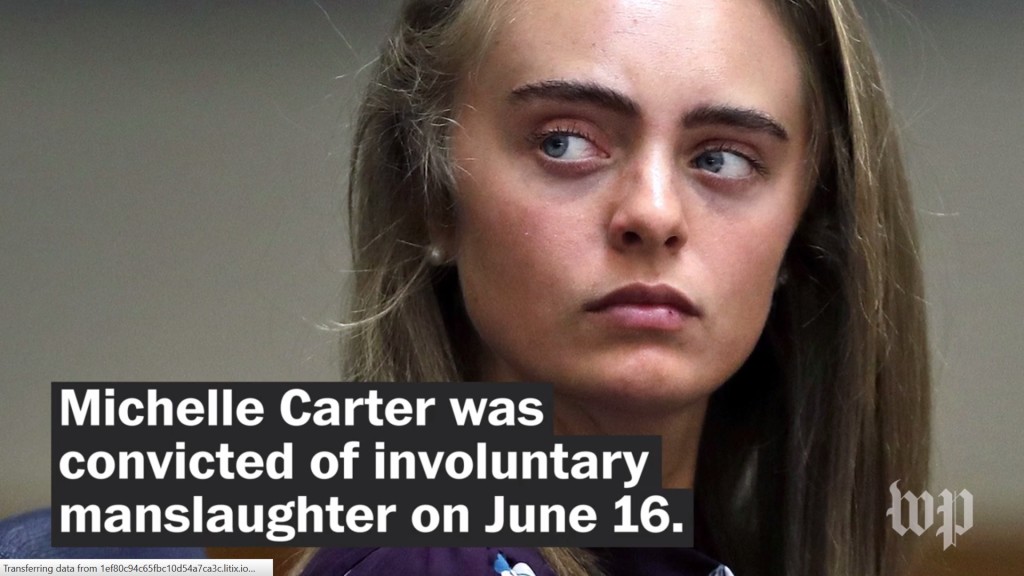
girl

I generally stay away from “people being beastly on the internet” stories because I’m just too busy with politics, policy and pop culture.

But this past week there were two horror stories that totally boggled what little mind I allowed to get distracted by them. Ironically, we had just had a discussion about cruel and unusual punishment when a prime candidate for such treatment was in the news: The monster who dangled his baby out a 15th-story window in a bid for Facebook “likes.” (Note that my link is to the Daily Mail, which seems the perfect setting for such a story.) You know how FB recently added those alternatives to “like”? For this guy, they need to add an “If I ever meet you in person, I’m breaking both of your arms so you can’t do that again” button.

Then there was the case Kathleen Parker wrote about under the headline, “Can words kill people?” It’s about “Michelle Carter’s conviction last week on involuntary-manslaughter charges in the 2014 suicide of her 18-year-old boyfriend, Conrad Roy III.” Excerpt:

At the time of the suicide, Carter was a 17-year-old whose boyfriend spoke frequently of taking his own life. He finally did by filling his parked truck with carbon monoxide. Mind you, Carter was nowhere near. She had no physical hand in the death, although she did text and call Roy, urging him to go ahead and do it. When he had second thoughts and got out of his vehicle, she instructed him to get back in.

Manslaughter? Evil? Or just dumb?

If Carter’s words were Roy’s death sentence, then his death was hers, if not literally, then, indeed, virtually. For her clearly tangential role, which one could as easily interpret as drama-queen excess, Carter faces up to 20 years in prison. Sentencing is scheduled for Aug. 3.

It is easy to feel outrage at what transpired. Prosecutors introduced hundreds of text messages between Roy and Carter in which she encouraged him to end his life and sometimes taunted him for his lack of courage. In one, she wrote: “You’re ready and prepared. All you have to do is turn the generator on and you will be free and happy. No more pushing it off. No more waiting.”

This alone is enough to make one dislike or even despise Carter. But is it enough to blame Carter for Roy’s death?…

Kathleen concluded that no, it isn’t. I was unsatisfied with that conclusion.

The columnist asks, “Manslaughter? Evil? Or just dumb?” The best of the three would seem to be evil. You read the words she wrote to this boy on the edge, and your blood runs cold. Mine does, anyway.

In terms of how to approach such a thing in the criminal justice system, manslaughter seems inaccurate. And I’m not sure how the law works on aiding and abetting. What should be the charge for being a cheerleader at a boy’s death?

There is evidently something essential missing in this girl, and at the very least it seems she should be confined somewhere until experts can figure out what it is, and whether it’s possible to fill that void.

Because anyone who will do what she did — repeatedly, insistently, matter-of-factly — is dangerous….

Donald Trump and Barack Obama on social media today

Let’s do a little compare-and-contrast.

Today, Senate Republicans released their health-care proposal, which apparently is almost, but not quite, entirely like the abominable House plan:

WASHINGTON — Senate Republicans, who have promised a repeal of the Affordable Care Act for seven years, took a major step on Thursday toward that goal, unveiling a bill to make deep cuts in Medicaid and end the law’s mandate that most Americans have health insurance.

The 142-page bill would create a new system of federal tax credits to help people buy health insurance, while offering states the ability to drop many of the benefits required by the Affordable Care Act, like maternity care, emergency services and mental health treatment…

Anyone checking to see what the president of the United States had to say about it via his favored mode of communication was disappointed. He didn’t address it. Here are his last two Tweets as of this posting:


How do you like that? He went into depth! Two whole Tweets on one topic! His other Tweets today were more or less in the usual “it’s all about me, and everybody else is to blame” mode.

Meanwhile, Barack Obama, who no longer gets paid to do this stuff, had this to say on Facebook:

Our politics are divided. They have been for a long time. And while I know that division makes it difficult to listen to Americans with whom we disagree, that’s what we need to do today.

I recognize that repealing and replacing the Affordable Care Act has become a core tenet of the Republican Party. Still, I hope that our Senators, many of whom I know well, step back and measure what’s really at stake, and consider that the rationale for action, on health care or any other issue, must be something more than simply undoing something that Democrats did.Barack Obama Facebook

We didn’t fight for the Affordable Care Act for more than a year in the public square for any personal or political gain – we fought for it because we knew it would save lives, prevent financial misery, and ultimately set this country we love on a better, healthier course.

Nor did we fight for it alone. Thousands upon thousands of Americans, including Republicans, threw themselves into that collective effort, not for political reasons, but for intensely personal ones – a sick child, a parent lost to cancer, the memory of medical bills that threatened to derail their dreams.

And you made a difference. For the first time, more than ninety percent of Americans know the security of health insurance. Health care costs, while still rising, have been rising at the slowest pace in fifty years. Women can’t be charged more for their insurance, young adults can stay on their parents’ plan until they turn 26, contraceptive care and preventive care are now free. Paying more, or being denied insurance altogether due to a preexisting condition – we made that a thing of the past.

We did these things together. So many of you made that change possible.

At the same time, I was careful to say again and again that while the Affordable Care Act represented a significant step forward for America, it was not perfect, nor could it be the end of our efforts – and that if Republicans could put together a plan that is demonstrably better than the improvements we made to our health care system, that covers as many people at less cost, I would gladly and publicly support it.

That remains true. So I still hope that there are enough Republicans in Congress who remember that public service is not about sport or notching a political win, that there’s a reason we all chose to serve in the first place, and that hopefully, it’s to make people’s lives better, not worse.

But right now, after eight years, the legislation rushed through the House and the Senate without public hearings or debate would do the opposite. It would raise costs, reduce coverage, roll back protections, and ruin Medicaid as we know it. That’s not my opinion, but rather the conclusion of all objective analyses, from the nonpartisan Congressional Budget Office, which found that 23 million Americans would lose insurance, to America’s doctors, nurses, and hospitals on the front lines of our health care system.

The Senate bill, unveiled today, is not a health care bill. It’s a massive transfer of wealth from middle-class and poor families to the richest people in America. It hands enormous tax cuts to the rich and to the drug and insurance industries, paid for by cutting health care for everybody else. Those with private insurance will experience higher premiums and higher deductibles, with lower tax credits to help working families cover the costs, even as their plans might no longer cover pregnancy, mental health care, or expensive prescriptions. Discrimination based on pre-existing conditions could become the norm again. Millions of families will lose coverage entirely.

Simply put, if there’s a chance you might get sick, get old, or start a family – this bill will do you harm. And small tweaks over the course of the next couple weeks, under the guise of making these bills easier to stomach, cannot change the fundamental meanness at the core of this legislation.

I hope our Senators ask themselves – what will happen to the Americans grappling with opioid addiction who suddenly lose their coverage? What will happen to pregnant mothers, children with disabilities, poor adults and seniors who need long-term care once they can no longer count on Medicaid? What will happen if you have a medical emergency when insurance companies are once again allowed to exclude the benefits you need, send you unlimited bills, or set unaffordable deductibles? What impossible choices will working parents be forced to make if their child’s cancer treatment costs them more than their life savings?

To put the American people through that pain – while giving billionaires and corporations a massive tax cut in return – that’s tough to fathom. But it’s what’s at stake right now. So it remains my fervent hope that we step back and try to deliver on what the American people need.

That might take some time and compromise between Democrats and Republicans. But I believe that’s what people want to see. I believe it would demonstrate the kind of leadership that appeals to Americans across party lines. And I believe that it’s possible – if you are willing to make a difference again. If you’re willing to call your members of Congress. If you are willing to visit their offices. If you are willing to speak out, let them and the country know, in very real terms, what this means for you and your family.

After all, this debate has always been about something bigger than politics. It’s about the character of our country – who we are, and who we aspire to be. And that’s always worth fighting for.

See which you find more valuable…

Left, right; left, right; left, right… Give it a REST, people!

congressional

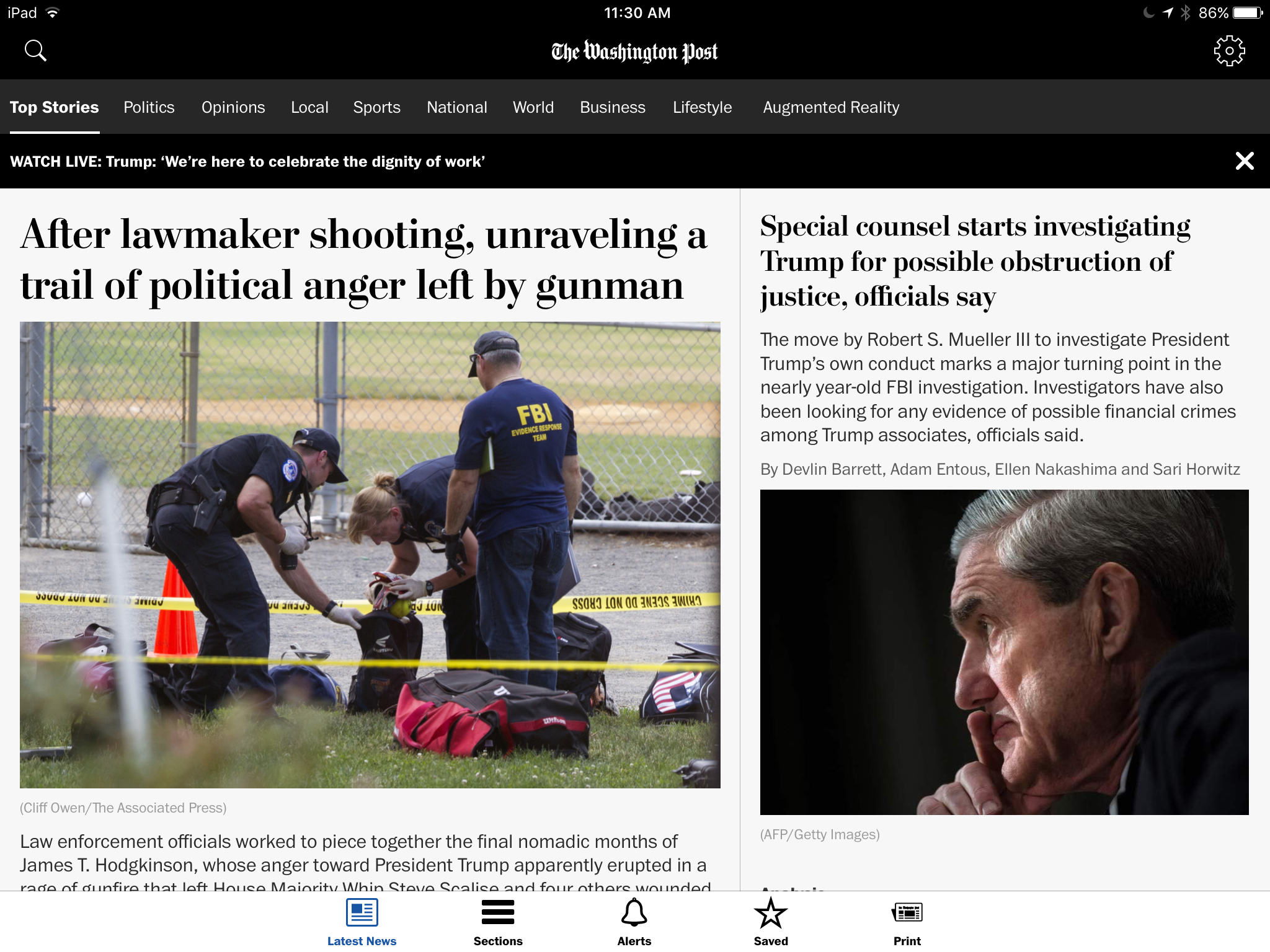
This morning, I was surprised to see that The Washington Post didn’t lead with their big scoop, which I had heard about on the radio first thing, on my way to my 8 a.m. dental appointment:

The special counsel overseeing the investigation into Russia’s role in the 2016 election is interviewing senior intelligence officials as part of a widening probe that now includes an examination of whether President Trump attempted to obstruct justice, officials said.

The move by special counsel Robert S. Mueller III to investigate Trump’s conduct marks a major turning point in the nearly year-old FBI investigation, which until recently focused on Russian meddling during the presidential campaign and on whether there was any coordination between the Trump campaign and the Kremlin. Investigators have also been looking for any evidence of possible financial crimes among Trump associates, officials said…

That’s so much bigger than other turn-of-the-screw stories that have led the paper in recent months.

Instead, the paper led with the congressional-baseball shooting, which of course is HUGE, especially if you’re published in Washington, but there was nothing new since last night. Rep. Scalise (may God send his healing grace upon him) was in critical condition yesterday, and he still was today.

But I guess I was wrong, based on what I heard on the radio later on a call-in show. Apparently the latest murderous nut-job case was Filled With Historic Political Significance, to hear what folks were saying.

Sorry that I didn’t take notes — I was driving — but it went kind of like this:

A man calls in and blames the shooting on the Left. After all, this guy was a lefty (so of course every liberal in the country was to blame). And he was made about Trump (so everyone who is mad that Trump is president is to blame). He had some kind of complicated theory about this all being part of the Left’s campaign against free speech, somehow connected to all the silly “safe zone” nonsense on college campuses. He explained that people were expressing themselves politically by electing these Republican lawmakers, who were delegated to speak for those people, and this guy was trying to shut them up by killing.

He was immediately followed by a woman who had zero hesitation about blaming it on the Right. After all, Trump had encouraged violence at his rallies, and didn’t Ted Nugent say something about assassinating Obama, and Trump invited him to hang out for hours at the White House? Therefore, she implied, everyone to the right of center was to blame for this, yadda-yadda.

Oh, come on, people! This isn’t a left-right thing. I mean, I was pretty disturbed by the whole Bernie Sanders billionaires-are-oppressing-us-all-and-we-must-get-angry-and-rise-up-against-them shtick, but it’s an outrage to suggest that even Bernie Sanders (whom the shooter supported) is in any way to blame for this, much less every other liberal in the country.

Obviously, such thinking must be refuted. But to do so by trying to turn it around and blame on conservatives everywhere is equally absurd.

Give it a rest, people! Not everything is an expression of the left-right dichotomy that you seem to think explains everything in the world. In fact, most things aren’t.

What we have here is a nut, one who went on a murderous rampage for reasons particular to him, which we’ll never know for sure because, as a result of what he did, he’s dead.

If there’s a political point to be made, it’s the one I made yesterday: It’s too easy for homicidal nuts to get their hands on guns. If we’d all like to have a constructive conversation about doing something to prevent that, great. But in this atmosphere, I’m not holding my breath…

IMG_1284

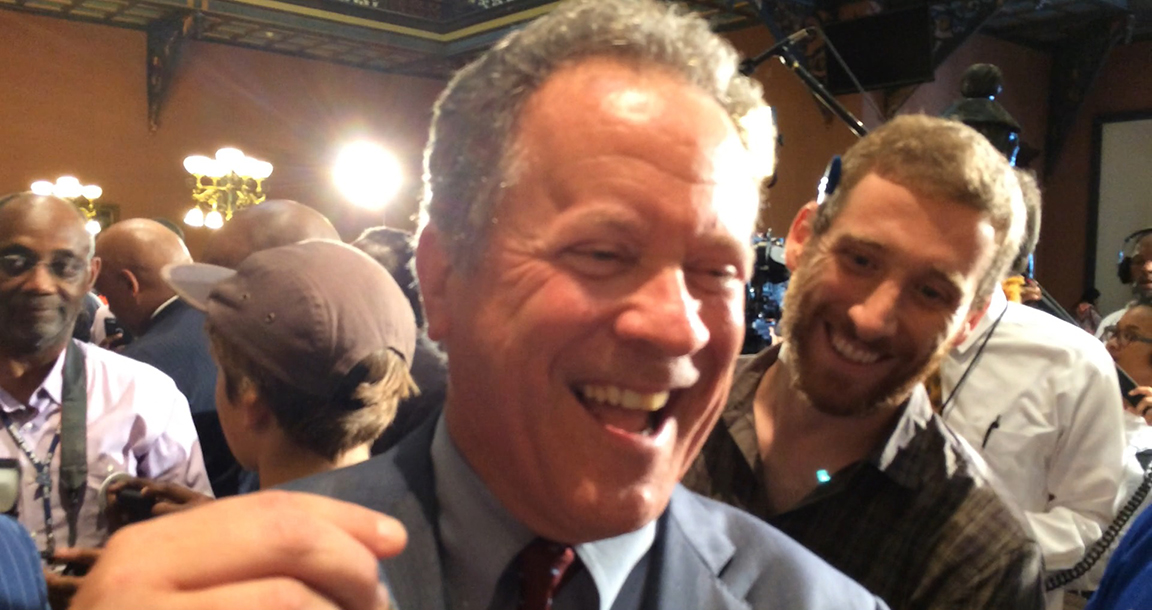
Beasley advocates to save U.N. World Food Programme

Beasley the last time I saw him, at the signing ceremony for the legislation to take down the Confederate flag.

Beasley the last time I saw him, at the signing ceremony for the legislation to take down the Confederate flag.

Here’s an interesting thing brought to my attention this morning by a Tweet.

To backtrack a bit first, this is from Foreign Policy back in March:

Former South Carolina Gov. David Beasley will be sworn in next week as the executive director of the World Food Program, placing the first Trump administration appointee at the helm of a major U.N. relief agency at a time when the president seeks deep cuts in funding for humanitarian causes, three senior U.N.-based diplomats told Foreign Policy.

U.N. Secretary General Antonio Guterres is gambling that the appointment of Beasley — who has no experience running a major international relief operation, or with the United Nations — will help dissuade the administration from cutting a large portion of the more than $2 billion it contributes each year on the agency to help fight hunger around the world.

In making his case for the new job, according to U.N. advocates he reached out to, Beasley has highlighted his Christian faith, and an extensive network of lawmakers around the world. Most important, perhaps, are his personal relationships with a trio of powerful South Carolina politicians who hold the U.N.’s financial fate in their hands: Nikki Haley, the U.S. Ambassador to the U.N.; Sen. Lindsey Graham (R.-S.C.), who chairs the appropriations subcommittee that oversees U.N. funding; and former congressman Mick Mulvaney, the White House budget chief, who has targeted the U.N. for some of the steepest cuts in the federal budget….

I didn’t realize Beasley was all that close to any of those three — the only one whose political career overlaps at all with his is Graham, and I find it very hard to imagine that the former Democrat is major buds with Mulvaney — but perhaps he is.

In any case, this Tweet this morning shows Beasley at least trying to realize the U.N.’s hopes:

This will be interesting to watch…

Thoughts on the Comey hearing?

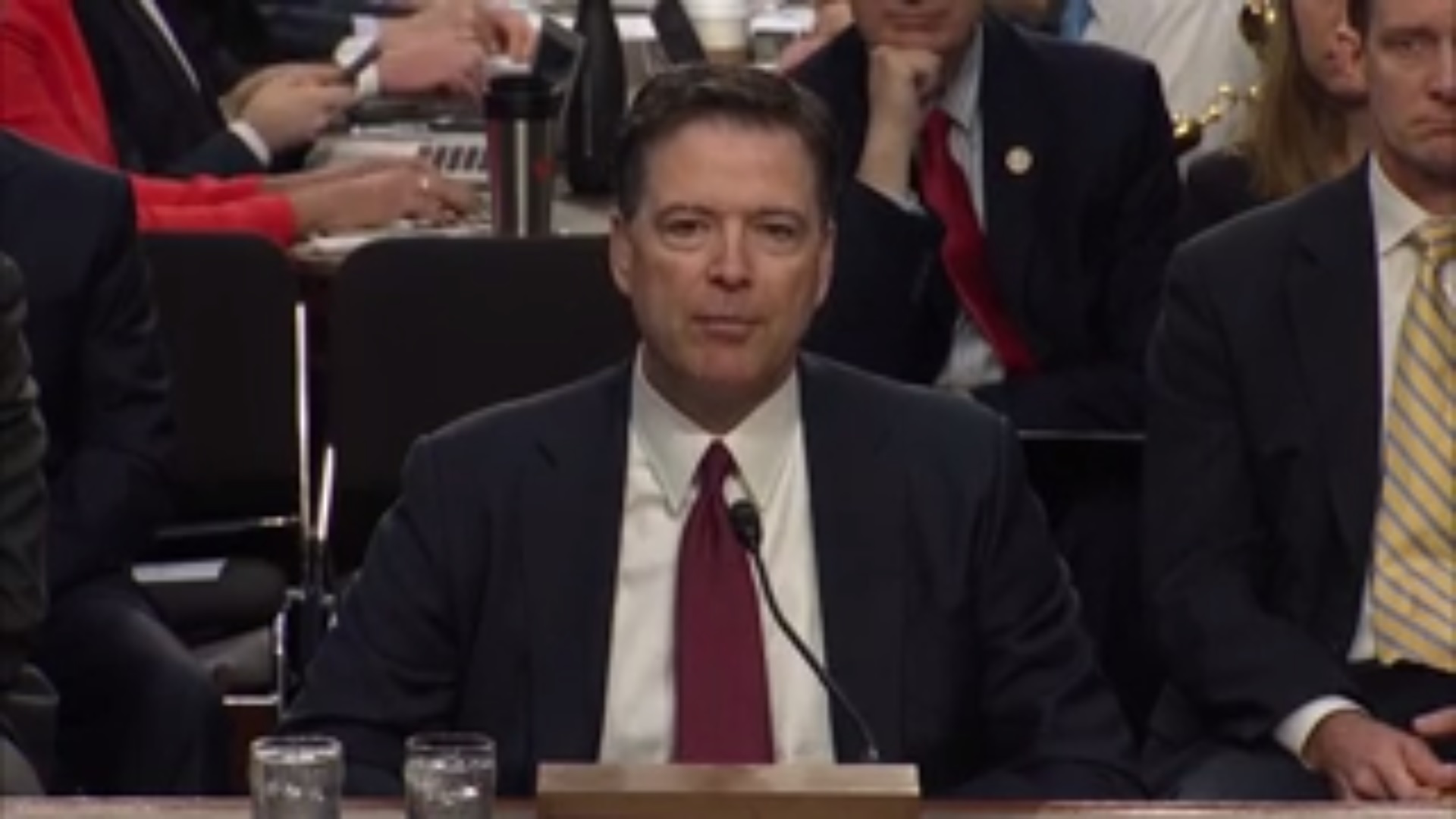
Comey, right after he said of Trump's excuses for firing him, "Those were lies, plain and simple..."

Comey, right after he said of Trump’s excuses for firing him, “Those were lies, plain and simple…”

Well, the public part is over, and the senators will move on to the SCIF for the good stuff behind closed doors.

My initial impression: Comey came across as a completely credible witness, and in terms of integrity, honesty and respect for the rule of law, Donald Trump’s polar opposite.

You? Thoughts?

My favorite bit may have been when Comey quoted my ancestor Henry II, as a way of saying he thought Trump’s stating aloud about what he wanted (for the Flynn investigation to be dropped) being tantamount to an order. Although I’m not sure who, in the analogy, was Becket.

Anyway, y’all get started, and I’ll join in later…

Now, the senators and Comey move on to the classified portion of the hearing, in the SCIF...

Now, the senators and Comey move on to the classified portion of the hearing, in the SCIF…

Why wasn’t there a Bond girl named ‘Reality Winner?’

Reality Leigh Winner, from her Instagram page.

Reality Leigh Winner, from her Instagram page.

“Who is Reality Winner?” is today’s most popular headline. Here are versions of that story from:

Her own self-description on her Instagram page simply says, “I lift, I eat, I have a cat.” That’s followed by lots of pictures of herself lifting weights, of food, and occasionally of a cat (although at first glance, there seem to be more dog than cat pictures).

Me, I’m just impressed that there’s someone at the center of a spy story with such a perfect Bond girl name, the sort that might cause James himself to say, “I must be dreaming.” First Anna Chapman (“From Russia with Va-va-VOOM!”), now this.

But I thought it was kind of odd that most of the coverage this morning was about her being charged with the NSA leak. I sort of thought the bigger news (and maybe this was played up bigger last night when I wasn’t paying attention) was what she had revealed:

Russian intelligence agents hacked a US voting systems manufacturer in the weeks leading up to last year’s presidential election, according to the Intercept,citing what it said was a highly classified National Security Agency (NSA) report.

The revelation coincided with the arrest of Reality Leigh Winner, 25, a federal contractor from Augusta, Georgia, who was charged with removing classified material from a government facility and mailing it to a news outlet.

The hacking of senior Democrats’ email accounts during the campaign has been well chronicled, but vote-counting was thought to have been unaffected, despite concerted Russian efforts to penetrate it.

Russian military intelligence carried out a cyber-attack on at least one US voting software supplier and sent spear-phishing emails to more than a hundred local election officials days before the poll, the Intercept reported on Monday….

You know how a lot of sticklers (particularly of the pro-Trump sort) have protested that it’s wrong to say the Russians “hacked the election,” when they didn’t actually break into our polling system, but just hacked party emails and leaked them and let the chips fall?

Which was true, which is why “hacked the election” was never the best way to say it.

Until now.

Oh, and by the way, it wasn’t some hacker “artist” operating on his own initiative, the way Putin tried to suggest the other day (channeling Trump with his “400-pound hacker“). This was the GRU

U.S. goes where only Syria and Nicaragua have gone before

Whole Earth

So what if the United States, guided by the wisdom of our cheerless leader, has pulled out of the Paris Accord signed by more than 190 other nations?

It’s not like we’re going to be alone! We’ll be joining, um, Syria. And Nicaragua! So, yay us, huh? Now we’ll be pace-setters, too!

President Trump declared that the United States would leave the Paris climate agreement, following months of infighting among Trump’s staff that left the world in suspense. He said he hopes to negotiate a similar deal that is more favorable to the U.S.

This move is one of several Obama-era environmental milestones that Trump has dismantled. And all the while, a new study shows global temperatures might be rising faster than expected.

Leaving the agreement displaces the U.S. from a stance of global leadership and places it alongside just two non-participating countries: Syria, which is in the midst of a civil war, and Nicaragua, who refused to join because the Paris Agreement didn’t go far enough. Even countries such as Liberia and the Democratic Republic of the Congo, which are among the poorest in the world and were struggling with an Ebola epidemic at the time, have signed on….

And yes, in answer to the question that a Trump supporter asked on the blog earlier today, China and India are taking part in the accord. Not only that, they’re stepping up into the leadership role the United States is forfeiting:

Earlier this week, Indian Prime Minister Narendra Modi, on a visit to Berlin, stood alongside German Chancellor Angela Merkel and said that failing to act on climate change was a “morally criminal act.”

And earlier this year, Chinese President Xi Jinping called the 2015 climate accord in Paris “a hard-won achievement” and urged other signers to stick to their pledges instead of walking away — “as this is a responsibility we must assume for future generations.”

In the past, there was skepticism in both countries about Western calls for emissions reductions, which were seen as hypocritical. The strong public comments now underline how far opinion both countries has moved in recent years, and the rhetorical leadership is extremely welcome, experts say….

Oh, and by the way — it’s not just words. China is not only living up to what it’s promised, it’s ahead of schedule in reducing its carbon footprint.

China is, of course, in this and other areas (such as TPP), only too happy to assume the mantle of global leadership that the United States is so eagerly, and so stupidly, laying aside.

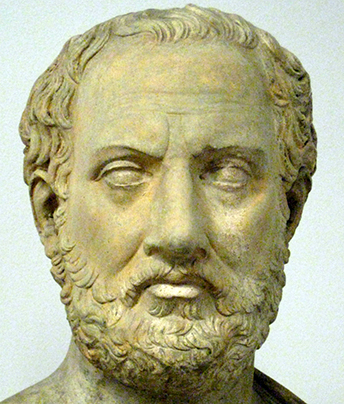
‘Trump the Thucydidean’ — OK, yeah; I hear it…

Occasionally, I get a little glimpse into what Trump voters object to when they behold the folk they see as out-of-touch elites — particularly those whom their spiritual godfather George Wallace called “pointy-headed intellectuals.”

An interesting discussion came on “On Point” this morning, just as I was arriving at the office. I’m sorry I didn’t have time to listen to the whole thing. One of the guests was Graham Allison titled “Destined for War: Can America and China Escape Thucydides’s Trap?” It’s about what may be the inevitable coming clash between these two behemoths, and you can hardly find a topic more important than that. Here’s an excerpt from a 2015 magazine article in which the author set out the concept:

When Barack Obama meets this week with Xi Jinping during the Chinese president’s first state visit to America, one item probably won’t be on their agenda: the possibility that the United States and China could find themselves at war in the next decade. In policy circles, this appears as unlikely as it would be unwise.

Thucydides

Thucydides

And yet 100 years on, World War I offers a sobering reminder of man’s capacity for folly. When we say that war is “inconceivable,” is this a statement about what is possible in the world—or only about what our limited minds can conceive? In 1914, few could imagine slaughter on a scale that demanded a new category: world war. When war ended four years later, Europe lay in ruins: the kaiser gone, the Austro-Hungarian Empire dissolved, the Russian tsar overthrown by the Bolsheviks, France bled for a generation, and England shorn of its youth and treasure. A millennium in which Europe had been the political center of the world came to a crashing halt.

The defining question about global order for this generation is whether China and the United States can escape Thucydides’s Trap. The Greek historian’s metaphor reminds us of the attendant dangers when a rising power rivals a ruling power—as Athens challenged Sparta in ancient Greece, or as Germany did Britain a century ago. Most such contests have ended badly, often for both nations, a team of mine at the Harvard Belfer Center for Science and International Affairs has concluded after analyzing the historical record. In 12 of 16 cases over the past 500 years, the result was war. When the parties avoided war, it required huge, painful adjustments in attitudes and actions on the part not just of the challenger but also the challenged….

It’s one of those Big Ideas that explain the importance of so many others. It explains why President Obama, and Hillary Clinton before she went all Bernie, rightly saw the Trans-Pacific Partnership as so important — you know, the thing Trump killed without a thought the moment he took office.

Still, knowing all that, when I heard the author mention how “Thucydidean” Trump was being, I thought, “OK, now I hear it. I see what all the anti-intellectuals are on about…”

How to win an election in America today: Provide positive proof that you are mentally unstable

logo

This is from The Guardian, which sort of has a vested interest in this American story:

Greg Gianforte has won a special election for Montana’s sole seat in the House of Representatives, just one day after he was charged with misdemeanor assault for “body-slamming” a Guardian reporter.

The Associated Press called it after 522 of 681 precincts – or 77% – reported. At that point Gianforte had 163, 539 votes, or 51% of the vote, compared with challenger Rob Quist’s 140,594 votes, or 44%.

Speaking at the G7 meeting in Sicily on Friday, Donald Trump called the victory a “great win in Montana”…

Well, of course he did. It was yet another instance underlying the fact that all you need to do to get elected in this country today is provide positive, unassailable proof that you are mentally unstable. Trump looks at this and thinks, “See? I’m not a fluke.”

Oh, by the way, the candidate apologized during his victory speech for attacking the reporter, although you could be forgiven for missing it because his supporters were laughing as he did so.

Anybody have any ideas about what we can come up with to replace this democracy thing, which clearly isn’t working any more?

Graham: Trump budget could cause ‘a lot of Benghazis’

And you know that, coming from Lindsey Graham, that’s a bad thing.

Here’s what The Washington Post is reporting:

The Trump administration’s fiscal 2018 State Department budget proposal irresponsibly cuts diplomacy and diplomatic security in a way that could cause “a lot of Benghazis,” according to Sen. Lindsey Graham (R-S.C), chairman of the Senate appropriations subcommittee on the State Department and foreign operations. He promised that Congress would reject the cuts.Graham mug

“If we implemented this budget, we’d have to retreat from the world and put a lot of people at risk,” Graham said on the day the Trump administration is releasing its detailed budget proposal for next year. “A lot of Benghazis in the making if we actually implemented the State Department cuts.”

Overall, the Trump administration is proposing to cut the budget for the State Department and USAID, from the $54.9 billion estimated total in fiscal 2017 to $37.6 billion in fiscal 2018 — a reduction of $17.3 billion, or 31 percent. Not counting emergency funding, known as Overseas Contingency Operations funding, the Trump budget would cut the State Department and USAID by 29 percent.

“A 29 percent cut means you really have to withdraw from the world because your presence is compromised,” Graham said. “That may be the goal of this budget. It’s not my goal. This guts soft power as we know it.”…

As is usually the case when Graham tries to hold Trump accountable, I agree wholeheartedly…