Category Archives: Character

We don’t need outsiders calling our governor a ‘clown’

crew

Back in the first few years that I was back here in SC — I want to say it was about the time of the Lost Trust scandal in 1990; in any case, it was a time when we were struggling with some huge problem in Columbia — The Charlotte Observer ran a short, dismissive, truly snotty editorial asking what was up with South Carolina, and comparing us to the Three Stooges.

That was it. There was no serious analysis of the problem, and no recommendation (that I recall) on how to make it better. Just a setup for comparing South Carolina to the Stooges. Ha-ha.

Something crystallized for me in that moment. I had been a longtime admirer of the Observer before I came to work here. But since my return here in 1987, I had noticed that its coverage of my home state had a certain tone to it — a scornful fascination based in a concept of SC as the other; as a vastly inferior other that existed to make folks in that corner of NC feel good about themselves.

I fully realized what had bothered me as soon as I read that editorial. I felt that the Observer couldn’t care less whether things got better in SC, as long as we provided our betters with entertainment. (If I’m correct on the timing, this was at the time that I was conceiving of the year-long Power Failure project analyzing what was really wrong with SC, and offering a specific path to fixing the problems. So I had a markedly different attitude: I cared.)

Anyway, I was reminded of that Three Stooges moment when Celeste Headlee brought my attention to CREW’s second list of the nation’s worst governors. (CREW, by the way, is the Citizens for Responsibility and Ethics in Government.)

For those of you interested in such things, of the 18 governors on the list, only two — Andrew Cuomo and Steven Beshear — are Democrats (Scott Walker makes the list for being anti-union, and accepting contributions from people who are also anti-union — really; those are his “sins”). But I’m less concerned with the fact that CREW doesn’t live up to its self-professed partisan impartiality than the fact that, by publishing a list such as this one, the organization gives the lie to the “responsibility” part of its name.

Of course, our own governor makes the list. And that would be OK, if CREW had some helpful criticism. Here’s what it has to say about Gov. Haley. I won’t bother repeating it since there’s no news in it. She’s been roundly criticized for these things in this space. But I stand today to defend her.

My beef is with the overall way that this list is presented. Someone thought it would be cute to give the list a circus theme. The 18 governors are divided into three groups — the “Ringmasters,” the “Clowns,” and the “Sideshows.”

Nikki Haley is listed among the six “Clowns.”

I’m mystified as to the reasoning behind this equal division into three groups. What, our governor is a “Clown,” but Rick Perry makes “Ringmaster”? Really? If someone forced you to pick one of them as a “Clown,” how could you pick her over him?

Beyond that, there is no evidence provided of her clownishness. I didn’t see anything funny in any of the things said about her. It is simply not a defensible metaphor.

Let me say unequivocally that Nikki Haley is not a clown. She’s a perfectly serious, earnest young woman who governs as well as she can, according to her lights.

She does not deserve to be called a clown.

And if CREW really cared about responsibility in government, it would desist from this kind of immature, dismissive, unhelpful nonsense. This is the kind of destructive thing the political parties do — denigrate and demean and utterly dismiss all with whom they disagree, making it impossible for people wearing different labels to work together toward the common good.

On its About Us page, CREW moans,

Many Americans have given up on our political system, writing off our elected leaders…

Well, you know why? Because (at least in part) of dismissive junk such as this.

If you have something constructive to say, say it. If you have any specific, serious advice to offer the people of South Carolina, we’re all ears — really. Not all of us have “We Don’t CARE How You Did It Up North” bumper stickers on our vehicles (although, admittedly, some of us do). Let’s hear your prescription.

But if you have nothing more helpful to offer than to call our governor a “clown,” then just shut up about it.

A wonderfully temperate and respectful speech on an emotional issue

Andrew Sullivan embedded this video from the Scottish parliament earlier this week because he saw it as “The Conservative Case For Marriage Equality.”

I was impressed with it for another reason: It was so thoughtful, mature and respectful to people who might disagree.

We don’t see a lot of that on this side of the pond when it comes to these Culture War issues. For that matter, we seldom see politicians sincerely addressing themselves to people who disagree with them about anything — the parties are so far apart that speeches are just about lambasting the opposition, and gaining the admiration of those who agree.

Unlike the rhetoric I routinely see in press releases, or in commentary on the Web, there is no name-calling, no castigation of those who disagree as narrow-minded bigots, as the spiritual heirs of lynch mobs.

Instead, we have thoughts such as those contained in this passage:

I therefore commend all of the contributors to this debate over the past few months and years who have sought to make thoughtful contributions, to elevate the ideas and to temper the language, displaying a respect for beliefs which differ from their own, but recognizing that those beliefs are just as sincerely held.

And I hope that that temperance will continue this evening, demonstrating that while this may be a fledgling parliament, that it has a maturity too….

If this woman, Ruth Davidson, is a representative sample, hers is a mature parliament, indeed.

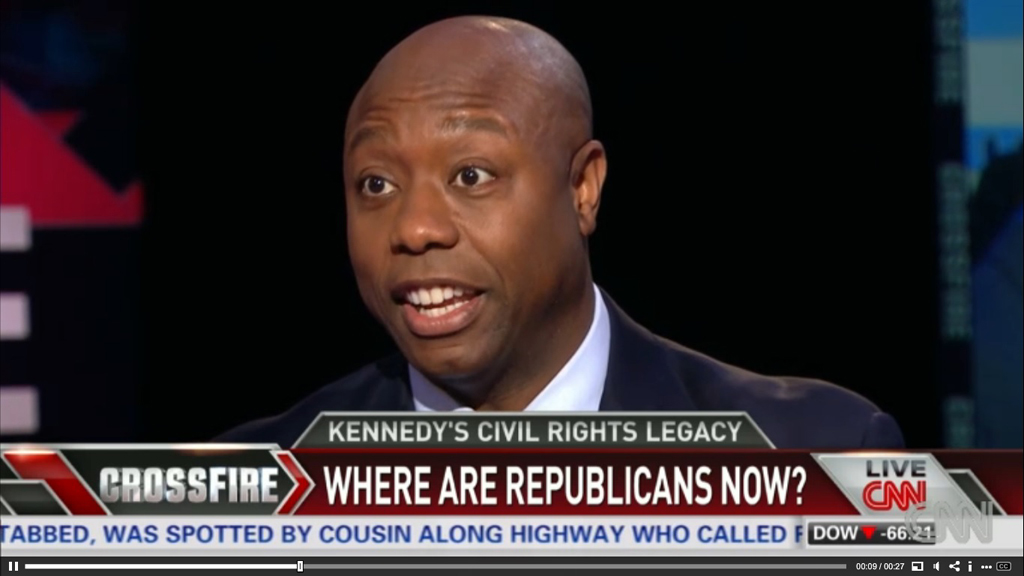
Tim Scott, twice refusing to endorse senior colleague Graham

The State‘s new Buzz blog (I’m trying to remember whether this is the paper’s first serious attempt at a state and national political blog since I got laid off, but perhaps such reflections are ignoble of me) brought my attention to the above clip. Their account (like I’m gonna retype if it I don’t have to) of it:

U.S. Sen. Tim Scott passed twice on saying whether he would endorse his fellow S.C. senator, Republican Lindsey Graham, in an interview on CNN’s Crossfire Wednesday.

When CNN’s Van Jones asked Scott whether he would support Graham, Scott said, “You know, as you three have heard recently, I am up for re — up for reelection myself. I’m going to make sure that Tim Scott gets out…I’m going to allow for all the other folks on the ballot to represent themselves very well, and I’m going to continue to work hard for my re-election.”

“No endorsement for Lindsey Graham tonight?” Jones asked again.

Scott replied, “I’m certainly going to work really hard for Tim Scott re-election — gotta win first.”…

I sort of doubt that Sen. Graham’s going to be sitting up nights trying to think of favors he can do for Sen. Scott in the foreseeable future.

I was particularly struck by the way he stopped himself from saying “re-election,” then went ahead and said it anyway. The question seems to have had him pretty flustered…

tim scott

An Armistice Day reflection

Doughboys of the 64th Regiment celebrate the news of the Armistice, November 11, 1918

Doughboys of the 64th Regiment celebrate the news of the Armistice, November 11, 1918

I originally posted the below material as a comment on the “Top Ten War Movies” post from over the weekend. Bryan suggested that today, it should be a separate post. I suppose he’s right.

The context is that I was responding to two previous comments — one by Rose praising the TV series “Band of Brothers,” and the other from Phillip about “anti-war” messages. This lies in the larger context of a long debate of several years’ standing, in which Phillip takes the position that all sane people oppose war, and I take the armchair-warrior position of “not always”…

“Band of Brothers” was the best thing ever made for television.

And it had the kind of anti-war message in it that I appreciate [as opposed to the kind of anti-war message I hate, which I had described earlier as “one that beats you about the head and shoulders with the idea that war is futile and stupid and anyone who decides to involve a nation in war is evil and unjustified, and we should never, ever engage in it”]. It’s very similar to a powerful one in “Saving Private Ryan.”

There’s this great scene in which the actor portraying David Kenyon Webster — the writer, from Harvard — is riding past thousands of surrendering Germans being marched toward the rear (the opposite direction from which he and Easy Company are traveling) and he spots some senior German officers. He starts shouting at them (excuse the language):

Hey, you! That’s right, you stupid Kraut bastards! That’s right! Say hello to Ford, and General fuckin’ Motors! You stupid fascist pigs! Look at you! You have horses! What were you thinking? Dragging our asses half way around the world, interrupting our lives… For what, you ignorant, servile scum! What the fuck are we doing here?

To explain what I mean by this… I grew up with shows like “Combat,” which gave a sort of timeless sense of the war. Sgt. Saunders and his men were soldiers, had always been soldiers, and would always be soldiers. And they would always be making their way across France in a picaresque manner, doing what they were born to do.

Well, what Webster is shouting at those Germans is that NO, we were NOT born to do this. This is a huge interruption in the way life is supposed to be.

That lies at the core of Tom Hanks’ character in “Saving Private Ryan.” His men think HE was born to be a soldier, and can’t imagine him in any other role (as Reuben says, “Cap’n didn’t go to school, they assembled him at OCS outta spare body parts of dead GIs.”) — hence their intense curiosity about what he did before the war. And their stunned silence when they learn the reality:

I’m a schoolteacher. I teach English composition… in this little town called Adley, Pennsylvania. The last eleven years, I’ve been at Thomas Alva Edison High School. I was a coach of the baseball team in the springtime. Back home, I tell people what I do for a living and they think well, now that figures. But over here, it’s a big, a big mystery. So, I guess I’ve changed some. Sometimes I wonder if I’ve changed so much my wife is even going to recognize me, whenever it is that I get back to her. And how I’ll ever be able to tell her about days like today. Ah, Ryan. I don’t know anything about Ryan. I don’t care. The man means nothing to me. It’s just a name. But if… You know if going to Rumelle and finding him so that he can go home. If that earns me the right to get back to my wife, then that’s my mission.

There, you learn this this is NOT supposed to be where he is. This was not the way his life was supposed to go.

Now… on the other hand…

Dick Winters was a real-life guy who had no desire to be a warrior. After surviving D-Day (having led his men in an action that should have gotten him the Medal of Honor, but he “only” received a Distinguished Service Cross for it), he took a quiet moment to pray that “I would make it through D plus 1. I also promised that if some way I could get home again, I would find a nice peaceful town and spend the rest of my life in peace.”

That’s all he wanted.

And yet, by having been forced to be a soldier, he and everyone around him found that he was superbly suited to it. He was one of those rare men who thought quickly and clearly under fire, and communicated his calm and his self-assuredness to his men. He knew what to do, and how to give orders so that it got done. He had a gift.

And that gift actually was a thing of value — to his society, and to the world. And here’s where we separate. Here’s where we draw a line between being “anti-war” as an absolutist position — that war is always wrong and evil and has no redeeming qualities — and my position, which is that sometimes nations need people like Dick Winters to step forward and exercise those abilities that they have. In other words, the warrior is a valuable member of society like the butcher, the baker and the candlestick-maker (actually, nowadays, perhaps more valuable than the candlestick-maker).

Which seems like a good place to stop, a little more than an hour before 11 o’clock on Nov. 11.


You’re a good man, Jim Hesson. Hang in there…

Jim Hesson was possibly my best friend on senior staff at The State, except for Warren Bolton. He was the paper’s IT director. Actually, we called it “I.S.,” for “information services,” and Jim lived that. He was helpful, patient, competent, and had a great sense of humor.

Jim Hesson

Jim Hesson

I still remember with embarrassment the time we were all riding up to North Carolina in a van for a senior staff retreat. He and I talked and joked back and forth so constantly that the person sitting between us finally offered to move, so that we would stop talking across her. Which made me feel bad that we’d been so rude. But I always had a good time talking with Jim.

The purpose of that trip, by the way, wasn’t to talk business. It was to go whitewater rafting. Holly Rogers, the life-loving soul who was then our human resources director, had this idea that to work together effectively, people should sometimes have fun together (another year, she dragged us all out to Frankie’s Fun Park). I would grumble and complain and pass critical remarks about these outings, and fret about the work waiting for me, but once there, I would throw myself into it and have as much fun as anybody. Those were different times.

Back to Jim Hesson. Today, Jim posted this on Facebook:

Yesterday morning I was having my quiet time on the train heading in to work. I was praying that God would give me clarity about my job and if it was time to seek another position. After I got in I was called in to a meeting where I was told my position was eliminated , along with a number of others in our IT dept. So God did answer my prayer, just not in the way I expected. God is good. And I know He can be trusted in all things.

I am so sorry, Jim. But I believe your faith is well-placed. You got an answer; it’s just not going to be an easy one to accept. May you soon see clearly the next steps on the path before. That’s the hard part — wondering whether that next opportunity will ever come. The good news is that you’ve got the right attitude about it.

I am deeply impressed by Jim’s honesty in sharing this. I wasn’t like that. Oh, I shared a lot — far, far more than most people who are laid off do. Thousands upon thousands of words, in my last columns and on the blog. On the first day I didn’t have a job to go to, I stood up in front of the Columbia Rotary Club and cracked jokes about it. And I didn’t lie about anything.

But it was superficial, stiff-upper-lip stuff. It was never gut-level. Not that I meant to mislead; I was just so busy figuring out the next step of each day that I didn’t plumb the depths of what I felt. In truth, of course, I wasn’t feeling on a deep level. I wouldn’t fully realize at the time how much I was losing. The grief of losing the job that paid me well to do what I do best is something that has unfolded itself gradually over a period of years. At the time, the bad feelings were offset by relief that I would no longer be the one laying off, and then having to figure out how to do the job going forward, without those good people. I quickly got over the rush of anger that I felt in the moment I got the news. I refused to dwell, even in my own mind, on how it felt to tell my wife and family.

And I certainly didn’t share private communications between me and the Almighty. In any case, they would have seemed rather incoherent and repetitive, not elegant and direct like what Jim shared.

It occurred to me to keep a journal, maybe write a book, about what it was like to have reached the pinnacle of what you wanted to do for a living, and then have it all taken away in an instant, just as you’re stepping into your peak earning years. And about what happens next. It would have relevance, in that year of 2009. (And today as well. How many people out there have never regained what they had? The unemployment figures don’t tell you that.) But I thought, what a bummer that would be — I certainly wouldn’t want to read such a book, much less write one.

Now, if I wanted to go back and write something like that, I’d have trouble assembling the details. I’ve just forgotten so much of it.

In any case, what could I write that would be as powerful as what Jim did?

You’re a good man, Jim Hesson. I know God will bless you going forward…

Courson reaching out to his Democratic (and GOP) friends, before it’s too late

I happened to be driving through Shandon just after 8 this morning, and there was John Courson, walking his dog on Wheat St.

I rolled down my window and stopped in the middle of the street to chat. No one was coming.

He said something about the shock of having lost four friends this past week, three of them younger than he is. I assume three of them were Lee Bandy, Steve Morrison and Ike McLeese. I didn’t ask him who the fourth was (I sort of hated to say, “Who was the fourth?,” because that would seem to diminish that person’s death by the fact that I had to ask), but my first guess would be Will McCain.

Will McCain

Will McCain

McCain, who had been then-Gov. David Beasley’s chief of staff, died before any of the other three, and it was a real shock to me. I didn’t think I was at the age at which I would start to peruse obits daily to see if my friends are there, but seeing Will McCain’s picture there as I was flipping by the page — looking just as he did during the Beasley years — made me think, “Maybe I am at that age.” Because he was born the same year I was.

We weren’t really friends; I don’t remember when I had seen him last. In my mind, he actually still looked that way — which added to the shock of seeing him on the obit page.

Maybe the senator had someone else in mind. (And Kathryn and Phillip give good reason below to think so.) In any case, my purpose in writing is to relate something else he said.

Sen. Courson said those deaths reminded him that he should get together with his friends and enjoy their company before they suddenly leave this vale. So he said he’s arranged a lunch with “some of my Democratic friends,” because his baseball buddy Ike was a Democrat. And then, he’s going to have lunch with some of his Republican friends.

Because that’s the way John Courson is. Cynics will say that’s the way he has to be, being a Republican (one of the most ardent admirers of both Ronald Reagan and Strom Thurmond I know) who lives in a largely Democratic district. Just as they might say Nikki Setzler, a Democrat in a largely Republican district, has friends and deals fairly with people on both sides of the aisle because he has to.

Maybe so. Or maybe it’s the other way around. Maybe swing districts, which aren’t too strongly either way, attract people who already are the kinds of people who reach across the aisle and try to represent all their constituents, not just the ones of their party. Or maybe it takes people who are just as partisan as most lawmakers and makes them into statesmen who rise, out of political necessity, above narrow considerations.

Either way, we need more districts like that. We have far too few of them, because lawmakers make it their business to make as many districts as possible either super-Democratic or super-Republican. And it’s tearing our country apart.

Cindi Scoppe on the now-rare ‘loyal opposition’

Cindi Scoppe had a good column in the paper today — one I might have written myself (ironic, self-mocking smiley face).

She was praising Leona Plaugh for attitudes that used to be fairly common among elected officials, but now are alarmingly rare — and practically nonexistent within the District of Columbia.

An excerpt:

Ms. Plaugh, you might recall, helped lead the opposition to Mayor Steve Benjamin’s rush job on the contract the city signed this summer promising tens of millions of dollars in incentives to Bob Hughes in return for his developing the old State Hospital property on Bull Street in accordance with city desires. She criticized the way the deal was rammed through so quickly that people didn’t know what was in it and she criticized what she did know about its contents. And she was happy to repeat those criticisms when she met with us.

But when my colleague Warren Bolton asked her what happens next, she said, essentially, we make it work.

“Once you vote for something and it’s done, it’s done,” she said. “We all need to get on the bandwagon now and hope it’s the best it can be.”

A few minutes later, when she was talking about her surprise at ending up on the losing end of a 2010 vote to turn control of the Columbia Police Department over to the Richland County Sheriff Leon Lott, and we asked why she hadn’t brought that idea back up as the department’s woes have mounted, she recalled all the debate and public hearings that had preceded that vote.

“I don’t think you continually go back and harp on things that this council has already voted on,” she explained, “unless someone on the other side is ready to change their position on it.”

Well.

Then we got to the city’s decision this spring to purchase the Palmetto Compress warehouse over her objections, and the news in that morning’s paper that a local development group had tentatively agreed to buy the property, at a small profit to the city. And there wasn’t even a hint of sour grapes when she told us, “I hope I lose my bet with the mayor and that that will be a roaring success.”

What put an exclamation point on all of this was the timing. Our conversation with Ms. Plaugh took place at the very moment that what passes for grownups in Washington were racing the clock to reach a can-kicking agreement to keep the federal government out of an elective default. An agreement that we weren’t at all certain they’d be able to sell to their colleagues.

Which is just mind-boggling….

As Cindi went on to say, Leona was expressing the attitude of a member of the loyal opposition, “a concept that no longer exists in Washington, outside the occasional Senate gang, and is falling out of favor at the State House, replaced with open disdain for the idea of even talking with people in the other party, much less accepting defeat and moving on.”

And our republic is much, much worse off for that quality being so rare.

Lindsey Graham is a stand-up guy who’s there for his country when it counts.

I’ve said this in the past. It remains true.

My friends here on the blog love to abuse Lindsey, for one of the very things I admire him for — his refusal to go along with either herd. (And when I say “either,” I refer to the only two that our pathetically inadequate modern political vocabulary allow as conceivable possibilities.)

We know how the right despises him — to the extent that “right” adequately describes those who despise him. I refuse to use the word “conservative,” because these destructive bomb-throwers don’t deserve it. They care for nothing but purity — a kind of purity produced by a distillation process like that of moonshine: It, too, will make you go blind.

My friends on the left love to applaud him when he is infuriating those on the right the most. Then, when he acts like what he is — an actual conservative — they talk about how disappointed they are in him. Even though he is the best, by their own lights, that they are ever likely to see representing South Carolina in the U.S. Senate.

Since I don’t subscribe to either of these temples of purity, I like him most of the time — probably most of all when he’s alienating both extremes of the spectrum.

Do I strongly disagree with him? Yes, frequently. But I expect that. There’s no one on the planet with whom I agree all of the time. That’s the way it is among people who think, rather than buying their positions on political issues off the shelf, as a package, all from column A and none from column B.

Anyway, bottom line, he’s a stand-up guy because he’s there when his country needs him, as it did earlier this week:

WASHINGTON — Sen. Lindsey Graham was the only Republican in South Carolina’s GOP-dominated congressional delegation who voted for the deal that reopened the federal government.

President Barack Obama signed the shutdown bill into law late Wednesday after the Senate passed it by an 81-18 vote and the House approved it by a 285-144 margin. Three-fifths of the Senate’s 46 Republicans voted for the legislation, while a similar share of the House’s 232 Republicans opposed it.

Graham, a second-term senator facing a contested re-election campaign, broke with Sen. Tim Scott, a North Charleston Republican in his first year as a senator.

“This agreement is far from great news, but it brings to an end, at least temporarily, a disaster” Graham said….

A lot of folks, particularly those of the liberal persuasion, have been bemoaning how Graham is “running to the right” as he faces re-election next year. But is it really wrong to emphasize the things on which you agree with your base, as you face a primary?

But at this dramatic moment, when the “purity” caucus is looking to you for a purely symbolic vote, but voting that way will push the U.S. and global economies down the stairs, what does he do? He does the right thing, for the country and the world.

That’s being a stand-up guy.

No, Mr. Sanford, it’s YOU who chose to do this to us

I’m sure you’ve all seen coverage of our fellow South Carolinian Chris Cox, who took it upon himself to do yardwork at the Lincoln Memorial.

God bless him for his gesture, especially since he seems to have done so out of a generosity of heart, rather than as implied criticism of anyone:

He said he does not have a political position on the shutdown. “I’m not here to point fingers,” he said. “I only want to inspire people to come out and make a difference.”

“The building behind me serves as a moral compass, not only for our country but for the world.”

“And over my dead body are we going to find trash pouring out of these trash cans,” he said. “At the end of the day we are the stewards of these buildings that are memorials.”

“I want to encourage my friends and fellow Americans to go to their parks, and show up with a trash bag and a rake,” he said. “Show up with a good attitude and firm handshake for the U.S. Park Service.”…

With an attitude like that, I can even forgive him for seeming to be a super-visible example of a certain sort of neighbor. You know, the guy who gets up eagerly on Saturday morning and spends the whole day ostentatiously laboring over his lawn, and acting like he likes it, in an obvious attempt to make other husbands in the neighborhood look bad for wanting to take a nap like a sane person.

I don’t think Chris Cox is like that at all, and I appreciate him.

What I don’t appreciate is what Mark Sanford said in praising him:

“I’m impressed, Chris embodies what it means to be not just a South Carolinian, but an American,” added Sanford. “He saw a job that wasn’t getting done and decided to take care of it. We are not a nanny state, and when government in this case chooses not to do something it’s in keeping with the American tradition to ask, “What can I do to fix the problem?” Chris’s example is one we could all learn from in Washington, and accordingly, I applaud him.”

Let’s review the pertinent part of that. Going right by the nonsensical bleating about a “nanny state,” let’s focus on “when government in this case chooses not to do something.”

Let’s run that again, because it completely blows my mind: “when government in this case chooses not to do something.”

No, Mr. Sanford. Only in the sense that you are the government (because you insisted on running for Congress again) did government “choose not to do something.”

It was you, and your colleagues in the Congress. This is true, obvious, beyond question. Aside from the fact that, contrary to your beliefs, the government is not some alien entity “out there” separate from the people, “in this case,” the guilty parties are unquestionably you and your cohorts.

I’m flabbergasted. It’s just beyond belief that he said that…

Profile in Courage, 2013 edition: Boehner promises to do the right thing to avoid default

First, I want to applaud Speaker John Boehner for promising to do the right thing, at least with regard to a default that could devastate the world economy:

With a deadline for raising the debt limit fast-approaching, House Speaker John A. Boehner (R-Ohio) has been telling colleagues in recent days that he will do whatever necessary to avoid defaulting on the federal debt, including relying on House Democrats to help pass an extension, according to GOP aides familiar with the conversations…

But after I’m done applauding the speaker for his courage, let’s have a moment of silence to mourn how low the “courage” bar is these days.

What that says is that the speaker of the House promises he will work with all of his willing colleagues, regardless of party, for the sake of the nation — to make sure that a terrible, needless thing does not happen to the country and the world.

That should be business as usual. Once upon a time, it would have been (in support of that statement, I submit the fact that the United States has never before defaulted in its 237-year history).

But today — and this just makes me sick — it’s extraordinary. In the U.S. House Republican caucus, it is seen as political suicide to work with Democrats, even on something of critical importance to the country.

So yay, Mr. Speaker. And here’s hoping and praying that we’ll live to see the day when this sort of behavior is once again sufficiently common that we have no reason to take note of it…

Oh, yeah… what about Nikki Haley and the Savannah port?

Kristin Sosanie over at the SC Democratic Party brings up something I hadn’t thought about for awhile, but which we’re likely to hear more about as Nikki Haley tries to get re-elected:

Vice President Biden will be in South Carolina’s lowcountry today to talk about the importance of the Port of Charleston for the state and national economy. Governor Nikki Haley will attend, and we can only imagine she’s hoping beyond hope that the people of South Carolina have forgotten how she sold out the Port of Charleston and the South Carolina economy for $15,000 in campaign contributions.


Actions speak louder than words, and no matter what she says today, South Carolinians remember that when it came down to it Nikki Haley chose to give Georgia the competitive edge over South Carolina in order to stuff her campaign coffers. Take a look back at the coverage of Nikki Haley’s infamous “Savannah Sellout”:


Haley Received $15K from a Georgia fundraiser prior to port deal that gave Savannah an edge over Charleston and hurt the state’s economic future. “Gov. Nikki Haley faces increasing questions over her role in a decision that helped Savannah gain a competitive advantage over the Port of Charleston, the state’s main economic engine. New concerns arose over two recent events: Haley’s refusal to attend a Senate hearing next week on the matter, and revelations that she raised $15,000 at a Georgia fundraiser 13 days before the S.C. Department of Health and Environmental Control approved dredging Savannah’s harbor. That Nov. 10 approval came about six weeks after the agency denied the request over water-quality issues the dredging would cause.” [Post & Courier, 11/24/11]


Haley Sold Charleston Port Down River. “Last week, Georgia Gov. Nathan Deal put out a statement to thank our own Nikki Haley ‘and others’ for helping out with the expansion of the Savannah port. That sure was nice of him. Of course it’s the least he could do, seeing as how our governor and “others” — her hand-picked Department of Health and Environmental Control board cronies — sold out South Carolina and the Charleston port for him. The DHEC board recently approved a controversial permit to dredge the Savannah River, a move that literally will put the river on life support and could cost this state billions.” [Post & Courier, 11/20/11]


Pay to Play Politics at its Worst. “An investigation has uncovered plane rides and large campaign contributions that some say show a cozy relationship between Gov. Haley and the DHEC board….Gov. Haley attended a fundraising event in Georgia just two weeks before DHEC approved the Georgia dredging permit. The event raised money from Georgia businesses to fund Gov. Haley’s 2014 re-election campaign. Before Gov. Haley appointed them to the DHEC board, campaign records show that Kenyon Wells and his family gave the governor $50,000, while DHEC Chair Allen Amsler gave $3,000. A third DHEC board member and Gov. Haley-appointee gave the governor $570 in 2010.” [WIS, 11/30/11]


Opposition from Democrats & Republicans. “Republican and “South Carolina House Republicans and Democrats alike blasted Gov. Nikki Haley on Tuesday for vetoing their resolution expressing displeasure with a state agency’s move to clear the way for the deepening of Georgia’s Port of Savannah. The House overrode Haley’s veto of that resolution by a 111-to-1 vote. ‘This is a political ploy,’ state Rep. Jim Merrill, R-Berkeley, said of Haley’s veto. ‘Once again, (Haley) is working more on behalf of Georgia, when it comes to this permit and this issue, than she is on South Carolina.’” [The State,2/28/12]

How was that not a campaign trip? And why the secrecy?

Still scratching my head over the state Ethics Commission fixin’ to slap Nikki Haley’s wrist, then changing its mind:

Gov. Nikki Haley’s campaign will not have to repay the state for the cost of a SLED security detail that accompanied her on a trip to North Carolina in June, the State Ethics Commission’s executive director said Wednesday.

Haley attended a late-June N.C. event sponsored by the Renew North Carolina Foundation, a 501(c)4 that supports Republican N.C. Gov. Pat McCrory. Tuesday, reports surfaced the state-owned vehicle Haley was riding in on that trip was involved in a minor car accident June 27. Haley, along with her political adviser and a campaign fundraiser, were passengers in that vehicle, according to a public incident report.

Cathy Hazelwood, the attorney for the state Ethics Commission, said Wednesday morning she had sent a letter to Haley’s campaign asking it to reimburse the state for providing the Republican governor with a security detail on a campaign fundraising trip. “I can’t fathom why you have campaign people in your car and that’s not a campaign event,” Hazelwood said…

But then, the director of the agency said never mind, once he got “the whole story” from one of the governor’s attorneys.

So… what IS the whole story? I mean, what’s with the governor of our state getting in a wreck in another state, and we hear about it months later?

And how was that not a campaign trip?

In case you weren’t entirely convinced that Weiner is a jerk

… watch this video, in which he mocks a British reporter for being British (likening talking to her to a Monty Python sketch), and then mocks England for being a “rainy, cloudy and grey” place.

But it’s not so much what he does as how he does it, with everything from his tone of voice to his body language to his constant demonstrations that he’d rather pay attention to anything but the reporter.

Yes, Anthony, there is an absurdist feel to the questions reporters ask you — to the entire existence of your campaign, for that matter. But whom do you have to blame for that?

GOP accuses Democrats of waging ‘war on women’

OK, I sort of got a kick out of this:

In 2012, Democrats’ constant refrain that the Republican party was in the midst of a “war on women” left the GOP — all the way up to presidential nominee Mitt Romney — exasperated at what they called a gross mischaracterization. Now Republicans are embracing the term as a way of reminding voters of Democratic men who have cheated, sexted, and harassed.

In e-mails, press releases and tweets, the Republican National Committee, National Republican Senatorial Committee and National Republican Congressional Committee are highlighting a “war on women” waged by San Diego Mayor Bob Filner (harassment), New York mayoral candidate Anthony Weiner (sexting), and former New York governor Eliot Spitzer (prostitutes).

Mentioned less often but still on the list: New York State Assemblyman Vito Lopez (harassment) and Tennessee Rep. Steve Cohen (mistakenly thinking he had a daughter, calling a reporter “very attractive”) among others.

“The best tools we have as Republicans to recruit women candidates this cycle are three Democrats named Bob Filner, Eliot Spitzer, and Anthony Weiner,” said NRCC spokeswoman Andrea Bozek…

Yes, it’s ridiculous to accuse an entire party of a “war on women” because of the personal misdeeds of a few. But it’s no more ridiculous than the Democrats using the hyperbolic term the way they did in last year’s election.

I hope he resigned by tweeting Weiner a picture of his middle finger

I just wanted to write that headline about this item, which I just read on Slate:

New York mayoral hopeful Anthony Weiner lost a key member of his already tiny staff when his campaign manager quit Saturday. The New York Times was first to report news that 31-year-old Danny Kedem decided to pack his bags following a week of embarrassing revelations that Weiner continued to exchange racy messages and photos with women after he resigned from Congress in 2011. Weiner confirmed the news Sunday morning: “Danny has left the campaign,” Weiner said. “He did a remarkable job.”

At lunch today, I happened to ask Samuel Tenenbaum how things were going, and he said he was depressed from following the news. Specifically, he cited the Weiner mess as further evidence that things are going down the tubes. He said something about his being yet another obnoxious narcissist.

I said the worst part is that these days, people will actually vote for someone like that.

But the fact that this guy quit gives me hope. Of course, maybe there’s something he knew that we don’t. Slate also noted today that Weiner hasn’t answered the question of whether he is still sexting

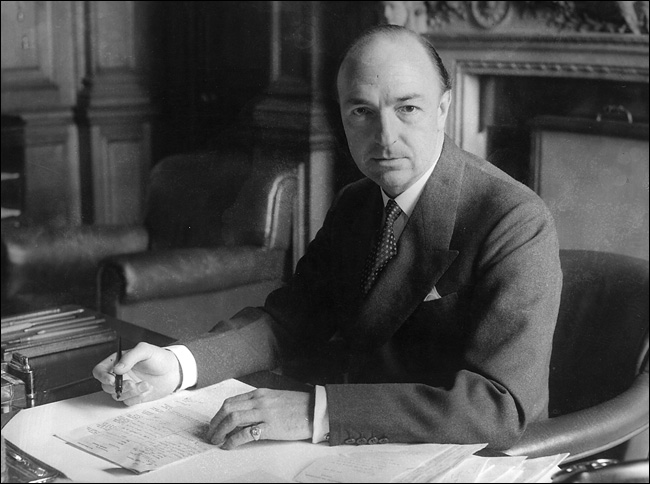
Profumo showed what Sanford, Weiner, Spitzer should have done

995401_343502635780906_108551644_n

Peggy Noonan’s column this week is a good one.

After recounting the Profumo Affair that rocked Britain (and broke a government) 50 years ago, she draws a clear contrast between what a man of honor — which is what John Profumo proved in the end to be — does, and what the likes of Mark Sanford, Anthony Weiner and Eliot Spitzer do.

In case you’re confused — in case you are thinking, “Well, a man of honor wouldn’t get himself into such a situation” — let me remind you that we’re all sinners, in one way or another, some more spectacularly than others. What this is about is whether you do the honorable thing after you’ve done something terribly wrong.

Here’s the best part of the column:

Everyone hoped he’d disappear. He did. Then, three years later, he… announced he’d deepened and matured and was standing for Parliament “to serve the public.” Of course, he said, “It all depends on the voters, whether they can be forgiving. It’s all in their hands. I throw my candidacy on their mercy.”

Well, people didn’t want to think they were unmerciful. Profumo won in a landslide, worked his way up to party chief, and 12 years later ran for prime minister, his past quite forgotten, expunged, by his mounting triumphs.

***

Wait—that’s not what happened. Nothing like that happened! It’s the opposite of what happened.

Because Profumo believed in remorse of conscience—because he actually had a conscience—he could absorb what happened and let it change him however it would. In a way what he believed in was reality. He’d done something terrible—to his country, to his friends, to strangers who had to explain the headlines about him to their children.

He never knew political power again. He never asked for it. He did something altogether more confounding.

He did the hardest thing for a political figure. He really went away. He went to a place that helped the poor, a rundown settlement house called Toynbee Hall in the East End of London. There he did social work—actually the scut work of social work, washing dishes and cleaning toilets. He visited prisons for the criminally insane, helped with housing for the poor and worker education.

And it wasn’t for show, wasn’t a step on the way to political redemption. He worked at Toynbee for 40 years…

What Profumo did addresses what I’ve written about in the past, about actual remorse and penitence.

He did the right thing under the terrible circumstances that he himself had brought about. Sanford, Weiner and Spitzer have not. Shame on them for that. And shame on voters willing to let them get away with it.

John Profumo

John Profumo

Sheheen makes entirely unobjectionable speech at summit

Vincent Sheheen, speaking to the Clean Energy Summit this morning.

Vincent Sheheen, speaking to the Clean Energy Summit this morning.

Does that headline sound a bit odd? Well… I was trying to capture what I tend to think, or perhaps feel, whenever I hear Vincent Sheheen speak publicly.

He says a bunch of perfectly fine things that I personally agree with, but he doesn’t make you go away all charged up and ready to do something — such as vote for him. Which could be key.

The speech was just fine. He was the keynote speaker at the Clean Energy Summit over at the convention center, and I thought all the points he made were good ones. I have every reason to believe the audience thought so, too.

The essence of what he said is captured in this excerpt from the op-ed he wrote to publicize the event ahead of time:

Now is the time for South Carolina to step forward as a leader in clean energy, which will benefit our state in many ways and move us toward a more prosperous future.

First, clean energy will help our state’s bottom line and create reliable and affordable energy sources for our citizens. When we create more energy from our own resources, we can stop sending South Carolina dollars out of state and keep them here to build our economy from within.

Currently South Carolina is a net energy importer. About $8 billion a year, a huge outflow, goes out of state to buy energy either as liquid fuel or fuel to power our electric-generating plants. By strengthening our own clean-energy sector, we can keep more of that money here to build our own economy.

In the next decade alone, we could create more than 30,000 jobs directly by attracting clean-energy companies or supporting homegrown ones. Add to that the tens of thousands of additional jobs that will be created in industries that support clean energy, and there’s a tremendous ripple effect.

Plus, with our great capacity to grow, South Carolina could expand further in the recycling, wind and solar industries to employ more than 60,000 within a decade, and our total clean-energy work force could jump as many as 74,000. That means more jobs, better jobs and good pay for the long-term for middle-class families. All we need is the right leadership to look ahead and build a more prosperous future.

Our state is blessed with natural assets that give us great potential to lead the nation. For solar projects, we have an abundance of sunny days. For wind, we have an expansive coastline. For biomass, we have 500,000 acres of available land that could provide great opportunities to sow and harvest energy crops. And of course, we have great people…

And so forth.

He tried creating a little suspense by saying he was going to, here and now, make an announcement about an industry that would bring lots of jobs to South Carolina… but I’m sure before he actually said “the Clean Energy Industry,” everyone figured out that was what he was going to say, so I don’t think the effect worked too well. Maybe if he’d done it a little more quickly… I don’t know.

Vincent always comes across as a really nice guy, so that’s good. He smiles a lot. He likes to salt his speeches with the little self-deprecating politician jokes that tend to go over well with Rotaries and similar audiences. For instance, he suggests that if wind turbines were placed outside the Senate and the governor’s office, “we can power the whole state.” People respond politely. And that’s about it.

I write this way because, as you no doubt have gathered in the past, I think Vincent Sheheen would make a good governor. He’s someone I would trust to make sound policy decisions on a wide array of issues. He would run an administration that would be open and honest, and he would strive for needed reforms to make government be more responsive and do its job better. He’d be a good-government governor, instead of an anti-government governor, which is what we’ve been accustomed to for more than a decade.

But can he get elected? I tend, when I hear him speak, to worry about his intensity, or seeming lack thereof. I don’t doubt that he will work hard as a campaigner, but I worry about his ability to connect sometimes, to motivate people to get on his bandwagon.

Maybe I worry too much. He came so close to winning last time, and now Nikki Haley has a record to run against, so maybe Vincent can win just by being Vincent. I don’t know.

I said something about all this to a friend who was there for the speech. I said Vincent comes across as a good, smart guy whose attitude is, “Sure, I’ll step forward and be governor, if no one better does.” My friend said, “Well, isn’t that what we want?” Meaning a citizen-leader who’s not power-starved or driven by some destructive ideology?

Well, yes. As long as such a person manages to get elected. We’ve seen enough of where good speakers get us. Nikki Haley is a good speaker, partly because she taps into the well of chip-on-the-shoulder demagoguery that has been popular in recent years. Actually, it’s been popular a lot longer than that in SC. Ben Tillman rose to power starting with a rip-roaring populist speech in my hometown of Bennettsville in 1885.

We definitely don’t need more of that.

But can an unassuming good guy get elected? We’ll see…

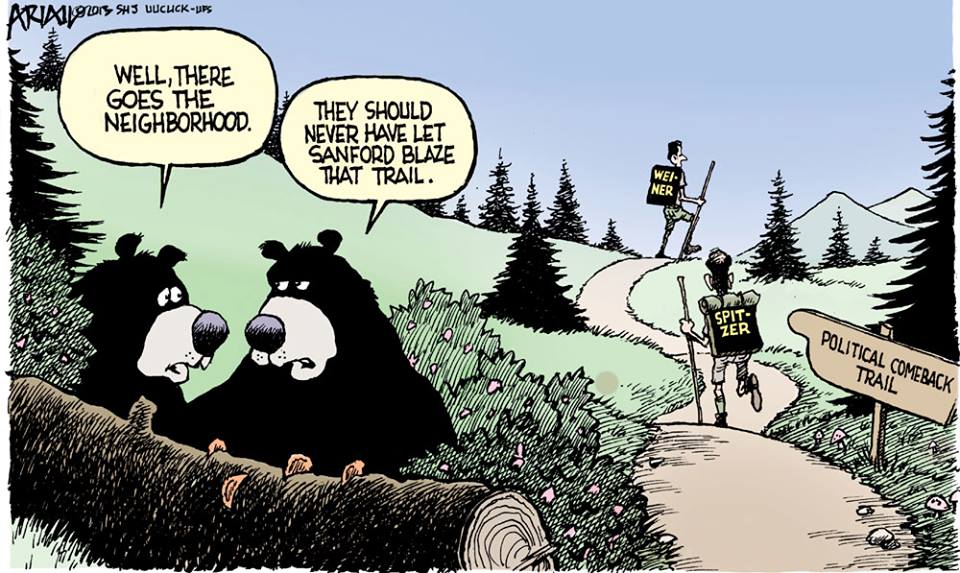
New York has SC’s 1st District to blame for Spitzer return

Sanford, having his Spitzer moment. Now Spitzer wants to have a Sanford moment.

Sanford, having his Spitzer moment. Now Spitzer wants to have a Sanford moment.

“The Fix” over at The Washington Post mentioned it in the lede of their Spitzer story:

It’s officially the year of the political comeback, with Mark Sanford winning a congressional seat and Anthony Weiner and Eliot Spitzer attempting their own second acts in New York City…

The New York Times was discreet enough to save it until the 3rd graf:

…His re-emergence comes in an era when politicians — like Representative Mark Sanford of South Carolina and the New York mayoral contender Anthony D. Weiner — have shown that public disapproval, especially over sexual misconduct, can be fleeting, and that voters seem receptive to those who seek forgiveness and redemption….

“It,” of course, is the embarrassing decision by the voters of South Carolina’s 1st District to send Mark Sanford to Congress again.

It’s apparently just given all sorts of bad actors bad ideas.

It shouldn’t. Just because voters in one state elected one guy who couldn’t keep his pants zipped (or even stay in this country when he was supposed to be on duty as governor of SC) doesn’t mean a whole other set of voters will vote for a whole other guy who also spectacularly engaged in misdeeds of a sexual nature. Particularly when the two men are so different politically, and their respective electorates are so different. It’s not like they’re all running on the “adultery” ticket, and that’s the political flavor of the month or something.

But national media too often act as though there is a real connection, and I fear that the backers and political consultants and hangers-on who talk these guys into making these comeback attempts do take such absurd, superficial, incidental correlations into consideration.

These things have been inextricably joined by national media since the start. The day that Mark Sanford did his super-painful (to watch, anyway) confessional presser, I was walking over to the State House for it, not exactly knowing what to expect, when an editor from The New York Post (in whose behalf I was on the way to cover the thing), called me on my old Blackberry to ask what I knew. Not much, I had to tell him. He asked, “Is he going to have a Spitzer moment?” I said again I didn’t know, although yeah, it was possible. I had been hearing things the last couple of days, but what I had heard was so sketchy and dubious that I didn’t want to embarrass myself promising such wild stuff when I had insufficient reason to believe any of it. (The only thing I had to go on was the governor’s bizarre disappearance, and his showing up that morning on a flight from Argentina.)

Then, when Sanford finally came out and started talking, I kept thinking, Wow, it was all actually true.

So now, they’re all like, Spitzer’s gonna try to do a Sanford.

Thanks, 1st District. Thanks so much.

Edward Snowden, the sniveling ‘hero’

This piece over at Slate

On the merits, Snowden’s claim for asylum would not count for much in any country. Applicants for asylum typically must prove they are the victims of persecution on account of their race, ethnicity, religion, or membership in a social or political group. Frequently, these are political dissidents who are fleeing government oppression, or members of the wrong group in a civil war or ethnic conflict. They have been tortured, their families have been massacred. Snowden could be regarded as a political dissenter, but the United States is attempting to arrest him not because he holds dissenting views, but because he violated the law by disclosing information that he had sworn to keep secret. All countries have such laws; they could hardly grant asylum to an American for committing acts that they themselves would regard as crimes if committed by their own nationals…

… reminded me of the statement Edward Snowden put out a day or two ago, through his friends at Wikileaks. After complaining that President Obama is employing “the old, bad tools of political aggression” against him, he went on:

The Obama administration has now adopted the strategy of using citizenship as a weapon. Although I am convicted of nothing, it has unilaterally revoked my passport, leaving me a stateless person. Without any judicial order, the administration now seeks to stop me exercising a basic right. A right that belongs to everybody. The right to seek asylum…

Well, first, young Edward, you have been “convicted of nothing” because you have not been tried, which is because you have not been apprehended, which is because you’ve been running like a scalded dog ever since you revealed your identity to the world.

And I thought Slate, above, explained pretty well why most nations would be unwilling to grant you the asylum that you wrongly regard as your “right.”

The whiny tone of Snowden’s statement this week sort of stands in contrast, in my mind, to the tone of self-righteous martyrdom that he struck at the outset, from Hong Kong:

I understand that I will be made to suffer for my actions, and that the return of this information to the public marks my end… There’s no saving me…

In other words, it’s a far, far better thing I do, yadda-yadda. Back then, he wasn’t concerned for himself, only for others:

“My primary fear is that they will come after my family, my friends, my partner. Anyone I have a relationship with,” he said. “I will have to live with that for the rest of my life. I am not going to be able to communicate with them. They (the authorities) will act aggressively against anyone who has known me. That keeps me up at night.”…

In other words, he was worried only about those whom HE had deliberately and unilaterally betrayed, along with his employer, his own oaths, and his country. He’s right — anyone associated with him, particularly anyone who worked with him, will be under suspicion, as our counterintelligence people will naturally wonder how one guy, working alone, had access to so much compartmentalized information.

But have you noticed something about those people he supposedly was so worried about? They’re still here, in this country. They are not hiding in an airport in Russia, desperately trying to find a country that will protect them from the legal consequences for their own actions. Only Edward Snowden, “hero” in the cause of transparency, is doing that.

If Snowden really wants a national conversation about the issues he raises, there would be no better stage for him than his own trial. The one he’s unwilling to face.

I had no idea Boehner was such a jerk

There was an interesting piece yesterday in The Washington Post about how divided the House Republicans are these days, headlined, “House Republicans broken into fighting factions.”

It provided an in-the-room perspective of recent battles within the caucus, such as the meeting on New Year’s Day in which Speaker Boehner told the caucus he was going to vote for the tax deal with the Democrats, and his two top lieutenants said they would vote against it, and a representative from Tennessee shouted, “If you’re for this and they’re against, we’ve got problems.”

As I said, interesting piece. I’ve felt a good bit of sympathy for Mr. Boehner over the last couple of years as he has tried to lead the House despite the open opposition of the Tea Party faction. But I lost all sympathy when I got to this part of the story:

On a recent Wednesday afternoon, House Republicans filed into the same Capitol basement room, HC5, where they fought on New Year’s Day. They filtered past clearly marked NO SMOKING signs — which, as always, the Camel-smoking Boehner ignored — and settled into the same hard plastic chairs that have served as Washington’s toughest ideological fault line of the past 30 months.

OK, maybe I’m the last person in America to know this about Boehner, but I find that shocking.

I would think any member of the Congress who so blatantly ignored a rule in place for the health of other people to be beyond the pale. But for a leader to do it — for someone in chargeto demonstrate that he is entitled to indulge his own noxious habit to the detriment of the health of everyone around him, even though others have to follow the rules…

That’s just breathtaking. So to speak. I’m stunned.

No wonder nobody wants to follow that guy.