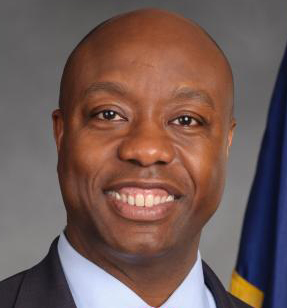
One recent morning, I watched another episode of “The West Wing” while on the elliptical trainer. It was the one titled “Drought Conditions,” the 16th episode of Season 6. It’s the one you might remember best from the scene when Josh and Toby actually get into a fight, right there in the West Wing, and Toby gets a nasty cut on his cheekbone. (See above.)
At this point in our story, Josh has left the White House to manage Matt Santos’ bid for the Democratic nomination for president. His candidate has done better than expected in New Hampshire, but Josh is worried about another candidate who has come out of nowhere to start grabbing support that should go to Santos. This new candidate, Rafferty, is using language that Toby once wrote for Bartlet in favor of a single-payer health care system. Toby admits he’s been collaborating with Rafferty. This is what precipitates the fight.
Anyway, there are two or three conversations about this, and we pick up on the fact that, way back before they won the White House, everybody else had to talk Toby (and presumably President Bartlet) down from their politically unpalatable position.
This was so familiar to me. This episode aired two years before I wrote my column asking why no presidential candidate, even in the Democratic field, dared to say “single-payer,” other than fringe extremists such as Dennis Kucinich. Barack Obama certainly didn’t dare say it. My attitude was much the same as Toby’s: What’s the point in even having Democrats, if they can’t stand up for something so obvious, so commonsense, so entirely accepted in the rest of the advanced world — and so in their wheelhouse ideologically?
Anyway, I finished watching the episode just as I finished with the elliptical trainer. (I do 40 minutes, which is almost perfect for watching American “hour-long” commercial TV shows.)
While doing my crunches and stretches after, I put on a few minutes of a “30 Rock” that I’d started watching previously. It’s the one when Jack and Avery have their baby, reluctantly, in Canada after failing to get back across the border before she gave birth.
Which leads to this exchange, which interrupts a phone call Jack is having with Liz Lemon:
Avery: This woman is trying to tell me that we don’t have to pay for any of this.
Woman: Right. The Canadian health care system…
Jack: Oh, no you don’t. We will not be party to this socialist perversion. You will take our money.
Woman: I’m sorry, sir, I can’t do that.
Liz (on the other end of the phone): Oh, this is gonna be good.
Jack: Avery, can you walk yet?
Avery (rising from her bed, holding the baby): I am right behind you, Jack.
Jack: Let’s go find a Canadian who will take our money.
That is played for laughs, and it is hilarious, particularly Jack’s hyperbolic crack about “socialist perversion.”
But what it’s making fun of isn’t funny. Why DO Americans freak out so over something that Canadians and Brits take for granted?
Y’all know me. I’m a center-right kind of guy (if you must place me on that stupid left-right spectrum), and on some things a neocon. I want the federal government out of things it has no business in, such as education (which means, by the way, that I would never vote for the fictional Matt Santos — he comes across like he’s running for school board rather than POTUS).
But putting everybody into the same risk pool and eliminating profit from the payment system just seems like common sense, not radical at all. Paying my premiums (or if you prefer, taxes) for coverage that I can never lose, no matter where I go to work in the future, also just makes sense to me. Having something simpler than either the patchwork of private coverage or the complex maze of Obamacare just makes sense to me.
I don’t get why it doesn’t make sense to other people — and in fact, freaks them out so. I mean, intellectually I understand that some people have a sort of religious horror of the government being involved with anything. I accept that they are that way. But I have trouble understanding why they’re that way. Why do Americans get so worked up about something that other people who are so like us culturally — such as the Brits, and the Canadians — take for granted, as a matter of course?
Some of y’all have tried to explain it to me in the past. Maybe you should try again. Maybe I’ll get it this time. Then again, maybe not.
The thing is, I can probably recite all of the objections. The words I know. What I don’t get is the passion, the horror at the idea. It’s the emotion that eludes my understanding…