Category Archives: Education

Rep. Smith: Democrats WILL vote to override all 107 Sanford vetoes

Not as a bloc, mind you, because as you know, Democrats don’t do blocs. But according to Rep. James Smith, who called me a few minutes ago to set me straight (thereby saving me a call to him or Minority Leader Harry Ott), it will be the official House Democratic leadership position that ALL of Gov. Sanford’s 107 vetoes should be overridden. And he hopes they will be — but of course that will depend on the Republicans doing their duty by South Carolina — which James suggests the Tea Party has made GOP lawmakers scared to do.

James called me because a lot of y’all were calling him, egged on to do so by this blog (in the absence of really helpful coverage of the

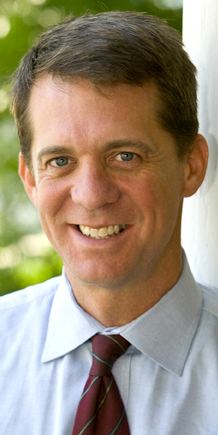
Rep. James Smith

budget vetoes by the MSM). I urge y’all to keep on calling your lawmakers, Democrats and especially Republicans (since there’s more of them) to tell them what you think. And if you’ve forgotten who your lawmakers are, or how to contact them, here are instructions on enabling yourself.

If you’ll recall, House Majority Leader Kenny Bingham told me over the weekend (“Lawmakers will uphold most of Sanford’s vetoes“), the governor is likely to prevail on most of his vetoes of funding for such things as public libraries, the State Museum, technical colleges, SC ETV, the Arts Commission and the Confederate Relic Room and Military Museum in part because Democrats can’t be relied upon to vote to override. He based this on the lack of support he got from Democrats on some key votes on the budget.

James says that was then, this is now.

Indeed Democrats were divided on some things such as court fees. But that has nothing to do with these budget vetoes. If the Legislature fails to override, says the former Minority Leader, it won’t be because of lack of Democratic votes. And of the governor’s 107 vetoes, “I have yet to find one that we would not override.”

And while Kenny is worried, James still hopes “to be successful in overriding them.”

If the Democrats can indeed stick together tomorrow, that means the fate of these vetoes will lie in the bitter rivalry between regular mainstream Republicans and the Sanford fringe — a fringe that was emboldened by Nikki Haley’s near victory in the primary last Tuesday. All Sanford and Haley and their allies need is to drum up a third of either the House or the Senate for Mark Sanford to have his biggest victory in his eight sorry years in office.

So once again, folks, rather than merely refer you to a link, here are the instructions on how to contact your legislator, as we used to say at the bottoms of editorials:

To find out who your legislators are and how to contact them, go to www.scstatehouse.net and select “Find your legislator” on the left. Or call Project Vote Smart at 1-888-VOTE-SMART.

Tech system funding, by the numbers

A little more perspective on the governor’s three vetoes of Technical College operational funding, courtesy of Midlands Tech President Sonny White, who spoke to the Columbia Rotary Club this afternoon. (He only mentioned the vetoes in passing; I got the rest from him in an interview afterward.)

When the Technical College system was founded at the behest of Gov. Fritz Hollings (who got the Legislature to go along by buying Sen. Edgar Brown a bottle of bourbon and helping him drink it, which shows that in an altered state of consciousness at least, our lawmakers can be forward looking), the system was paid for thusly:

  • 70 percent of funding came from the state
  • 10 percent came from the counties served by the 16 schools — this went to physical plant and other local operating costs
  • 10 percent came from students — which made sense, since this was about providing a bright future to folks who did not already have good income
  • 10 percent came from auxiliary services such as bookstores and the like

In the 2011 fiscal year, the breakdown will be:

  • 70 percent will come from students — some of it from Pell Grants and lottery-funded scholarships, but it will still be up to the students to find the way to come up with it
  • 10 percent from the state — which is just so many different kinds of pitiful that it defies words
  • 10 percent from counties — Sonny expressed his appreciation that counties have at least kept their part of the bargain over the years.
  • 10 percent from auxiliary services.

Oh, and by the way, the technical system has seen a 20 percent increase in enrollment during this period in which unemployment has hovered around 12 percent.

So now you know.

Some background on Sanford’s tech system vetoes

You may have seen a piece in The State today by Otie Rawl regarding governor’s vetoes of funding for the S.C. Technical College system. (This may be the only place you’ve seen mention of this in the MSM).

Let me give you some numbers to add to your perspective on this particular outrage of the governor’s.

Basically, the governor was looking for $4 million. What he wanted to do initially was ReadySC. As Sonny White, Midlands Tech president, ‘splained to me this afternoon, ReadySC is the entity at the heart of South Carolina’s ability to tell industrial prospects — the example he gave was Boeing — that yes, we’ll be able to train your workforce for you. To explain to you what the governor apparently doesn’t understand, here’s what ReadySC does:

As an integral part of the SC Technical College System, The Center for Accelerated Technology Training and its readySC™ program work together with the 16 Technical Colleges to prepare South Carolina’s workforce to meet the needs of your company.
Established in 1961, readySC™ is one of the oldest and most experienced workforce training programs in the United States. We are ready to bring this experience and expertise to work for your company.
  • We are ready to quickly and successfully start up your new facility.
  • We are ready to help you seamlessly expand your existing facility.
  • We are ready to discover the skills, knowledge and abilities needed at your facility.
  • We are ready to design new and innovative training solutions customized specifically for your needs.
  • We are ready to respond to your time frames and deadlines no matter how tight.
  • We are ready to deliver world-class training and project management.
The Center’s new moniker — readySC™ — sums up perfectly our message to
companies that are considering a relocation or expansion in South Carolina.
We are ready!

As Sonny explained to me, the problem is that the governor simply doesn’t believe that the technical colleges should be involved in economic development. Let me say that again: Our governor (Nikki Haley’s guiding light) does not believe that the technical college system — which was created under Gov. Fritz Hollings as an economic development tool — should be involved in economic development.

The good news is that Sanford was talked out of this, by ecodevo types like Otie Rawl, according to Dr. White.

But the governor still wanted his $4 million. Fine. So he took it out of administration for the 16 technical colleges. He said that the three biggest colleges — Midlands Tech being one — should provide administrative services for the other 13.

Fine, says Sonny. But there’s no plan to do that, no authorizing legislation, no nothing — except the governor’s airy wish that it come into being.

The blog goes academic

Just got this request this morning:

Dear Mr. Warthen:
I am teaching Political Sociology next term and I’m putting together readings for my course packet. I follow (and enjoy) your blog and and read with interest your post “Where have all the reporters gone. . . duh.”  I would like to save it as a .pdf and include it as one of the supplemental readings for the section on media, politics and democracy. Please let me know if this is acceptable.
Best regards,
Tracy
Tracy Burkett, Ph.D.
Associate Professor of Sociology
College of Charleston

To which I said sure; go for it. I’d offer to come speak to the class, but I don’t get down to Charleston as much as I’d like. I never pass up a chance to further confuse the leaders of tomorrow, as long as it doesn’t inconvenience me…

If I were endorsing, I’d endorse Vincent Sheheen

Ignore what I wrote in that last post. It does Vincent Sheheen a great disservice, by suggesting the reason to pick a Democratic ballot and vote for him tomorrow is simply because of the mere absence of negativity in his campaign.

He deserves a much more positive endorsement than that, for the simple reason that he is far and away the best candidate running for governor in 2010, a year in which we badly need new and visionary leadership in the governor’s office.

Of course, I put myself in a bind a couple of months back, when I sorta kinda decided not to endorse candidates as a blogger. I had all sorts of good reasons not to: No one was paying me to take all that aggravation. No longer representing the voice of the state’s largest newspaper (at least, that’s what it was when I was there), I had no institutional obligation to do it. And while doing it for the newspaper was business, if I did it on my own blog it would be personal, with all the many levels of messiness that entails. Then there was the unstated reason: For the first time ever, I found myself in a situation in which there would be a personal cost of sticking my neck out. A year’s unemployment had shown me how reluctant employers can be to take on someone with as much well-documented baggage as I have (much of it from having taking a stand FOR this powerful person, and AGAINST that one). And I was about to start trying to sell advertising, with the only thing I had to sell being my own brand and how it was perceived — and there is no surer, more infallible way to infuriate close to 50 percent of the public than to choose one candidate over another. Did I not owe it to my family to try to launch this enterprise on a sound footing, and not undermine it by making arrogant (at least, that’s how a lot of people perceive endorsements) pronouncements that would inevitably alienate? After all, I could be honest about what I think about candidates without taking that formal, irrevocable step.

Lots of good, solid, self-interested reasons not to endorse, right?

Well… sometimes one must stand up and be counted, even when one is not being paid to do so. Remember how, when Grace Kelly demanded to know why Gary Cooper had to make a suicidal stand against Frank Miller and his thugs when he wasn’t the marshal any more, he explained “I’ve got to, that’s the whole thing.“? Full of nuance, that Gary Cooper. Anyway, this is an “I just gotta” moment for me, minus the gunplay (we hope).  There are things more important than my own self-interest, or the good of the blog. One of them is South Carolina’s crying need for new leadership at this point in its history.

Ours is still a poor state. On all sorts of measurements of economic and social and physical well-being, from income to health, we continue to be last where we want to be first, and first where we want to be last. We continue to have a political culture, and institutional structure, that reinforces that dynamic, and resists change more steadfastly than the government of any other state. Our government was designed by landed slaveholders to preserve the status quo, because that’s what benefited them. Those men are all gone, but the system of government designed to serve them still exists, and holds us back.

We are also held back by a lack of trust of each other, and a lack of faith in the idea that together, we can overcome the challenges that face us. This manifests itself in the phenomenon we see being played out so dramatically in the Republican primary this year, as the candidates — even candidates I would think would know better — compete to see who can be the most negative, the most rabidly anti-government. What does it mean to be anti-government, in this context? It means to deny faith in our ability to get together, people of different attitudes and philosophies, and work through our differences to build a better future to share.

The radical individualism that all of the Republican candidates embody this year — especially Nikki Haley, the front-runner — has been tried in South Carolina, over and over. Our current governor, Mark Sanford, is easily the most ideologically pure manifestation of that philosophy ever to hold that office.

It is painfully clear after eight years of Mark Sanford — whom I enthusiastically endorsed in 2002 — that such an “I, me, mine” approach to governance does not work. One cannot govern effectively when one holds governing in contempt. That should have been obvious then. It’s certainly obvious now.

Vincent Sheheen offers the positive alternative. Not the “big-government, liberal” alternative that the propagandists of the GOP will accuse him of offering (not because of anything he advocates, but because that is their reflexive, automatic reaction to everything), but a sensible, moderate South Carolina-friendly approach unencumbered by radical ideology of any kind. Before he began this campaign, he was pushing his own proposal for restructuring our government to make it effective and accountable for a change. It is a pragmatic approach that would actually have a chance of becoming law if a governor were behind it. Rather than throwing unacceptable ultimatums at the Legislature and reveling in lawmakers’ rejection, Vincent Sheheen would actually work with lawmakers of both parties (he has a proven ability to do so) to make his proposal a reality. Instead of a governor who can’t even work with his own party and doesn’t want to, imagine how wonderful it would be to have one who works amicably with both?

Now, many of these same things can also be said of Jim Rex. He, too, has a positive, teamwork approach. He’s worked across party lines in advancing his public school choice initiatives, and has formed alliances with some of the most conservative Republicans in trying to improve the way schools are funded in South Carolina. But, because it’s been his job, his policy experience in office has been limited to education. And while better education may be the thing South Carolina needs most, it’s not the only thing; Vincent Sheheen’s experience with public policy is broader, despite his youth.

And in this election, when we have such a need for new beginnings, his youth is an advantage.

That I would say that would surprise some people who have worked most closely with me. I was the grumpy eminence grise on the editorial board who would ask a young candidate, “How old ARE you, anyway?” with a tone that suggested they hadn’t lived enough to be ready for the office they were seeking.

But it’s time now for a generational change. And among the 39-year-old Sheheen’s strengths is the fact that he offers us that.

An old friend, sensing I was leaning that way — because I’ve been honest about what I think of candidates, however much I’ve resisted a formal endorsement — asked me several weeks ago why I would choose Vincent over Jim. I answered as follows, after protesting that I was not, repeat, NOT going to endorse:

Now between you and me, I’d go with Vincent. So you inferred correctly.

Several reasons:
1. You know that with me, it’s seldom about the sum of policy positions. I would be hard-pressed to tell you [off the top of my head] what their policy positions are, beyond the fact that nothing has jumped out at me as bad. Rex has a plan for spending cigarette tax money that I’m not sure about, and I know Vincent’s all about restructuring, to cite a couple of differences that jump to mind. And the restructuring is a biggie.
2. So that leaves us with character, and I think the character of both is fine. But I’ve seen Vincent grow during this campaign in terms of his ability to connect with voters, while Rex is still that trustworty elder statesman who I’d be OK with as governor, but who isn’t likely to inspire. Vincent generates a newness, a sense of a new generation taking over from all the nonsense of the past, that is appealing. And he wears it well; he has his head on straight.
3. Vincent could work with the Legislature. He’s one of them, and that helps make up for being a Democrat. He would come in with lawmakers knowing that about him. He could make a difference. Rex is the guy that they’re accustomed to thinking of as “that ONE statewide Democrat,” and they just won’t be as likely to want to engage with him.
4. Vincent could win in November. Normally I wouldn’t mention that, but this year it’s important. The Republicans are all running so hard to the right, trying so hard to convince us that, in varying ways, they will be Mark Sanfords — even Henry, who should know better — that this year I just don’t see anything good coming out of any of them becoming governor. We so desperately need a break from what we have. And that makes it vitally important that the Democratic nominee not only be someone who’d be an improvement over what we have, but who could WIN in the face of the odds, which are always against the Democrat.

Let me stress again the generational factor. South Carolina needs a fresh start, a real break with its recent past. Vincent embodies that the best. This is a decision I’ve come to gradually, in my own holistic, intuitive way, but I’ve tried to spell it out as systematically as I can for you.

To elaborate on that: Rex radiates the aura of a civic-minded retired guy who’s willing to “give back” if there’s no one else to do the job. Vincent wants to build a better South Carolina, the one that he and his young children will live in. Makes a difference.

It occurs to me that I do my readers a disservice by sharing those thoughts privately with one friend, but not openly with them. So there it is. It may seem to be high on intangibles and low on specifics, but that’s because I had already reached the conclusions that on the specifics, I’ve concluded that Vincent is sound. That makes the intangibles — the ability to inspire, the ability to be positive rather than negative — of great importance. We didn’t worry about the intangibles (such as his aloof manner, his sleep-on-the-futon quirkiness, his hermitlike aversion to the company of other Republicans) with Mark Sanford, and look where it got us.

As I’ve explained before, none of the Republicans is offering us anything positive for our future. That puts me in the unaccustomed position of not having a preferred candidate on that side. But there is no doubt that there is a Democrat who stands well above them all, as well as being a stronger candidate than any in his own party.

That candidate is Vincent Sheheen.

At least, that would be what I’d say if I were endorsing.

If you think spending TOO MUCH MONEY is the main problem with SC schools, you’ve lost me

Had to scratch my head at this Tweet from superintendent candidate Kelly Payne:

Education spending is a fiscal time bomb, see my solutions. http://www.votekellypayne.com

I followed the link, and it didn’t help me understand her point better.

There are a lot of problems with public schools — the inferiority of poor, rural schools compared to the suburban ones; the difficulty in hiring and retaining good teachers and getting rid of bad ones; the absurdity of maintaining more than 90 separate district administrations, to name but a few.

But too much money — at least, that’s how I read “fiscal time bomb” (maybe she meant something else; I hope so) — isn’t one of them. Unless, of course, you’re running in a Republican primary. Sigh. Kelly, being a teacher, should know better.

Benjamin wants to put new law school on Main St.

It’s going to be interesting having Steve Benjamin as mayor. His mind is just going a mile a minute spotting opportunities, making connections, such as this one reported by Mike Fitts:

Columbia already has the right major tenant to go into the former SCANA Corp. space on Main Street, according to mayor-elect Steve Benjamin: He wants the building to be the new home of the University of South Carolina School of Law.

Benjamin hopes the school could work out a long-term lease with the Palmetto Center, the building that now has about 450,000 vacant square feet in the heart of downtown. A long-term tenant such as the law school should be appealing to the owners, Benjamin said, and would keep the building in private hands and on the tax rolls….

If the school were there, it would be surrounded by the offices of many of the state’s biggest law firms and several courts, including the S.C. Supreme Court, Benjamin said.“It’s a perfect place for law students,” he said.

Benjamin said he has met with the building’s owner and real estate agent to pitch the plan. The building could be bought by a new owner and renovated for substantially less than it would cost USC to build a new school, he said.

Moving it there “would mean giving Main Street a big old shot of adrenalin,” Benjamin said. He compares the potential impact on downtown to what the Savannah College of Art and Design has brought to that city….

Already, this idea is creating a lot of buzz. Mandi Engram posted something about it on Facebook and has kicked off a lively discussion there.

What do y’all think?

Graham not so ‘cool’ now on global warming

Back in late February, Tom Friedman wrote the following about our senior senator:

And for those Republicans who think this is only a loser, Senator Graham says think again: “What is our view of carbon as a party? Are we the party of carbon pollution forever in unlimited amounts? Pricing carbon is the key to energy independence, and the byproduct is that young people look at you differently.” Look at how he is received in colleges today. “Instead of being just one more short, white Republican over 50,” says Graham, “I am now semicool. There is an awareness by young people that I am doing something different.”

But today, we have the following  release from some of his erstwhile young fans:

Youth Activists Demand S.C. Leadership on Energy and Climate Legislation

(Columbia, SC) – Responding to Senator Lindsey Graham’s withdrawal from federal energy legislation and the offshore oil disaster, youth activists in South Carolina have called on the Senator to renew his leadership.

“Students at Clemson were proud to stand behind our hometown Senator in pushing for federal energy and climate legislation,” says Gabriel Fair, co-president of Clemson University’s Student for Environmental Action. “Lindsey Graham’s leadership really encouraged the young people who are fighting to cut carbon pollution and create a clean energy economy in this state.”

Over the previous months, Graham has led in federal energy and climate legislation. In February editorial in the New York Times, Thomas Friedman quoted Graham saying, “I have been to enough college campuses to know if you are 30 or younger this climate issue is not a debate.  It’s a value.  These young people grew up with recycling and a sensitivity to the environment – and the world will be better for it.”

Senator Graham’s withdrawal from the federal energy debate has disappointed students across South Carolina. “We’d like to stand behind our Senator again and hope he comes back to the table and strengthens the bill further,” says Fair.

Students in South Carolina are looking for the jobs comprehensive energy and climate legislation would produce. According to Winthrop University student Lorena Hildebrandt, “Young people face the highest unemployment rates in this country right now. Like many of my friends, I’ll be graduating college soon and looking for a job.  That’s why building a new clean energy economy is so important to young people. It’s absolutely necessary we pass comprehensive federal legislation to create a clean energy economy.”

Graham’s backing away from the process occurs at a crucial time for federal energy legislation.

In light of the unfolding oil disaster in the Gulf of Mexico, Americans are reconsidering our country’s dependence on oil. Recent polls have indicated that the Deepwater Horizon explosion has actually bolstered support for federal climate legislation, while support for drilling is falling.

According to a poll conducted last week by Clean Energy Works, 61 percent of Americans now favor a climate bill that would cut carbon pollution.  Meanwhile, CBS News reported this week that forty-one percent of Americans feel the risks of offshore drilling are too high, up from twenty-eight percent in 2008.

Students on the coast are worried about what Graham’s pulling out will mean for federal legislation on energy and climate. “We’re disappointed here on the coast that Senator Graham walked away from federal energy and climate legislation,” says Marissa Mitzner, Sustainability Coordinator at Coastal Carolina University. “Especially with the oil disaster in the Gulf unfolding and our own South Carolina coasts vulnerable to the impacts of climate change and the threat of oil drilling, we need Senator Graham’s leadership more than ever.”

###

Face it, senator: You’re not even “semicool” now, not with the kids.

As for what a cool guy like me thinks, well, I’d certainly appreciate a better understanding about why the Dems’ recent moves on immigration mean you can’t lead on this.

Oh, and kids — Tom Friedman didn’t write that in “and editorial.” It was a column. He doesn’t write editorial.

What does Innovista success look like?

How will we know when Innovista is succeeding? Well, to begin with, we won’t be at the point where we can call it a complete success for many years, at best. But along the way, there will be signs.

Some of them will be big, such as the new baseball park and the Moore School moving to the geographic area that is central to the Innovista movement. Or the eventual construction of the waterfront park that makes the area more inviting. Most important will be the development of high-tech start-ups that you won’t even be aware of at first, but that will grow and feed off each other as the dynamic starts working.

But there will also be other less obvious signs. Here’s one small, but definite, sign that jumped out at me in recent days…

Have you heard the radio ads for Thirsty Fellow Pizzeria and Pub? The part that jumps out at me is when this eatery/watering hole announces that it can be found in USC’s Innovista. I’m never in a position to take notes when I hear it, but here’s what the Thirsty Fellow says on its website:

Owners Willie Durkin, Chuck Belcher, Dean Weinberger and Terry Davis want you to join the Thirsty Fellow family. Located in the USC Innovista area, we have a comfortable atmosphere, a great menu, a full bar and plenty of televisions. Open for lunch, dinner, late night and Sunday brunch, put Thirsty Fellow on your “to do” list.

“Located in the USC Innovista area.” Whether you take that as a boast — a desire to be associated with the idea of the Innovista — or merely as an acceptable way of giving directions (thereby suggesting that everyone knows where the Innovista is), this is a small-but-telling sign of the concept moving forward, taking hold in the marketplace.

Let me say that again: In the marketplace. You know, that place where Gov. Sanford and the Policy Council don’t want USC to go messin’, the place where they believe, with all the fervor of their secular anti-gummint religion, it is doomed to fail.

And yet, the place where, in this tiny way, it is taking hold…

Making Innovista work going forward

Don Herriott speaks about Innovista to Columbia Rotary Club recently.

Had breakfast this morning with Don Herriott, USC’s new honcho for Innovista – a guy with a tough job cut out for him.

Innovista has always been a huge challenge. So many things have to go right for it to work – not specific things, not necessarily things you can plan in advance. So much of what will make Innovista work will involve players yet unknown, engaged in activities yet unenvisioned. And those who seek to make it happen, to encourage this process along, have to keep the vision of what Innovista can be in front of so many, fostering and growing the idea.

Under the best of circumstances, you have to overcome a lot. You have to sell the idea of Columbia as a place to live and work to established researchers, to students, to investors, to entrepreneurs, to developers, to so many, so that you can draw in the people who will be at the core of the process – while at the same time keeping all the local incumbent players (business, political, civic) energized and encouraged to keep doing their part to keep the whole thing moving in the right direction.

That’s much tougher to do when there are setbacks, such as the mess that has ensued from entanglements with problematic partners, and buildings that have become a focal point to the extent that many people erroneously think those buildings ARE Innovista.

It’s made far harder when the political leader with the state’s bulliest pulpit is absolutely opposed to what you are doing, and wants you to fail. And when he is supported by a well-funded chorus of naysayers. And make no mistake: Mark Sanford and the S.C. Policy Council, to name but one of his cheerleaders, don’t merely object to the decisions that have been made in the name of the Innovista. Their problem isn’t the overemphasis on hydrogen, or the investment in “spec” buildings. They are opposed to the VERY IDEA of the university and local and state government being engaged in trying to build the local and state economy. No matter what was done in the name of Innovista, they would be against it – especially if it looked as though it might succeed.

The thing I like about what Don Herriott’s trying to do is get everyone refocused on what Innovista has been from the start. It’s not a building or set of buildings, it’s not a specific grid of city blocks, it’s not just hydrogen (much less the much-derided, but much hyped, electric cars). It’s about sparking and sustaining a dynamic that leads to the creation of high-paying, new-economy jobs so that Columbia and South Carolina – instead of being behind every curve – will actually be well-positioned in the “New Normal” economy of the 21st century.

It’s a movement, a concept, a vision. Like the Vista before it, a lot of people will have to believe in it, and invest in it in many ways over a course of years and decades, for it to achieve its potential. And like the Vista, it’s a goal that neither government nor the private sector can make happen alone.

Don’s a little frustrated that when he has good news to tell – such as the fact that some high-tech companies associated with Innovista are moving into the Wilbur Smith building – it gets played like this: “A major tenant planned for USC’s struggling research campus, Innovista, is instead moving into a downtown Columbia office tower several blocks away.” That lede was based on the fact that these companies had planned to be in an Innovista building that didn’t get built as planned. So instead of just withering away or going to another city, another state, they’re locating as close as they can so that they can still be a part of the Innovista movement – which should be great news. But it didn’t play that way. It played as a “coup” for Matt Kennell’s City Center Partnership, and a loss for Innovista – as though they were in competition, instead of dependent on each others’ success.

Yes, as Innovista moves forward and succeeds, the vacuum of that territory between Assembly Street and the river will naturally fill with Innovista-related people, structures and activity. That gaping void of pure potential in the heart of an urban center is one of the great advantages Innovista will have over other research centers around the country. As Mr. Herriott says, “Silicon Valley doesn’t have a street where it begins and ends.” The idea that the Wilbur Smith building, two blocks from the heart of the USC campus one way and three from the Vista proper in the other, is not a part of this movement, this dynamic that he is trying to foster, is absurd.

But a lot of people don’t understand that. And that’s bad because local folks need to understand when Innovista is moving forward in order for it to be able to continue moving forward.

For that reason, one big challenge Don Herriott doesn’t really need – that of renewing and maintaining the local buy-in that Innovista enjoyed when the concept was first unveiled – is as big as any other.

I know a lot of you out there aren’t cheering for him to succeed. But I am. And I hope at some point you will too. Because the stakes for Columbia are enormous, and making Innovista work is an all-hands-on-deck job for this community.

Dead-blogging the GOP debate

Just some scattered thoughts as I listen to the GOP debate last night via the Web. Can’t call it “live-blogging,” but it’s kind of like that, so I’ll call it “dead-blogging,” which sort of reflects my level of enthusiasm about the candidates so far, a few minutes into it. Some random observations:

  • These people aren’t running for governor of South Carolina. They’re running for the GOP nomination for governor, which is entirely different. Every word they’ve uttered so far has dripped with Republican jargon and catch phrases, and none of them has communicated the slightest desire for MY vote. Anyone else feel that way? I mean, it’s like listening to old-line Marxists talk about “running-dog imperialists.” These phrases don’t communicate or inspire, they just help us pigeon-hole the speakers…
  • Did Larry Grooms just say that DHEC regulates too aggressively? In what state, in which universe?
  • Seems the panel should have some folks on it with more of a statewide perspective, such as, say, the editorial page editor of The State. Oh, wait; there isn’t one any more
  • Nikki’s sweet (oh, the women are going to come down on me for that one, but she is), but she really shows she’s out of her depth whenever she starts comparing government to a business. Inevitably, she betrays a lack of understanding of one, or both. For instance, she just decried the fact that the state lottery spends $7 million on advertising. She says that should go to education. Well, fine, so far. I don’t like the lottery spending to sucker more people into playing; I don’t think the lottery should exist. I would not, of course, try to make people think that the lottery is in ANY way an answer to our school funding needs. But that’s not the problem with what she said. The problem is, she says a business would not spend the money on advertising to keep the customers coming. Ummm… yes it would, Nikki. It would have to. I mean, duh, come on. It’s hard to imagine a type of business that would be MORE dependent on ad spending to keep its product front-of-mind for prospective players, to constantly whip up interest in its “product.” It has no substance, so it’s ALL about generating buzz…
  • Interesting how it is an accepted truth among these GOP candidates that the current administration has totally dropped the ball on economic development. There’s nothing new about it — Republicans have been griping about it for years — but it’s interesting because it sounds for all the world like these folks are running for the nomination of a party that has NOT held the governor’s office since 2002.
  • Which is dumber or more off-point — a TV watcher asking when we’ll eliminate property taxes, or Larry Grooms saying we shouldn’t tax either property or income? Which of course only leaves taxing economic activity as the last major category. And given our current economic situation, how stupid is that? And is he unaware that we’ve already tilted our tax system far too far in that direction already? Where’s he been the last few years?
  • Gresham Barrett tries to deflect a question about the Confederate flag by saying we need to concentrate on sending the signal that we are serious about moving forward on economic development in this state. Well, getting the flag off our state’s front lawn is the easiest, simplest, most obvious step we can take in that direction.
  • Here’s another odd question from the public — Would you oppose more stimulus funding for SC if South Carolinians didn’t have to repay it? What relationship does that have to reality? None. There has never been, and never will be, such a major expenditure that we as taxpayers won’t be on the hook for. Of course, Nikki’s reply acts as though that’s the very situation we had with the stimulus that she agreed with Sanford on, which is the opposite of the truth.
  • Henry at least gets a plug in for comprehensive tax reform…
  • Grooms is right to say across-the-board is not the right way to cut the state budget, but then he retreats into quasi-religious ideological gobbledegook about how the problem is too much spending to start with. (More specifically, he says we shouldn’t institute programs — as if we’ve instituted new programs lately — that we don’t know how we’ll pay for. And yet he’s the guy who wants to make sure we don’t have the revenues we need, by taxing nothing but economic activity.)
  • Just watched Bill Connor’s Gov Lite campaign ad, which reminds me: If I ever do run for office, and I start blathering about how you should vote for me because I’m not a “professional politician,” will one of y’all slap me? Not hard, mind you, just to sort of reboot my brain so I can come up with something other than cliches…
  • Nikki says she supports “all education reforms.” So basically, if you call it a “reform,” she’s for it. Talk about failing to be discriminating…
  • Henry doesn’t seem to be aware that we are a national leader in demanding accountability of public educators. Lack of accountability isn’t the problem. We’re et up with it. In fact, we just had an insurrection over the PACT test, because so many parent agreed with the teachers that they’d had enough of it. I’m with him on merit pay, though.
  • Andre just came out for consolidating school districts. Good for him. Of course, Mark Sanford has always said he was for it, but hasn’t lifted a finger to make it happen. He also said he doesn’t want to spend money on football stadia, which I certainly applaud.

OK, I’ve got to stop watching now… lunch appointment. More later, if I get time…

What’s a Florida Atlantic anyway?

Something I’ve been wondering about since I read my paper yesterday morning. There was something on the front page, superimposed over one of those huge football pictures, like “USC 38, Florida Atlantic 16.”

I forget exactly what it said — I don’t have the paper in front of me. But the thought I had when I saw it was, “What’s a Florida Atlantic?”

Presumably it’s an institution of higher education (most likely located on the eastern side of the state) that has a football team. But I once lived in Florida — I went to high school there for two years — and I think this was the first time I ever heard of something called “Florida Atlantic.”

Probably everybody knew about it but me. Probably a real powerhouse, both academically and athletically. But until yesterday, I had missed it.

Was I the only one?  Probably.

Rex lets the first shoe drop

Don’t know if you saw this on Jim Rex’s Facebook page:

Statement by Jim Rex
Thursday, September 3, 2009

“I have decided that I will not seek re-election to the Office of State Superintendent of Education in 2010, regardless of whether or not I decide to run for Governor. It is clear from my time in this office that there is a limit to what we can accomplish to move South Carolina’s schools and our state forward so long as we do not have someone in the Governor’s office who is making education, jobs, and economic development the top priorities of this state. I am in the final stages of making a decision about whether or not to offer myself to South Carolinians to be that kind of Governor – a “turnaround” Governor – or whether to return to the private sector and continue to work to make a difference there. Sue and I appreciate the support and encouragement we have received as we have moved around the state in these last few weeks, and I look forward to a final decision very soon.”

So that’s one shoe. He said at Bud’s house that if the other shoe’s gonna drop, it will be this week or next.

So if he does get into it, what does that do to the race for governor? I was intrigued that Wes Wolfe suggested Rex would be in third place behind Vincent Sheheen and Dwight Drake. I asked Wes why he thought that, to which he responded:

The money and connections Drake has are pretty powerful. Plus, Rex’s only claim to fame was beating Karen Floyd by 455 votes. Also, Rex’s fundraising operation, at least so far, has been woefully inadequate compared to Drake and Sheheen. I think he could pull third, but he’d have to show me something special to prove that he can get into the runoff.

My own thought is that Rex has more name recognition than Vincent, and lacks the controversy that attaches to Dwight as a result of his lobbying clients. In a Democratic primary, that is. For many Republican voters (those of the Sanford ilk), Rex brings baggage just from being associated with public education, which they despise. And there are enough of that sort of voter to be a factor in a general election. But that’s not a factor in a Democratic race.

I don’t know for sure which of those three ought to get the nomination, but if I were to predict I’d say Rex would start out with an advantage, whether he should or not. But of course, no one really knows; we’re making educated guesses.

Cindi sets the governor’s numbers straight

I highly recommend Cindi’s column in The State today, which debunks the numbers the governor uses in arguing his quirky view of the stimulus, and does so in highly understandable (even for me) terms. A sample:

The governor’s other numbers aren’t quite as obviously skewed, which is why we need to take a closer look at them. Since Mr. Sanford consolidated most of his claims in a recent op-ed column, let’s just work from that:

• “Last year state government spent $19 billion, and this year we will spend $21 billion.”

The budget passed by the House, which includes all $928 million in stimulus funds, was $21.2 billion, but because of another across-the-board cut last month, it will have to be cut to $21.1 billion. If you left out the $350 million Mr. Sanford wants left out, you’d be down to $20.7 billion. That’s about $800 million more than the current budget of $19.9 billion, which has been cut many times, but it’s less than the $20.9 budget the Legislature passed last spring.

On top of that, more than a third of the money is federal funds, which agencies don’t have the discretion to divert the way they can state funds. And of course our population is increasing, which increases the demand for government services.

• “Even education spending will go from $3.3 billion to $3.5 billion.”

After I raised questions about the first figure, Mr. Sanford’s office sent out a note Tuesday saying it got bad figures from the State Budget Office and it should have said education spending will go from $3.43 billion to $3.55 billion. But even the “correct” numbers demand explanation. The budget passed by the House includes $3.8 billion in state and federal funding for the state Education Department; eliminate stimulus funds, and it drops to $3.55 billion. Last month’s budget cuts would reduce that figure to $3.5 billion. So, the increase would be $70 million, not $200 million.

Still, that is an increase. Sort of. Here’s where context is crucial: The budget the Legislature passed last spring promised $3.8 billion to the schools, so they started this school year thinking they had $3.8 billion to spend; they paid the raises the Legislature mandated, and kept their staff at the levels that would support. Then the state budget cuts started. Since schools were barred by law from laying off teachers or cutting their pay, they had to dip into their reserve funds. That means they will actually spend significantly more than $3.5 billion this year.

So getting $3.5 billion next year would be a reduction, and reductions mean layoffs. (At an average $61,000 in salary and benefits, a $100 million cut takes out more than 1,600 teachers.)…

But you should go read the whole thing. It’s all valuable.

There’s no journalist in South Carolina who understands, or explains, state fiscal matters better than Cindi. I’ve relied heavily on her ability to explain these things — to me, and to the readers — for over 20 years.

Obama looking appalled in the Corridor of Shame

obama-photo-bud

Bud Ferillo and I had lunch today for about two hours and 40 minutes, which is something we unemployed people can get away with (although it doesn’t touch my all-time personal best, a three-hour lunch with the late Gov. John C. West at the Summit Club, sometime around the year 2000, when I actually had a job).

Anyway, we spoke of many things, and one of them was this photograph he shared with me of Barack Obama last year when he first beheld J.V. Martin Junior High in Dillon. Bud urged me to note the president-to-be’s look of disgust that children were still attending class in a structure so old. (Or is he just squinting in the sunlight? You be the judge.)

Bud is the director of the acclaimed “Corridor of Shame,” by the way.

Higher education funding in S.C., by the numbers

xxx
By BRAD WARTHEN
brad@bradwarthen.com


For once, let’s start off with some numbers and dates:

· 17 percent – the amount of the University of South Carolina’s funding that now comes from state appropriations. Our state’s major research universities now get less than a fifth of their funding from state appropriations. In recent years, those in the know have stopped calling them “state institutions” and started calling them “state-assisted.” We’ve now reached the point at which even that seems like an overstatement.

· 1st – South Carolina’s ranking in percentage of higher education funding cut last year. South Carolina, before the December and March reductions, had cut 17.7 percent from higher education budgets. (After those cuts, it has slashed higher ed budgets 24 percent.) The second worst state was Alabama, at 10.5 percent.

· 38th – Our state’s ranking for higher ed funding before the past year’s nation-leading cuts.

· 1995 – The last year that state appropriations, as a dollar amount, equaled the current level, before adjusting for inflation.

· 1973 – The year that matches the current level of funding, once you adjust for inflation. (Think for a moment what North Carolina and Georgia have done in higher education since 1973, pulling light years ahead of South Carolina.)

· $29 million – The value of one grant (from the National Institutes of Health) brought in by a single one of the 13 endowed chair holders at the Medical University of South Carolina.

· 25 – New technology companies started by USC faculty in the years since the endowed chairs program started, which places the university 19th among public institutions in the nation in number of start-ups.

· 50,000 – S.C. jobs provided directly or indirectly by USC.

· 11 percent – South Carolina unemployment rate in February.

· 43rd – South Carolina’s national ranking for percentage of adult population with college educations.

Those are a few of the figures I picked up from the presentations that Clemson President James Barker, Medical University of South Carolina President Ray Greenberg and USC President Harris Pastides (joined by Garrison Walters, executive director of the state Commission on Higher Education) made to a joint meeting Wednesday of two Senate panels that deal with higher education funding, such as it is.

They were there to try to stop the bleeding, and to send the message that dealing a further blow to these institutions’ already last-in-the-nation funding by not accepting federal stimulus funds would be beyond insane (my wording, I hope you’ll note, not theirs).

In some cases, they had requests that bore specifically upon their respective institutions. For instance, Dr. Greenberg’s wish listed included a request that if tuition is capped, graduate and professional programs will be exempted. But in keeping with the extraordinary collaboration that has marked the interaction of the three presidents in recent years (which is no less than miraculous, given the petty, wasteful, tit-for-tat competition that characterized the decades that went before), he also cited priorities shared by all: Regulatory relief (which President Barker has explained as minimizing cost by requiring the schools to jump through two or three hoops instead of six every time they make a move); a state bond bill for capital needs; and passing the cigarette tax increase, with a major portion of the revenue going to Medicaid. OK, so maybe that last one has the most immediate effect on the medical university, but its benefits to the entire state are so obvious as to absolve it of parochialism.

And they had a sympathetic audience. “You’re number one in the country,” in budget cuts, Sen. Nikki Setzler noted. “If that isn’t a challenge to this committee to carry forward to the full General Assembly, then shame on us.”

Of course, Sen. Setzler is a Democrat, but that doesn’t count for as much of a difference in the S.C. Senate as it does in some venues. And when it comes to the federal stimulus upon which the GOP leadership is completely dependent for keeping essential state services running, there are only two sides – on one is Gov. Mark Sanford and a few allies to whom ideology is the only reality; on the other the vast majority of lawmakers.

Republicans don’t come more conventionally conservative than Senate Education Chairman John Courson, to whom Ronald Reagan was a demigod. And here’s what he had to say about the stimulus: “If we don’t accept that money, it does not go back to the Treasury; it goes to other states.” Which is just common sense, of course – nothing ideological about it. But this is a moment in South Carolina history when commonsense statements are in pathetically short supply, so every one uttered takes on added value. In an interview later, Sen. Courson explained the rationale adopted by most Republicans whose top priority is not posturing for national media: He opposed the stimulus bill when it was being debated in Washington. There’s a lot in it he doesn’t like; if he had been a member of Congress he would have voted against it. But that’s all over now. It’s a fact, and South Carolinians are going to be paying for it along with everyone else. Therefore, not taking the money makes no sense at all.

Tuition cost was on the senators’ minds, and well it should be, now that the bulk of higher education costs is on students and their families rather than state taxpayers. “I am pledging to keep any tuition increase for next year to a minimum,” said Dr. Pastides. “I’m keenly aware of the burden that a tuition increase would put on students and their families.”

But what happens with tuition depends upon the General Assembly’s actions – and the governor’s. “Will tuition and fees increase next year?” President Barker asked rhetorically. “The answer is: Almost certainly, but the level of increase is very dependent on what happens with state funding. Tuition is Clemson’s last-resort response….”

Mr. Barker pointed out that the effect of stimulus money on tuition is not direct, since he, like the other presidents, would use stimulus money for one-time, not recurring, expenses. But when asked by Sen. Harvey Peeler the expected effect upon the institutions of not accepting the stimulus money, the Clemson president said it “would be devastating.”

Other senators, seizing upon that word, asked other witnesses whether they agreed with it, prompting Dr. Pastides to oblige them by saying for the record, “It will be devastating, and it will have an effect on tuition” if the stimulus is blocked.

Normally, I’m not what you’d call a numbers guy; words are my thing. So I appreciate that the senators were groping for just the right word to describe the situation. But in this case, for once, the numbers impress me more. We are so far behind in our state. And if our governor has his way, we’ll take an additional giant leap backward.

This is my first weekly online-only column after leaving The State. Watch for more here on bradwarthen.com.

Background materials for tomorrow’s column

Being a creature of habit, I’ve written a column for tomorrow. It won’t be in The State, but it will appear here at bradwarthen.com (I hope that makes y’all feel special).

It’s based on the joint meeting of the S.C. Senate Education Committee and the Senate Finance Committee Higher Education Subcommittee on Wednesday morning at 10 a.m. The heads of the state’s three research universities and of the CHE testified regarding budget matters.

One of the cool things about being unemployed is that I actually have time to go out and do legwork, which I haven’t been able to do for years. I hadn’t even set foot in the Statehouse complex this year before Wednesday. And it’s been many years (perhaps going back to my reporting days in the late 70s) since I was able to sit all the way through a two-hour public hearing.

It was nice to be able to get that sort of perspective for a change. Anyway, I thought I’d provide y’all with some background material for the column. I don’t have electronic copies of CHE head Garrison Walters’ presentation, because it didn’t occur to me to request it, since I had a hard copy from the meeting. Likewise with MUSC President Ray Greenberg’s remarks, since he gave me his personal copy afterwards. But I did ask for USC President Harris Pastides’ and Clemson President James Barkers’ via e-mail, and here they are:

Let me know if you have any trouble opening those.

Sorensen on my last column

Former USC President Andrew Sorensen had the following to say about my last column in The State:

Dear Brad:

As one who has just embarked on a marked change in professional responsibilities, I wish you well in the next stage of your career, whatever that may be.

Thanks very much for your stimulating op-ed piece of March 22nd.  Although I was tempted to respond to each paragraph as well as the concluding suggestions, in the interest of brevity I’ll comment only on (1) “Improve our schools” and (2) “Let our colleges and universities drive our economy.”

(1)I couldn’t agree more with your recommendation that we “stop talking about nonsensical distraction, and fix the schools.”  We South Carolinians ought to be profoundly embarrassed by the quality of schools in our economically depressed communities.  It is imperative that all South Carolinians have an opportunity for the quality of education afforded at the many first-rate schools throughout our state.  Your suggestions for restructuring, if implemented, would do much to correct our current imbalance in facilities and human resources.

(2)During the past several years, the presidents of USC, MUSC and Clemson have made extraordinary progress in collaborating on the “cutting edge of wealth-creating innovation.” During this period of profound fiscal crisis the temptation is great to hunker down and look upon investment in this area as one of high risk that will yield principally future benefit, and is unlikely to be manifest in the next few weeks or months.  That admission will cause detractors to argue that investing in these programs in the midst of economic stringency is counterintuitive.  But the economic future of our state is heavily dependent on the highly skilled and scientifically sophisticated youth of today who will become the leaders of our state’s economy tomorrow.

All the best to you.

Sincerely,

Andrew A. Sorensen

Good job rejecting the tuition caps

This might sound strange coming from a guy who was already counting pennies (or quarters, anyway — I miscounted how many I had this morning in my truck, and ended up with a parking ticket because I didn't have enough for the meter), with my two youngest daughters still in college. And now I'm about to be unemployed.

But I'm glad the House rejected tuition caps at S.C. colleges and universities. I have an anecdote to share about that.

Remember the recent day when college students wandered the State House lobbying lawmakers on behalf of their institutions. They wanted the state to invest in higher education the way North Carolina and Georgia have. Either that day, or the day after, I had lunch with Clemson President James Barker, and he told me an anecdote he had witnessed: He said the students were pressing a lawmaker NOT to support the tuition caps, because they were worried about their institutions being even more underfunded — they hardly get anything from the state — some are down below 20 percent funding by the state, and the rest has to come from such sources as tuition, federal research grants and private gifts. Eliminate the ability to raise tuition, and the institution's ability to provide an excellent education is significantly curtailed. If we want lower tuitions, the state should go back to funding higher percentages of the schools' budgets, the way our neighboring states with better higher ed systems do.

The lawmaker listened to the kids, and then said with great condescension, maybe you kids don't care if tuition goes up, but I'll bet your parents would like a cap. He thought he had them there, but the kids set him straight: None of their parents were paying the bills. These kids were working their way through schools and paying for it all themselves. And they didn't want to see the quality of what they were working so hard to pay for be degraded by an artificial cap on tuition. The lawmaker had not counted on getting that answer.

I wish I had been there to see it, because I've been in a similar place before. Back in 95 or 96, Speaker Wilkins had brought his committee chairs to see us, and I started challenging the wisdom of their massive rollback of property taxes paid for school.One of them allowed as how he bet I was glad to get that couple of hundred dollars I didn't have to pay. And I answered him that I was ashamed that I was paying so little through my property tax to support schools that I knew needed more resources. He said smugly that he was sure I wouldn't want to give it back. I told him I didn't see as how there was any channel for doing that, but if he could point me to the right person who would take my money and see it gets to the right place, I would pay the difference. He didn't have a good answer for that.

It would be great if our lawmakers would stop assuming that all of us in South Carolina are so greedily shortsighted that we can't see past our personal desire to pay less money, and that we are corruptible by a scheme to starve colleges of reasonable support.